

Yunshi Software Launches GeniusMED: AI-Powered Drug Discovery Engine Targeting 60% Efficiency Gain
ForceClouds
SaaS Service Provider in the Pharmaceutical Industry
The gateway to the future of new drug development has been opened.
VCBeat (WeChat ID: vcbeat) has learned that on April 27, 2018, at the GMIC conference themed “AI Creates All Things” held in Beijing, Zhang Yingnan, Founder and CEO of ForceClouds, was invited to deliver a speech and unveiled GeniusMED, a new-generation AI-driven drug discovery engine developed in collaboration with Cornell University. The platform aims to increase R&D efficiency for new drugs by 60% while significantly reducing development costs.
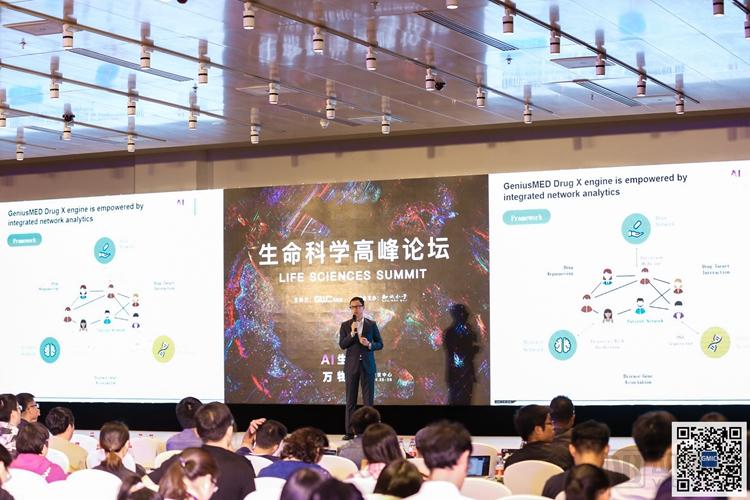
ForceClouds Founder & CEO Zhang Yingnan Delivers Keynote Speech at GMIC Conference (Photo provided by the company)
New Drug Development Is a “Nine-Out-of-Ten Losers” Gamble, but the Game Is About to Be Rewritten
Authoritative data indicate that the development of each new drug is a “process of emerging from near-certain failure.” From initial laboratory research to final market approval, it takes an average of 12 years, with total costs amounting to approximately RMB 6.6145 billion. The process entails 7,008,740 hours and 6,587 experiments, requiring the in-depth involvement of 423 researchers, ultimately yielding just one new drug. Each new drug development endeavor resembles a gamble; nevertheless, pharmaceutical companies continue to place substantial bets in order to help more patients.
In 2016, U.S. pharmaceutical giant Eli Lilly and Company publicly announced that its drug Solanezumab, intended for the treatment of mild Alzheimer’s disease (commonly known as senile dementia), had failed in Phase III clinical trials. The billions of dollars invested in research and development were essentially wasted. In fact, many organizations, including the Bill & Melinda Gates Foundation and major pharmaceutical companies, have spent substantial sums on developing new drugs in this field, but with little success to date.
ForceClouds, a cloud solutions provider for the life sciences sector, partnered with Weill Cornell Medicine of Cornell University, an Ivy League institution, in early 2017 to integrate AI technologies into the new drug development process. After years of accumulation and refinement, experimental data and robust evidence have demonstrated that artificial intelligence holds significant potential to enhance the efficiency of new drug development. ForceClouds firmly believes that one day, Alzheimer’s disease will no longer be a “nightmare” plaguing countless elderly individuals.
GeniusMED Digitizes the New Drug R&D Process
The difficulties in new drug development stem largely from the fact that numerous unknown etiologies have slowed progress. For many diseases, including Alzheimer’s disease, modern medicine has not yet fully elucidated their pathogenic mechanisms. In contrast, AI can derive new knowledge from vast amounts of data and provide insights into complex etiologies that have hitherto been beyond human understanding.
Fundamentally, every critical step in drug development involves identifying the appropriate data from a vast array of datasets. Although the volume of any single dataset is not large—even if we aggregate the medical records of every individual on Earth, the total would only reach the tens of billions—the ability to make optimal decisions at each stage requires a profound understanding of data from other stages. Consequently, drug scientists face a combinatorial "explosion" problem. Successful drug discovery often relies on the experience and judgment of a few core scientists. However, human knowledge is inherently limited, particularly when pathogenic mechanisms remain unclear, necessitating that decisions regarding research directions be based on specific hypotheses.
The emergence of AlphaGo has made humanity realize that many problems limited by human computational power and knowledge reserves can be equated to computational problems. The same applies to new drug discovery, as computers can master more data than pharmaceutical scientists and find new clues previously unattainable from the data, thereby making more reasonable judgments. Therefore, AI will inevitably solve the efficiency problem in new drug research and development; this is beyond doubt and has been verified by GeniusMED, the new drug discovery engine launched by ForceClouds.
GeniusMED Leverages Machine Learning to Gain More Knowledge and Insights into New Drug Discovery
GeniusMED is a new drug discovery engine powered by cutting-edge artificial intelligence technologies. By integrating diverse R&D data related to drugs, diseases, genes, and proteins from extensive data sources, the engine constructs a large-scale, comprehensive knowledge base for pharmaceutical R&D. Users (drug R&D professionals) can leverage GeniusMED to efficiently and conveniently explore potential associations among different entities within the knowledge base, thereby uncovering implicit drug development pathways from drugs to diseases and from diseases to drugs. It can significantly enhance the accuracy and effectiveness of the drug development process and is applicable to all key stages of new drug R&D.
Currently, using the pathway discovery tool of GeniusMED, ForceClouds has validated the conclusion that metformin can treat colon cancer, providing specific pathway information. Moreover, in most cases, these pathway insights represent entirely new knowledge discovered purely through the powerful learning capabilities of GeniusMED, having not been previously identified in the real world.
Notably, in the field of Alzheimer’s disease (AD), GeniusMED has predicted that 10 existing drugs may be effective for AD treatment and provided a ranked list. Among these, three are already approved drugs. Of the remaining seven, three are currently undergoing relevant clinical trials. Although there is no direct evidence of clinical success yet, this indirectly demonstrates the robust capabilities of GeniusMED. In its exploration of systemic lupus erythematosus (SLE), GeniusMED also identified three known drugs as effective. Among another seven candidates, two are in clinical trials, while the remaining five are high-potential drugs identified through GeniusMED’s computational analysis.
Actively Promote Internationalization Strategy and Intensify R&D Efforts in Core Technologies
In March 2018, ForceClouds publicly announced the completion of a new round of financing led by Oriental Fortune Capital, with participation from Blue Lake Capital and existing shareholder Sidao Capital (formerly Fidelity Asia Ventures). Following this round, Zhang Yingnan stated that one of ForceClouds’ strategic priorities for 2018 was to accelerate the commercialization of AI-assisted drug discovery products incubated by the “ForceClouds-Cornell Artificial Intelligence Laboratory,” thereby advancing the company’s internationalization strategy.
ForceClouds believes that AI will transform healthcare and revolutionize new drug development, and that GeniusMED is poised to make even greater contributions to the life sciences field in the future.
About ForceClouds
ForceClouds is an innovative company that empowers the pharmaceutical industry through cloud computing, big data, and artificial intelligence. Its major clients include Fortune 500 companies such as AstraZeneca, Bayer, and Wyeth Nutrition; leading multinational corporations in specialized fields such as Eisai Pharmaceutical, Takeda Pharmaceutical, Mundipharma, and Dentsply Sirona; domestic industry leaders such as China Resources Double-Crane Pharmaceutical, Hisun Pfizer (formerly Hisun Pfizer), and Salubris; as well as CRO companies such as Anhui Wanbang and Dish Consulting. Its main products cover three key areas of the pharmaceutical industry: new drug R&D, clinical trials, and marketing. Among them, GeniusMED is a collaborative product of ForceClouds and Weill Cornell Medicine, with a team composed entirely of world-class scientists in the field of AI-driven drug discovery.