

Chinese-American Pioneers in Medicine: A Spotlight on National Academy of Sciences Laureates and Their Transformative Healthcare Innovations
On May 1, 2018, the U.S. National Academy of Sciences announced the list of newly elected members on its official website. In recognition of their outstanding contributions and sustained achievements in original research, 84 American scientists and 21 foreign associates were elected as new members of the U.S. National Academy of Sciences. To date, the total number of active members has reached 2,382, with 484 foreign associates, among whom 190 are Nobel laureates.
Throughout its more than 140-year history, the U.S. National Academy of Sciences has held its annual meeting in Washington, D.C., every late April, announcing the list of newly elected members and foreign associates on the final day of the conference. This institution selects the most outstanding representatives in various scientific fields around the world—scientists who have made significant contributions to human scientific endeavors—as foreign associates of the Academy, a distinction regarded as one of the highest honors in the American academic community.
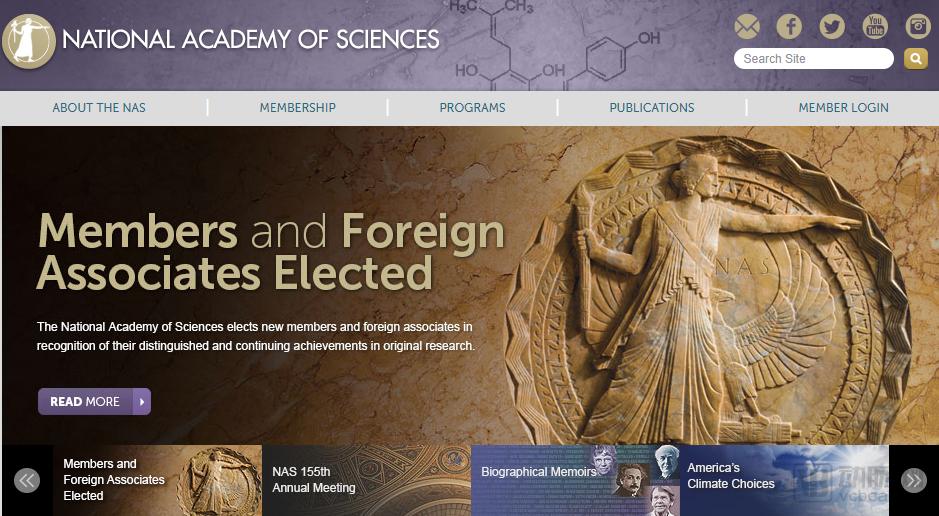
Image source: Official website of the U.S. National Academy of Sciences
Among the newly announced list are six prominent Chinese-American scholars based in the United States, spanning fields such as physics, biology, and solid mechanics. Previously, scientists who have made monumental contributions to humanity, such as Hua Luogeng and Yuan Longping, were selected, and there is also a significant number of scientists from the medical field alongside those in physics and biology.VCBeat (WeChat ID: vcbeat)Identifying Chinese-American Members of the U.S. National Academy of Sciences Dedicated to Healthcare: Examining the Trends They Are Leading in Academia
The U.S. National Academy of Sciences (hereinafter referred to as NAS), established in 1863 under a charter authorized by then-U.S. President Abraham Lincoln, is a private institution composed of scientists and engineers dedicated to providing scientific and technological advice and recommendations to the U.S. federal government. Election to membership in the NAS is regarded as one of the highest honors in the American academic community.
In recent years, the U.S. National Academy of Sciences has elected approximately 72 new members and 18 foreign associates annually. The Academy currently includes more than 20 members of Chinese nationality.
The six selected scholars of Chinese descent are: Yang Dan, Professor at the University of California, Berkeley; Ying-Hui Fu, Professor at the University of California, San Francisco; Huajian Gao, Professor at Brown University; Xiao-Gang Wen, Professor at the Massachusetts Institute of Technology; Haifan Lin, Professor at Yale University, who was elected as a member of the American Academy of Arts and Sciences in April; and Feng Zhang, Professor at MIT.
Among them, four scientists are involved in the medical field, having made significant contributions to healthcare. Their research directions and contents are detailed as follows:
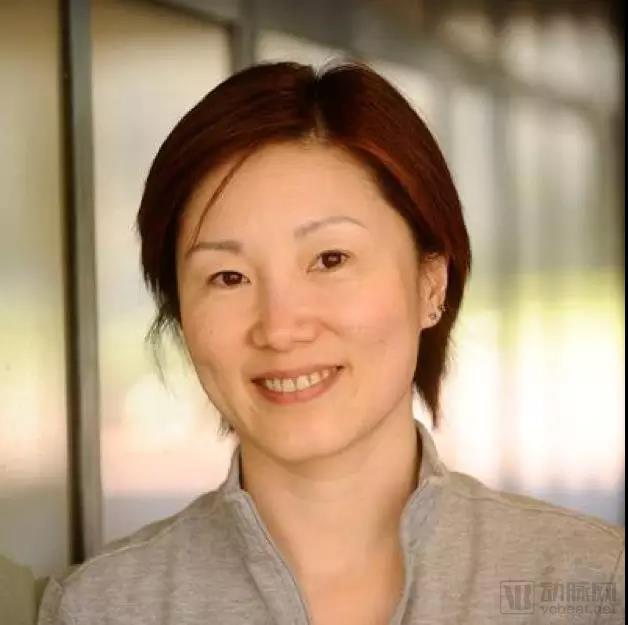
Dan Yang, the Paul Licht Distinguished Professor at the University of California, Berkeley, and an Investigator at the Howard Hughes Medical Institute, primarily engages in neuroscience and brain research.
Dan Yang earned his bachelor’s degree in physics from Peking University and subsequently pursued a Ph.D. in biology at Columbia University, where his research primarily focused on the molecular mechanisms of neurotransmitter secretion and synaptic plasticity.
Thereafter, he conducted postdoctoral research at Rockefeller University and Harvard Medical School, focusing primarily on information coding in the visual system.
In terms of academic achievements, Dan Yang has received the Alfred P. Sloan Research Fellowship, the Beckman Young Investigator Award, and other honors.
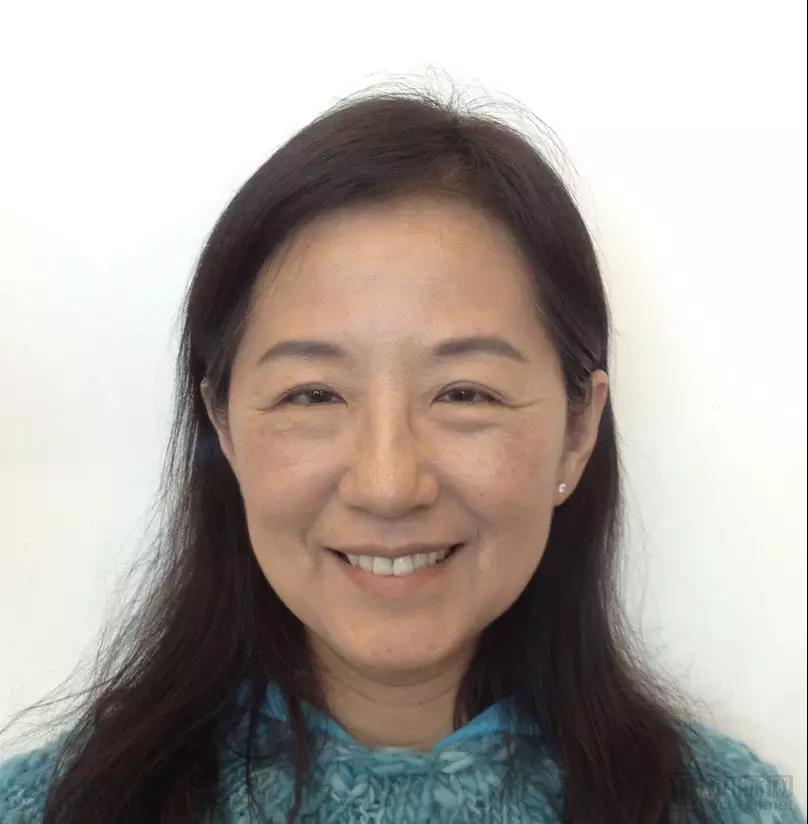
Ying-Hui Fu, biologist, Professor in the Department of Neurology at the University of California, San Francisco
Fu Yinghui graduated from National Chung Hsing University (Taiwan) in 1980 with a degree in Food Science;
Graduated from The Ohio State University in 1986 with a degree in Biochemistry and Cell Biology;
After completing a three-year postdoctoral fellowship at The Ohio State University in 1989, Fu Yinghui moved to Baylor College of Medicine to continue her postdoctoral research, focusing primarily on the human genome.
After completing her postdoctoral research, she worked in the industry for four years before returning to academia as a Research Assistant Professor at the University of Utah.
In 2002, Ying-Hui Fu established her laboratory at the University of California, San Francisco, in collaboration with Louis Ptacek. Her primary research focuses included mapping human sleep genes, elucidating the molecular mechanisms underlying human sleep regulation and circadian rhythms, investigating mouse models of demyelinating diseases, and classifying microRNAs (miRNAs) that promote healthy myelin. In 2009, she and her team discovered DEC2, the first gene identified to regulate sleep duration.
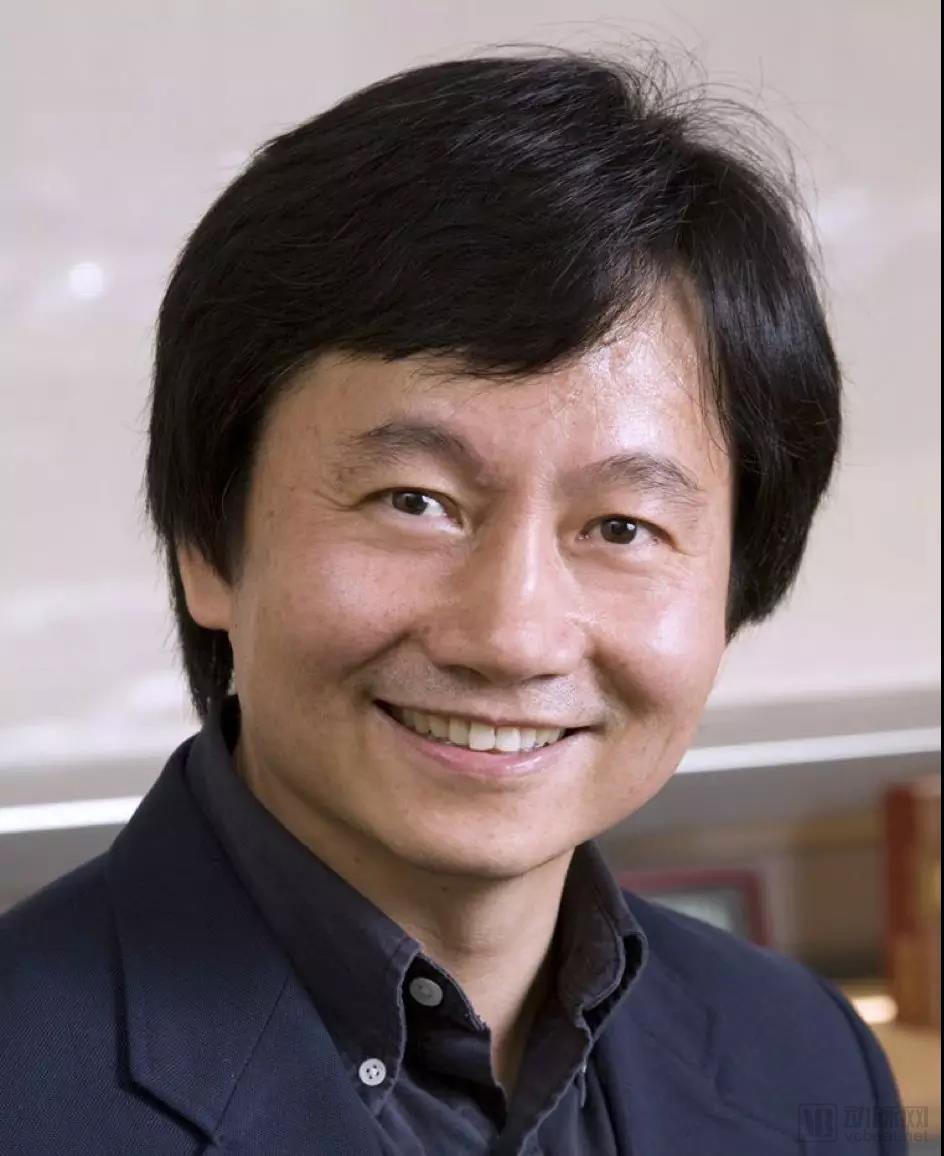
Lin Haifan, Eugene Higgins Professor of Cell Biology at Yale University, Director of the Yale Stem Cell Center, and Fellow of the American Academy of Arts and Sciences
Lin Haifan, born in 1962 in Wenzhou, Zhejiang;
1982: Earned a Bachelor’s Degree in Biochemistry from Fudan University;
Ph.D. in Genetics and Development from Cornell University, 1990;
1990-1994: Postdoctoral Fellow at the Carnegie Institution for Science in the United States;
From 1994 to 2006, he successively served as Assistant Professor, Tenured Associate Professor, and Professor at Duke University School of Medicine in the United States.
Since 2006, he has served as Professor in the Department of Cell Biology, Professor in the Department of Genetics, and Professor in the Department of Obstetrics, Gynecology, and Reproductive Sciences at Yale School of Medicine, as well as the Founding Director of the Yale Stem Cell Center; since July 2013, he has concurrently held the position of Professor at the Institute of Immunochemistry, ShanghaiTech University.
Since March 2014, concurrently serving as Dean of the School of Life Science and Technology at ShanghaiTech University.
As an internationally renowned stem cell biologist, he primarily investigates the mechanisms of stem cell self-renewal, using Drosophila germline stem cells, mouse embryonic stem cells, germline stem cells, neural stem cells, and Hydra stem cells as model systems. Additionally, his research focuses on germ cell development and tumors associated with the malignant proliferation of stem cells.
Lin Haifan has made significant contributions to demonstrating asymmetric stem cell division, the stem cell niche theory, and the fundamental roles of the Argonaute/PIWI gene family in stem cell self-renewal and germline development. He discovered a novel class of non-coding small RNAs known as PIWI-interacting RNAs (piRNAs), which was recognized by Science magazine as one of the scientific breakthroughs of 2006.
Currently, RNA-mediated epigenetic coding and post-transcriptional regulation in stem cells are also major research focuses of Lin Haifan’s laboratory. On April 18, 2018, Lin Haifan was elected as a Member of the American Academy of Arts and Sciences (generally, the National Academy of Sciences, the National Academy of Engineering, the National Academy of Medicine, and the American Academy of Arts and Sciences are referred to as the “Four Academies,” representing the highest academic honors in academia).
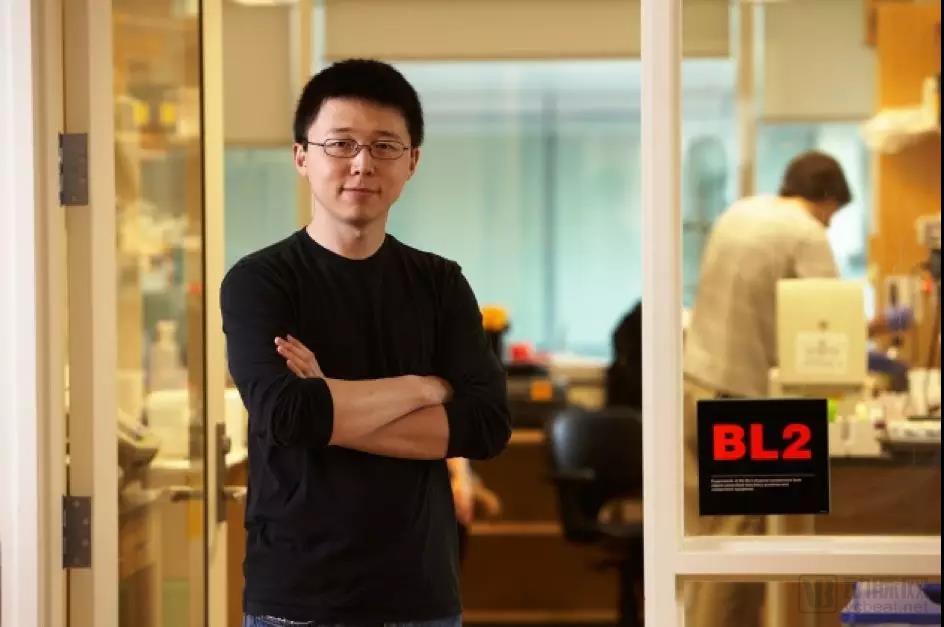
Feng Zhang, James and Patricia Poitras Professor of Neuroscience at MIT; Associate Professor in the Department of Brain and Cognitive Sciences and the Department of Biological Engineering; Core Institute Member of the Broad Institute of MIT and Harvard; Investigator at the McGovern Institute for Brain Research; Member of the American Academy of Arts and Sciences
In October 1981, Zhang Feng was born in Shijiazhuang, China, and moved with his parents to Iowa, United States, at the age of eleven.
In 2004, Feng Zhang earned a Bachelor of Arts in Chemistry and Physics from Harvard University.
In 2009, obtained a Ph.D. in Chemical and Biological Engineering from Stanford University.
Feng Zhang specializes in the field of gene editing. In 2013, he secured the first U.S. patent for the development and application of his CRISPR-Cas9 gene-editing technology, demonstrating its capability to edit mammalian DNA and knock out specific genes. Owing to this breakthrough, he has emerged as a leading candidate for the Nobel Prize.
In 2014, he was named one of Nature’s 10: Ten people who mattered in 2013.
In 2017, Feng Zhang was promoted to tenured professor at the School of Science, Massachusetts Institute of Technology.
On August 15, 2017, Feng Zhang received the Albany Medical Center Prize in Medicine and Biomedical Research, becoming the second Chinese-American scholar in history to receive this award.
For his significant contributions to the fields of genomics and optogenetics, Feng Zhang has received numerous awards, including the Perl/UNC Neuroscience Prize (shared in 2012 with Karl Deisseroth and Ed Boyden), the NIH Director’s Pioneer Award (2012), the National Science Foundation’s Alan T. Waterman Award (2014), the Canada Gairdner International Award (shared with Jennifer Doudna, Emmanuelle Charpentier, Philippe Horvath, and Rodolphe Barrangou), and the 2016 Tang Prize (shared with Doudna and Charpentier).
Half a month ago, Zhang Feng and Lin Haifan were jointly elected as members of the American Academy of Arts and Sciences in 2018.
In the 1980s, scientists such as Hua Luogeng and Yuan Longping were successively elected to the U.S. National Academy of Sciences (NAS), with research fields spanning physics, biology, paleoanthropology, agriculture, and other disciplines. From a statistical analysis of ethnic Chinese NAS members over the years, we compiled a list of 18 scientists with medical-related affiliations between 2011 and 2018, revealing several interesting patterns.
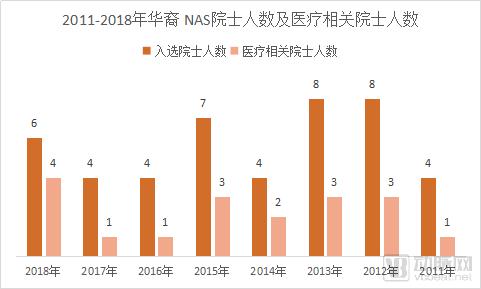
Number of Chinese-American NAS Academicians and Scientists in the Medical Field Selected from 2011 to 2018 (Data Source: Public Data; Compiled by VCBeat)
According to data collected by VCBeat, from 2011 to 2018, there were a total of 45 Chinese-American academicians, among whom 18 were involved in the medical field.
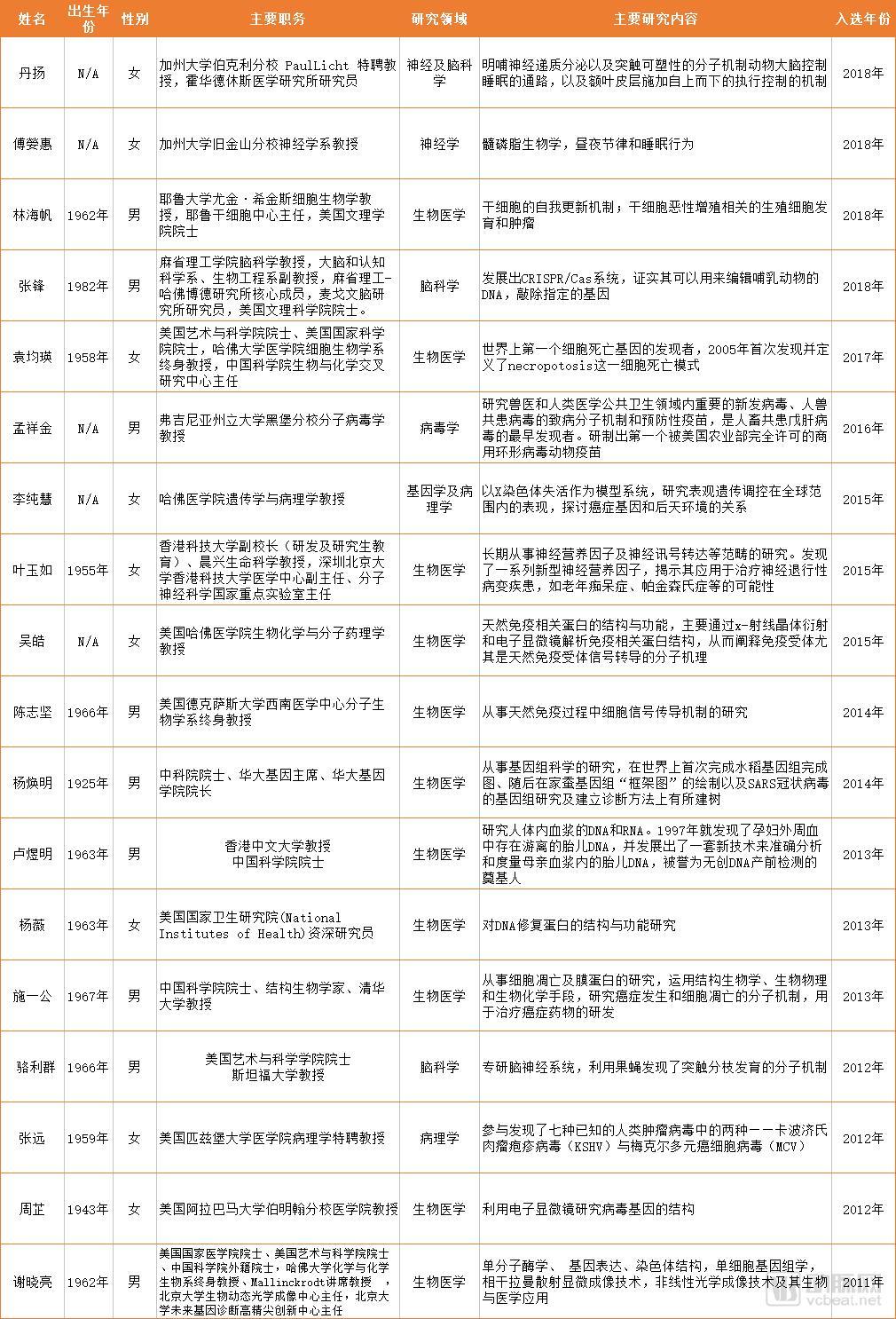
List of Chinese-American NAS Members in the Medical Field (Data Source: Publicly Available Data; Compiled by VCBeat)
According to publicly available data, the earliest inclusion of a Chinese-American scientist in the roster of members of the U.S. National Academy of Sciences dates back to 1942. Physiologist Robert K. S. Lim gained international renown in the medical community for his discovery of “enterogastrone,” and he conducted in-depth research primarily focused on pain and analgesic mechanisms.
First, in terms of age and experience, based on the available data, the newly elected academicians were predominantly born in the 1950s and 1960s. They graduated from prestigious universities such as Peking University, Xi’an Jiaotong University, Fudan University, and the University of Science and Technology of China in the 1980s, and have overseas study experience. After completing their education, most of these scientists chose to teach or conduct research at renowned foreign institutions such as Harvard University, the Massachusetts Institute of Technology (MIT), and the University of California.
Also on the list is Zhang Feng, the only “post-1980s” academician, a brain scientist who has long been renowned in the field of neuroscience. The discussion surrounding this scientist gained significant traction after the 2018 release of the list of Chinese-American members of the National Academy of Sciences (NAS).
In terms of gender distribution, scientific research is not the exclusive domain of men; high technical barriers have not deterred female scientists. Among Chinese-American members of the National Academy of Sciences (NAS), those specializing in the medical field are evenly split, with men and women each accounting for 50%.
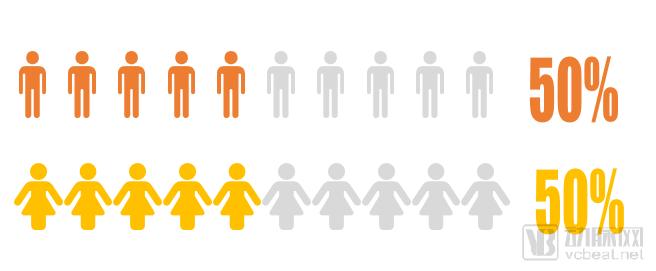
Gender Distribution Among Chinese-American NAS Members in the Medical Field (Compiled by VCBeat)
In the fields under investigation, the vast majority of scientists—accounting for 59%—are engaged in biomedical research characterized by high technical barriers, with notable achievements concentrated in areas such as genomics and cytology.
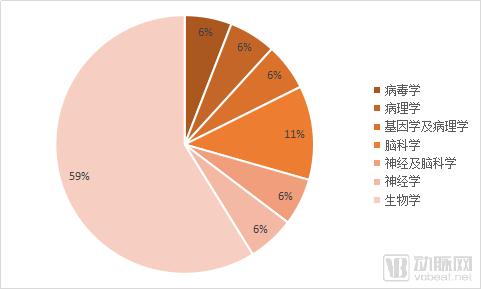
Research Field Distribution (Data Source: Public Data; Compiled by VCBeat)
In the field of medicine, several pioneers have emerged as the “first” to achieve groundbreaking results in their respective areas, such as Professor Yuan Junying, the discoverer of the world’s first cell death gene, and Professor Dennis Lo, hailed as the founder of non-invasive prenatal testing (NIPT) using cell-free DNA.
Among numerous research achievements, Chinese-American NAS academicians have not only frequently published their findings in prestigious international academic journals such as *Cell* and *Nature*, but also translated their scientific breakthroughs into practical medical applications, dedicating themselves to tackling disease-related challenges.
Scientific research demands innovation. Across various fields of study, we have selected several representative academicians to showcase their research achievements, aiming to identify cutting-edge trends among the scientific community’s outputs and explore pathways for the practical application of advanced technologies.
Professor Yuan Junying: Research on the Mechanism of Apoptosis
Professor Junying Yuan, currently on the faculty of Harvard Medical School, is the only scientist born in mainland China among the Chinese-American electees to the National Academy of Sciences (NAS) in 2017. This distinction follows her earlier election as a Fellow of the American Academy of Arts and Sciences in 2007. Professor Yuan has dedicated many years to researching the mechanisms of apoptosis, establishing herself as one of the pioneers in the field and the discoverer of the world’s first apoptosis-related gene.
In 2005, Professor Junying Yuan first discovered and defined necroptosis as a mode of cell death and fully elucidated its mechanism.
Necroptosis refers to a form of necrotic cell death that is initiated by death receptor ligands, mediated by death receptors, and occurs when the apoptotic pathway is inhibited. Upon binding of death receptor ligands, such as TNF-α, to their corresponding death receptors, the receptors are rapidly activated and form dimers. Subsequently, the receptor-interacting proteins RIP1 and RIP3 sequentially bind to the death receptors, forming a complex that undergoes phosphorylation to regulate downstream signaling pathways. This process ultimately leads to the excessive production of reactive oxygen species, resulting in cell disintegration and necrosis.
This discovery laid the research foundation for the global field of apoptosis, prompting numerous laboratories worldwide to conduct systematic studies on apoptosis from various perspectives, and made significant contributions to her graduate advisor, Professor Horvitz, winning the 2002 Nobel Prize.
Professor Yuan Junying’s research has been published numerous times in prestigious academic journals such as *Science*, *Nature*, and *Cell*, totaling 195 papers. Her work has been cited 67,000 times, with 25,000 citations in the past five years, establishing her as a recognized authority in the field of cell death within the international academic community.
During her appearance at the Shuimu Tsinghua Life Sciences Lecture Series in 2015, Professor Junying Yuan noted that necroptosis plays a significant role in the pathogenesis and progression of various conditions, including inflammatory disorders, ischemic cardiovascular and cerebrovascular diseases, neurodegenerative diseases, and tumor drug resistance.
According to the official report by Tsinghua University on this lecture, Professor Junying Yuan’s laboratory has long been dedicated to developing and utilizing specific small-molecule inhibitors to thoroughly investigate and elucidate the mechanisms of necroptosis. The fourth-generation small-molecule compound, Nec-1, which has been developed to date, effectively inhibits kinase activity by targeting the kinase domains of RIP1 and RIP3, thereby blocking their mutual phosphorylation and specifically preventing the occurrence of necroptosis. Therefore, drug design and development aimed at modulating the kinase activities of RIPK1/3 may provide new strategies for the clinical treatment of acute and chronic diseases.
Professor Nancy Y. Ip: Exploring the Potential of Neurotrophic Factors in Treating Neurological Disorders
Professor Nancy Y. Ip was elected as a member of Chinese origin to the U.S. National Academy of Sciences (NAS) in 2015. Her research focuses on employing modern molecular and cellular biology approaches to investigate the relationship between neurotrophic factors and neuronal development, as well as their potential for treating neurological disorders.
She participated in the discovery of three novel neurotrophins—NT3, NT4, and NT7—and investigated their functional characteristics and partial mechanisms of action. She discovered that the CNTF receptor is a ternary complex, sharing mechanistic similarities with the leukemia inhibitory factor (LIF) receptor. Furthermore, her studies on the functional characteristics of CNTF revealed synergistic interactions among various neurotrophins. She also elucidated the regulatory mechanisms underlying neuromuscular synapse formation, demonstrating that Cdk5 is present at the neuromuscular junction and directly influences synaptogenesis and functional development. These findings contribute to a deeper understanding of the mechanisms of synaptic formation and function, offering significant insights into the underlying processes of learning and memory.
Their research achievements have been cited or referenced over 9,000 times in more than 130 academic papers published in leading core journals, and they hold 12 patents.
According to an announcement from the Shenzhen Research Institute of The Hong Kong University of Science and Technology, on March 30, 2018, the institute’s “Peacock Team,” led by Professor Nancy Ip Yee-ru (named after Shenzhen’s “Peacock Plan” for introducing high-caliber technical talent), achieved a breakthrough in Alzheimer’s disease research. The team conducted the first whole-genome sequencing study focused on Chinese patients, identifying novel risk gene loci closely associated with the onset and progression of the disease, and revealing the link between immune system dysregulation and Alzheimer’s pathology.
This significant finding was published in the Proceedings of the National Academy of Sciences (PNAS) on February 5, 2018, filling a gap in international whole-genome data for Chinese Alzheimer’s disease populations and holding substantial importance for early diagnosis, biomarker research, and drug development for Alzheimer’s disease.
In terms of practical application, the World Alzheimer Report 2015 indicates that one new case of Alzheimer’s disease (AD) is diagnosed globally every three seconds. By 2050, the number of people worldwide living with dementia is projected to rise from the current 46 million to 131.5 million. A market worth at least tens of billions of US dollars annually awaits development, prompting major pharmaceutical companies to enter the field in rapid succession.
According to data from Yicai, since 2002, pharmaceutical companies have invested more than $200 billion in the research and development of new drugs for Alzheimer’s disease. However, among more than 200 clinical trials, only one Alzheimer’s drug has successfully reached the market, resulting in a drug development failure rate as high as 99.6%.
Dr. Wu Shenghu, Medical Director of Eli Lilly’s Neuroscience Therapeutic Area, stated in an interview with Yicai Global, “Any company worldwide that can develop a drug to slow the progression of Alzheimer’s disease (AD) will have a ‘super blockbusters’ on its hands.” Against this backdrop, scientists such as Professor Nancy Ip still face a long and arduous journey in their exploration of solutions for neurological disorders.
Professor Dennis Lo: Pioneering the Application Revolution in Non-Invasive Prenatal Screening
According to a report by Xinhua News Agency, in 1997, Dennis Lo discovered the presence of cell-free fetal DNA in maternal blood. Building on this finding, he conducted a series of pioneering studies to investigate the characteristics of such cell-free fetal DNA, demonstrating the feasibility and practicality of using it for the diagnosis of genetic disorders. This significant discovery was subsequently published in the prestigious international medical journal The Lancet, in an article titled “Presence of fetal DNA in maternal plasma and serum.” Since its publication, this article has been cited 2,167 times.
Prior to the advent of next-generation sequencing (NGS), clinical screening for Down syndrome primarily relied on two methods: serological screening and amniocentesis. Amniocentesis is considered the gold standard for diagnosis; however, it is highly invasive and carries a risk of miscarriage. Although serological screening is non-invasive, its detection rate and false-positive rate are less than satisfactory. The emergence of non-invasive prenatal testing (NIPT) has addressed one of the most urgent needs in clinical prenatal screening. In 2010, NGS-based non-invasive prenatal screening technology began to be implemented in clinical practice.
It was Professor Dennis Lo’s discovery that pioneered non-invasive prenatal testing (NIPT) and ultimately opened up a new avenue for detecting Down syndrome using next-generation sequencing. As a result, Professor Lo is regarded as the founder of non-invasive prenatal DNA testing.
Released by VCBeat·VCBeat Research Institute"Report on the Realization of Commercial Value in Genetic Technology"As indicated in the article, in 2015, the National Health and Family Planning Commission issued a notice on pilot programs for the clinical application of high-throughput sequencing. Eight medical testing laboratories, including BGI Genomics, and 108 prenatal diagnostic institutions were granted pilot qualifications. The pilot program was officially terminated in 2016. After one year of small-scale validation by regulatory authorities, non-invasive prenatal genetic testing began to be conditionally permitted nationwide.
Technologically, NIPT is disruptive, meeting the dual demands of clinical practice. During the one-year pilot period for its deregulation, local governments and companies provided varying levels of subsidies and price concessions for testing. The improvement of regulatory frameworks and the reduction in costs have enabled the technology to reach primary care hospitals, allowing individuals with relatively lower incomes to benefit as well. Compared to gene editing, which is still in its infancy, the maturity of NIPT technology and the relaxation of policies have opened the door early for the commercialization of this scientific achievement.
References:
http://www.nasonline.org/
https://mp.weixin.qq.com/s/SE-t6W4wbeModMymtP1pdg
http://news.sciencenet.cn/htmlnews/2017/5/375241.shtm
http://www.hhmi.org/scientists/yang-dan
http://www.tsinghua.edu.cn/publish/thunews/10303/2015/20150409140147634938592/20150409140147634938592_.html
http://www.eol.cn/guangdong/guaungdongxiaoyuan/201803/t20180330_1593005.shtml
http://www.xinhuanet.com/gangao/2016-09/20/c_129289007.htm