

PwC: China's Medical Device Industry M&A Value Drops to $4.94 Billion in 2017, Overseas Deals Surge by 59% Amid Strong Interest in Imaging and Consumables
Recently, PwC released the report “2017 M&A Review: China’s Medical Device Industry.” VCBeat (WeChat ID: vcbeat) has compiled the key highlights as follows.
According to the report, the transaction value of mergers and acquisitions in China's medical device industry fell to $4.94 billion in 2017,The annual transaction value hit its lowest level in the past three years. However, overseas M&A transactions reached a record high, surging by 59% to $1.1 billion. Surgery, consumables, and imaging equipment were the key investment focuses, while the M&A boom in the in vitro diagnostics (IVD) sector cooled off.
Overview of M&A Transactions in the Medical Device Industry in China
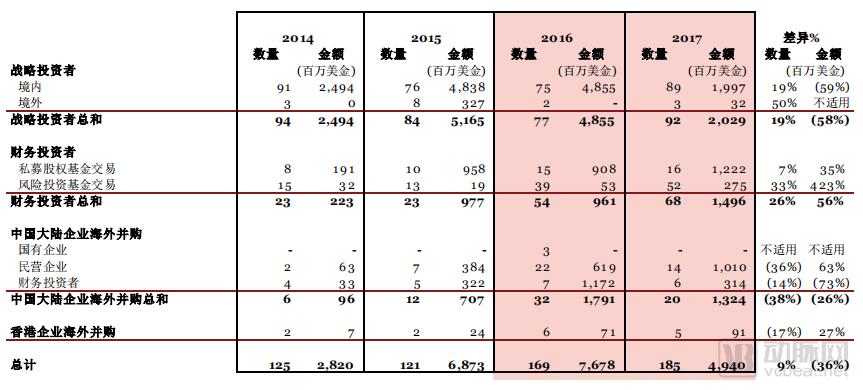
China's Medical Device IndustryTotal Number and Value of M&A Transactions
In 2017, the total transaction value of mergers and acquisitions in China's medical device industry declined to USD 4.94 billion, representing a 36% decrease compared with 2016.the lowest annual transaction volume in the past three years.
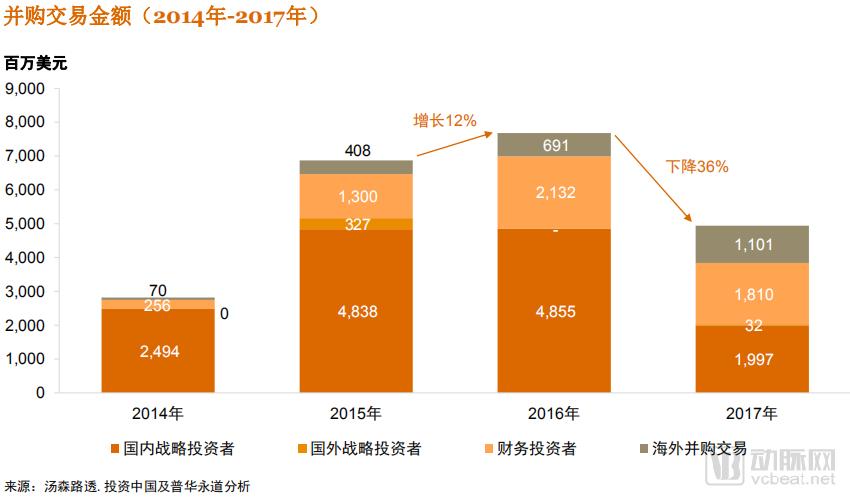
M&A deal values declined to varying degrees across most sectors, with transaction amounts in the two major sub-segments—domestic strategic investments and financial investments—experiencing significant drops. In contrast, overseas M&A transactions rose by 59%, reaching $1.1 billion in 2017 and setting a new historical high.
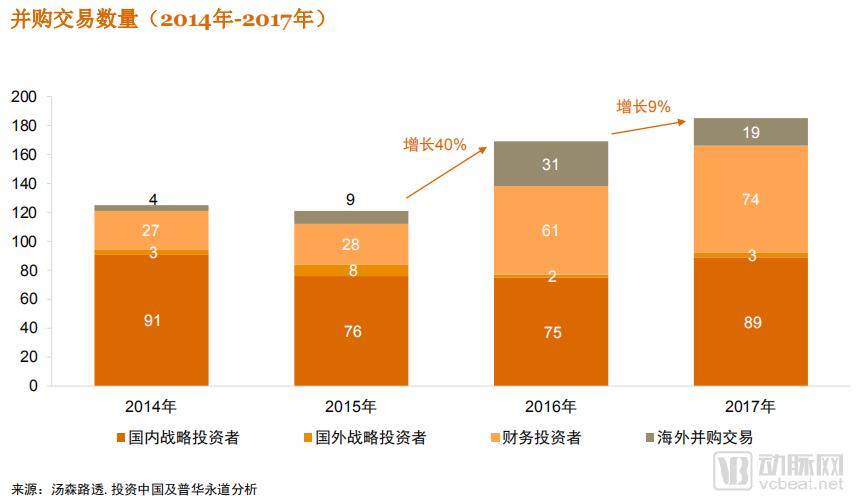
From 2014 to 2017, although the total value of mergers and acquisitions (M&A) in China’s medical device industry decreased by 36%, the annual number of M&A transactions still increased by 9%. Strategic and financial investors remained active in terms of transaction volume, while the number of cross-border M&A deals declined.
Strategic Investor Transactions
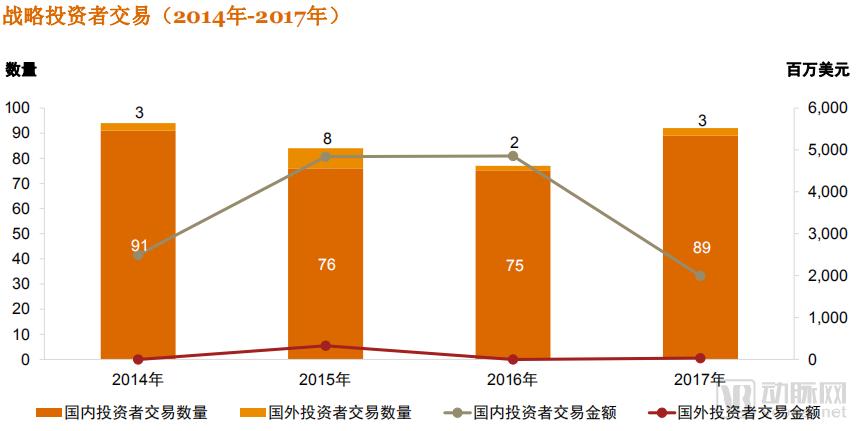
In the strategic investment sector, the number of domestic strategic M&A deals rose by 19% in 2017, but the transaction volume decreased by 58% quarter-on-quarter, hitting a three-year low; meanwhile, overseas strategic investors remained sluggish.
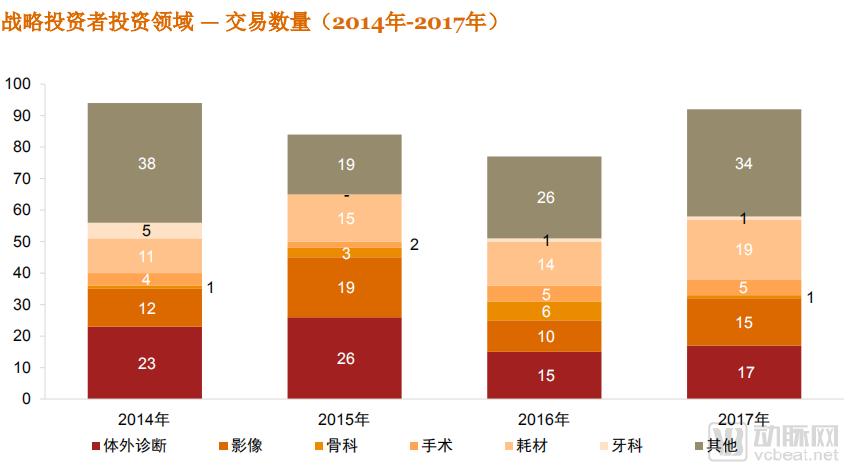
From a sector-specific perspective, surgery, consumables, and imaging equipment became the investment focus in 2017, while mergers and acquisitions in the in vitro diagnostics segment, traditionally a hot spot for investment in the medical device industry, declined.
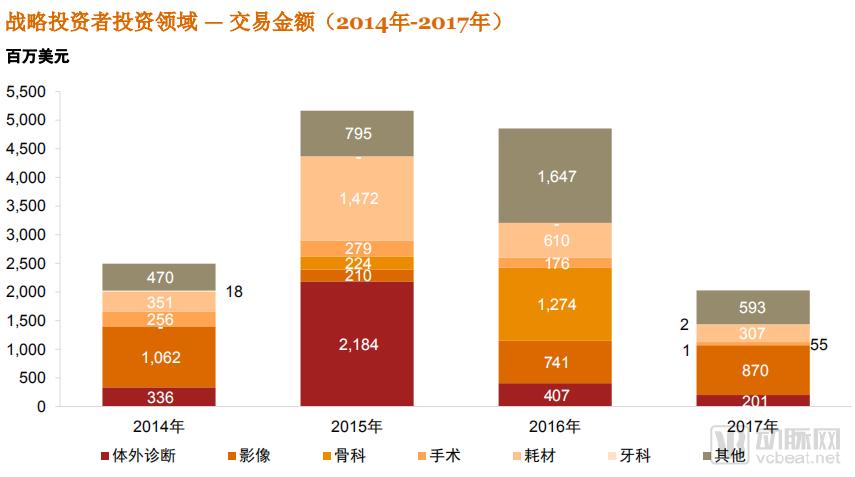
In terms of transaction value across various sub-sectors, all categories except medical imaging experienced a significant decline. In 2017, investment in medical imaging equipment reached $870 million, the highest level in the past three years.
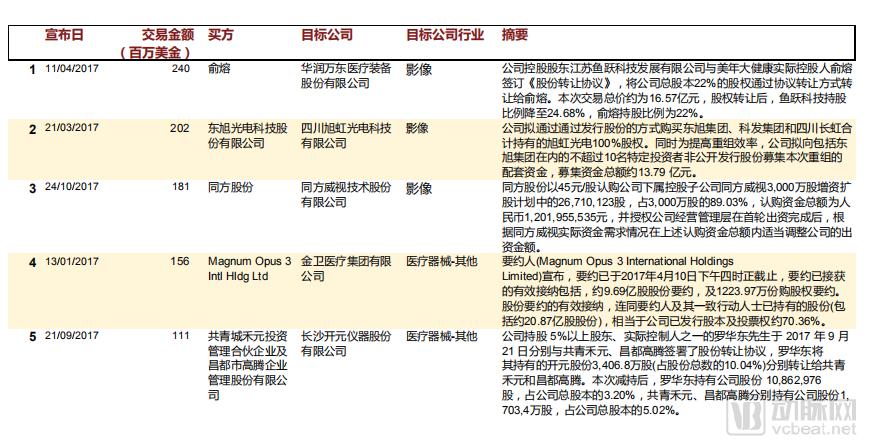
M&A Cases Involving Strategic Investors in the Medical Device Sector in 2017 (Over $100 Million)
In 2017, there were five M&A cases involving strategic investors with transaction amounts exceeding US$100 million. Among them, on April 10, 2017, Wandong Medical announced that Yu Rong, the actual controller of Meinian Onehealth, intended to acquire a 22% stake in Wandong Medical from its controlling shareholder, Yuyue Technology, for RMB 1.657 billion, thereby becoming the second-largest shareholder of Wandong Medical. Upon disclosure of this news, the three prominent companies—Wandong Medical, Yuyue Technology, and Meinian Onehealth—briefly became the focus of industry discussion.
Financial Investor Transactions
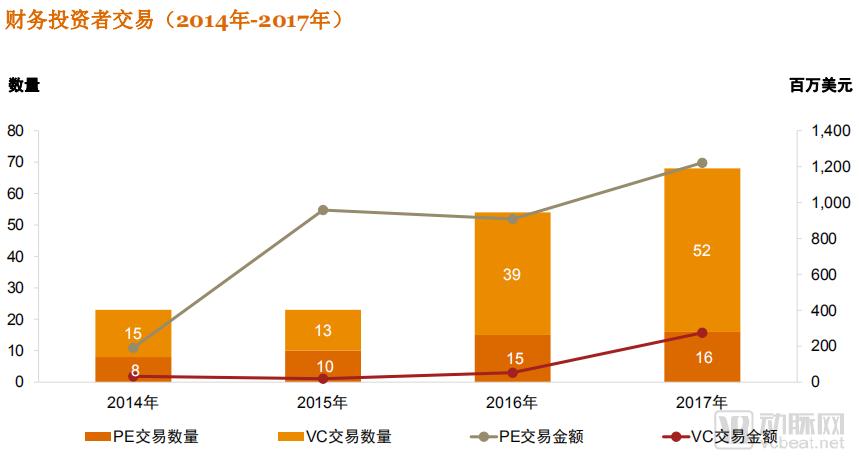
In the financial investor segment, venture capital funds remained active in 2017 in emerging medical device sectors such as medical diagnostics, consumables, medical imaging, precision medicine, mobile health, and healthcare information technology, with both the number and value of transactions showing an upward trend.
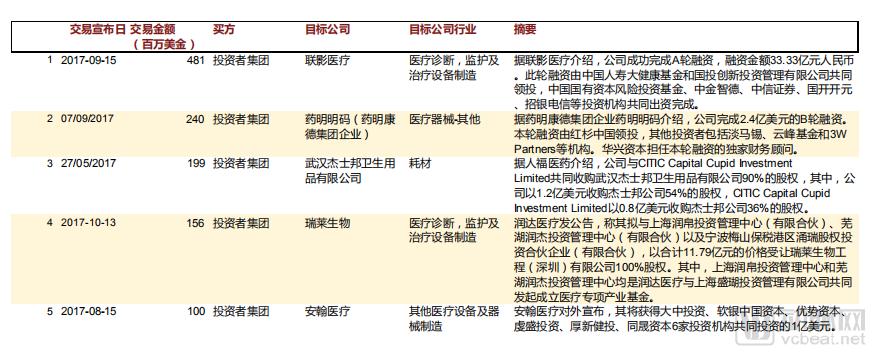
M&A Deals Involving Financial Investors in the Medical Device Sector in 2017 (Over $100 Million)
In 2017, there were five M&A deals involving financial investors in China’s medical device sector with transaction values exceeding USD 100 million. Among these, the largest and most notable deal was United Imaging Healthcare’s completion of its Series A financing. On September 15, 2017, United Imaging Healthcare announced the closing of its Series A round, raising RMB 3.333 billion and achieving a post-money valuation of RMB 33.333 billion, setting a record for the largest single private equity financing in China’s medical equipment industry to date.
This round of financing was co-led by China Life Health Care Fund and SDIC Innovation Investment Management Co., Ltd., with joint investment from China State-owned Capital Venture Investment Fund, CICC Zhide, CITIC Securities, CDB Kaiyuan, and China Merchants Bank Telecom, among other institutional investors.
Overseas M&A Transactions by Mainland Chinese Enterprises
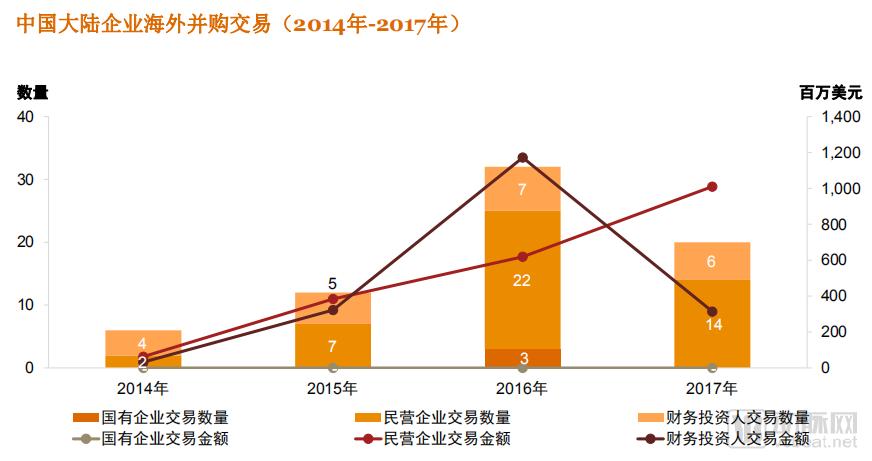
In 2017, overseas M&A transactions by Chinese medical device companies rose by 59%, reaching $1.1 billion, a record high. Among these, investment activities by both private and state-owned enterprises declined in 2017, yet private enterprises still accounted for a relatively high proportion of the total number of investments. The number of transactions by financial investors remained largely flat compared to the previous year, but the total transaction value dropped significantly.
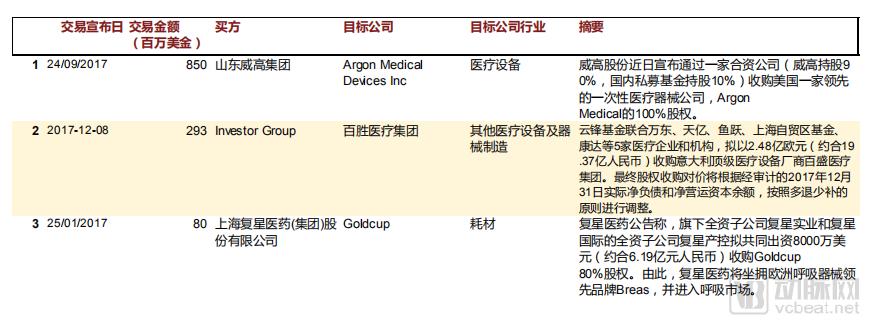
2017 Overseas M&A Cases by Mainland Chinese Enterprises (Transactions Exceeding USD 50 Million)
In 2017, there were three overseas M&A transactions by Chinese medical device companies with amounts exceeding USD 50 million. Among them, on December 8, 2017, Yunfeng Capital, founded by Jack Ma, joined forces with five medical enterprises and institutions—Wandong Medical, Tianyi Group, Yuwell, Shanghai Free Trade Zone Fund, and Kangda—to form the “Strongest Chinese Medical Investment Consortium.” The consortium planned to acquire Esaote, a top-tier Italian medical equipment manufacturer, for EUR 248 million (approximately RMB 1.937 billion). The transaction was completed on April 18, 2018, with the final actual transaction amounting to EUR 232.1 million (approximately RMB 1.803 billion).
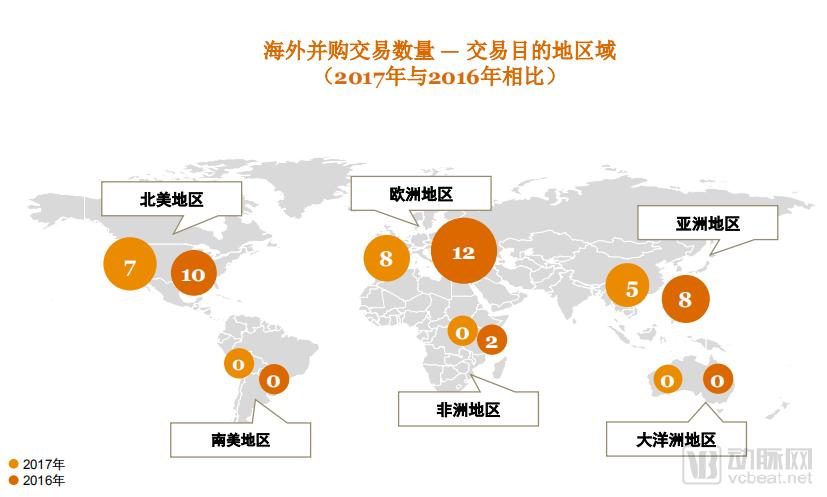
Finally, from a geographic perspective, developed economies remain the primary destinations for overseas mergers and acquisitions by Chinese medical device companies. In 2017, Europe and North America ranked highest in terms of transaction volume.
References:
Source: PwC Official Website
Note:
“Private Equity Fund Transactions” specifically refer to equity transactions conducted by financial investors with a transaction value exceeding USD 10 million, as well as transactions undertaken by private equity funds where the transaction amount is not disclosed. The majority of these transactions are executed by private equity fund management firms, but they also include transactions carried out by financial institutions and corporate groups that are essentially private equity investments in nature.
“Venture Capital Fund Transactions” specifically refer to equity transactions conducted by financial investors with transaction amounts below US$10 million, as well as equity transactions conducted by venture capital funds where the transaction amount is not disclosed.
“Strategic investors” refer to corporate investors that acquire a company and integrate it into their existing business operations (as opposed to “financial investors”).
“Financial investors” refer to investors who engage in mergers and acquisitions with the aim of profiting from future divestitures, primarily including but not limited to private equity funds and venture capital funds.