Ping An Good Doctor Lists in Hong Kong; Dr. Wu Xiaobin Officially Joins BeiGene as President

Work | St. Vitus' Dance
Author | Pieter Bruegel
Medical History in Pictures | Issue 20180506
The artist of this painting, who was previously featured in the April 15, 2018 issue of “Illustrated Medical History,” was the greatest genre painter from the Low Countries in the 16th century.
The image depicts people performing a so-called “idiot’s dance,” mimicking the involuntary, flailing movements characteristic of chorea. The form of chorea portrayed in the painting was a widespread disease at the time. Analysis suggests that the condition was caused by unsanitary living conditions leading to moldy food; chronic consumption of such contaminated food resulted in poisoning. During episodes, patients experienced limb spasms and exaggerated, distorted movements, resembling dancing.
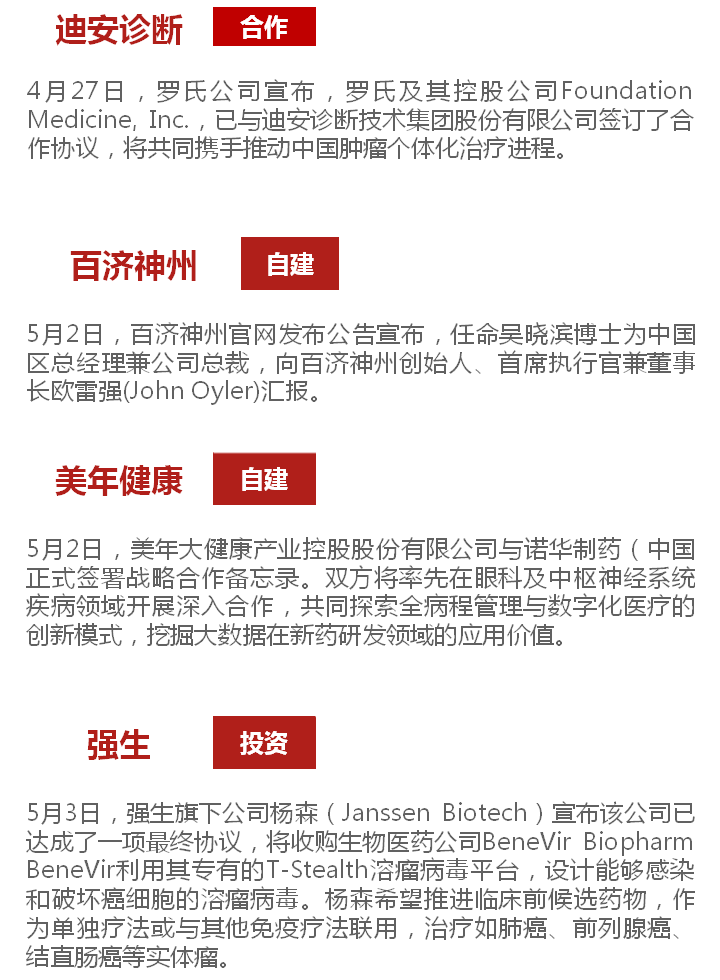
This week,Ping An Healthcare and Technology DepartmentPing An Good Doctor (HK: 01833) was listed on the Hong Kong Stock Exchange. Three Wuhan-based companies, including Wuhan Mingde Biotechnology Co., Ltd., all passed regulatory reviews and successfully went public. Xiaobin Wu, former President of Pfizer’s Core Medical Greater China Division and Country Manager of Pfizer China, has officially assumed his position at BeiGene. Regeneron decided to discontinue the Phase 3 clinical trial of high-dose fasinumab. Novartis China announced that Lucentis® (ranibizumab) had been approved by the National Medical Products Administration for the treatment of conditions secondary to retinal vein occlusion (RVO). The 2018 Primary Healthcare Summit “New Structure” garnered significant attention.RegistrationMid-Week... Grasp a Week's Industry Dynamics in Ten Minutes with the Eggshell Weekly Report.
As blockchain technology advances at a rapid pace, let us take a step back to examine how blockchain projects around the world actually plan to generate profits.
Currently, the source code for many cryptocurrencies is built upon the open-source technologies of Bitcoin and Ethereum. The vast majority of blockchain developers endorse this open-source model, as it significantly reduces their workload and allows them to devote more resources to advancing blockchain technology.
VCBeat has compiled and analyzed ARCH Venture’s 261 investments since 1995, selecting 174 deals in the healthcare sector to gain insights into the investment strategy of this top-tier venture capital firm.
Five major events related to “Internet + Healthcare” occurred in April. Some say that internet healthcare has finally seen the light at the end of the tunnel, others claim that spring has arrived for health IT enterprises, while still others argue that private internet hospitals are under greater pressure. With such diverse opinions abounding, what is the perspective of industry insiders?
VCBeat conducted separate interviews with Liao Jieyuan, Chairman and CEO of WeDoctor; Wang Hang, Founder of Haodf Online; Zhang Kun, CEO of Chunyu Doctors; and Wei Jianfeng, Founder of Zhuojian, aiming to capture authentic insights from the front lines.
On May 1, 2018, the U.S. National Academy of Sciences announced the list of newly elected members on its official website. In recognition of their outstanding contributions and sustained achievements in original research, 84 American scientists and 21 foreign associates were elected as new members of the U.S. National Academy of Sciences. To date, the total number of active members stands at 2,382, with 484 foreign associates, among whom 190 are Nobel laureates.
Among the newly announced list are six prominent Chinese-American scholars, spanning fields such as physics, biology, and solid mechanics. They join the ranks of previously elected scientists who have made monumental contributions to humanity, such as Hua Luogeng and Yuan Longping. A significant number of scientists from the medical field, alongside those in physics and biology, have also been elected. VCBeat has identified Chinese-American members dedicated to healthcare who have appeared on the U.S. National Academy of Sciences roster in recent years, examining the trends they are leading within the academic community.
Amid the collective euphoria of internet healthcare companies and the wait-and-see stance of capital, Ping An Healthcare and Technology Company Limited (HK: 01833, hereinafter referred to as “Ping An Good Doctor”) was listed on the stock exchange at 9:30 a.m. on May 4, 2018. Its opening share price was HK$57.3, with a high of HK$58.7 per share.
From a unicorn in the mobile healthcare sector, Ping An Good Doctor has rapidly become the internet healthcare company with the shortest time to IPO. How did this happen? VCBeat traces the company’s development journey to present a comprehensive overview.
This issue features our curated selection of the fourth cohort of Qingsong Club’s “Medical Innovation Camp,” a specialized training program designed for professionals in medical innovation. The curriculum primarily covers six core modules: New Mindsets for Medical Innovation Leaders, Emerging Directions in the Healthcare Industry, Innovative Models in Medical Innovation, Methodologies for Financing Medical Innovations, New Hotspots in Healthcare Investment, and New Global Perspectives in Healthcare.
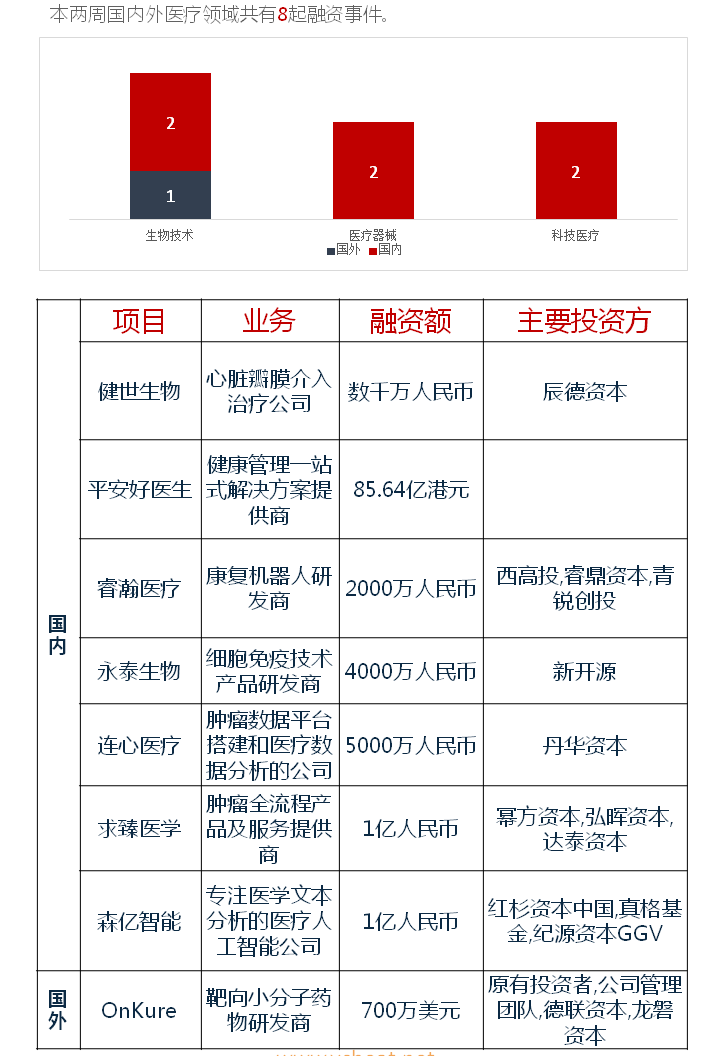
Artificial Intelligence:Lianxin Medical: Completes RMB 50 Million Series A Financing to Accelerate Enhancement of Oncology Diagnosis and Treatment Capabilities in Primary Care Hospitals
Pharmaceutical Retail:Xingbang Health: Covering Over 1,000 Pharmacies in 4 Months, Leveraging Marketing, Healthcare, and Insurance to “Make It Easy for Every Pharmacy to Do Business”
Health Management:Sumeian:Non-Pharmacological Treatment of Insomnia: Achieving a Breakthrough from 0 to 1—How to Build a Closed-Loop Sleep Management Service Using Smart Hardware and Cloud Medical Platforms
Large Companies:Nokia: From the Acquisition of Withings to Its Exit from the Digital Health Market, What Efforts Did It Make?

For more content, please refer to the VCBeat knowledge base!