

Ping An Good Doctor Debuts on HKEX at HK$57.3, Backed by Over 20 Investment Firms After Rapid 4-Year Rise

Ping An Healthcare
One-stop Solution Provider for Health Management
By Luo Mei, Li Yanyu
On May 4, 2018, amidst the collective euphoria of internet healthcare companies and the wait-and-see stance of investors, Ping An Healthcare and Technology Company Limited (HK: 01833, hereinafter referred to as “Ping An Good Doctor”) was listed on the stock exchange at 9:30 a.m. Its opening share price was HK$57.3, reaching a high of HK$58.7 per share.
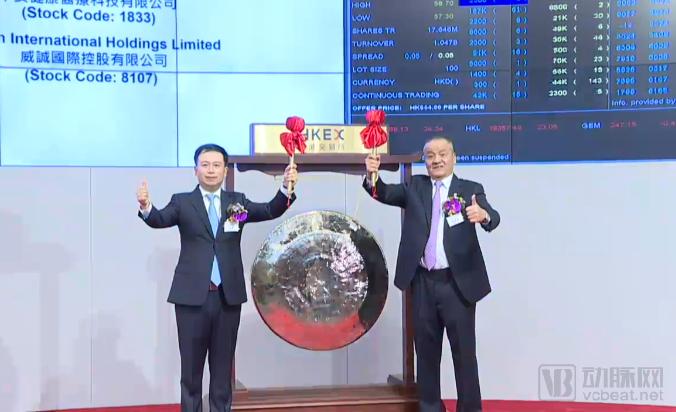
Since Ping An Healthcare and Technology Company Limited was established by Ping An Group in August 2014 with a registered capital of RMB 350 million, Ping An Good Doctor has leaped from being a unicorn in the internet healthcare sector to becoming the internet healthcare enterprise with the shortest time to IPO.
How did this all come about, and which investment institutions stand to benefit? VCBeat traces the journey of Ping An Healthcare since its inception to present a comprehensive overview.
In April 2018, with the official release of the “Opinions on Promoting the Development of ‘Internet + Healthcare’” by the State Council, a large number of internet healthcare enterprises enthusiastically proclaimed that their “spring” had finally arrived; prior to this, these companies had been struggling.
According to VCBeat’s corporate database, there are a total of 161 internet healthcare companies focused on online medical consultation services. Among them, 12 have reached the mid-to-late stages of development, while the rest remain in the early stages. Faced with high barriers to entry on both the physician and patient sides, mere cash burning is insufficient to sustain corporate growth. For most of these companies, which are still in the phase of validating their business models, achieving scalable profitability remains a long and arduous journey. Therefore, during the first two years of the internet healthcare sector’s development, the dream of an initial public offering (IPO) remained just that—a dream.
As early as 2017, news that Ping An Good Doctor was preparing for an initial public offering (IPO) on the Hong Kong Stock Exchange spread rapidly. Unlike other internet healthcare companies, Ping An Good Doctor attracted significant industry attention from its inception due to its strong backing by Ping An Group. However, when Ping An Good Doctor formally filed its listing application in January of this year, it had not yet turned a profit.
From the company’s registration in August 2014 to its IPO listing, it took only four years, while Ping An Good Doctor’s product had been online for just three years.
First, let’s review some historical milestones of Ping An Good Doctor over the past four years:
Ping An Healthcare and Technology Company Limited was established on August 20, 2014, with a registered capital of RMB 350 million;
In April 2015, the Ping An Good Doctor app was officially launched, becoming a platform-level gateway for medical and health services;
In April 2016, just one year after the launch of the Ping An Good Doctor app, it completed a $500 million Series A financing round, reaching a corporate valuation of $3 billion and becoming a healthcare unicorn. Meanwhile, Ping An Good Doctor set two records: the largest single financing round in the global internet healthcare sector and the highest valuation for a Series A round.
In December 2017, Ping An Good Doctor secured $400 million in Pre-IPO financing from SoftBank;
On January 29, 2018, Ping An Good Doctor submitted its IPO application to the Hong Kong Stock Exchange;
On May 4, 2018, Ping An Good Doctor officially listed on the Hong Kong Stock Exchange.
The listing of a yet-unprofitable enterprise was made possible by the 2018 reform of Hong Kong’s stock exchange listing rules for biopharmaceutical companies, as well as Ping An Good Doctor’s own strong performance.
Ping An Good Doctor was established in 2014, when internet healthcare was at its peak. It serves as one of the key vehicles for Ping An Group’s “Healthcare” strategy within its five major sectors: “Healthcare, Food, Housing, Transportation, and Entertainment.”
In the healthcare sector, Ping An Good Doctor firmly adopts “light consultation” mobile healthcare as its entry point. By building a medical service network and integrating domestic medical information, it brings new customer resources to health insurance, further providing various health services to customers, thereby forming a complete O2O closed loop.
Similar to Tencent, Ping An Good Doctor’s core positioning is also connectivity—connecting hospitals, users, insurance payers, service providers, and other stakeholders to form an open internet-based healthcare service ecosystem.
In a previous media interview, Wang Tao, Chairman and CEO of Ping An Healthcare, stated: “We aim to connect users, insurance companies, medical insurance providers, hospitals, clinics, testing and inspection institutions, emerging smart devices, and various health service providers through Ping An Good Doctor, thereby building an internet-based health management and medical ecosystem. This will integrate all stages of disease prevention, medical treatment, payment, and post-illness recovery, thus broadening revenue streams in the mobile healthcare sector.”
As can be seen from the above statements, the core of connectivity lies in the integration and establishment of advantageous resources, as well as the expansion of business segments.
Ping An Good Doctor has shifted its service focus from online to offline, offering paid products that cater to multi-tiered and segmented needs. Its service portfolio encompasses innovative healthcare offerings such as personalized medicine, overseas health checkups, live streaming consultations, internet hospitals, pharmaceutical e-commerce, and general practice clinics.
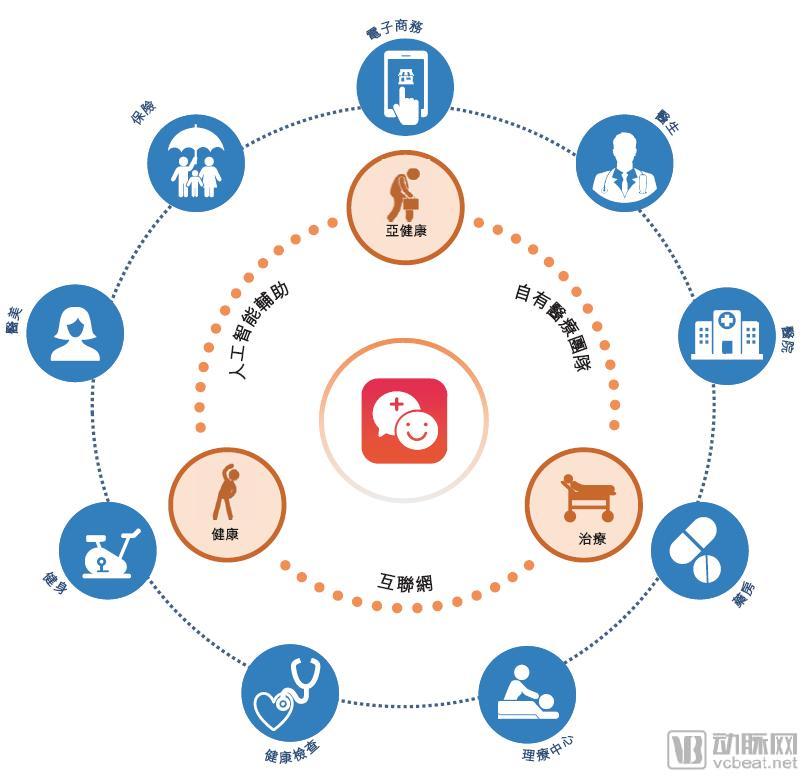
Illustration of Ping An Good Doctor’s Business Segments (Source: Ping An Good Doctor Prospectus)
As illustrated in the business diagram, within the service closed-loop established by Ping An Good Doctor, healthcare and consumer scenarios that patients may encounter—such as hospitals, e-commerce, consumer healthcare, and insurance—are all encompassed within its business segments, in addition to online consultations.
In terms of business investment, online asset-light services—such as personalized medicine, health management, health-focused live streaming, and health e-commerce—are largely self-developed by Ping An Good Doctor. In contrast, for offline asset-heavy medical institutions, including hospitals, clinics, and physical examination centers, Ping An Good Doctor has opted for a collaborative approach, partnering with multiple organizations such as Hainan R&F, Shenzhen Hospital of Southern Medical University, and overseas physical examination providers to jointly build an ecosystem.
From a product perspective, healthcare remains a low-frequency service. Companies that enter the market solely through models such as online consultations and pharmaceutical e-commerce face significant developmental constraints. This is particularly evident in the capital-intensive internet healthcare sector, where enterprises struggle to survive without external support. Without a viable business model, they lack self-sustaining revenue-generating capabilities.
For this reason, Ping An Good Doctor has chosen to collaborate with partners in specialized fields to provide diversified services that meet user needs, thereby gaining access to user data, integrating its products into users’ service radius, and retaining users on its platform to generate more interaction opportunities.
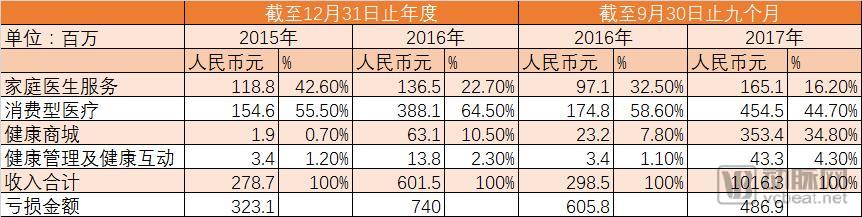
According to the prospectus data disclosed by Ping An Good Doctor, consumer healthcare has consistently accounted for the largest share of revenue, making it the primary source of income, followed by the Health Mall. Except for 2015, when the Health Mall was not yet mature, the growth of family doctor services over the past three years has been modest, significantly lagging behind the increase in registered users, while its contribution to total revenue has continued to shrink.
According to Dr.2’s analysis, Ping An Good Doctor’s future revenue model includes B2B corporate user health management services, online medical services for enterprise employees, and insurance partnerships, as well as B2C health cards, pharmaceutical e-commerce, and patient guidance and triage services. Additionally, supplementary revenue streams include advertising, membership fees, cloud computing and big data services, and overseas markets.
Despite the heavy cash burn, the data is impressive.In its previous analysis of Ping An Healthcare’s IPO prospectus, VCBeat pointed out that Ping An Healthcare underwent the following four major steps from its inception to its public listing:
Step 1: Provide initial development funding through capital injection by Ping An Group.
Step 2: Establish the initial business model for online medical consultations and acquire seed users through related-party transactions and user migration within the Ping An Group.
Step 3: Achieve substantial user growth through marketing campaigns and cash subsidies.
Step 4: Achieve a significant increase in sales revenue by establishing an online store.
From this perspective, Ping An Healthcare appears to have been in a state of persistent "cash burn"; however, behind these capital investments, the company has delivered strong performance metrics.Specific operational data are as follows:
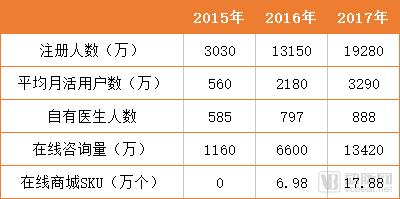
In addition to the aforementioned operational data, Ping An Good Doctor’s AI-assisted in-house medical team, comprising 888 healthcare professionals, has become a strong pillar for its online consultation business. In terms of headcount alone, Ping An Good Doctor’s self-built medical team is large enough to outshine many competitors.
According to previous prospectus data, Ping An Good Doctor’s in-house physician team comprised 585, 797, and 888 members in 2015, 2016, and 2017, respectively. The platform handled 11.6 million, 66 million, and 134.2 million online consultations in 2015, 2016, and 2017, respectively.
Furthermore, offline, Ping An Good Doctor also possesses a nationwide network of healthcare service providers, covering 3,100 hospitals (including 1,000 Grade A tertiary hospitals), 1,100 experience centers, 500 dental clinics, and 7,500 pharmacies.
According to data from Alpha Factory, Ping An Good Doctor’s monthly active users are 5.45 times those of the industry’s second-largest company, indicating its overall strength leads the sector. Following the launch of the Ping An Good Doctor app, the user base grew significantly. As of December 31, 2017, Ping An Good Doctor had 193 million registered users; by February 2018, the number of registered users exceeded 200 million.
Although internet healthcare emerged against the historical backdrop of substantial traffic dividends generated by online platforms, the gradual dissipation of these benefits has made “user acquisition” and “survival” the two most pressing challenges for internet healthcare companies.
Faced with exceptionally high efficiency in user acquisition and retention, Ping An Good Doctor ensures its platform’s user base and engagement levels through two approaches: first, the internal conversion of seed users from the Ping An Group, and second, substantial investment in promotional expenditures.
Ping An Group boasts a vast user base. In a 2017 news report, Sun Jianyi, Vice Chairman of Ping An Group, revealed that in the first half of 2017, Ping An had 143 million personal finance customers and 403 million internet users. Customers who purchased Ping An insurance policies had access to Ping An Good Doctor within the client app. Users accessing Ping An Good Doctor through Ping An’s ecosystem applications, such as Ping An Jin Guanjia, became a significant source of its early adopter base.
The second approach involves sustained external marketing and promotional campaigns. In late 2015, Ping An Good Doctor launched the “Step-by-Step Gold Rush” promotion, leveraging a referral mechanism to drive user-base expansion and trigger viral app adoption. Within one year, the number of registered users grew from 30 million to 130 million. Correspondingly, Ping An Good Doctor’s promotional expenditures reached RMB 385 million in 2016, compared with only RMB 7.1 million in the same period of 2015. Based solely on promotional spending, the customer acquisition cost was approximately RMB 3.8 per user, aligning with the industry average and helping to expand the user base.
At the core of healthcare lies the human element. Therefore, it must be acknowledged that Ping An Good Doctor’s significant investment in building an 888-member medical team constitutes one of its primary advantages. While other internet healthcare companies are still striving to compete for physician resources, Ping An Good Doctor has already established its own in-house medical team to deliver online health management services and consumer-oriented medical services. This approach enhances the controllability of the health services provided by Ping An Good Doctor and significantly reduces platform risks.
Therefore, some analysts have pointed out that, similar to Alibaba, the “asset-heavy” model is now considered one of the “decisive factors” enabling Ping An Good Doctor to rapidly take the lead over its peers. This is inextricably linked to Wang Tao, the General Manager of Ping An Good Doctor, who comes from a technical background.
Wang Tao, CEO of Ping An Good Doctor, has repeatedly emphasized in public that artificial intelligence, as an efficient tool, can assist physicians in handling tedious and redundant yet essential tasks.
Through independently developed artificial intelligence technology, when users engage in voice consultations with Ping An Good Doctor’s Family Health Guardian, the AI doctor leverages real-time AI speech recognition to generate diagnostic and treatment plans. With a high volume of online consultation services on the platform, the AI system assists medical teams in delivering high-quality healthcare services.
Furthermore, AI assistants can execute intelligent analysis pathways to direct patients to the most relevant departments or physicians, while providing pertinent information and recommendations to independent physician teams.
On December 8, 2017, Ping An Good Doctor announced the establishment of a joint venture with Unisound—Shanghai Haoyi Intelligent Technology Co., Ltd. (hereinafter referred to as “Haoyi Intelligence”). The formation of this joint venture, Haoyi Intelligence, is regarded as one of the significant milestones in Ping An Good Doctor’s further strengthening of its medical AI strategy.
Currently, Ping An Good Doctor has developed multiple products and features, including “Intelligent Consultation,” “Facial Recognition,” “Modern Hua Tuo,” “Intelligent Image Reading,” and “Voiceprint Recognition.”
Therefore, compared with traditional offline consultations, it can significantly improve efficiency and reduce costs. According to user surveys, the satisfaction rate with Ping An Good Doctor’s online consultation services reached 97% despite such a high-intensity workload.
As of 2017, Ping An Good Doctor had accumulated over 211 million online consultation records, with the database continuing to expand rapidly at a rate of 300,000 to 400,000 entries per day. Leveraging this vast clinical database, the capabilities of Ping An Good Doctor’s AI assistant are continuously evolving. Its accuracy is being steadily enhanced through collaborative training with internal and external physicians, as well as by employing technologies such as natural language processing and semantic recognition.
In fact, the listing of Ping An Good Doctor was also driven by investment institutions. To this end, we conducted a search of public records and found that between 2016 and 2018, Ping An Good Doctor attracted interest from more than 20 investment firms. The details are as follows:
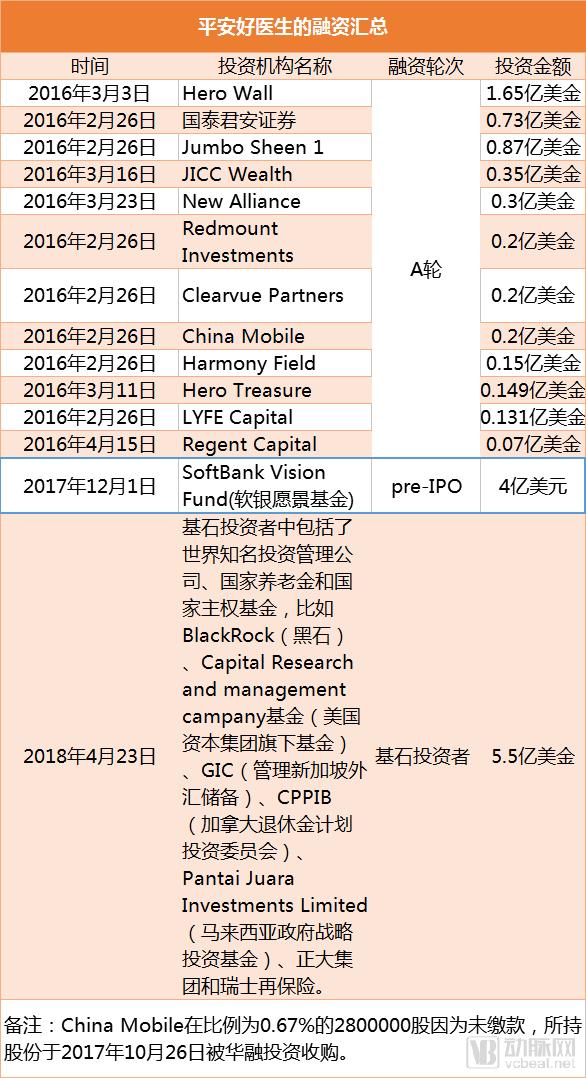
In the internet healthcare industry, Ping An Good Doctor went public in Hong Kong after just two rounds of financing. Behind each listing round was inseparable from capital support.
At the inception of Ping An Good Doctor,With a registered capital of RMB 350 million, it serves as one of the key vehicles for Ping An Group’s “Healthcare” strategy within its five major sectors: “Healthcare, Food, Housing, Transportation, and Entertainment.” In April 2015, the Ping An Good Doctor app was officially launched, becoming a premier platform-level entry point for medical and health services.
At that time, the shareholders were Shenzhen Ping An Financial Technology Consulting Co., Ltd., with a capital contribution of RMB 245 million, accounting for 70% of the total equity; and the well-known Ping An internal employee stock ownership platform, Urumqi Guangfengqi Equity Investment Limited Partnership, with a capital contribution of RMB 105 million, accounting for 30%. As a wholly-owned subsidiary under the Ping An Group, Ping An Good Doctor did not face any shortage of operating funds at its inception.
Subsequently, the “Ping An Good Doctor” app, which officially launched in late April 2015, joined the ranks of companies engaging in heavy cash-burning subsidies by introducing promotional campaigns such as “Free Consultations” and “RMB 1 Medicine Rush.” Specifically, in addition to free consultations with full-time Ping An Healthcare doctors available online, users could participate in the “RMB 1 Medicine Rush” event every hour and half-hour from 10:00 AM to 10:00 PM daily on the app. The medicines offered included summer household essentials and health products such as Piyanping Ointment, Jianwei Xiaoshi Tablets, and Wuji Baifeng Pills. Users could purchase these items at the ultra-low price of RMB 1 and enjoy free home delivery.
It is reported that Ping An Good Doctor has invested a total of RMB 30 million in pharmaceuticals and RMB 20 million in logistics costs to subsidize users. By committing half a billion yuan in a bold bet on the pharmaceutical sector, Ping An has indeed achieved certain results. Since the launch of the campaign on June 8, 2015, Ping An Good Doctor has attracted 20 million user participants and received nearly 100,000 comments and messages, generating a highly enthusiastic response.
Seeing the results brought by burning cash, Ping An Good Doctor continued to increase its investment. In 2016, with over 130 million new users, Ping An Good Doctor spent nearly 600 million yuan on promotion and advertising expenses. In the same year, it secured $500 million in Series A financing.
In December 2016, the SoftBank Vision Fund invested $400 million in Ping An Good Doctor, acquiring a 7.41% stake. According to insiders, Masayoshi Son made this decision in “just 10 minutes.” This investment further propelled Ping An Good Doctor toward its initial public offering (IPO) by completing pre-IPO financing.
In particular, the Hong Kong Stock Exchange released the Consultation Paper on Listing Regime for Emerging and Innovative Companies in February 2018, allowing “biotechnology companies that fail to meet the financial eligibility tests, including those without revenue or profit records,” to list in Hong Kong. With no mandatory profitability requirement, mainland Chinese biotechnology firms and internet healthcare platforms were eager to seize the opportunity, paving the way for Ping An Good Doctor’s listing.
Although Ping An Healthcare secured its listing ticket,The perplexing profitability of Ping An Healthcare was a focal point of external attention prior to its IPO. Meanwhile, the prospectus did not disclose any technological advantages held by Ping An Healthcare that would allow it to stand out significantly from competitors. Typically, during periods of market volatility, companies are eager to “eliminate” risks associated with the offering. Engaging multiple investment banks and pre-selling a substantial portion of the shares may help mitigate such risks. However, this approach also carries certain drawbacks. The presence of a large number of cornerstone investors signals underlying weakness in market conditions, and new listings are becoming increasingly reliant on cornerstone investors.
The introduction of cornerstone investors serves as an endorsement of the company’s fundamentals, business model, and growth prospects, bolstering market confidence and acting as a stabilizer for the IPO.
The prospectus revealed that Ping An Good Doctor has entered into agreements with multiple international cornerstone investors. The top ten cornerstone investors will contribute $550 million, subscribing to approximately 53% of the offering, which represents around 8% of the issued share capital.
Cornerstone investors include world-renowned investment management firms, national pension funds, and sovereign wealth funds, such as BlackRock, Capital Research and Management Company (a fund under The Capital Group), GIC (which manages Singapore’s foreign exchange reserves), CPPIB (Canada Pension Plan Investment Board), Pantai Juara Investments Limited (Malaysia’s strategic investment fund), Charoen Pokphand Group, and Swiss Re.
At the press conference on April 23, Fan Yin, Managing Director of Ping An Good Doctor, stated that the criteria for selecting cornerstone investors included their understanding of the industry and potential strategic synergies. The investments by these investors demonstrate their confidence in Ping An Good Doctor’s business model and future development. In response to why all cornerstone investors were foreign institutions, Fan Yin remarked, “There was strong interest, and this was a decision made after careful consideration by the company.”
Following Ping An Healthcare’s successful IPO, the investment firms that propelled its listing may emerge as the biggest winners.