

Illumina: NovaSeq Is Not the Ultimate Weapon, But the Beginning of a New Era in Sequencing
On April 24, Shanghai had just seen the end of a heavy downpour. Perhaps it was the refreshing weather after the rain, or perhaps the satisfactory outcomes from the previous meeting’s discussions; even though it was 1 p.m., a time when drowsiness typically sets in, the delegation from Illumina’s headquarters remained vibrant and full of energy.
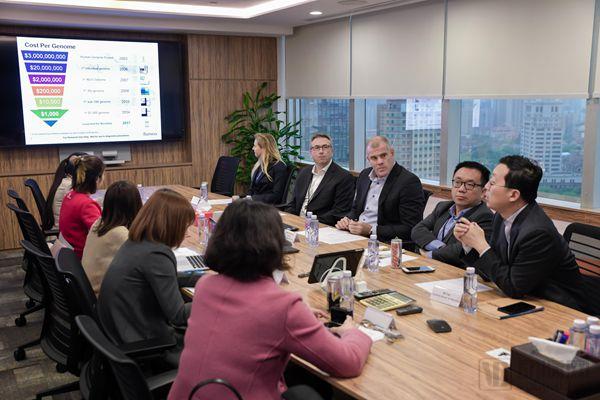
Image provided by Illumina
Perhaps accustomed to this pace of life, the meeting remained well-organized despite the rushed itinerary. Melinda Hutcheon, Senior Manager of Public Relations, delivered a brief company introduction in under 10 minutes.
Over the following hour, Mark Van Oene, Senior Vice President and Chief Business Officer at Illumina; Dr. Garret Hampton, Executive Vice President of Clinical Genomics; and Zhao Ruilin, Vice President of Global Operations and General Manager of Business Operations for Greater China, outlined their strategies and expectations for the Chinese market to the visiting journalists.
Bullish on the Chinese Market: The Unignorable Power of Population Scale
According to the annual report, Illumina’s total global revenue reached $2.75 billion in 2017, with the China region accounting for approximately 10%.
The company has secured a leading position in China’s sequencing instrument and equipment market through collaborative efforts with customers and business partners. The purpose of this trip to China is likewise to visit Chinese customers and partners, aiming to gain a deeper understanding of market needs through direct engagement and thereby enhance service delivery.
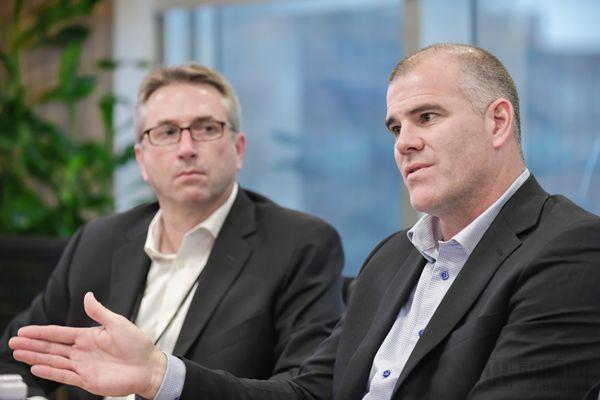
Illumina Senior Vice President and Chief Business Officer Mark Van Oene (Photo courtesy of Illumina)
“Every time I come to China, I feel excited; here you can sense the market potential driven by the sheer scale of the population,” Van Oene told VCBeat.
Dr. Hampton also expressed his agreement, sharing his insights from the past few days with VCBeat. Regardless of whether they are located in first-tier or second- and third-tier cities, a single Grade A tertiary hospital can handle over one million outpatient visits per month, which is equivalent to the annual patient volume of an entire country in Northern Europe.

Dr. Garret Hampton, Executive Vice President of Clinical Genomics (Photo courtesy of Illumina)
“The opportunity here is immense; any application, if approached with the right strategy, could tap into a market of millions,” said Dr. Hampton. “This is truly exciting.”
Device Consumables Remain the Market Focus
“What changes has Illumina made to its market strategy in China?”
“We will continue to focus on the market for sequencing instruments and consumables, but we will develop comprehensive solutions in collaboration with many partners.” This is how Van Oene summarized Illumina’s future development strategy when asked about it.
At the 2017 J.P. Morgan Conference, Illumina launched its flagship product, the NovaSeq; in 2018, the company also released the iSeq series at the J.P. Morgan Conference.
Among the two new products, NovaSeq offers higher throughput and is suitable for production-scale applications, while iSeq provides greater flexibility at a lower cost, making it highly attractive to small laboratories. Differentiating product lines to address the distinct needs of large-scale production laboratories and small laboratories will be the company’s strategic direction in the upstream market going forward.
“We hope that this approach will enable more people to use our products,” said Van Oene.
On Third-Generation Sequencing: Not a Purely Competitive Relationship
As next-generation sequencing (NGS) continues to deepen its penetration and gain wider adoption, third-generation sequencing platforms are also maturing and entering the market. It is not only Illumina that remains bullish on the Chinese market; two third-generation sequencing manufacturers—PacBio and Oxford Nanopore—have both significantly intensified their promotional efforts in China in recent years.
Undoubtedly, while users are diversifying their choices in the upstream market, this translates into diversified competition for enterprises. However, Van Oene believes that second-generation sequencing and third-generation sequencing do not represent a purely competitive relationship.
Illumina does not classify sequencing technologies into second-generation and third-generation sequencing; instead, it categorizes them as short-read and long-read sequencing. Compared with second-generation sequencing, third-generation sequencing offers longer read lengths but also exhibits higher error rates. Such error rates are unacceptable in clinical settings.
Van Oene revealed to VCBeat, “In fact, many laboratories have both types of instruments. Long-read sequencing is highly valuable for innovative research, but it is currently not well-suited for clinical applications.”
“Many laboratories first use long-read sequencing technologies for discovery-phase work, followed by short-read sequencing for further analysis and exploration. ‘Thus, you can see that this is not a purely competitive relationship,’ added Dr. Hampton.”
NovaSeq Is Not the Ultimate Weapon, but the Beginning of a New Era in Sequencing
When Illumina launched the NovaSeq in 2017, it once again sparked a global surge of discussion on sequencing costs. The NovaSeq marked the first time that sequencing costs were reduced to below $1,000, with the company pledging to achieve $100 genome sequencing someday in the future.
When VCBeat asked whether the NovaSeq would be the company’s “ultimate weapon,” Van Oene stated that it marked the beginning of a new era in sequencing costs.
“Previously, discussions centered on what would happen if sequencing costs dropped to $500. We were the first to propose the goal of $100 genome sequencing,” said Van Oene. “We recognize that the industry requires greater incentives, and we believe that $100 genome sequencing is achievable at some point in the future.”
As with the previous HiSeq series, the NovaSeq and iSeq series were made available for sale in China immediately upon their launch. In addition to direct sales, Illumina has partnered with domestic companies such as Berry Genomics and Annoroad Gene Technology to market its products to laboratories and testing institutions through collaborative regulatory submissions.
Clinical and Consumer Markets Are Future Growth Drivers
Illumina announced the establishment of two subsidiaries, Helix and Grail, in 2015 and 2016, respectively, to position itself in the consumer testing and early cancer screening markets. However, beyond founding its own companies or making strategic investments, Illumina has largely relied on partners to develop its midstream market presence.
For instance, the company recently entered into two agreements with Nasdaq-listed Loxo Oncology and pharmaceutical giant Bristol-Myers Squibb.
On April 10, 2018, Illumina and Loxo Oncology announced a global strategic partnership to jointly develop and promote multi-gene panels for comprehensive tumor profiling, thereby delivering scalable next-generation sequencing (NGS) companion diagnostics (CDx) with indications across multiple cancer types.
The goal of this collaboration is to secure approval for Illumina’s TruSight Tumor 170 as a companion diagnostic (CDx) for Loxo Oncology’s larotrectinib (targeting NTRK gene fusions) and LOXO-292 (targeting RET gene mutations) across multiple tumor types.
Three days later, the company announced a collaboration with pharmaceutical giant Bristol-Myers Squibb to develop and globally promote in vitro diagnostic (IVD) tests using Illumina’s next-generation sequencing (NGS) technology, supporting Bristol-Myers Squibb’s oncology product portfolio.
The two companies plan to develop a diagnostic version of the TruSight Oncology 500 assay to measure potentially predictive genomic biomarkers, including tumor mutational burden (TMB). The TruSight Oncology 500 assay is currently under development and can detect biomarkers for most known cancer therapies.
Companion diagnostics are a prerequisite for personalized medicine. These diagnostics assist physicians in making treatment decisions; by providing comprehensive genomic information, they enable clinicians to select more appropriate therapeutic regimens for patients. For pharmaceutical companies, such data provide foundational support for drug development.
“Genetic sequencing has many applications, such as disease detection and agriculture. But for our company, the clinical sector is one of the most promising markets. I believe the three fastest-growing areas are NIPT, oncology, and rare diseases,” said Van Oene.
“I am primarily responsible for the company’s clinical operations. For me, reproductive health, oncology, and genetic diseases are my key areas of focus, and I want to understand the nature of demand in the Chinese market,” Dr. Hampton told VCBeat. The primary objective of his trip to China was to visit the company’s clients and partners in its clinical business segment.
Another area of significant interest is consumer-grade testing. Van Oene believes that consumer testing will increasingly overlap with medical testing and will become an integral part of health management in the future.
“When users gain an understanding of their own genetic makeup, they may exhibit less resistance and adopt a more proactive attitude if they are unfortunately diagnosed with a certain disease,” he explained.
Since 2017, the U.S. consumer genetic testing market has experienced significant growth. In contrast, data indicates that the growth rate in the Chinese market has been relatively slower. “We observed an increase in China’s consumer testing market in 2017, but only a small fraction of it has been tapped so far,” said Zhao Ruilin. “Given China’s large population, the market potential is considerable.”
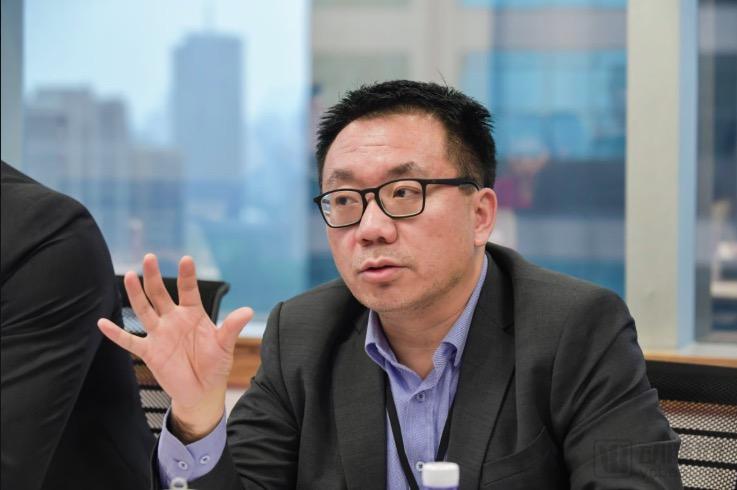
Zhao Ruilin, Global Vice President and General Manager of Business Operations for Greater China at Illumina (Photo provided by Illumina)
“It’s not just in first-tier cities; people in second- and third-tier cities also have a certain level of awareness about genetic testing. For instance, in the assisted reproductive technology sector, one of our clients may conduct more tests in a single year than the entire country of Canada.” Van Oene added, “These facts repeatedly remind us that the Chinese market is extremely important. We will spare no effort to serve this market well.”
They are also advancing China’s consumer testing market by forging partnerships. In April, Illumina announced a collaboration with WeGene, a leading personal genomics services company in China, to establish a premier microarray laboratory in Asia leveraging Illumina’s genotyping array platform.
“The market potential is undeniable, but it is equally impossible to ignore the challenges this market still faces. ‘The most prominent issues are the establishment of industry standards and data ownership,’ said Zhao Ruilin.”
“The development of an industry requires a unified and widely recognized industry standard,” emphasized Zhao Ruilin. “However, this standard should not be determined by a single individual or company. We hope to work with partners across the upstream and downstream supply chains, and even with competitors, to jointly advance this initiative.”
Regarding data privacy, most Chinese people have less awareness of privacy compared to those in Western countries. However, as the consumer-grade testing market develops, this issue will receive increasing attention. “Especially when it comes to big data and whole-genome sequencing, certain data must not be disclosed. How should data be encrypted? In addition to technical support, this may ultimately come down to industry standards,” he added.
The Research Market Remains Impossible to Ignore
"However, for now, the scientific research market remains the largest: 'The scientific research market is like bread and butter—it is the most fundamental and important market,' said Zhao Ruilin."
Van Oene went on to explain that, although global R&D spending has remained flat in recent years, research in genomics has continued to show significant growth. Previously, the scientific community focused more on functional studies; now, with declining costs, researchers are expanding into broader fields.
“For example, many of our previous customers were geneticists, but now a growing number of cell biologists are also expressing interest in our products, representing a new user base,” said Van Oene.
“Another example lies in microbiomics. Previously, we considered it a field of basic biological research. However, growing evidence has linked it to an increasing number of diseases, spurring a surge in translational research,” Dr. Hampton added. “In the past, no one anticipated a connection between gut microbiota and Parkinson’s disease. Now, there is a greater need for large-scale sequencing studies targeting oral and gut microbiota. These are the changes we have observed over the past year or two.”
Spare no effort to advance the Chinese market together with local enterprises
“Collaboration and Penetration”: These are the most frequently adopted market strategies by Illumina for the mid- to downstream markets. So, how does the company select its partners, and what expectations does it have for them?
“The most important thing, I think, is a sense of responsibility—whether we can deliver products with scientific merit and value to the market and consumers,” Zhao Ruilin responded.
Van Oene also expressed his agreement, stating, “First and foremost, these are companies recognized by the industry that demonstrate responsibility and commitment to innovation. We are willing to collaborate with such companies because their spirit of innovation aligns with ours.”
In addition to the already announced collaboration with WeGene, the company is also in negotiations with several other domestic firms. Zhao Ruilin stated, “We will proactively engage with local Chinese partners in our own way to jointly drive the development of the Chinese market.”
Postscript
The interview lasted approximately one and a half hours. Afterwards, Van Oene and his entourage promptly departed for their next engagement. This seven-day trip to China will focus on Beijing and Shanghai, where they will meet with their Chinese team, key clients and partners, as well as government officials, to explore further opportunities in the Chinese market.