

Global Review of 11 Dermatology AI Projects: 63% Target Clinicians, Chinese Enterprises Lead with Top Hospital Collaborations
This year, three AI-based diagnostic products for dermatology have been launched. One of them is “Smart Skin,” a comprehensive AI-assisted diagnosis and treatment platform for dermatological conditions, jointly developed by the Second Xiangya Hospital of Central South University (hereinafter referred to as “Xiangya Second Hospital”), DXY, and Ruiqi Software. On April 27, the three parties held a clinical launch event at Xiangya Second Hospital in Changsha, officially opening the platform for use by clinicians.
The other two AI-based dermatology products are the Youzhi AI System, jointly developed by China-Japan Friendship Hospital and Umai Technology, and an artificial intelligence diagnostic system for dermatological conditions based on deep learning technology, co-developed by Peking Union Medical College Hospital and Nankai University. These two products are positioned to provide convenient and rapid reference and guidance for a broad range of dermatology patients, general practitioners, and junior dermatologists.
It is evident that a growing number of enterprises are choosing to collaborate with universities, hospitals, or medical experts to jointly develop AI-assisted diagnostic and treatment systems for dermatological conditions. So, how many skin-related AI projects currently exist worldwide? How effective are they? What challenges do they face? And how do policies provide guidance? VCBeat has compiled an overview of these issues.
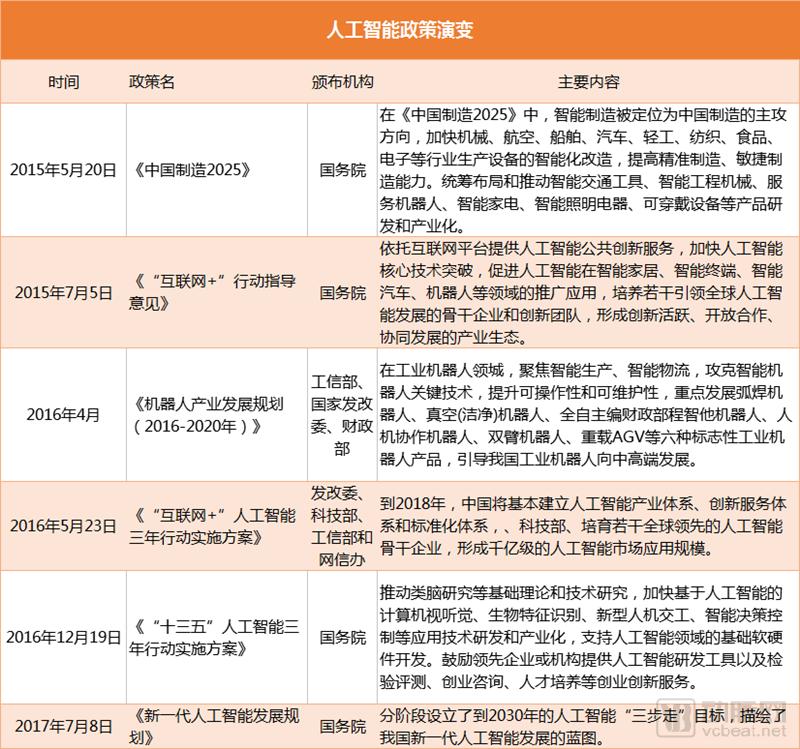
The development of the healthcare industry is closely intertwined with policy. The frequent emergence of AI-powered dermatology products this year has also been driven by policy guidance. Based on a review of publicly available information, we have compiled policies related to artificial intelligence issued in China over the past three years. We found that few policies specifically target medical AI; most are applicable across the entire industry. Details are as follows:
According to the “2017 Report on Medical Big Data and Artificial Intelligence Industry” released by VCBeat in 2017, the application of artificial intelligence in healthcare brings distinct benefits to physicians, medical institutions, patients, and enterprises.
On the physician side, it helps doctors improve the speed and accuracy of medical diagnoses, increase their service capacity, enable earlier disease detection, provide personalized analysis for patients, optimize treatment plans, and reduce subsequent healthcare costs.
Patient side: Increase the proportion of patients engaging in self-examination, self-diagnosis, and self-management; reduce patient demand for physicians; and lower costs.
For healthcare institutions, it enhances the work efficiency of medical facilities and physicians, optimizes hospital management, and reduces medical costs; for enterprises, it assists R&D personnel in identifying promising new drug candidates.
Consequently, artificial intelligence (AI) gained significant traction last year, attracting substantial capital investment. According to statistics from VCBeat, the medical AI industry witnessed 27 financing events in 2017. When including several companies that did not disclose their funding details, the total financing amount in this sector exceeded RMB 1.7 billion in 2017, with industry leaders having already reached Series B funding rounds. These companies address a wide variety of diseases, numbering in the dozens, including dermatological conditions, pulmonary nodules, and diabetes. Among these, AI products for dermatology are the most numerous.
On April 28 this year, the General Office of the State Council issued the “Guiding Opinions on Promoting the Development of ‘Internet + Medical Health’” (hereinafter referred to as the “Opinions”).Encourage tertiary medical institutions within medical consortia to leverage technologies such as artificial intelligence to provide remote consultation, remote ECG diagnosis, and remote imaging diagnosis services to primary care facilities, thereby facilitating real-time access, mutual recognition, and sharing of examination and test results among medical institutions within the consortia.
Perhaps the introduction of this policy will further facilitate the diversified development of medical AI products and their rapid adoption in healthcare institutions, thereby significantly boosting the growth of the medical AI industry.
It is reported that dermatology is a discipline heavily reliant on morphological features, with skin imaging serving as a crucial tool for diagnosing skin diseases. The diagnostic approach in dermatological imaging has evolved from initial visual inspection to magnifier- and microscope-assisted diagnosis, and more recently, to digital imaging technologies combined with intelligent analysis.
Currently, skin imaging technologies represented by dermoscopy, cutaneous ultrasound, and reflectance confocal microscopy (RCM) have become important tools for the clinical diagnosis of dermatological diseases. Dermoscopy employs various diagnostic approaches for melanoma, including the ABCD rule, pattern analysis, the seven-point checklist, the three-point checklist, and the CASH algorithm. These methods guide physicians in scoring and evaluating extracted features, representing a relatively mature application of artificial intelligence.By integrating a multidimensional dermatological imaging repository to extract disease features of various skin conditions and perform standardized scoring and identification, we can better teach machines how to make judgments.
Stanford University published an article in Nature, exploring the use of artificial intelligence for the automated diagnosis of skin diseases by leveraging a database of 130,000 dermatological images. The image database comprised dermoscopic images, smartphone photographs, and standardized clinical photos. The study applied the AI diagnostic system to differentiate between benign skin tumors, malignant tumors, and other non-neoplastic skin conditions. The results demonstrated a very high concordance between the AI diagnoses and those made by dermatology experts, with diagnostic performance reaching parity.
For instance, in the diagnosis and treatment of common and frequently occurring conditions such as psoriasis, urticaria, and acne, physicians’ tasks—including making diagnoses, prescribing medications, and providing health education—are not only repetitive but also conducted through interactions with patients in confined spaces. As this routine repeats daily, the entire process or parts of it may be replaced by artificial intelligence.
However, the wide variety of dermatological conditions, coupled with the lack of unified criteria for differential diagnosis and definitive diagnosis, makes it challenging to train robots to recognize and diagnose diseases. This represents one of the bottleneck issues in AI-based dermatological diagnosis. Currently, automatic recognition and diagnosis based on dermatological imaging still fall short of achieving the accuracy of pathological image analysis. Furthermore, rare skin diseases have very few documented cases, resulting in an insufficient volume of samples for machine learning training. Consequently, achieving ideal efficiency in automatic recognition and diagnosis remains difficult.
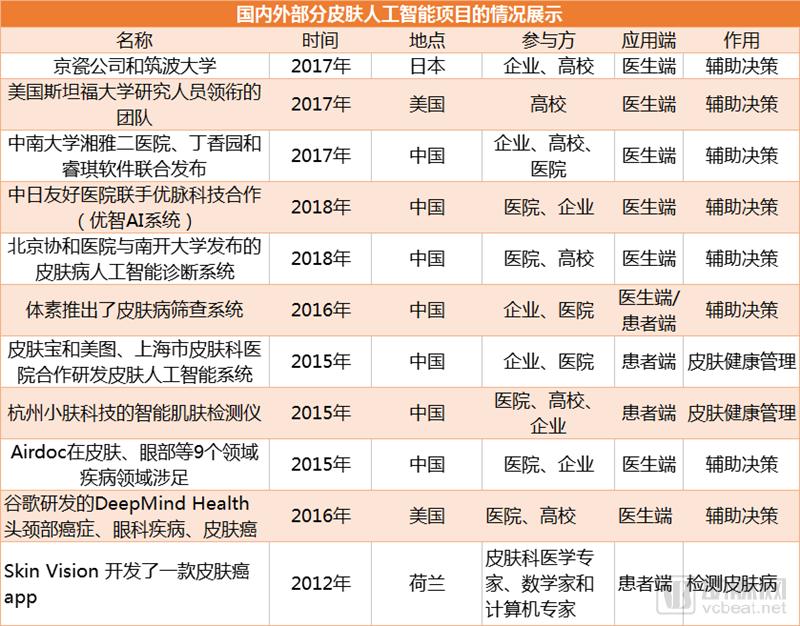
To this end, we selected AI-powered dermatology products from both domestic and international markets for analysis. By examining dimensions such as project stakeholders, application endpoints, and market positioning, we aim to gain an overview of the AI dermatology landscape and understand their product functionalities.
Based on a search of publicly available information, we identified 11 AI-powered products for dermatology both domestically and internationally. The earliest product was launched in 2012, with ten emerging between 2015 and 2018. Stakeholders involved include enterprises, universities, and hospitals. Most of these AI-driven dermatology solutions are designed for physician use, providing auxiliary diagnostic decision support. Specific details are as follows:
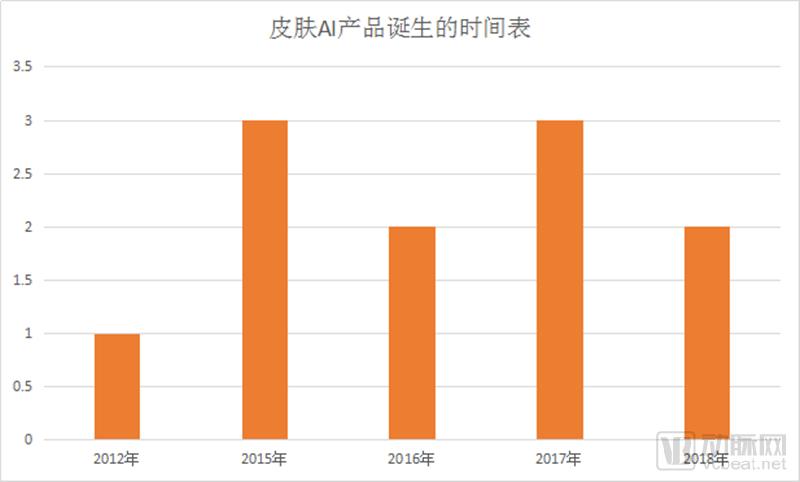
From a temporal perspective, AI for dermatology emerged in 2012, with three products launched each in 2015 and 2017, and two products each in 2016 and 2018.
2015 marked the nascent stage of artificial intelligence, while 2017 was hailed as the inaugural year of AI. According to industry insiders, during that period, tech companies felt like outsiders if they did not mention artificial intelligence. Just how fervent was the hype at that time?
According to 2017 statistics from VCBeat, the medical artificial intelligence industry recorded a total of 27 financing events. Including several companies that did not disclose their funding details, the total financing amount in this field exceeded RMB 1.7 billion in 2017, with industry leaders having already entered Series B financing rounds.
In terms of policy, relevant policies for the medical artificial intelligence industry were gradually advancing in 2017. According to VCBeat, since the State Council released the "Development Plan for New Generation Artificial Intelligence" on July 20, the National Institutes for Food and Drug Control (NIFDC) and the China Food and Drug Administration (CFDA) have been actively engaging with industry stakeholders, while related policies and regulatory frameworks are being intensively formulated.
Meanwhile, domestic tech giants have also entered the fray. In 2017, Alibaba, Tencent, iFlytek, and other leading technology companies successively launched AI-powered healthcare products, deployed them in hospitals for real-world validation, and collaborated to build smart hospitals based on artificial intelligence technologies.
Prominent international experts in medical AI also returned to China in 2017 to join this wave of medical AI entrepreneurship. Among them were Lei Xing, Professor at Stanford University; Huiyuan Xiong, Co-founder of Deep Genomics; and Xiaodong Tao, former Chief Architect of Philips Healthcare’s Radiology Solutions.
In terms of deployment in physical medical institutions, the total number of healthcare facilities where various medical AI companies had implemented their solutions exceeded 1,000 by 2017. A hospital director who attended a medical conference once remarked that any hospital not discussing artificial intelligence this year would feel outdated.
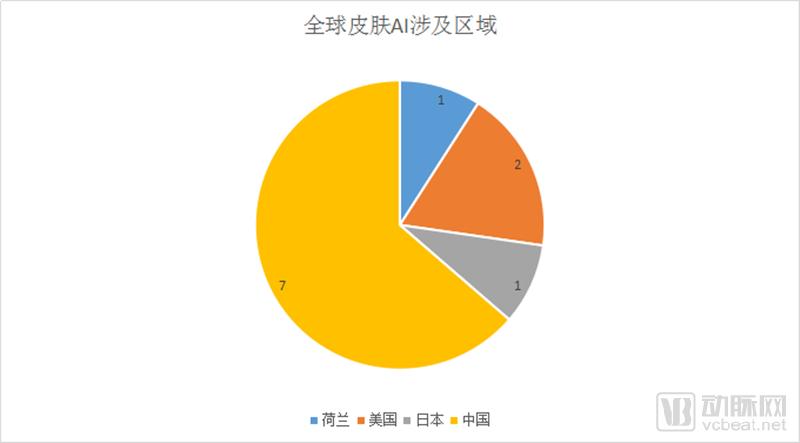
From a global perspective, the regions involved in AI for dermatology include China, the Netherlands, the United States, and Japan. Among these, China has produced the largest number of AI-based dermatology products, with seven in total, followed by the United States with two.
Against the backdrop of China’s new healthcare reform, particularly as it enters a critical and complex phase, any product capable of addressing pain points in the healthcare industry—provided it has already been applied abroad—is highly sought after by investors and entrepreneurs. Examples include mobile health, digital health, medical artificial intelligence, and blockchain technology.
Medical artificial intelligence (AI) has long been held in high regard, viewed as the fundamental solution to enhancing healthcare productivity. In China, issues such as population aging, the rapid rise of chronic diseases, severe imbalances between the supply and demand of medical resources, and uneven geographic distribution have created substantial demand for medical AI. Meanwhile, China’s large population base, diverse industrial ecosystem, and ample talent pool provide a solid foundation for the development of artificial intelligence.
Although the United States has long been at the forefront of basic research in artificial intelligence, China’s AI tech talent has been achieving overtaking on a curve over the past two years.
According to the U.S.-released “National Artificial Intelligence Research and Development Strategic Plan,” the number of SCI-indexed papers in the field of artificial intelligence involving “deep learning” increased approximately sixfold from 2013 to 2015. The number of papers published by Chinese scholars surpassed that of the United States starting in 2014 and has significantly led other countries.
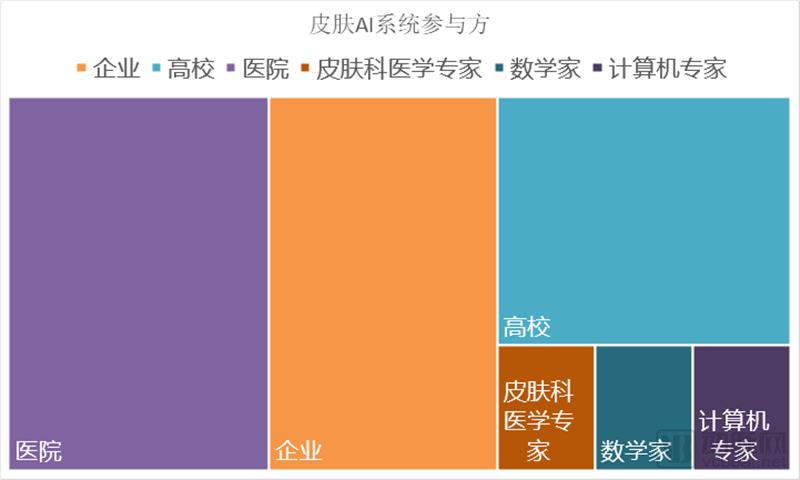
From the perspective of stakeholders, the development of an AI solution for dermatology requires multi-party collaboration. The participation of hospitals, enterprises, universities, dermatology experts, mathematicians, and computer scientists fully demonstrates the principle of “specialized expertise across different industries.”
In brief, the development of an AI-based dermatology product relies heavily on data and technological support. Beyond computer science, artificial intelligence (AI) encompasses a multidisciplinary range of fields, including information theory, cybernetics, automation, bionics, biology, psychology, mathematical logic, linguistics, medicine, and philosophy. The primary areas of research in AI include knowledge representation, automated reasoning and search methods, machine learning and knowledge acquisition, knowledge processing systems, natural language understanding, computer vision, intelligent robotics, and automatic programming.
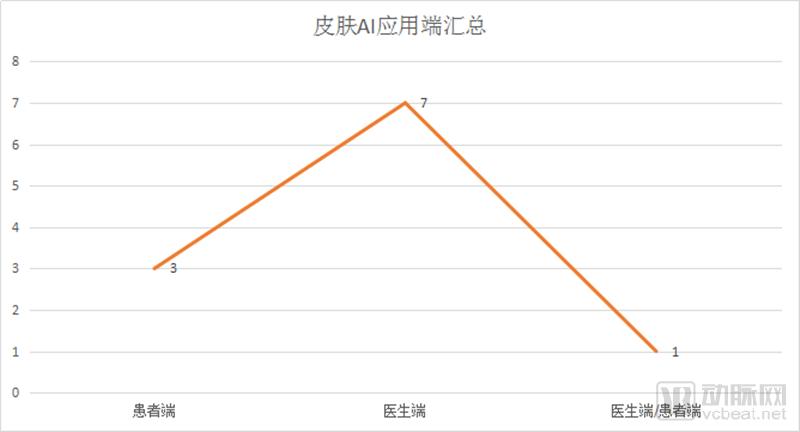
Currently, AI products for dermatology are applied in three scenarios: physician-facing, patient-facing, and both physician- and patient-facing. Among these, 63% of dermatology AI products are designed for physician use.
For instance, in 2012, an app named SkinVision was launched in the Netherlands for consumer patients. It can detect 94% of melanomas using only images, helping users track changes in the size and shape of moles on their skin, analyze and assess whether they may pose a risk of malignant transformation, and alert users to closely monitor suspicious moles or consult a physician.
SkinVision focuses on moles, as they—particularly those exhibiting abnormal growth—serve as early indicators of skin cancer. Malignant melanoma, the most lethal form of skin cancer, often develops from seemingly innocuous moles. If diagnosed and treated promptly in the early stages, up to 95% of skin cancer patients can achieve a cure or long-term survival; however, if detected only at an advanced stage, the long-term survival rate drops to just 15%.
Caucasian skin naturally lacks the melanin needed to protect against ultraviolet (UV) radiation from sunlight, resulting in a higher incidence of skin cancer compared to Asian and Black populations. Consequently, mobile applications for self-examination of moles, such as SkinVision, hold significant market potential in Europe and North America.
In 2012, SkinVision received investment from the Dutch venture capital firm Personal Health Solutions. From its launch in 2012 to November 2014, the app had been downloaded by approximately 100,000 users, who contributed 175,000 photos to the product database for future development.
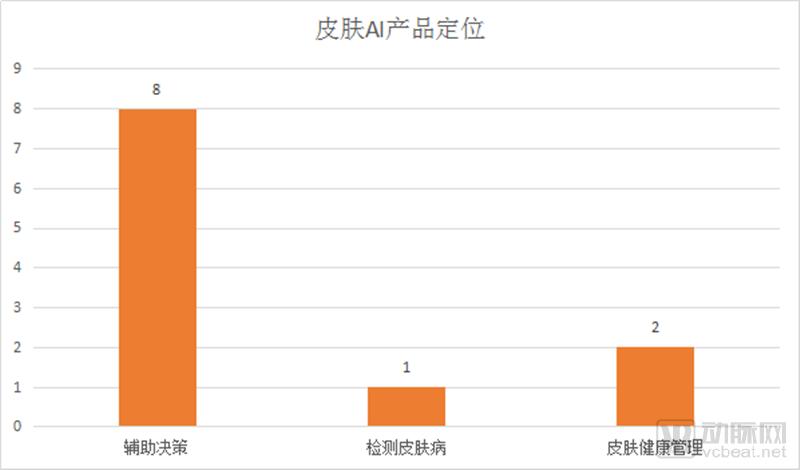
Based on currently available information, there are three categories of AI-driven dermatology applications tailored to user needs: assisting in diagnostic decision-making, detecting skin diseases, and managing skin health. Among these, products designed to assist in diagnostic decision-making are the most prevalent.
This outcome stems from the healthcare industry’s predicament of a shortage of physicians. According to a 2017 study published in The Lancet, although 4.7 million medical students graduated in China between 2005 and 2015, the total number of physicians increased by only 750,000.
The corresponding author of this study is Professor Fan Pei-Zhen from National Yang-Ming University in Taiwan. By combining reports and yearbooks from the National Health and Family Planning Commission and Peking Union Medical College Hospital for analysis, the study found that from early 2005 to late 2014, there were 4,374,191 graduates with bachelor’s degrees in medicine and 4,131,865 graduates from seven-year medical programs, totaling approximately 4.72 million medical graduates. During this period, however, only 750,000 newly licensed physicians were added.
Among these, the proportion of clinicians aged 25–34 decreased from 31.3% to 22.6%, while the proportion of physicians aged 60 and above increased from 2.5% to 11.6%. The share of seven-year master’s degree graduates rose from 4.3% to 11.2%. There is a shortage of more than 500,000 doctors in rural areas. This coincides with the weakest segment of China’s healthcare system, which is also the primary focus of policy support and vigorous development efforts for primary care. The emergence of medical artificial intelligence may help change this situation.
So, how are these AI-based dermatology products specifically applied? To address this, we have selected two representative products: one is an intelligent skin-assisted diagnosis and treatment system developed by enterprises and hospitals; the other is a diagnostic system jointly developed by universities and hospitals.
In fact, last May, Xiangya Second Hospital, DXY, and Ruiqi Software jointly launched China’s first AI-assisted diagnostic and treatment system for dermatology—Smart Skin. Over the past year, Smart Skin has undergone multiple rounds of testing, review, and training, accumulating learning from more than 600,000 case images. Recently, the system achieved a major breakthrough: it attained an 86% accuracy rate in identifying 85 types of skin diseases, with accuracy exceeding 95% for 34 common conditions. Both the number of identifiable diseases and the accuracy rate rank first in the industry.
Among the three collaborating parties, Xiangya Second Hospital serves as the primary data provider, leveraging extensive imaging resources from more than 20 top-tier (Grade III Class A) hospitals across China. The technological foundation is provided by Ruiqi Software, built upon the core algorithmic architecture of its flower-identification app, “Xingse” (“Form and Color”). “Xingse” is a leading-edge image recognition system meticulously developed by Ruiqi, positioning it at the forefront of the industry. DXY specializes in integrating and coordinating healthcare industry resources, participating in the system’s design, development, and operations.
From April 16 to 25, The Second Xiangya Hospital and DXY jointly launched the “AI Assistance” National Dermatology Physician Ranking Competition.
Among the 545 participating dermatologists and venereologists, physicians at the attending level or above demonstrated significantly higher average scores and greater engagement compared to their peers in other specialties. Their average quiz score was 69.03, with an average completion time of 107 seconds. In contrast, Smart Skin achieved an average score of 87.5 and an average completion time of 31.4 seconds.
Such results came as no surprise to Professor Lu Qianjin, Director of the Department of Dermatology at the Second Xiangya Hospital of Central South University and doctoral supervisor. He noted that in scenarios where both physicians and AI systems are tasked with interpreting images, artificial intelligence demonstrates higher accuracy and efficiency than doctors, primarily due to its training on vast datasets of images.
According to him, the application of "Smart Skin" has been rolled out in primary healthcare institutions. In April 2018, "Smart Skin" was introduced at the People's Hospital of Jianghua Yao Autonomous County in Hunan Province and the People's Hospital of Pengyang County in Guyuan, Ningxia, providing primary care physicians with advanced AI-assisted diagnostic technologies, connecting them to top-tier national dermatology diagnosis and treatment resources, and launching a targeted medical poverty alleviation program.
Gao Yong from the People's Hospital of Pengyang County, Ningxia, stated, "Our hospital lacks specialized dermatologists; instead, surgeons serve in a dual capacity. Consequently, diagnoses for dermatology patients are often ambiguous, leading to equally vague treatment plans. Since piloting the use of Intelligent Dermatology, doctors can simply take a photo of the patient's lesion. Based on their clinical experience, they select the most similar condition, and the system then provides a diagnostic conclusion. This process is extremely time-efficient, significantly enhancing both the speed and quality of medical care. I hope this platform can be extended to poorer and more remote areas, enabling skin disease patients to receive more precise treatment and strengthening the diagnostic and therapeutic capabilities of primary healthcare institutions."
At the press conference held on April 27, the Dermatology Artificial Intelligence Development Alliance was officially established. Professor Lu Qianjin serves as the Chairman of the Alliance, while Mr. Zhang Wei, Vice President of DXY, serves as the Secretary-General. Members of the Alliance from across China will pool their resources to expand intelligent systems to a broader range of diseases and further enhance the comprehensiveness of the system platform.
To ensure that medical poverty alleviation efforts are effectively implemented and carried out in depth, the three collaborating parties have also prepared a comprehensive package of integrated assistance resources for the supported institutions. The specific plan is as follows:
1-year access to the AI-assisted comprehensive diagnosis and treatment platform for dermatological diseases;
1 LCD monitor, 1 cloud set-top box, and 2 smartphones;
200 remote dermatology consultations and case discussions with specialists;
100 Professional Dermatology Courses;
Provide training and advanced study opportunities for member units of the Artificial Intelligence Development Alliance for Dermatology;
Invitation to Join and Provide Clinical Services at DXY Internet Hospital.
These programs will be officially implemented in the first batch of precision medicine poverty alleviation partner institutions, including Pengyang County People’s Hospital, Pingjiang County First People’s Hospital, Pingjiang County Traditional Chinese Medicine Hospital, Anhua County People’s Hospital, Yanling County People’s Hospital, Cili County Traditional Chinese Medicine Hospital, Guidong County People’s Hospital, Jianghua Yao Autonomous County People’s Hospital, Rucheng County Institute of Dermatology Prevention and Control, and Xintian County People’s Hospital.
As the platform operator, Zhang Wei, Vice President of DXY, stated that in the short term, the platform will not allow patients to receive direct disease diagnoses. Under this premise, patient-facing services on the platform involve intelligent triage based on comprehensive disease information submitted by patients, helping them match with appropriate medical institutions after considering geographic and disease-related factors. This approach aligns with the national strategy for deepening tiered diagnosis and treatment.
When discussing the future plans of the Artificial Intelligence Development Alliance for Dermatology, Professor Lu Qianjin stated:
Over the next five years, the Alliance will develop in three phases. In 2018, the first phase, it will establish and improve the Alliance’s framework and development mechanisms, building itself into a trusted integrated diagnosis and treatment platform. From 2019 to 2020, the system development phase, it will achieve coverage for the diagnosis and treatment of major skin diseases and establish industry standards in the field of artificial intelligence for dermatology. From 2021 to 2023, the ecosystem refinement phase, it will form a complete value chain integrating industry, academia, and research.
On March 30, 2018, Peking Union Medical College Hospital of the Chinese Academy of Medical Sciences and Nankai University jointly released an AI-based diagnostic system for dermatological conditions leveraging deep learning technology. Dubbed as a tool capable of identifying diseases through smartphone photos, it is similar to the SkinVision product but targets different users. While SkinVision is designed for consumer-facing patients, the dermatology AI system they developed is intended for use by physicians.
This technology was jointly developed by Professor Yang Jufeng’s team from the Computer Vision Laboratory at the College of Computer and Control Engineering, Nankai University, in collaboration with Peking Union Medical College Hospital. It features two primary functions: first, capturing dermoscopic images of pigmented nevi using a dermatoscope and performing image recognition; second, capturing images of skin lesions using standard smartphones and conducting intelligent identification to provide diagnostic references for common dermatological conditions.
Currently, the system achieves an accuracy rate of over 92% in identifying pigmented skin nevi, providing a robust diagnostic basis for the early detection of melanoma. Meanwhile, its accuracy in recognizing several common skin diseases (such as eczema, psoriasis, and pityriasis rosea) from smartphone-captured images of skin lesions has also exceeded 80%.
In addition to assisting general practitioners and primary care dermatologists in disease diagnosis, this system offers an innovative solution to alleviate the severe shortage of dermatologists and the difficulties patients face in accessing medical care in remote and impoverished areas. This year, the system will be integrated into medical poverty alleviation projects in Heilongjiang, Shanxi, and Jiangxi provinces, empowering grassroots physicians in these underserved regions to manage dermatological conditions with greater competence and confidence, thereby contributing to improved quality of life for residents in poverty-stricken areas.
It is reported that the Computer Vision Laboratory of the College of Computer and Control Engineering at Nankai University has actively responded to national initiatives, targeting the forefront of international artificial intelligence research. The laboratory is dedicated to applying machine learning technologies to practical problems in computer vision and has established close collaborative relationships with institutions such as the University of California, Cardiff University in the United Kingdom, and Peking Union Medical College Hospital. The intelligent dermatological diagnosis system developed in this initiative builds upon the laboratory’s long-term theoretical research and accumulated expertise, with preliminary findings published consecutively at top-tier international academic conferences, including the European Conference on Computer Vision (ECCV) and the IEEE/CVF Conference on Computer Vision and Pattern Recognition (CVPR). These efforts have facilitated the translation of achievements in computer vision and artificial intelligence into applications within smart healthcare, providing convenient and rapid reference and guidance for dermatology patients, general practitioners, and junior dermatologists, thereby generating significant social value.
With AI-powered dermatology products and pilot hospitals already in place in China, and a series of AI diagnostic systems successively approved overseas, entrepreneurs have reason to be “encouraged.”
Since the U.S. Food and Drug Administration (FDA) established its Artificial Intelligence and Digital Health Review Division in 2017, AI-based medical products have received substantial support from the agency. In the first three months of 2018 alone, multiple AI-powered diagnostic decision support systems were successively approved—an unprecedented development in the FDA’s history—clearly signaling the strong trend toward the integration of artificial intelligence in healthcare. This trend encompasses not only the currently prominent field of image recognition but also approaches such as radiomics, which integrate imaging data with clinical information for comprehensive computational analysis.
Currently, AI medical products that have received FDA approval internationally cover a range of diseases, including stroke, atrial fibrillation, heart disease, lung disease, liver disease, pediatric autism, diabetic retinopathy, lung cancer, breast cancer, rectal cancer, colon cancer, gastric cancer, cervical cancer, pneumonia, Alzheimer’s disease, congenital cataracts, and skin cancer.
What is concerning is that not a single next-generation AI medical product in China has yet received certification from the National Medical Products Administration (NMPA), thereby preventing these products from rapidly entering the market through hospital procurement channels. What should be done?
Regulatory authorities are also actively researching the approval mechanisms for medical artificial intelligence products. On September 4, 2017, the China Food and Drug Administration (CFDA) released a new version of the "Medical Device Classification Catalog," adding categories corresponding to AI-assisted diagnosis.
According to the latest classification regulations, if diagnostic software provides diagnostic recommendations through algorithms and serves only an auxiliary diagnostic function without directly issuing a diagnostic conclusion, it shall be registered as a Class II medical device. If it automatically identifies lesions and provides explicit diagnostic prompts, it shall be regulated as a Class III medical device.
Notably, Class III medical devices require clinical trials, while Class II devices are subject to a clinical trial exemption list. The China Food and Drug Administration (CFDA) has not yet issued specific regulations on whether diagnostic software applications can qualify for such exemptions.
This specification will come into effect on August 1, 2018. If medical AI companies wish to pursue hospital procurement channels, obtaining certification from the National Medical Products Administration (NMPA) is mandatory. For Class III medical device certification, or if diagnostic software does not qualify for exemption, extensive real-world clinical application data will significantly support the company’s application.
In addition, the National Institutes for Food and Drug Control (NIFDC) is also formulating detailed approval guidelines. An expert team for fundus image calibration has already been established, and approval standards for pulmonary nodules are currently under development. AI will bring profound changes to future medical technologies and serves as a powerful driver for innovation and reform in medicine.