

Comcast Enters Digital Health with Open-Source Platform to Enhance Care Efficiency and Patient Experience
On April 22, U.S. cable television giant Comcast announced its entry into the healthcare sector, with the aim of improving care delivery efficiency and consumer experience. The media conglomerate is partnering with Independence Health Group (a subsidiary of Blue Cross Blue Shield) to develop an open-source technology-based communication platform that enables patients to access their medical data anytime and anywhere throughout their treatment journey. The joint venture will launch a pilot program in Philadelphia in the second half of 2019, with plans to gradually expand nationwide. What are Comcast’s objectives in entering the healthcare industry? VCBeat (WeChat ID: vcbeat) has compiled and analyzed the relevant information.
Comcast is the largest cable television company and provider of broadband internet and IP telephony services in the United States. Headquartered in Philadelphia, Pennsylvania, it serves 24.6 million cable TV subscribers, 14.4 million broadband internet users, and 5.6 million IP telephony customers. Comcast is also the second-largest internet service provider in the U.S., trailing only AT&T.

Image source: HealthITNews
At the press conference, Comcast did not specify the type of support the platform would provide to consumers. In the current experimental phase, the platform is primarily used to track individual patients and collect data spanning the preoperative, postoperative, and recovery stages. According to the analysis, its first strategic focus after the conclusion of the trial will be in the fields of medical education and telemedicine.
Tech companies are drawn to the healthcare sector because, although they have developed data-driven solutions, they have failed to address the health concerns that matter most to end consumers. Traditional healthcare institutions, by contrast, possess a deep understanding of patient needs and know how to develop products within existing regulatory frameworks. This presents tech companies with an opportunity to establish dominance in shaping primary care platforms.
Traditional healthcare institutions are seeking new technologies to address the current severe challenges in resource allocation, reduce costs, and strive to provide system interoperability, ultimately improving customer satisfaction. Comcast is merely the latest among a series of non-healthcare giants entering the market to tackle the U.S. healthcare crisis. Other companies, such as Amazon, Apple, Google, and Microsoft, have already launched clear healthcare initiatives.
Amazon is building a comprehensive healthcare ecosystem by launching multiple cloud computing and voice-assisted initiatives, providing medical equipment to clinics and small healthcare facilities, and co-founding its own health company in partnership with JPMorgan Chase and Berkshire Hathaway.
In April, Apple redesigned the Health app as part of its iOS system update. The primary aim of this update is to enhance software interoperability, enabling users to share their health data with hospitals or insurance companies more easily. In late March, Apple announced a list of 27 new healthcare institution partners, bringing the total number of collaborating institutions to 39. These organizations will engage in data collaboration with Apple through the Health app.
At the HIMSS18 conference in March, Google launched its Healthcare Cloud Services API, aiming to help healthcare institutions more effectively collect, store, and access health data. The internet giant subsequently initiated a new round of collaboration with the American Medical Association, launching its push with a focus on the HIMSS18 theme of “Interoperability.”
Microsoft has long maintained a low profile in the healthcare sector, rarely providing clear updates on project progress and only announcing the general framework of its Healthcare NExT initiative. At the HIMSS18 conference, Microsoft released several auxiliary applications designed for healthcare institutions, including office software templates for physicians and the AI system Project EmpowerMD. This AI project was jointly developed by Microsoft and Project EmpowerMD.
According to Rock Health’s 2017 statistics, patient satisfaction with video-based interactive services (83%) was significantly higher than that with mobile-access platforms (59%). Comcast’s advantage lies in its ability, as a broadband internet giant, to leverage its existing industrial strengths to build dedicated telemedicine networks for healthcare institutions that are more cost-effective and offer greater network stability. This would enhance the quality of video-based interactive services and potentially optimize the transmission of medical images.
Comcast has not disclosed many details of its plans, but we can look to similar companies in China for insights into its future development direction.
In response to the national call for “Internet+ Healthy China,” Unicom Cloud Data launched its smart healthcare product, “Wo·Yizhen Cloud,” in Nanjing, Jiangsu Province. The product features ten major service systems: Imaging Cloud Data Services, Clinical Imaging Collaboration, Precision All-Modality Work and Collaboration System, Clinical Imaging Big Data (Research) Platform, Medical Consortium and Regional Technical Collaboration Platform, Medical Consortium and Regional Healthcare Platform (Telemedicine), Independent Imaging Center Cloud Platform, and Yizhen Doctor Social Network.
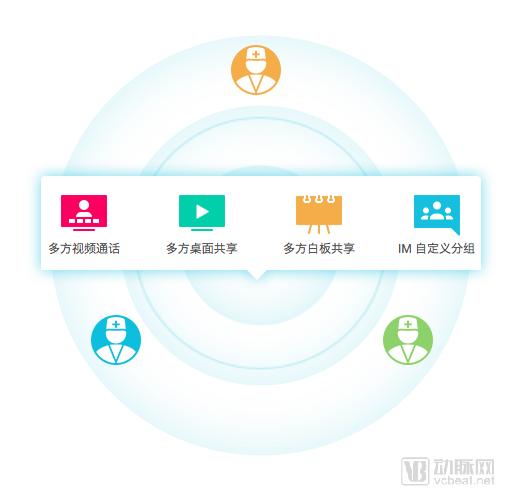
Image source: Official website of “Yi Zhen Yun”
“Wo·Yizhen” platform supports images from all DICOM-standard devices; it covers all medical imaging departments, providing ultra-fast image viewing and report access for all departments; it builds a comprehensive medical data center for all departments, enabling centralized management of outpatient records, inpatient records, imaging reports, pathology results, ECG reports, laboratory test results, genetic testing data, and more; it facilitates multi-institutional, multidisciplinary, region-based joint consultations, ensuring a smooth and collaborative remote consultation process.
On November 23, 2017, China Telecom Corporation Limited’s Hunan Branch signed a strategic cooperation agreement on “Internet + Healthcare” with Jinshengda Air Hospital Information Services Co., Ltd. The two parties will join forces to build a telemedicine “cloud platform” covering medical institutions at all levels across the province, enabling residents in grassroots communities to consult with provincial-level experts without leaving their counties.
In accordance with the terms of the agreement, both parties will engage in comprehensive and in-depth collaboration to advance informatization in healthcare, medical services, and family planning. Cooperation will be fully implemented across areas including “Internet + Healthcare” network infrastructure, “Internet + Healthcare” cloud computing, telemedicine, cloud PACS, mobile health, and the Internet of Things (IoT).
Overall, it is difficult for traditional healthcare institutions to enjoy the conveniences of data processing and transmission without leveraging network communication providers. As an increasing volume of medical information migrates to the cloud, analyzing and processing this data to maximize efficiency and returns has become a critical consideration for healthcare organizations.
Telecommunications companies often possess high-speed transmission channels capable of meeting the demands for large-scale data transfer. Their professional nature necessitates advanced data analytics capabilities, and they also provide the stable dedicated network lines required for telemedicine. Consequently, the entry of telecommunications giants such as Comcast into the healthcare sector has effectively advanced the informatization of healthcare and the development of telemedicine.
Comcast has not previously placed significant emphasis on the healthcare sector, acting more as a customer of healthcare startups than as an investor.
Comcast Ventures made two small-scale investments in 2016. In March 2016, Comcast Ventures invested in Eight, a startup engaged in research on sleep-tracking devices. Eight raised a total of $6 million in this seed funding round.
In November of the same year, Comcast Ventures, together with established investment firms such as Bessemer Venture Partners and internet-focused venture capital firm Mangrove Capital, participated in Kang Health’s seed funding round, raising a total of $3.3 million. Kang Health is a company developing a precision telemedicine platform for online self-diagnosis.
Comcast Group’s largest investment in the healthcare sector was made in May 2017. The recipient, Peloton Interactive, is a startup specializing in smart fitness bikes. What sets Peloton apart is its integration of a screen into the front of the bike frame, which not only tracks exercise metrics but also offers professional fitness classes and fosters a community for cycling enthusiasts.
In May 2017, the company raised $325 million from investors including Wellington Management, Fidelity Investments, Kleiner Perkins, and Comcast NBCUniversal, marking what was likely Peloton’s final funding round before its initial public offering (IPO). The company reached a valuation of $1.3 billion in this round.
Overall, Comcast’s announcement of its entry into the healthcare sector still requires considerable preparation, as it has not made comprehensive strategic arrangements prior to this move, unlike tech giants such as Apple, Microsoft, and Google.
As highlighted in EY’s Life Sciences 4.0 report, platforms are the core of future value creation. We are in the era of the Fourth Industrial Revolution, where the development of emerging technologies such as 3D printing, blockchain, and artificial intelligence has led to “the fusion of the physical, digital, and biological worlds.”
In this era, the transmission of information serves as the foundation of the new-age healthcare sector. Leveraging its existing customer base and infrastructure, Comcast can rapidly establish a digital health platform, even bundling digital health services with cable TV subscriptions to offer medical services on a subscription basis.
Life Sciences 4.0 is both an urgent global imperative and an opportunity rich in value. If Comcast can build a platform and organize its proprietary data, it will be at the forefront of the era and enjoy boundless future value.