

Tianchi Precision Medicine Competition Awards $38,000 to Clinically Integrated AI Champion for Diabetes Risk Prediction
VCBeat learned that on the afternoon of April 28, 2018, the final defense of the Tianchi Precision Medicine Competition, co-hosted by Qingwutong Gene and Alibaba Cloud, came to a close. Wang Zhiwen, a student from Beijing University of Posts and Telecommunications, ultimately claimed the championship.
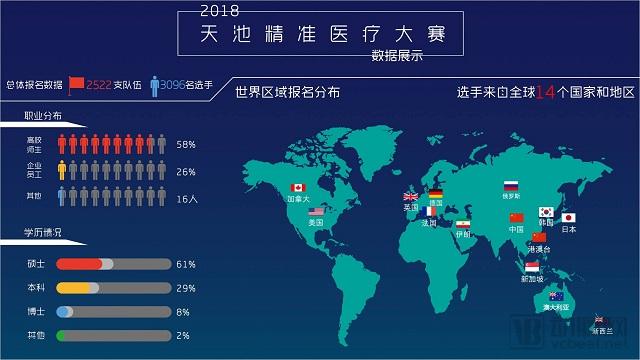
The competition lasted for three months, with the theme ofAI-Assisted Prediction of Genetic Risk for Diabetes: Exploring AI Applications in the Field of Diabetes, Initiating Weight Analysis of Multidimensional Influencing Factors for Complex Diseases, and Advancing the New Frontier of Diabetes Prediction. The competition featured participants fromMore than 2,500 teams from 14 countries participated in the competition. After the preliminary and semi-final rounds, six teams successfully advanced to the finals of the Tianchi Precision Medicine Competition.. After fierce competition, the champion, runner-up, and second runner-up were determined, receiving prize money of RMB 100,000, RMB 80,000, and RMB 50,000, respectively, sponsored by Qingwutong and Alibaba Cloud. Each of the three Geek Award-winning teams received a prize of RMB 10,000.
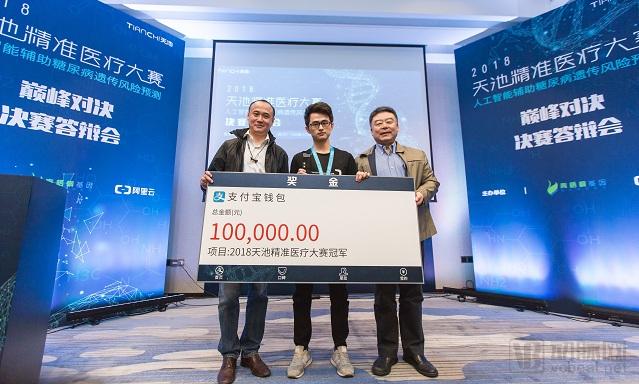
Champion of this final: Wang Zhiwen, a second-year graduate student at Beijing University of Posts and Telecommunications, won a prize of 100,000 yuan.
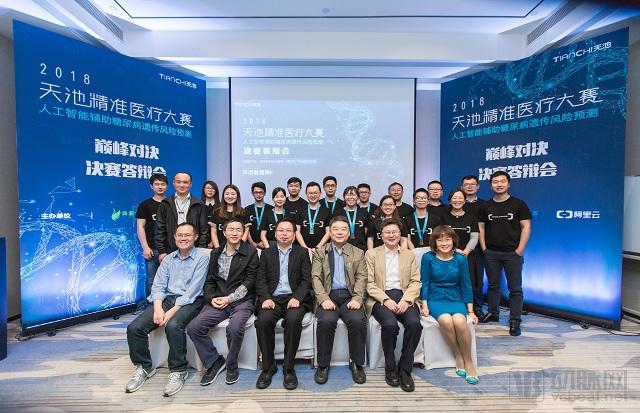
Group Photo of Semi-Finalist Teams and Judges
VCBeat noted that the team winning the championship this time wasDue to in-depth study of extensive medical literature and a thorough understanding of diabetes-related diagnostic and treatment data, the resulting model is more readily interpretable by physicians.。
Professor Zhao Weigang from the Department of Endocrinology at Peking Union Medical College Hospital, who served as a judge for this competition, told reporters,Professionals with interdisciplinary expertise are in higher demand. In the medical field, many research initiatives require healthcare practitioners to possess both medical knowledge and IT proficiency, thereby enabling them to effectively translate clinicians’ needs into algorithms and products.. Clinicians need to collaborate with IT professionals who understand clinical terminology to develop tools tailored for clinical use.
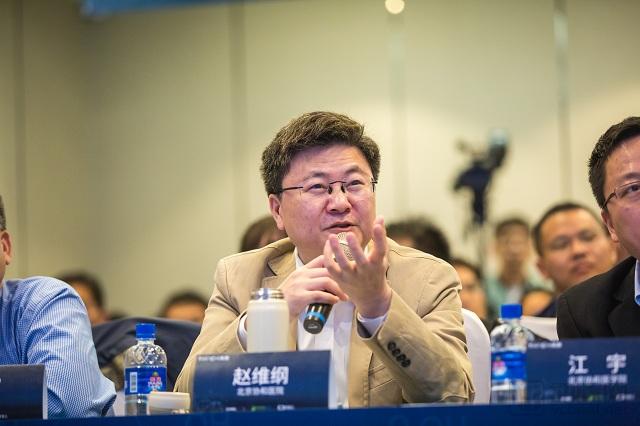
Zhao Weigang, Chief Physician of the Department of Endocrinology, Peking Union Medical College Hospital (photo)
AI Products Can Only Be Successfully Implemented When Integrated with Clinical Practice
Gu Fei, Chief Scientist at Alibaba Precision Medicine and a judge in the finals, stated that with the rise of AI technology, an increasing number of institutions, academic entities, and startups have joined the field of medical AI research. While many teams boast excellent AI expertise and have developed robust product models in laboratory settings, these models often fail to achieve effective application in clinical practice. The primary reason for this discrepancy is the insufficient integration of clinical needs during the product development process. Only by seamlessly integrating clinical insights and tailoring models to specific usage scenarios can true implementation be achieved, thereby qualifying as a high-quality product.
Yu Jun, a researcher at the Beijing Institute of Genomics, Chinese Academy of Sciences, who served as a judge for this competition, also stated: “Medicine is a complex discipline. In actual clinical diagnosis and treatment, physicians encounter various scenarios not covered in textbooks. Furthermore, genetic data vary from individual to individual. Therefore, researchers must develop practical, implementable products aligned with real-world needs to better benefit patients.”
Furthermore, diabetes is a chronic disease caused by multiple factors. The de-identified data used in this competition encompasses multiple dimensions, such as blood pressure, blood lipids, blood glucose, creatinine, uric acid, age, height, sex, ethnicity, genetics, and family history of disease, with the aim of enabling contestants to develop models that more closely approximate real-world clinical settings.
Regarding the comparison between traditional machine learning algorithms and the latest deep learning algorithms, Zhao Weigang stated that as long as an algorithm can solve practical problems, it should not be subject to evaluation; it is a tool, and one should simply use whichever tool works best.
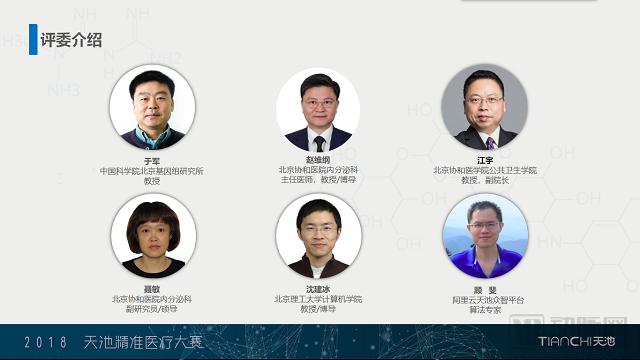
Finals Judges
The original intention of the competition is to discover and cultivate talent.
Prior to the commencement of the competition, Niu Xiaoqiang, founder of Qingwutong Gene, delivered remarks on behalf of the organizers, discussing the original intention behind hosting the Tianchi Precision Medicine Competition.On the one hand, it aims to address the challenges of early prediction and prevention of diabetes; on the other hand, it seeks to identify and cultivate medical AI talent through the competition.China is a major country for diabetes, having long held the top position globally in terms of the absolute number of diabetic patients. With a prevalence rate of 11.6%, approximately 113.9 million people are living with diabetes. This is a challenge that our entire society must address together.
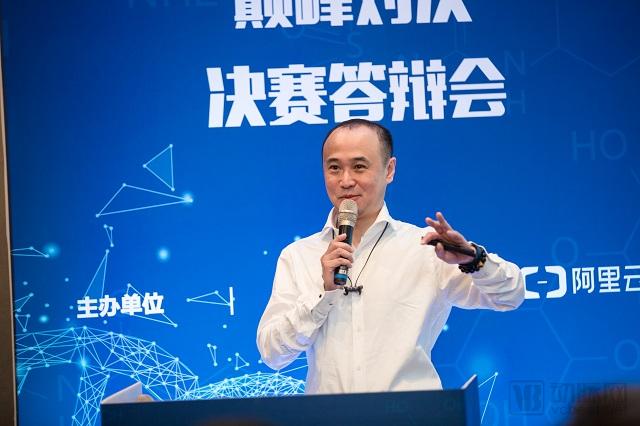
Niu Xiaoqiang, Founder of Qingwutong Gene
Diabetes is a complex, chronic disease caused by the interplay of multiple genes and factors. Genetics, lifestyle, and environment are all significant influencing factors. Since 2016, China has introduced numerous national policies promoting precision medicine. In active response to these national initiatives, Qingwutong Health Genomics leverages artificial intelligence to comprehensively process and analyze genetic, clinical, and lifestyle data, thereby developing more realistic and highly accurate disease risk prediction models. This enables early intervention and effectively helps prevent the onset of diabetes.
This competition aims to emphasize the cultivation of interdisciplinary talent in medical artificial intelligence.Niu Xiaoqiang stated that the rapid development of artificial intelligence (AI) in the past two years has raised awareness about the importance of cultivating AI talent. However, as a technology, AI must be integrated with other industries to fully realize its potential. This is particularly true in the healthcare sector, which itself has high entry barriers. Merely possessing AI knowledge is insufficient for accurately understanding the needs of patients and physicians; therefore, while delving into AI, it is also essential to have a certain level of understanding of the medical field.
The maturity and development of medical artificial intelligence require high-quality big data to meet the basic needs of machine learning. Qingwutong has been deeply engaged in the field of chronic disease genomics for several years, accumulating a substantial volume of high-quality medical data, thereby laying a more solid foundation for future scientific research and the translation of AI products.
Niu Xiaoqiang told reporters that Qing Wutong is a biotechnology application company focused on the field of chronic diseases. As an enterprise, all its technologies are developed with practical implementation in mind. Currently, the company leverages advanced genetic testing combined with artificial intelligence to provide screening services for chronic conditions such as diabetes, along with personalized precision prevention plans.
The Tianshi Precision Medicine Competition is held to leverage artificial intelligence methodologies and paradigms for processing, analyzing, interpreting, and applying diabetes-related big data. It challenges participants to design high-precision, efficient, and highly interpretable algorithms to tackle the scientific challenge of precise diabetes prediction, thereby providing robust technical support for academia and precision medicine, accelerating progress in overcoming diabetes, and facilitating the practical implementation of AI, genomics, and clinical data integration.