

40% of U.S. Dentures Imported: Three Industry Leaders Propose Transparency Solutions for Dental Labs
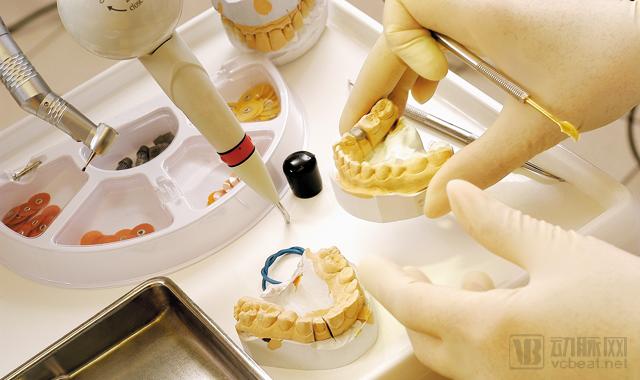
Technician performing manual operations | Image from Dental Products Report
The United States is the world’s largest producer and consumer of dental instruments, with its imported medical devices including dental prosthetics and materials. In the U.S., 40% of dental prosthetics rely on imports.
The outlook for the U.S. denture industry is currently grim: imported equipment is priced lower than domestically produced alternatives, so tariff hikes will have limited impact; many U.S. dental device companies are undergoing a wave of closures due to overseas competition and industry consolidation, while the roles of dental technicians are increasingly being replaced by automation.
According to Elizabeth Curran, Associate Professor and Deputy Technical Director of the Dental Laboratory at the College of Oral Health, Arizona School of Dentistry & Oral Health in the United States: “Fierce overseas competition and the U.S. response have placed the American dental equipment industry in a dilemma. Because the materials used by dental laboratories and equipment manufacturers are also classified as medical devices, after tariff increases, using imported materials to manufacture domestically produced restorations would not actually offer a price advantage over directly adopting imported restorations.”
VCBeat (WeChat ID: vcbeat) has translated and compiled the perspectives of three U.S. medical device industry professionals, examining their views on industry turbulence and the actions they are taking to maintain competitiveness.
“From the perspective of the dental equipment manufacturing and dental laboratory industries, this situation has long existed. We anticipate that the offshore prices of related materials will continue to rise, as the pricing formulas used by Dental Service Organizations (DSOs) are based on dental laboratory costs,” said Bennett Napier, Executive Director of the National Association of Dental Laboratories (NADL).
For a long time, although the low prices of imported dental prosthetics have brought considerable benefits to various dental clinics, the impact on other related industries, especially dental laboratories, has been severe.
Bennett Napier believes that industrial competition is inevitable and will continue indefinitely, both domestically and internationally; what dental laboratories should truly be concerned about isWhat Traits Help You Stand Out in Competition。
Regarding foreign competition, Bennett stated that we should first analyze what value-added services they offer and precisely what products they can provide that we, located 5,000 miles away, cannot.
“Leveraging digital technology, peers worldwide can communicate anytime and anywhere. There are always certain products and services that only we, American dental technicians, can provide, but our foreign counterparts cannot,” Bennett Napier continued to explain, “We have to focus our attention on”These differentiated products", and strive to strengthen and expand them, thereby enhancing the irreplaceability of these products."
“Only by focusing services more on individual consumers can we further dispel the prejudices people hold against dental prosthetics, helping them realize that these are not merely off-the-shelf commodities,” emphasized Elizabeth Curran. “We are not engaged in trivial matters like manufacturing small parts; rather, we are”Provide personalized custom restoration services。”
Steve McGowan, head of Arcus, a dental laboratory in Seattle, stated, “I believe that dental laboratory personnel, including owners and technicians, should enhance their professionalism through training and continuing education to distinguish themselves, such as”Gain a deeper understanding of clinical dentistry knowledge and information, becoming an irreplaceable partner for dental clinics, rather than repeatedly lowering prices to fend off competition.”
He believes that dental laboratory technicians need to receive education in all aspects of dentistry,Including Materials Science and Clinical Dentistry. If dental laboratories shift toward a small-parts manufacturing model and claim to employ so-called “advanced-tier” technicians, lab owners may reap substantial profits, but for dental technicians, their career prospects will be essentially exhausted.
“The ‘advanced-level’ workers I refer to may, in fact, have no idea how dentures are fabricated from start to finish. I believe that our current system provides technicians with more training than education,” Steve McGowan continued. “In our field,Most training is provided by manufacturers., they will teach you how to use instruments and how to make them, but they won’t teach you why you should do so. This situation has actually persisted for quite a long time, and I believe it is a major mistake in the industry.”
To ensure competitiveness in the U.S. market, it is essential for dental laboratory owners to make their existing and prospective clients aware of the full range of services their laboratories offer.
Bennett Napier shared his views on this issue: “Many dental laboratories have overlooked the need toPromote their complete industrial chain“, their product or service X is already well-known, but in reality, they may also offer products Y and Z. However, dentists might assume that this dental laboratory can only produce this specific type of restorative product or provide this particular type of service, leading them to think, ‘I’ll have to find another lab this time.’ Therefore, dental laboratory practitioners should learn to communicate comprehensively with clinics to showcase their full range of services.”
According to the 2017 NADL commercial survey, 63% of the surveyed dental laboratories offered multiple services (typically having the capability to simultaneously fabricate various dental prostheses, such as crowns, bridges, porcelain-fused-to-metal restorations, and implant-supported restorations), while the remaining 37% provided only a single service. These latter laboratories were generally smaller in scale, often offering exclusively denture or crown fabrication services.
Bennett Napier continued, “To make your dental laboratory stand out, you should emphasize to clients the various elements of your services, complex treatment plans, or related consulting services,”This aspect is particularly appealing for cases requiring extensive reconstructive repair.. From the perspective of dental patients, their diverse and emerging needs are increasingly growing; therefore, it is essential for practitioners to communicate their capability to meet these demands.
He further elaborated, “Full-mouth edentulous reconstruction and complex implant cases represent a significant growth area for both dental clinics and dental laboratories. Successfully managing these intricate cases requires establishing stable partnerships, enabling dentists and dental technicians to collaborate closely in addressing challenging issues and formulating treatment plans. If this trend continues to develop positively, we may one day see dental technicians and dentists working side by side in U.S. dental clinics—a model that is difficult to replicate abroad.”
According to Elizabeth Curran, dental school graduates today receive minimal training in dental laboratory technology, especially when compared with dentists from 25 years ago.
“Compared to dentists in the past, today’s younger dentists rely more heavily on dental laboratories, and that raises questions,” said Curran. “As the U.S. dental laboratory market becomes increasingly consolidated, dentists must clearly define their needs to select more appropriate partners. They need to identify where the problems lie and understand what they require in order to communicate more effectively with dental laboratories, thereby meeting both their own and their patients’ needs.”
This is why Bennett Napier believes that over the past decade, NADL’sThe focus has consistently been on transparency.
“We are not blindly rejecting overseas or pro-overseas markets,” said Napier. “We have long been in an era of a globalized economy, and intense competition is generally positive for the overall industry environment. However, we also need to recognize that”Transparency is the most intractable pain point for the entire medical device sector and even the broader healthcare industry.. “We do not want a dental clinic to establish a partnership with a dental laboratory simply because their products are domestically produced brands manufactured overseas.”
McGowan of Arcus Dental Laboratory elucidated why the United States has reached a situation where up to 40% of dental prosthetics rely on imports. He stated, “Labor costs in China are low; a custom-made dental crown can be produced for $40, whereas my price in the U.S. is $400. Larger dental laboratories may charge only $100 per crown, which is obviously much cheaper. The real competitor is indeed China, but we have no choice but to adapt to the current reality. In fact, many large-scale dental laboratories also outsource their work to China or other countries; it’s just that nobody knows about it.”
Currently, the NADL is actively promoting a campaign titled “What’s In Your Mouth?” aimed at enhancing transparency in the dental prosthetics market and empowering patients and dentists with greater informed decision-making capabilities. The NADL states that the information gap between patients and dental laboratories often results in critical details failing to reach stakeholders, such as the country of origin of the prosthetics and the materials used. Meanwhile, they are calling on dental laboratories that indiscriminately outsource their work to overseas providers at low costsIt is also necessary to sell the finished products to dentists at low prices.
Indeed, the Washington State Legislature has stepped in, passing a bill that will compel dental laboratories to disclose information about their third-party outsourcing providers.
Until all U.S. states enact legislation mandating greater transparency in dental laboratories, it is crucial to continuously verify credentials and build trust—verification is indispensable. Bennett Napier advises dental practices: “You may have collaborated with a particular laboratory for many years, or it may have been recommended to you by others. However, just as with any other business relationship, you have the right and the responsibility to understand all details of the laboratory’s services. This ensures that you truly receive the services and products you need.”
Curran also advised dentists, “There is a fundamental question you need to ask your partners: whether they can provide FDA approval documentation for the materials used in the restorations. Since imported materials are not subject to FDA regulation, it is difficult to verify that the materials you receive are truly what you require. They may claim that the ceramic is FDA-approved, but in reality, it could merely be a substandard foreign product.”
Bennett Napier added that another question to ask the dental laboratory is whether it has obtained self-certification; if the answer is yes, further details should be requested.
“These are all measures to demonstrate one’s good reputation and provide reassurance to dentist clients. When dentists are engaged in clinical practice, knowing that the partners they collaborate withThe dental laboratory has a standardized system.and within reachResources, which is very reassuring.”
Bennett Napier is firmly convinced that the entire healthcare industry will continue to experience steady growth: “I believe that, withThe Continuous Growth of Dental Clinical Services, the domestic dental equipment market will also grow accordingly. Despite the strong impact of low-cost imported products, gradual industry consolidation and stabilization, and the rise of digital machinery, I still believe that the dental equipment industry is currently in a period of significant opportunity. "
“With the advancement of dental digitalization, the continuous development of new materials, and the surge in various industry innovations, I remain optimistic about the entire sector,” Napier stated positively.
On the other hand, McGowan was not as optimistic as Napier. Although he also acknowledged that the decline of the U.S. dental laboratory industry is a multifaceted and complex issue, he consistently maintainedThe educational issues facing dental technicians are the most pressing.. If the technical personnel in an industry prefer on-the-job training to formal education, then this industry may not be far from decline.
“I firmly believe that formal, systematic education and a broad foundational education are absolutely paramount for technical professionals,” McGowan stated. “If someone identifies as a dentist, it is widely recognized that they have undergone standardized education and received relevant skills training. However, if you say you are a dental technician, the situation can be quite nuanced.”
“I believe NADL is working to lower the entry barriers for the dental technician profession,Because staff turnover in this industry is indeed severe., but I believe this is akin to drinking poison to quench one’s thirst. Given the considerable complexity of this work, artificially simplifying it would undoubtedly result in losses outweighing the gains.”
Elizabeth Curran stated, “The United States is a country that does not regulate dental technicians; we lack a robust regulatory framework enforced through a dedicated organization. I believe this is largely because many patients are entirely unaware that the dental crowns they receive are actually fabricated by dental laboratory technicians. In their view, dentists are the authoritative figures in the field. However, in reality, many dental devices are not manufactured by dentists themselves and are not subject to their direct oversight.”
This view runs counter to the findings of an ADA report titled “The Future of Dentistry,” in which the authors wrote: “Technicians in dental laboratories typically fabricate oral prostheses under the supervision of dentists, and dentists generally possess the operational skills and knowledge base required for dental laboratory work.”
The report also concludes that formal education for dental technicians will gradually disappear, as the income gap between formally educated technicians and those who have received only skills-based training is not significant for this entry-level position. Interestingly, the authors of the report also suggest that the decline in the proportion of formally educated individuals may be due to the greater effectiveness of on-the-job training. Regardless of which view proves correct, the outcome will likely become clear in the near future.
References:
http://moderndentalnetwork.dentalproductsreport.com/
https://zh.scribd.com/article/345802205/U-S-Dental-Labs-Are-Gritting-Their-Teeth