

Synergy Between Real Estate and Healthcare: Driving Consumption Upgrading and Industrialization
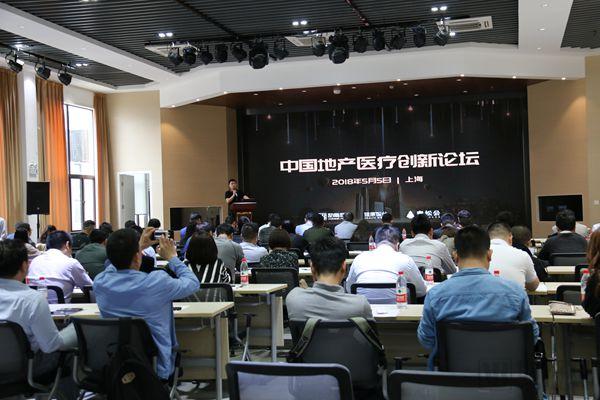
China Real Estate Healthcare Innovation Forum
Against the backdrop of the new healthcare reform and the “Healthy China” strategy, favorable policy orientations have prompted an increasing number of real estate developers to venture into the broader health industry. Major property giants such as Wanda, Evergrande, and Vanke have all entered the medical sector, with investments by China’s real estate industry in the health sector exceeding RMB 300 billion in 2017. Models such as community-based healthcare, Medical Malls, and community elderly care have gained significant traction. In this emerging field, can the real estate and healthcare sectors be effectively integrated to explore localized models and generate new profit growth? Furthermore, what challenges and opportunities does the “Real Estate + Healthcare” model present for investors and medical institutions?
In May 2018, VCBeat, in collaboration with Shanghai Health Valley and Qingsong Club, co-hosted the 2018 China Real Estate Medical Innovation Forum at the Shanghai Health Valley Building. Nine prominent investors and entrepreneurs from the real estate and healthcare sectors—including Zeng Zun, Deputy General Manager of Shanghai Health Valley; Zhu Yuejun, Chairman of Dongtan Consultants; Jiang Tianjiao, Director of the Industrial Finance Department at Founder Securities; Luo Xiaobin, Senior Vice President and Chief Medical Officer of Miao Health; Zhang Jinglei, Vice President of Airdoc; Dr. Zhang Qiang, Founder of the Zhang Qiang Doctor Group; and Liu Yongwang, President of Meifang Health Industry Group—engaged in discussions on these topics.
Medical Healthcare Empowers the Real Estate Industry's Upgrade, Building a New Ecosystem
The real estate industry has entered a phase of industrial upgrading. Whether driven by policy or spontaneous transformation, real estate is no longer merely about selling homes but rather marketing a lifestyle. The core objective of real estate marketing is to enhance consumers’ quality of life, thereby increasing their sense of well-being and fulfillment.
Zhang Tao, Deputy General Manager of Lanxi Health Group, stated, “Currently, many real estate projects are not merely marketed as property sales but as offerings of a happy, ideal, beautiful, and joyful lifestyle. These aspects are prominently highlighted. In the long term, we sincerely hope that once homeowners move into this community, their lives will become happier, more fulfilling, and healthier. Regardless of whether it is a joyful or a beautiful life, health always comes first.”
Zhang Tao believes that the supporting services provided by the “healthcare + real estate” model establish strong connections with customers. “If every property owner in this park knows us and recognizes the services we have provided, we can build robust connections. These connections foster word-of-mouth reputation and trust. Only after trust is established will customers make purchases, thereby creating a profitable model for sustainable development.”
Zhu Yuejun believes that many real estate developers are forced to transform into commercial real estate. These top domestic real estate companies are urgently seeking industrial IPs and resources to integrate with their properties. High-quality industrial IP resources can be combined not only with real estate developers but also directly with governments, while exploring innovative models in this regard. The integration of industry and real estate is not a zero-sum game but a win-win situation for all parties involved.
Real estate enterprises can leverage collaborations with the medical industry to build an ecosystem that transcends both real estate and healthcare, providing customers with integrated, specialized services. Liu Yongwang, President of Meifang Health Industry Group, stated, “Our aim is to incorporate health, health management, and consumer-oriented medical services into an aesthetically pleasing environment, thereby offering our customers one-stop, convenient, and high-quality services.”
The real estate industry must undergo a scenario-based revolution to enhance customer stickiness, with healthcare serving as a key entry point.
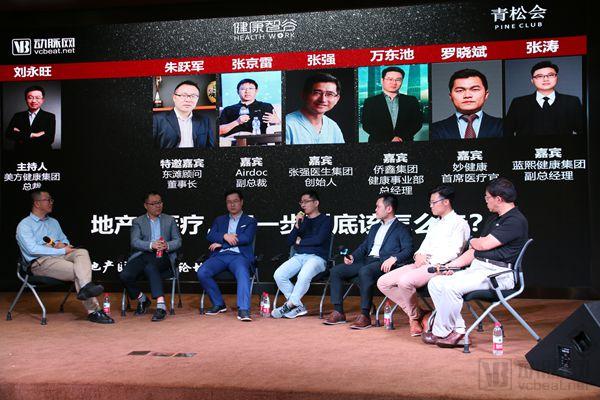
On-Site at the China Real Estate Medical Innovation Forum
Real Estate Drives Patient Traffic and Capital Investment to Complete the Layout of the Greater Health Industry
Amid the urgent need for upgrades in the health industry, real estate enterprises’ entry into the healthcare sector can not only facilitate greater capital investment for healthcare companies. Furthermore, it enables resource exchange between the real estate and healthcare sectors, mutual empowerment of business models, resource integration, and the realization of industrial cluster effects, thereby enhancing the visibility of healthcare enterprises and promoting the industrialization of healthcare.
In this regard, Jiang Tianjiao, Director of the Industrial Finance Department at Founder Securities, analyzed: “Within the broader healthcare industry chain, some startups and entrepreneurs can seize this opportunity to participate as strategic components in developers’ future medical real estate layouts. If this segment gains momentum, whether through industrial real estate facilitating enterprise incubation, commercial real estate driving customer traffic to these enterprises, or residential real estate empowering such medical partners with its resources, it is logically plausible that these medical partners could receive capital investment from real estate developers.”
At the event, Dr. Zhang Qiang, founder of the Zhang Qiang Doctor Group, shared the case of the Medical Mall in Hangzhou’s 501 Building, which serves as a prime example of leveraging the U.S. Medical Mall model to promote integrated development within the healthcare industry. Located in a commercial district in Hangzhou, the facility features three floors of retail shopping below, while the 18 floors above are exclusively occupied by various medical institutions. These institutions share resources, including physicians, operating rooms, and pharmaceutical supplies.
Dr. Zhang Qiang explained that the future direction of the integration between healthcare and real estate will go beyond a simple landlord-tenant relationship, aiming instead to achieve cluster effects, build brand recognition, and enhance trust. He stated, “Real estate developers may establish their own brands, similar to Hangzhou’s 501 Building, which represents high quality and premium consumption. In the future, our commercial real estate sector may differentiate itself through branding, particularly for ventures related to health. This involves careful selection; for instance, only pre-vetted entities are allowed into the 501 Building. Brands without established reputations or with poor public perception are strictly excluded. Only reputable commercial institutions are admitted, akin to how a Starbucks would not be situated next to a Shaxian Delicacies outlet.”
Liu Yongwang, President of the US-side Health Industry Group, also discussed systematic planning: “Of course, if we can form a relatively cohesive entity, we can carry out unified promotion. The role of branding is critical; brand signifies credibility and confidence. It is not easy for a single product to succeed. Among so many physician groups, few have achieved the renown of the Zhang Qiang Physician Group. However, as a consortium with a unified identity, selecting the best resources nationwide, it will inevitably become the most significant emerging force in the market. We are not aiming to compete head-on with certain institutions, but at least we can establish a very positive image in the minds of consumers, which is often the core element in the health and medical industries. In terms of collaborative planning and development, whether a dental clinic or a medical aesthetics clinic suddenly opens on a street or in a shopping mall, integrating them into an industrial cluster allows for continuous adjustment and optimization from the source and through industrial planning.”
Real estate enterprises entering the healthcare sector can introduce industrialized management practices, alleviate the operational burden on medical institutions, and enable physicians to focus on their professional expertise. As medical institutions enjoy enhanced brand reputation, they also assume greater brand responsibility.
How Healthcare + Real Estate Can Address Challenges and Complete the Service Loop
Abroad, the “real estate + healthcare” model has already seen mature implementations such as community physician systems, Medical Malls, and physician groups. However, in China, this emerging sector faces unique challenges due to the country’s distinctive medical environment and regulatory framework, as well as competition from public hospitals.
Dr. Zhang Qiang believes that the United States has a mature healthcare system, whereas in China, two major challenges persist. First, there are issues with the planning of medical institution distribution; the layout of the broader health industry tends to skew toward lightly regulated, low-investment sectors such as wellness, nail care, and cosmetic surgery. Second, and more critically, there are significant problems with the payment system, as public health insurance has not yet shifted its focus toward small and medium-sized clinics. Furthermore, regarding operational management teams, the real estate sector’s entry into healthcare still requires a learning process.
Furthermore, investment models are also fraught with uncertainties. Jiang Tianjiao, Director of the Industrial Finance Department at Founder Securities, observes that while real estate companies have cast a wide net in entering the healthcare sector, the level of synergy remains insufficient. He highlights three models through which real estate firms engage in healthcare: profiting from “land,” collecting rent via “medical” facilities, and earning revenue from “medical” services. Notably, those that have truly penetrated the core operations of healthcare enterprises often suffer from inadequate subsequent investment and operational support.
Jiang Tianjiao stated, “However, the key issue lies in identifying where the synergy truly exists for real estate developers entering this field. This is a significant challenge. It is evident that focusing heavily on medical services would put them at a considerable disadvantage. For certain major diseases, first, the incidence rate is very low; it requires covering a population of hundreds of thousands or even millions to sustain the operations of such large-scale medical institutions. Second, there is the matter of professional expertise.”
Exploring the Real Estate + Healthcare Model to Achieve Practical Implementation
Regarding the integration of healthcare and real estate, on-site guests also shared new perspectives on exploring the “real estate + healthcare” model to achieve practical implementation. First, real estate enterprises incubate the healthcare industry in the form of industrial parks, creating differentiated medical device industrial parks. Second, mutualIntegration of Telemedicine and AI with the Real Estate Model. Applying Internet-based AI healthcare to the consumer sector to meet real estate consumers' needs and enhance user satisfaction.
Zhu Yuejun, Chairman of Dongtan Advisors, stated that real estate will inevitably return to the essence of living—secure housing—which fundamentally encompasses education, health, and entertainment. The medical and big health industry chain is extensive. Currently, the effective integration of emerging business models with real estate primarily hinges on two factors: First, there must be industrial-scale value; if it does not reach an industrial level, it remains merely a minor service, which holds little significance for real estate developers. Second, it must achieve product-level appeal, exerting strong attraction to end-users (B2C). Without reaching this level, collaboration with real estate developers becomes considerably challenging.
Wan Dongchi, General Manager of the Health Division at Qiaoxin Group, stated: “Real estate can also venture into healthcare. How? By serving as a differentiator and complement to public hospitals. Second, by bringing the world’s…”“Integrating advanced technologies and high-quality resources into China offers a new perspective for the real estate industry to draw upon.”
Zhang Jinglei, Vice President of Airdoc, stated from the perspectives of artificial intelligence and resident health services: “Airdoc provides new technologies oriented toward individual consumers. As just mentioned, the real estate sector has very strong demand from this consumer segment. Currently, 99% of AI companies are focused on the B2B side, serving hospitals and physical examination centers. Airdoc’s core mission is to leverage big data effectively to promote healthy living.”
Luo Xiaobin, Senior Vice President and Chief Medical Officer of Miao Health, also holds the view: “In integrating health with real estate, we aim to make health a high-frequency behavior and effectively activate consumer-side (C-end) engagement. Traditional health management, whether in the physical examination industry or other sectors, has largely catered to business-side (B-end) clients. From an internet perspective, acquiring consumers and activating this traffic are worth careful consideration.”
Join VCBeat Membership
I. Member Privileges:
①Free Access to All Research Reports from VCBeat
Delivering over 40 original reports annually, covering more than 14 healthcare subsectors
The most frequently cited original news and report sources in the market
②Free Access to VCBeat’s Online Database
Building a Structured Knowledge System for the Future of Healthcare
100,000+ China Healthcare Policy Database
③Long-Term Free Conference Tickets
Free Tickets to the Healthcare & Wellness Themed Salon
Large-Scale Forum Tickets at Deep Discounts
… …
④Join the VCBeat Member Circle
An Elite Circle in Healthcare, Covering the Core Forces Across the Entire Industry
1,000+ members in the medical and health sector,Communicate with youWork
II. Planning for Offline Member Activities
In 2017, we hosted three offline member salon events, covering areas such as health management, real estate healthcare, and genomics...
In 2018, VCBeat will host more than ten themed salons in Beijing, Shanghai, Shenzhen, Chengdu, and other regions. Covered areas: healthcare informatization, blockchain + healthcare, real estate healthcare, general practice/specialty/community clinics, medical IoT, pharmaceutical distribution, intelligent medical devices, artificial intelligence, elderly care and nursing, insurance healthcare, and health management.
In 2017, VCBeat walked alongside our valued members, progressing together. In 2018, let us once again join forces to explore the infinite possibilities of healthcare innovation. We also welcome more non-member friends to join us.
III. Introduction to the Members' Exclusive Circle
To foster interaction and bring together “those who are changing the future of healthcare,” we aim to transform our followers into members and friends, enabling VCBeat to engage more closely with professionals in the industry. This allows VCBeat to better facilitate mutual recognition and collaboration within this vast community. In March 2017, we launched the VCBeat Exclusive Member Circle, working hand in hand with these committed participants and promoters to drive the growth and development of future healthcare.
Here, there are many industry luminaries and peers, all engaging in dialogue and growing together.
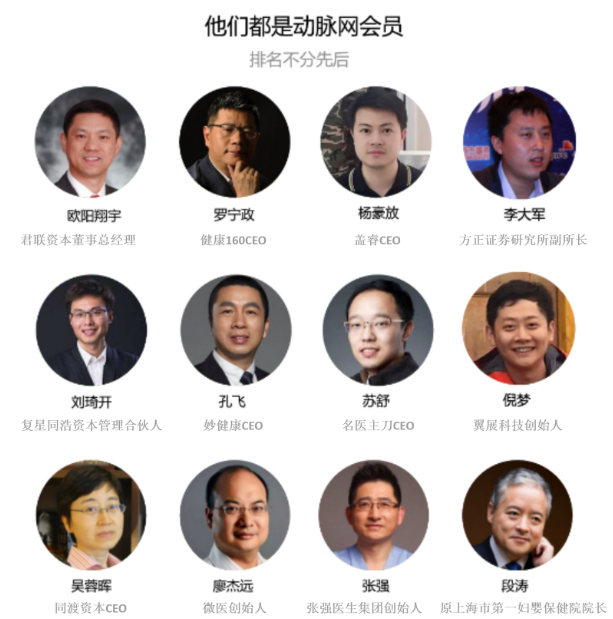
For those who have not yet become VCBeat members, please scan the QR code below to purchase a membership. By becoming a VCBeat member, you can join the exclusive members’ circle and participate in various private events, engaging in in-depth exchanges with industry peers.
(Scan the QR code to purchase a membership and participate in more member-exclusive events)
