

From Clinic to Global Market: How OBrace's Ultra-Precision Self-Ligating Brackets Are Challenging International Orthodontic Giants
China has nearly 3 million patients with orthodontic needs, posing significant challenges for both clinicians and patients. Among them, 95% of patients use traditional metal brackets, which are associated with issues such as mucosal abrasion, food impaction, and difficulty in maintaining oral hygiene. For clinicians, bracket data is prone to loss, making precise control difficult, and the average treatment duration extends to two years.
Although domestically produced and imported conventional brackets currently dominate the orthodontic market, high-quality domestic self-ligating brackets are poised to become a major trend within the next decade, driven by consumption upgrades, growth in the cosmetic dentistry sector, and the trend toward substitution with domestically manufactured devices.
Guangzhou O-O Medical Technology Co., Ltd. (hereinafter referred to as “O-O Medical”) is a company specializing in the production of self-ligating brackets. Its brands include OBrace and O-Eyes. The company possesses world-class design and manufacturing capabilities for its key elastic components, enabling full expression of torque with precise control. The products utilize metal parts weighing just 0.0009 grams. To date, the company has secured 47 patents worldwide and has declined acquisition offers from multiple Fortune 500 multinational corporations.
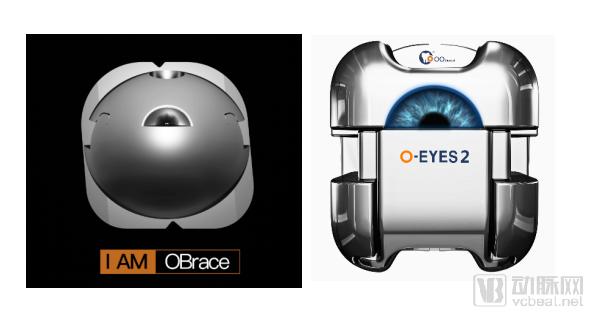
OBrace and O-Eyes Products
What sets the company apart is that it was founded by physicians with a focus on addressing clinical challenges, striving for excellence in medical procedures, patient experience, and treatment outcomes.
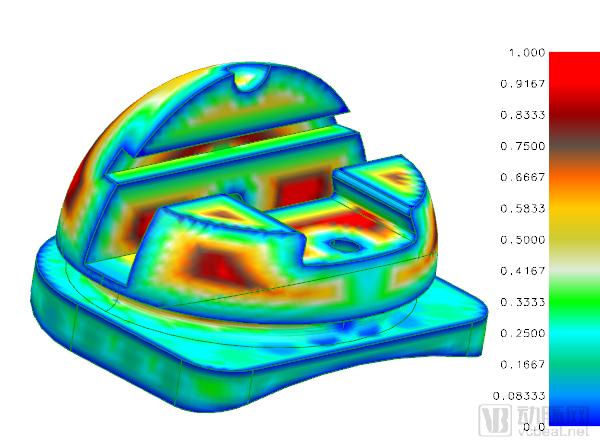
Utilizes 0.0009 grams of metal for components, holding 47 patents worldwide
To manufacture products of such high precision, Dr. Ji Li, the founder, reached out to more than 1,000 manufacturing enterprises and conducted on-site visits to over 100 of them. His uncompromising approach has earned recognition from physicians and industry peers alike. So, what kind of company is Ouo Medical? What are the distinctive features of its products? And how high can the precision manufacturing of Chinese dental instruments reach? VCBeat (WeChat ID: vcbeat) conducted an exclusive interview with Dr. Ji Li, founder of Ouo Medical.
Regarding his intuitive perception of the orthodontics industry, Ji Li stated, “Orthodontists feel like both physicians and artists, capable of transforming ugliness into beauty. I believe it is a highly rewarding profession.”
However, there remains a significant gap between China and other countries in terms of patient awareness. Ji Li stated, “Over 80% of children abroad have undergone corrective treatment, whereas China is just getting started, with parents gradually beginning to accept it. Therefore, there is substantial room for growth in the future.”
"In addition, regarding dental equipment such as intraoral scanners, CBCT, or orthodontic brackets, 'doctors initially relied exclusively on foreign products; major hospitals generally maintained a cautious stance toward domestically produced devices, and high-quality products from large foreign enterprises consistently monopolized the industry.'"
However, since the introduction of orthodontic techniques to China, generations of medical professionals have worked tirelessly to achieve near-synchronization and interoperability of products and technologies both domestically and internationally. “The number of cases handled by Chinese doctors in a single month may equal what their American counterparts handle in an entire year; such quantitative accumulation leads to qualitative transformation. After decades of accumulated experience, Chinese orthodontists have reached a tipping point for initiating innovations in brackets and other orthodontic medical devices. The key to breakthroughs still lies in clinical accumulation.”
Ouo Medical’s core business comprises four key areas: clinical healthcare, research and development (R&D), manufacturing, and sales and services. Unlike other companies, Ouo Medical held nearly 30 domestic and international invention patents at its inception. “Many of our products were personally designed by me. Innovation in the medical device sector must focus on addressing clinical challenges. We are a company with clear industry objectives and positioning, which explains our rapid growth over just a few years. Many of our products have obtained certifications from the China Food and Drug Administration (CFDA), the U.S. Food and Drug Administration (FDA), and the CE marking.”
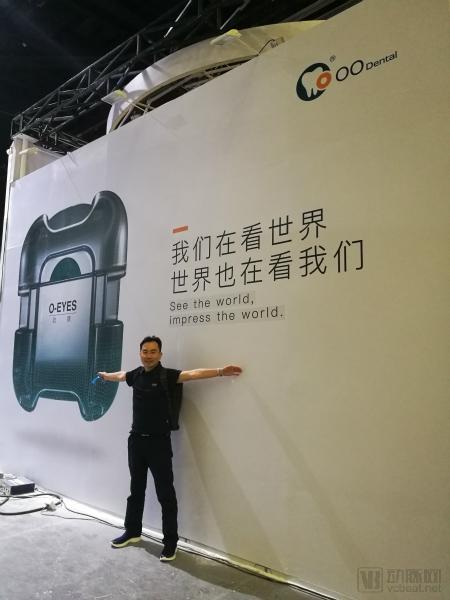
Dr. Ji Li, Founder of O-O Medical
Dr. Ji Li, the inventor of the spherical self-ligating system and Ouqing self-ligating brackets, has been engaged in clinical practice, teaching, and research in orthodontics for over ten years. He has published more than ten academic papers domestically and internationally and holds over seventy domestic and international invention patents, including four U.S. patents and more than ten international PCT and European patents. Currently, he works at the First Affiliated Hospital of Sun Yat-sen University, serves as a specially appointed professor of the Guangdong Private Dental Association, and remains active in frontline clinical practice.
Medical professionals have the clearest understanding of the therapeutic efficacy of medical products for patients, as well as the complexity of their operation. Dr. Ji Li told reporters, “Product engineers from non-medical fields must imagine the clinical environment in which physicians operate and the scenarios in which patients use these devices, resulting in high communication costs. For instance, with traditional medical device manufacturers, when a new orthodontic aligner is developed, suppliers provide the product to physicians for trial use, who then offer feedback that necessitates further revisions. This process is protracted; moreover, many products have already been finalized, making subsequent modifications highly challenging.”
Across hundreds of processes—including clinical conceptualization, R&D design, process development, and manufacturing—communication costs and information loss at each stage are critical determinants of a product’s success or failure. A high-quality medical product must not only address communication inefficiencies but also incorporate continuous iterative feedback to drive ongoing improvements, thereby achieving a balance between clinical requirements and the constraints of existing manufacturing processes.
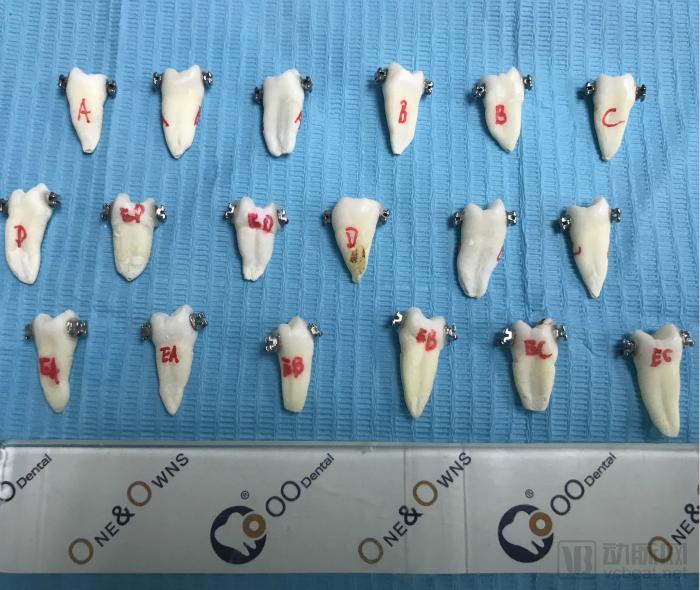
Self-Ligating Bracket Products
Therefore, as a physician-founded enterprise, Ouo Medical anchors its R&D—the core of its four business pillars—in clinical practice. On this foundation, we meticulously refine design blueprints; only after the designs are finalized do we proceed to manufacturing, sales, and service. Throughout this process, we continuously collect feedback from physicians, directly contributing to 18,000 iterations of blueprint modifications and improving the craftsmanship across hundreds of procedures involved in bracket manufacturing. The resulting products then return to clinical settings for continuous improvement, forming a complete closed loop. By ensuring that every stage closely aligns with clinical thinking and requirements, Ouo Medical’s product DNA stands distinct from that of other companies.
Every dentist dreams of owning their own clinic, and Ji Li is no exception. In 2011, Ji Li co-founded a dental clinic with partners. “Many dentists envision an ideal future as holding a position at a public hospital while also owning a clinic that generates decent income. I achieved both goals. Later, to focus on my orthodontic bracket business, I sold the clinic.”
“Using foreign-made devices, we did not perceive Chinese physicians as having strong decision-making authority. A simple example is that many medical devices from major international brands include user manuals in more than twenty languages, yet none of them contain Chinese. Nevertheless, the quality and quantity of Chinese physicians are no inferior to those abroad. These observations were the initial impetus behind my thinking.”
As early as 2011, Geely conducted a series of experiments on orthodontic brackets. In 2013, the company began filing patents for its concepts and experimental findings, triggering an unprecedented surge in intellectual property acquisitions; by 2015, it had secured more than 20 patents.
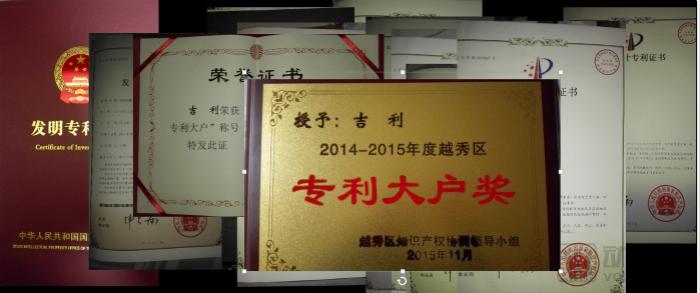
Patents Held by Dr. Jili
“Starting in late 2013, I gradually realized that while patents and ideas are indeed important, it is crucial to translate these ideas into practice. The commercialization of patents is far more difficult than one might imagine,” said Ji Li. “A patent claim may be as brief as a single sentence. For instance, it may simply state that an elastic component controls the opening and closing of the bracket cover. However, developing an elastic component that is user-friendly for clinicians, provides appropriate elasticity, and is lightweight is extremely challenging.”
Furthermore, when filing for patents, it was necessary to navigate around the structural protections of thousands of existing foreign patents, which set a very high bar. “During those two years, I actually struggled every day with whether to continue.”
How to Commercialize Patents? Geely initially collaborated with foreign manufacturers. However, after discussions with a major international orthodontic bracket manufacturer, although they expressed surprise and genuine interest in acquiring the patent—offering a high price—we felt concerned that they might simply acquire the patent for internal research without necessarily developing it, potentially shelving it among other projects.
The current state of the orthodontic bracket industry is such that the hub for bracket manufacturers in China is primarily located in the Jiangsu and Zhejiang regions, where approximately 20 companies are concentrated, mainly engaged in export and foreign trade. “At that time, I did not find like-minded partners. To create world-class products requires both medical and manufacturing expertise, while also challenging the high-end capabilities of domestic manufacturing. This was what I aimed to achieve, so I embarked on a path of developing independent intellectual property rights, with both manufacturing and design fully meeting our high standards.”
Reporters learned that, based on clinical research, the Ouqing bracket is designed with optimized height and width to reduce root resorption and facilitate the expression of rotation, angulation, and torque. Its volume has been restored to that of traditional ligature brackets, while its thickness has been reduced. This design not only enhances patient comfort but also positions the slot closer to the center of resistance on the tooth surface. Furthermore, each bracket position features a width tailored to its specific biomechanics, resulting in more comprehensive expression of orthodontic forces and accelerated treatment.
The product is already in mass production. “Its sales volume has surpassed that of domestic and international giants during the first year of their market entry. After-sales service and response mechanisms have kept pace accordingly. Between speed and stability, I prioritize stability. I am amazed at how quickly the product can align teeth so neatly, with quality in many aspects superior to similar products.”
Pursuing an ultimate product mindset has caused Geely considerable hardship. “It is actually quite difficult to find a manufacturing partner that shares the same vision, given that most companies merely produce passable products. At the time, we decided to take matters into our own hands and search for one ourselves, after all, the manufacturing sector in the Pearl River Delta region is quite robust.”
Geely revealed that they initially identified contact information for over 1,000 companies. After screening, they conducted on-site visits to more than 100 of them. “During that period, we basically drove out for site inspections every day after hospital hours. We started with nearby areas such as Shenzhen, Dongguan, Foshan, Zhuhai, and Zhongshan, and then expanded our search nationwide. However, most of these companies were engaged in 3C products; designing more precision-oriented products posed significant challenges. We even visited several national-level precision laboratories.”
Finally, with the help of friends, Oou Medical initiated a preliminary collaboration in precision assembly with a leading publicly listed company in the field of precision manufacturing. As for the core elastic component, “we co-developed it with a key precision manufacturing supplier for top-tier aerospace equipment at the Chinese Academy of Sciences. Weighing only one ten-thousandth of a gram, this elastic component is critical to the performance of high-quality foreign orthodontic brackets. Achieving precise dimensions and elasticity at such an incredibly low weight is no simple feat.”
Throughout this process, Geely refused to make concessions or compromises in manufacturing. “All the machines on our production lines were personally commissioned and fine-tuned by our own team. It is easy for situations to arise where engineers report that certain design features are too complex, or that the product is too thin or too small to be manufactured.”
At this stage, there are generally two options. One is to “follow the engineers’ recommendations and enlarge the product; however, this would double the thickness and size of the orthodontic aligners, causing discomfort for patients. Some domestic companies’ products end up being neither fish nor fowl because they compromise with industrial manufacturing constraints.”
The second option was to be even more professional than the engineers. “I personally conducted all the measurements and drafting, explored these machines through trial and error, and only after I had successfully implemented the functionalities myself did I inform the engineers and workers that such precision was achievable. They were quite surprised. After repeated iterations, the team members became reluctant to say it couldn’t be done.”
“Of course, Jili also acknowledges: ‘It’s not that every step is non-negotiable. The advantage clinicians bring is that when manufacturing can be simplified without compromising therapeutic efficacy or hindering physician operation, we can adhere to principles of industrial design. Each time I revise the drawings, I deeply appreciate the significant role physicians play, because it is impossible to expect an engineer to fully understand how our aligners are used in real-world clinical settings.’”
"The core competitiveness of R&D lies in innovation and practical implementation. We should also strive to quantify projects that are inherently difficult to measure, such as bracket strength. To this end, we have independently developed a horizontal tensile testing machine capable of withstanding debonding forces of approximately 80–100 N and performing over 5,000 cycles of repetitive fatigue mechanical testing."
Ouo’s goal is to create brackets that are best suited for clinicians, a process that inevitably involves extensive testing data. “Many of our peers in the orthodontic bracket manufacturing industry have even expressed skepticism: how can strength still meet standards when the brackets are made thinner, and how can bond strength be ensured to prevent debonding when they are made smaller? This is because previous evaluations were based entirely on subjective judgment.”
Thus, Geely dedicated himself to studying circuit diagrams and sourcing materials such as wooden boards, motors, saws, screws, electric motors, and counters. He single-handedly built the first inspection device assembled with wood, designed to measure the tensile force of orthodontic brackets, creating a universal testing machine specifically for dental bracket inspection. This equipment has since undergone industrial upgrading. “Relying on intuition is insubstantial; it must be quantified. If any issue arises, we will start over from scratch. This is the core of our unyielding spirit.”
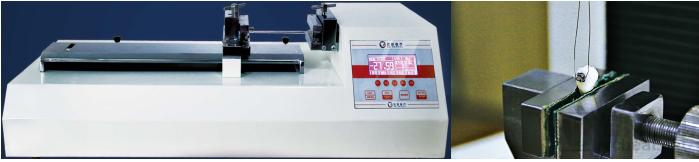
Universal Testing Machine for Dental Bracket Inspection
The reporter learned that Jili also personally conducts quality testing and inspection. All products leaving the factory are not shipped directly to customers; instead, they are first sent to the company. “Only after I have personally conducted random inspections and confirmed that there are no issues will the products be shipped to users. Any non-conforming products will be destroyed.”
Even so, Geely inevitably encountered challenges in user education during product sales and promotion, as doctors held deeply entrenched views regarding domestic medical device products. “At trade shows, many doctors would immediately ask where the product was manufactured. Upon learning it was made in China, they would turn and leave without giving us any opportunity to introduce our offerings. Our brackets demonstrate quality through real-world data; whether in terms of strength or bond strength, you can conduct head-to-head comparisons with competing products using a tensile testing machine on site.”
When discussing potential competitors, Ji Li stated, “I hold Ormco in high esteem. As a company with nearly a century of history, its bracket products truly represent a benchmark in manufacturing. Our goal is to establish new precision standards based on this existing benchmark, through repeated verification and experimentation. We are committed to a path characterized by respect, independence, and self-reliance. Our products have already gained recognition and respect from many clinicians both in China and abroad.”
However, Geely also acknowledged that “it will certainly not happen overnight to fully convince many domestic doctors that Chinese-made products can outperform foreign ones. Much like Huawei smartphones, which are now widely used by many Chinese consumers despite limited recognition just a few years ago, the revitalization of national enterprises and their acceptance by both domestic and international audiences is inevitably a long-term process.”
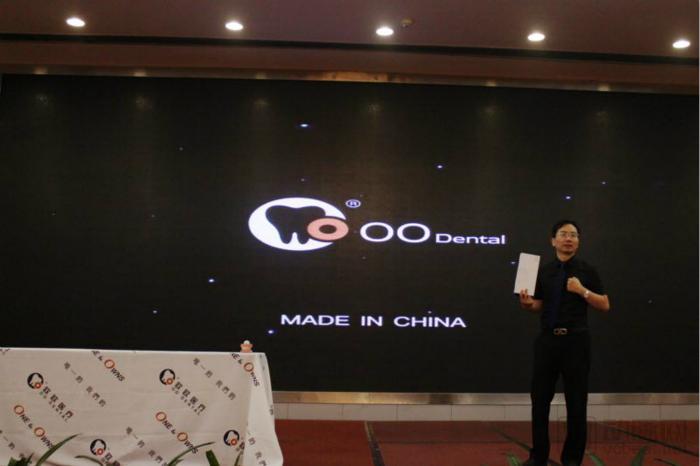
Dr. Ji Li’s Persistent Emphasis on “Made in China” at the American Association of Orthodontists (AAO) Annual Session
Innovation in medical devices must be aimed at solving clinical problems. From the perspective of the bracket industry, two conditions need to be met:
First, for physicians, to improve their procedural performance and lower the barrier to performing these procedures;
Second, for patients, it improves their experience by making them feel more comfortable, while also enhancing treatment outcomes;
“These aspects must be strictly followed in the R&D of medical devices, yet the process is invariably fraught with contradictions. For instance, while every effort may be made to lower the operational threshold for physicians, this could potentially cause patient discomfort. To enhance patient comfort, painless anesthesia devices can be employed to eliminate injection pain; however, this adds complexity to the physician’s operation of the equipment,” said Ji Li.
“The quality of orthodontic appliances is fundamentally judged by treatment outcomes, clinician technique, and improvements in patient comfort. Ceramic materials and clear aligners share certain similarities, offering patients aesthetic benefits without the complexity associated with metal braces. These are areas we must engage with, as we cannot go against prevailing trends. Running a business, unlike practicing solely as a clinician, requires staying ahead of trends to lead the market.”
However, Jili believes: “There is currently significant controversy surrounding clear aligner therapy. While it is a remarkable invention that addresses many patient concerns—such as aesthetics, the absence of brackets, and ease of brushing—it often does not outperform traditional bracket systems in terms of treatment efficacy, precision, or time efficiency for clinicians.”
Reporters learned that, as of the end of last year, Invisalign’s global case volume had exceeded 5 million. From a commercial perspective, it has been highly successful, “making many dentists feel that applying braces has become much simpler. However, achieving high-quality treatment outcomes is extremely challenging; it involves far more than just aligning teeth.”
“Ninety-nine percent of orthodontists in the United States have used clear aligners to treat cases, yet the final market share of clear aligner therapy accounts for only 15%–18%. This relatively low figure indicates that clear aligners have not disruptively replaced traditional brackets. After all, as two pieces of 3D-printed material, they cannot enable patients’ teeth to undergo normal biomechanical adjustments around the clock, unlike brackets. Nevertheless, digital orthodontics is indeed the future trend, but the current clear aligner model requires upgrading.”
The manufacturing process for clear aligners involves 3D printers, intraoral scanners, supporting software, and dental laboratories. “There may be hundreds of companies in China offering clear aligner treatments, collaborating with dentists and dental labs; the entry barrier is now quite low. With the emergence of new products, a rigorous selection process will unfold both domestically and internationally. Ultimately, only those leveraging data and core technological R&D capabilities will secure a leading position in the market.”
Regarding digital dentistry, Jili stated, “This is undoubtedly the trend. For instance, it enables remote assistance to clinicians by leveraging the expertise of high-quality specialists to facilitate diagnosis, analysis, and the formulation of treatment protocols and steps, thereby allowing novice practitioners to perform treatments. Our approach to digitalization builds upon the current landscape by first implementing digital solutions for diagnosis, analysis, bracket bonding, and orthodontic treatment planning, with the aim of addressing clinical challenges and subsequently expanding digital capabilities.”
Currently, O-O Medical has attracted several leading figures in the dental industry to join its team and is seeking a new round of financing. Regarding the fundraising efforts, Ji Li stated, “This is essentially a two-way selection process. Each investment firm has its own distinct style. What I need to do is focus on building high-quality products and leverage financing to introduce complementary resources that support our goal of developing world-class products. Only when investors’ perspectives align with ours can we achieve synergistic effects.”
“As we look at the world, the world is also looking at us. When we step out of China to engage with the global community, the world watches us closely; therefore, every step we take must be worthy of that scrutiny.” Dr. Ji Li expressed great expectations for the company’s future development.
Note: All images in this article are provided by the company.