

XtalPi Inc. and Pfizer Inc. Announce Strategic R&D Collaboration to Advance AI-Driven Small Molecule Drug Discovery
U.S. Time, May 8 – XtalPi Inc., an AI-driven pharmaceutical R&D company that leverages algorithms for innovation, announced a strategic R&D collaboration with Pfizer Inc. The partnership aims to integrate quantum physics and artificial intelligence to build a small-molecule drug simulation algorithm platform, significantly enhancing the accuracy and broad applicability of its algorithms, thereby driving innovation in small-molecule therapeutics.
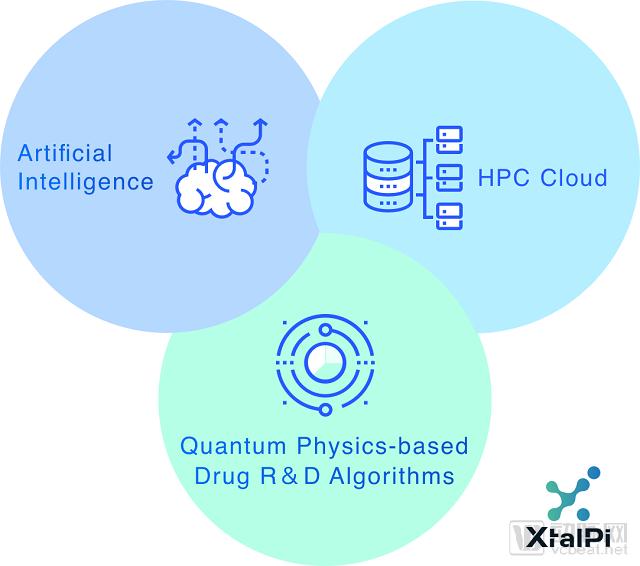
Drug simulation technology is widely applied in drug discovery and design, enabling scientists to study and predict the biological and pharmaceutical properties and reactions of drugs at the atomic level.In this collaboration, XtalPi will leverage its technological advantages in quantum mechanics, artificial intelligence, and cloud-based high-performance scientific computing to improve and break through existing drug simulation technologies, enabling the platform to cover a broader chemical space and generate more accurate drug molecule models.。
Building on this foundation, the platform will also enable accurate prediction of several key properties of drug candidates, further empowering critical stages in drug discovery and development. The establishment of this strategic R&D collaboration benefits from the strong existing partnership between XtalPi and Pfizer. Pfizer has favored XtalPi’s crystal form prediction technology, and this drug simulation algorithm platform will further enhance both parties’ technical capabilities in computer-aided drug design and solid-state screening.
To foster technical exchange among industry, academia, and research institutions, a portion of the molecular mechanics parameters derived from public databases will be open-sourced to the academic community following the successful completion of this R&D effort, thereby promoting and supporting continuous progress and innovation in related fields.
“Collaboration with XtalPi will be a great opportunity to enhance our computational simulation capabilities,” said Charlotte Allerton, Head of Drug Design at Pfizer. “We look forward to leveraging new technological tools to further improve Pfizer’s efficiency in small-molecule drug development.”
“We are delighted to partner with Pfizer, a global leader in innovative pharmaceuticals. They share our conviction that AI and algorithmic innovations within physics-based modeling scenarios will give rise to a new generation of highly efficient and accurate drug discovery tools,” said Wen Shuhao, Co-founder and Chairman of XtalPi. “This collaboration provides us with an opportunity to fully leverage XtalPi’s accumulated technological strengths in molecular simulation, artificial intelligence, and cloud computing, thereby upgrading existing general-purpose R&D algorithms and developing novel algorithmic solutions for unresolved challenges in drug design.”
XtalPi is the first AI company jointly invested in by two tech giants, Google and Tencent, and the first Chinese AI drug algorithm company to announce a strategic partnership with a top-tier global pharmaceutical firm. Founded in 2014 on the MIT campus, XtalPi is driven by computational innovation and is committed to developing next-generation intelligent drug R&D technologies to address efficiency and success rate challenges in preclinical drug research. By integrating quantum physics, artificial intelligence, and large-scale cloud computing, the company has achieved breakthrough capabilities in the rapid and accurate prediction of key properties of small-molecule drugs, holding multiple industry-leading technologies in areas such as drug design and solid-state screening. XtalPi’s investors include Tencent, Sequoia Capital China, Google, ZhenFund, and FreeS Fund. The company has established stable and in-depth collaborations with numerous top-tier global pharmaceutical companies and new drug research institutions, achieving several milestone advancements.