

More Than 30% of Chinese Youth Spend Over Half Their Salary on Appearance Enhancement, According to 2018 China Youth Appearance Competitiveness Report

Riding on the lingering momentum of the May Fourth Youth Day, Gengmei App, Asia’s leading professional platform for minimally invasive cosmetic procedures, jointly released the “Report on the Appearance Competitiveness of Chinese Youth” with BOSS Zhipin today.
The report indicates that the overall physical appearance competitiveness of Chinese youth has reached its historical peak in the past decade, with half of young people developing awareness of appearance-based competition before the age of 18. On average, males begin to develop such competitive awareness five years later than females, and they start taking actions to enhance their physical appearance 22 years later than females.
This report is based on big data analysis and joint research conducted via the Gengmei App and the BOSS Zhipin platform, leveraging behavioral data from Gengmei’s 32 million users and 10,053 valid responses. Additionally, Baihe Jiayuan provided data support for the section on marriage and relationships in this report.
The report indicates that competition based on physical appearance is most intense in the realms of stranger social networking, dating and marriage, and the workplace. Seventy percent of professionals allocate more than 20% of their salaries to enhancing their aesthetic competitiveness, while ten percent max out their credit cards to invest in their appearance.
The competition for physical attractiveness has reached its most intense level in nearly a decade, with women entering this race 22 years earlier than men.
Gengmei and BOSS Zhipin jointly investigated the onset of appearance-related competitive awareness among Chinese youth on their respective platforms. The results showed that 90% of those born after 2000 and 50% of those born between 1995 and 1999 developed such awareness before the age of 18, while a larger proportion of individuals born in the 1990s, 1980s, and 1970s became aware of appearance competition during the ages of 18–25, 25–30, and 30–40, respectively.
The awareness of appearance-based competition has emerged across all age groups within the past decade, marking a society that increasingly prioritizes physical attractiveness, with the "beauty premium" reaching unprecedented historical heights.
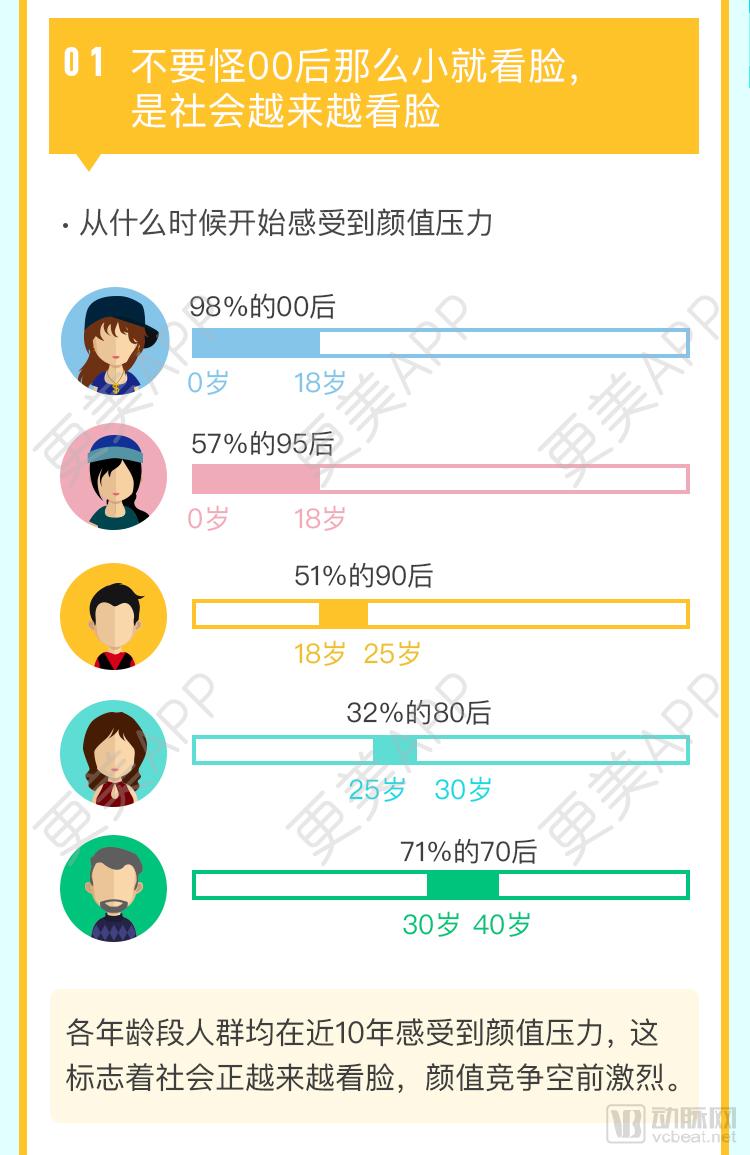
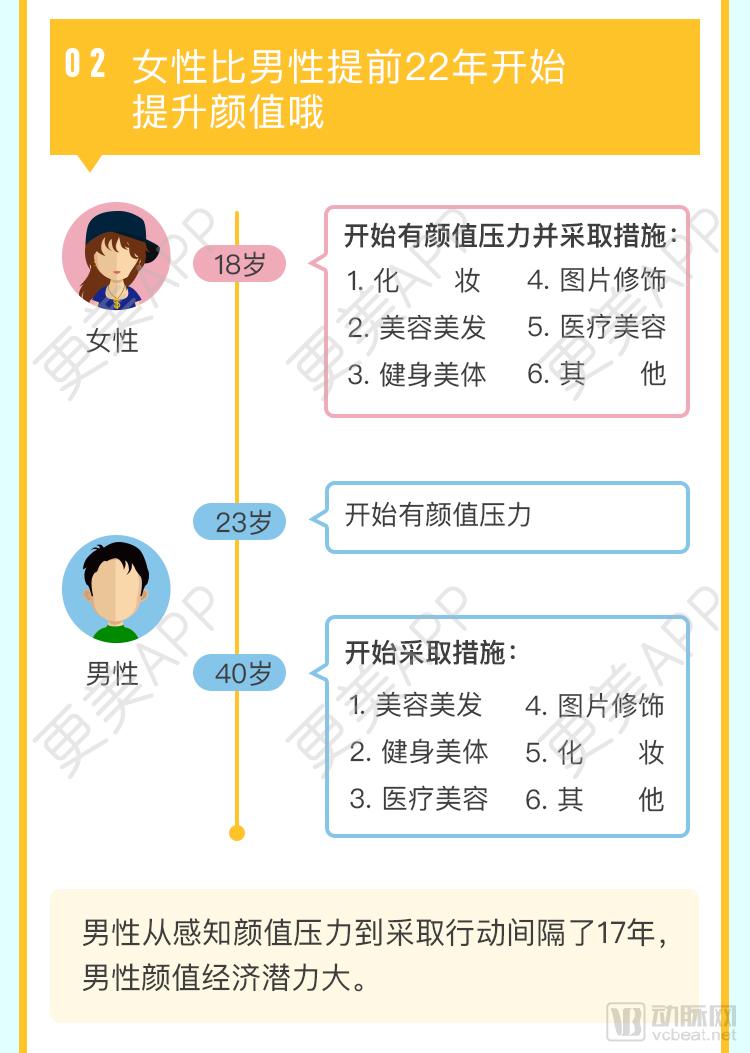
The report indicates that women develop an awareness of appearance-based competition, on average, five years earlier than men. Specifically, 51.9% of women reported experiencing pressure related to their physical appearance before the age of 18, whereas 57.14% of men did not feel such pressure until between the ages of 18 and 25. In terms of taking action to enhance their appearance, women typically begin at age 18, while men generally do not start until after age 40, with medical aesthetics and fitness becoming the preferred choices for men. Notably, there is a nearly 17-year gap between men’s initial awareness and their subsequent actions, highlighting significant potential in the male appearance economy.
90% of Professionals Acknowledge That an Attractive Appearance Enhances Salary Negotiation Power; Men Prioritize Looks More Than Women Do in the Dating Market
Does Physical Appearance Affect Job Hunting? In a survey, job seekers considered looks to be the second most influential factor after work experience and educational background, but 70.6% of employers stated that whether appearance matters in hiring depends on the industry and specific position.
Regarding the relationship between physical appearance and career advancement or salary increases, only 5.7% of respondents believed that “appearance has no impact whatsoever on promotions or raises.” Among individuals with an annual income exceeding RMB 300,000, 100% acknowledged that appearance plays a role in career advancement and salary growth, with zero respondents selecting “no help at all.”
Reports indicate that individuals with annual salaries ranging from RMB 100,000 to 500,000 are considered the “new affluent middle class.” Among them, those earning over RMB 300,000 annually are predominantly born in the 1980s and 1990s, and have generally reached mid-level management positions in large corporations or director-level roles in average-sized companies. Years of navigating career challenges have led them to believe that professional success depends not only on competence but also on physical appearance.
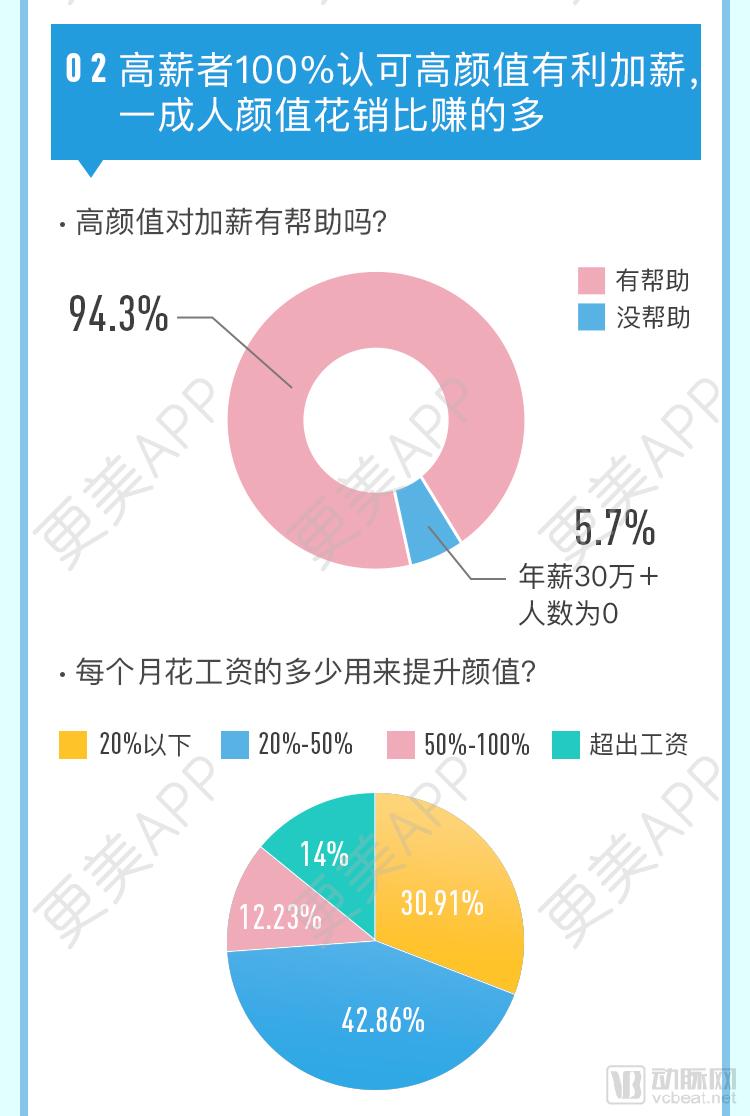
In terms of investment in appearance,Nearly 70% of working professionals allocate more than 20% of their monthly salary to appearance-related investments. 14% of working professionals spend more than their monthly salary on appearance-related investments, with 70% of them earning an annual salary below RMB 60,000; those born in the 1990s and 2000s together account for over 60%.
In the dating and marriage market, physical attractiveness is equally competitive. Appearance ranks among the top three criteria most valued by both men and women when selecting a partner. Women prioritize personality, appearance, and income, while men prioritize appearance, personality, and family background. In terms of facial features, both genders tend to prefer partners with oval-shaped faces and double eyelids.
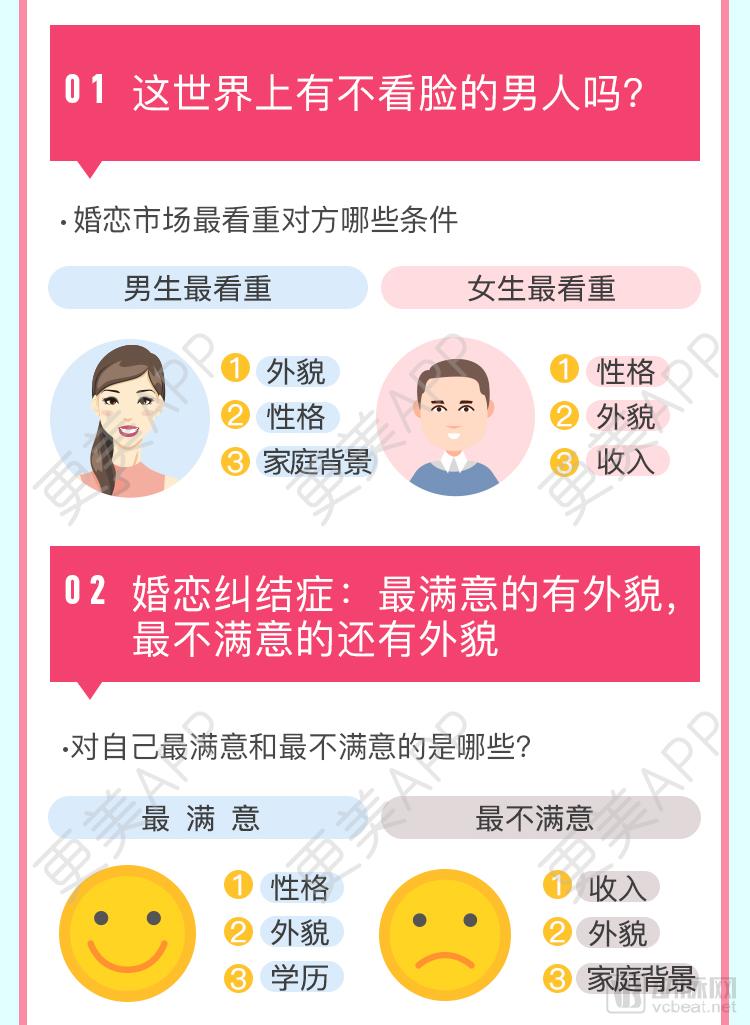
Interestingly, in the dating and marriage market, people hold ambivalent views toward their physical appearance. The top three attributes with which individuals express satisfaction are personality, physical appearance (including height), and educational background; conversely, the top three sources of dissatisfaction are income, physical appearance (including height), and family background. This suggests that while individuals are generally satisfied with their looks, the pervasive pressure regarding physical attractiveness in the dating and marriage landscape undermines their confidence. Meanwhile, people perceive room for improvement in their appearance and demonstrate a willingness to enhance their physical appeal.
Young People Prefer Clothing with Immediate Visual Impact and Aesthetic Medicine to Boost Their Appearance Competitiveness
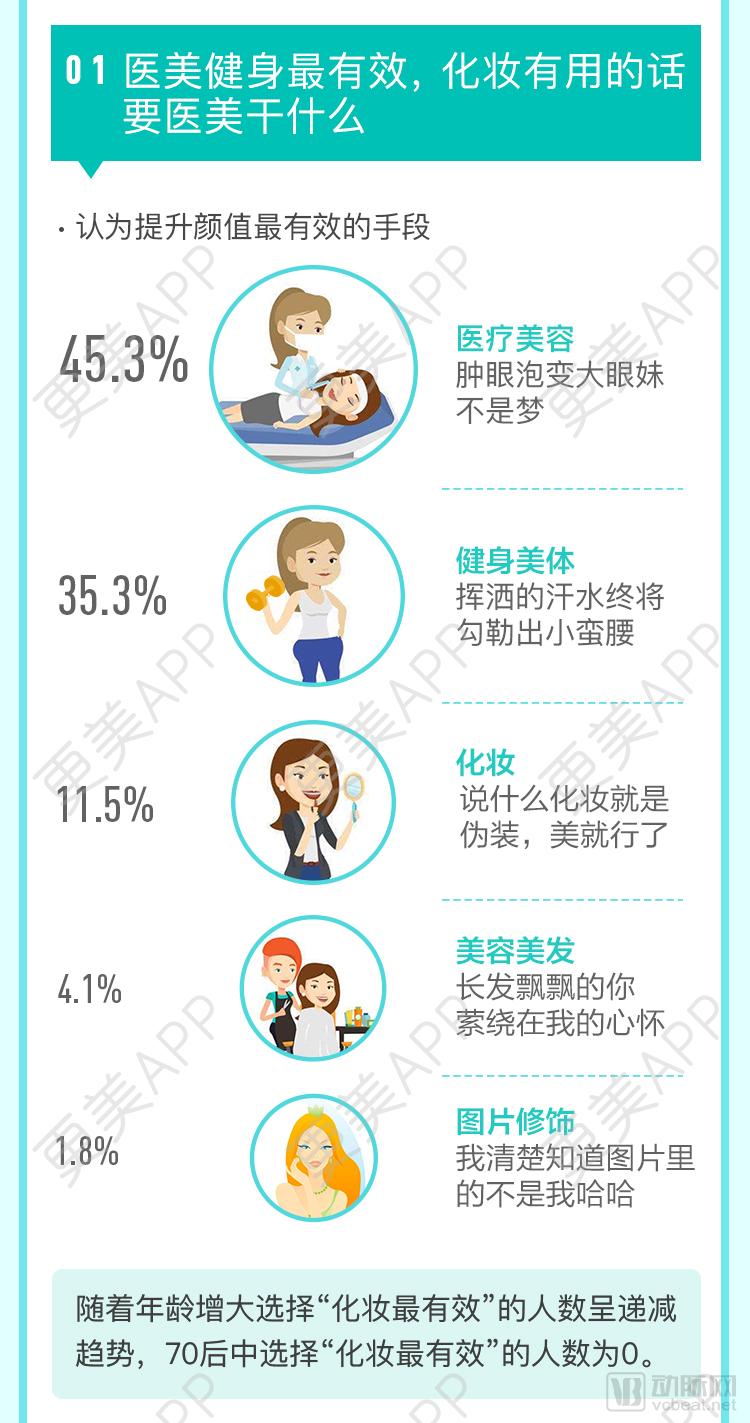
The report shows that among the methods commonly used by contemporary young people to enhance their physical appearance, medical aesthetics (45.3%) and fitness (35.3%) were selected as the most effective approaches. Only 1.8% of respondents considered photo editing the most effective method, while makeup (11.5%) and beauty and hair care services (4.1%) ranked third and fourth, respectively. However, the proportion of individuals who consider makeup effective decreases with age.The number of individuals born in the 1970s who considered makeup effective was zero.。
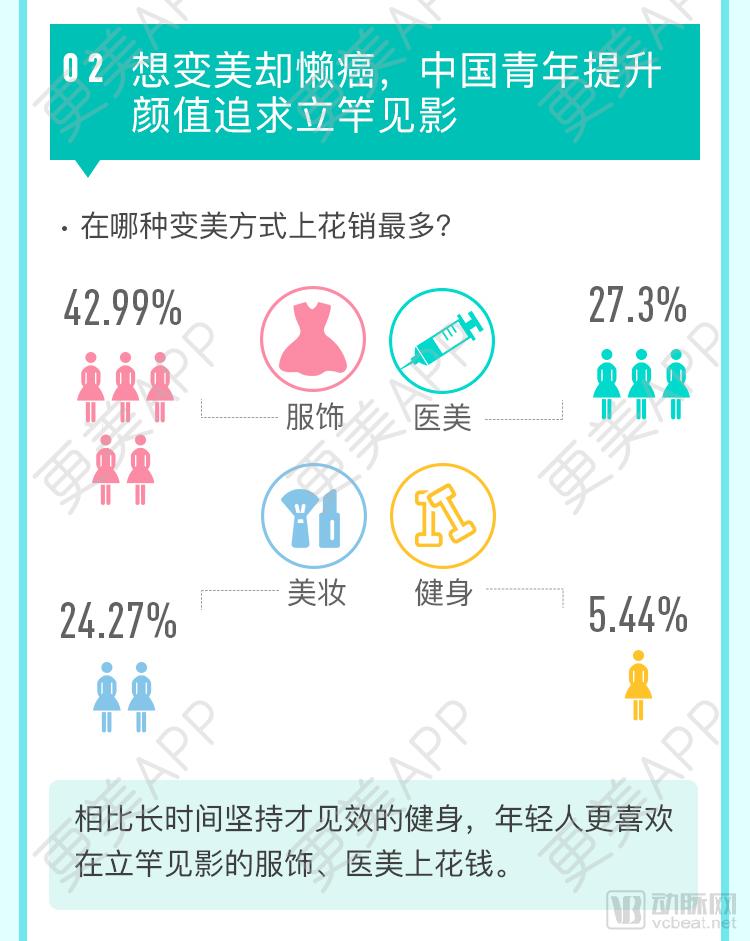
In terms of spending on appearance-related consumption, the highest expenditures are on clothing, medical aesthetics, cosmetics, and fitness, in that order. Compared to fitness, which requires long-term persistence to yield results, young people prefer to spend money on clothing and medical aesthetics, which offer immediate, visible effects.
According to the "2017 White Paper on China's Medical Aesthetics Industry" released by the Gengmei App, China’s medical aesthetics market in 2015 trailed Brazil by a narrow margin of just 0.8%. As the industry entered a "fast lane" of development, China saw a growth rate exceeding 40% in 2017, with the total number of procedures surpassing 10 million. This milestone marked China’s overtaking of Brazil to officially become the world’s second-largest medical aesthetics market, after the United States. This survey further reflects this trend: over 93% of respondents believed that using medical aesthetic treatments to enhance one’s appearance is acceptable, and 89% of users expressed willingness to try minimally invasive procedures.
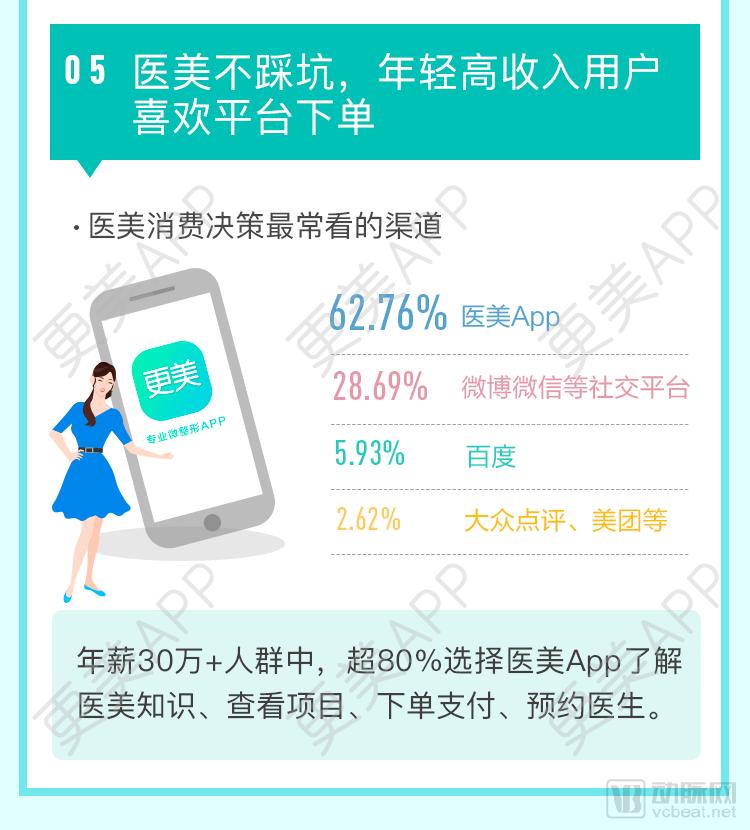
The Report on the Competitiveness of Appearance Among Chinese Youth shows that when searching for medical aesthetic information and making consumption decisions, people most frequently consult the following channels in order: medical aesthetic apps (62.76%), social media platforms such as Weibo and WeChat (28.69%), Baidu (5.93%), and Meituan (2.62%). People most commonly use medical aesthetic apps to verify the credentials of plastic surgeons, acquire knowledge about medical aesthetics, and purchase medical aesthetic procedures.
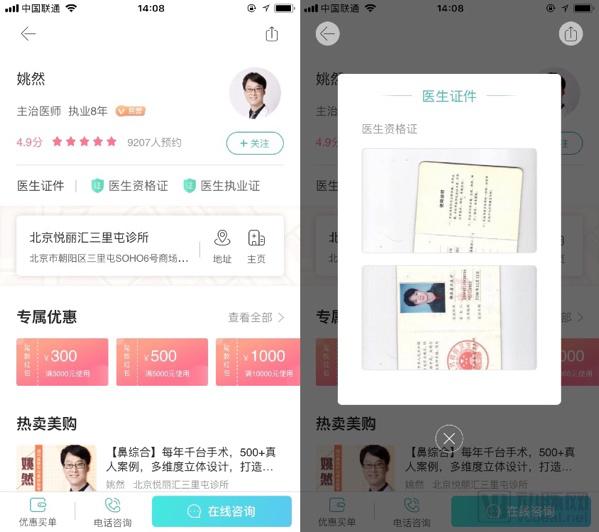
According to statistics from the "2017 Black Book of China's Medical Aesthetics Industry" by the Gengmei App,The number of illegal practitioners in China is nine times that of compliant practitioners.. In other words, only one in ten plastic surgeons is genuinely qualified. To help consumers steer clear of illegal aesthetic medicine practices, the Gengmei App displays the credentials of all doctors on its platform, including their Medical Qualification Certificates and Medical Practice Licenses. Users can also verify the authenticity of medical products by scanning QR codes through the app’s drug verification feature. These measures have further enhanced user trust in the Gengmei App.
It is reported that the Gengmei App, established in 2013, currently operates in over 300 cities across five overseas countries and regions, helping 32 million users continuously enhance their appearance.
The Gengmei App has onboarded over 7,000 licensed medical aesthetic institutions and more than 20,000 practicing physicians, accumulating 3.6 million real-patient cosmetic surgery case records on its platform. To date, the Gengmei App has secured multiple rounds of joint investment from numerous top-tier investment firms and listed companies, including Tencent, Sequoia China, CHJ Jewellery, Matrix Partners China, Vivo Capital, Fosun Pharma, Legend Capital, and China Securities Co., Ltd.