

Hao Ge, Founder of 'The Female Demon Arrives,' Advocates Performance-Driven Marketing in Aesthetic Medicine Industry
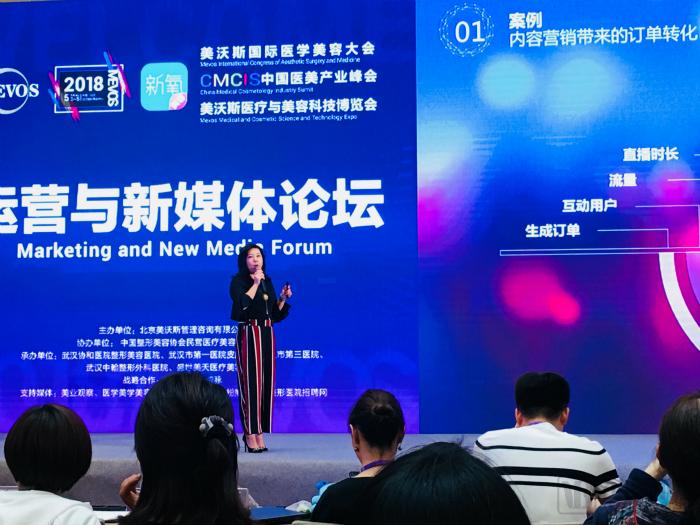
Hao Ge, founder of “Female Demon Boss,” delivers a speech titled “Content-Driven and Data-Empowered: Launching the New Integration of Aesthetic Medicine Operations and Omni-Media”
In May 2018, the MedWorld International Medical Aesthetics Conference was held in Wuhan. At the Operations and Management Summit, Hao Ge, founder of the all-star medical aesthetics talk show brand “Nü Mo Tou Jia Dao” (The Devil Wears Prada), delivered a speech titled “Content-Driven, Data-Empowered: Launching a New Integration of Medical Aesthetics Operations and Omnimedia.” VCBeat (WeChat ID: vcbeat) compiled the key insights.
Prior to founding “The Arrival of the She-Devil,” Hao Ge spent nearly 15 years in the media industry, serving as a producer for numerous talk shows and large-scale variety programs at Beijing Television, Shenzhen Satellite TV, and Anhui Satellite TV, including notable titles such as Hall of Fame and Born with Talent. With the rise of the internet wave, she transitioned from traditional media to digital media, eventually focusing specifically on the medical aesthetics sector. The following is the content of her speech.
It is a great honor to have this opportunity to exchange ideas with everyone here. I would like to share my one-year entrepreneurial journey for mutual discussion, learning, and exploration of how to leverage an omni-media content matrix to integrate online and offline sales into a closed loop, thereby achieving genuine monetization of traffic. I also look forward to receiving your valuable feedback and recognition.
Let’s start by looking at a few sets of figures from “The Devil Wears Scrubs”:
Case 1: A 90-minute live stream garnered 3 million views and 5,000 comments, driving RMB 1.5 million in direct sales conversions.
Case 2: Deployment of an omni-media content matrix, resulting in a 400% month-over-month growth in e-commerce sales and a 43% offline conversion rate.
Over the past year, we have deeply immersed ourselves in the medical aesthetics industry, identifying numerous opportunities while analyzing extensive industry data. We aim to leverage the power of media to genuinely support all professionals across this value chain, reestablishing a positive narrative for the sector. Furthermore, through our content, we seek to reach individuals aspiring to enhance their appearance, guiding them to reputable institutions and distinguished physicians.
Today, a popular saying holds that marketing without measurable results is merely communication. The boundary between brand marketing and performance marketing has vanished. In today’s omnichannel media landscape, establishing a closed-loop marketing system has become essential for every institution. For instance, after live streaming and content-driven “seeding” (i.e., generating consumer interest), how can conversions and sales be achieved? Even mini-programs are becoming more scenario-based and closely integrated into users’ daily lives. These new trends demand that institutions pursue the integration of branding and performance, further underscoring efficient, measurable marketing approaches. Such strategies will empower more institutions and physicians to monetize their traffic effectively.
We have clearly defined “The Arrival of the Diva” as an all-star medical aesthetics talk show. By leveraging the concept of celebrities, we popularize professional knowledge in the field of medical aesthetics through an entertaining approach. Our content matrix encompasses online variety shows, short-form videos (featuring practical medical aesthetics tips, celebrity beauty transformations, and KOL/influencer experiences with the “Jiang Mei” brand), PGC live streaming (including Taobao Live), audio programs, article-and-image content, and interactive social commerce platforms. Furthermore, we operate this content matrix by combining official corporate account content with a network of numerous secondary accounts dedicated to sharing specific topics.
In less than a year, cumulative online views exceeded 100 million, with 50 physicians appearing on web variety shows and PGC live-streaming programs, and comments surpassing 10,000.
In terms of target audience, whether To B or To C, we have our own strategic approach. We interpret the innovative model of an omnimedia content matrix from multiple perspectives: user reach, user insight, user retention, and user conversion. In the future, we will build a comprehensive medical aesthetics platform that assumes different content roles across various stages of media formats.
Throughout our years of experience in the media industry, we have gained a clear understanding of what users truly need. When we entered the broad field of medical aesthetics, we conducted extensive foundational work, including thorough research and iterative trial-and-error processes. Our decision to launch a startup in this sector was not driven by the common perception that medical aesthetics is the quickest path to profitability, nor by the trend of many investors and investment firms allocating resources to this industry. Instead, we aim to drive meaningful change through our own efforts, rather than simply conforming to existing industry norms. Let us first examine how we gain insights into user needs.
How Can the Rising Post-00s Generation Truly Grasp the Pulse of the New-Generation Consumer Market?
As the first generation to come of age in a “decentralized” communication environment, their understanding of personal value, ideological awareness, and emphasis on individual experience have coalesced into a powerful force that is gradually rewriting the rules of the business world. In the coming years, the post-00s cohort will become the mainstay of consumer spending.,These are their personality traits:
“Baoyu” Background:Superior living conditions have led them to adopt a consumption pattern driven not by necessity—where one buys only what is lacking—but entirely by personal preference.
"Internet-Wide" Life:They have been using internet products since birth. The unique environment has made it very easy for them to access various media for information and engage in information exchange;
“Orphan” Mentality:This cohort was born during the period of lowest birth rates; most individuals born after 2000 have no siblings. As only children in extended families, they tend to be more self-centered and prone to loneliness. Consequently, this group has a greater need for well-structured organizations and a sense of belonging. It is essential to help them form communities, enabling them to find emotional support and a sense of belonging within virtual organizations.
Unique Consumer Psychology:Personalization and Self-Awareness. The post-2000s generation dislikes superfluous talk; they prefer highly personalized information. Therefore, you must be able to quickly convey your story and its related content, making them feel, “I am who I am, and I am unique.”
Consumer Demand:Unlike their predecessors, the post-00s generation is highly willing to spend on their hobbies and interests, often splurging lavishly on favorite celebrities or in-game skins. They are prepared to pay for knowledge and virtual products, and they do not shy away from challenging authority. If they disagree with your viewpoint, they will express it directly. Once your product fosters a sense of “companionship” and “belonging” among these post-00s consumers, they will demonstrate exceptionally high levels of engagement and purchasing intent.
Can the Post-90s Generation Shoulder the Era and Lead the New Consumption Age?
Nowadays, it is no longer accurate to say that the post-90s generation is still young. Today, individuals born in the 1990s are already 28 years old, rapidly approaching the age of thirty, traditionally regarded as a milestone for establishing oneself in life. The preferences of this demographic have become increasingly labeled and segmented. We have conducted a series of related surveys among our customer base and would like to share several key findings:
1. “Treat yourself better” is a key purchasing motivator, with physical appearance being another; these concepts are incorporated into the scripts used by consultants and nurses to serve as persuasive cues.
2. I despise the tear-jerking gimmicks in variety shows—the tropes are all too familiar;
3. It’s not that I dislike magazines or anything traditional; I simply dislike mediocrity. Content should avoid being mediocre and instead demonstrate greater personalization.
What Do Women Born in the 1970s and 1980s Fear Most?
In this era of hypersensitivity to “aging,” it is often difficult to live as we please. Pressure, anxiety, and fear burden us with a prematurely aged heart—but is this truly what we desire? Shouldn’t women embrace a life of elegance, self-assurance, and beauty?
Perhaps the anxiety of early aging stems from dwindling possibilities, from the fear of time’s hurried passage and the helplessness in the face of an unchangeable reality.
In plain terms, we desire much and exert ever-greater efforts, yet time affords us fewer and fewer opportunities to correct our course. As we age, we draw nearer to the ordinary middle-aged person we have long sought to avoid becoming.
For individuals born in the 1970s and 1980s, aging is an enduring topic. It is not difficult to identify ways to reach them and help them address this issue together.
I wonder if everyone agrees with my analysis of the target population. Because we have been gaining insights into user needs from the early stages, we are better positioned to address those needs. In this era of fragmented internet usage, users have diversified their media choices, and marketing approaches have become increasingly varied. The market that institutions face is now more segmented than ever before; users are more finely segmented, communication channels are complex and ever-changing, and the sophistication of marketing strategies continues to advance.
Thus, by gaining insights into the distinct needs of consumers and aesthetic seekers, it becomes easier to identify where they prefer to spend their time, which media platforms they are willing to engage with for longer durations, and what types of content they favor. Consequently, we must leverage omni-channel media strategies to reach them.
From the perspective of omni-media, let us revisit the terms we are familiar with: traditional media, new media, self-media, new media matrices, self-media matrices, and numerous other combinations. But how exactly are they defined?
In fact, the first thing we need to understand is that omnimedia encompasses the entire cluster of integrated online and offline media.
Traditional media, without further elaboration, refers to media channels that are accessible and understandable to people of all age groups, educational backgrounds, and geographic regions. It represents authority and credibility.
What Is New Media? In terms of format, new media encompasses a wide variety of forms, including short videos, audio content, and Wi-Fi-based media.
What is We-Media? This phenomenon arises because consumer preferences are ever-changing, and the themes that guide consumers have become increasingly diverse. In the past, celebrities were the epitome of trends; however, with the emergence of internet influencers, Key Opinion Leaders (KOLs), and major online personalities, ordinary individuals have also joined this marketing battle, becoming new “sales powerhouses.” Examples include Zhang Dayi and Papi Jiang. Increasingly, people are focusing on highlighting and packaging their personal IP (Intellectual Property/Brand) image. By leveraging a matrix that combines we-media with new media, they have become ubiquitous across various media platforms. Today, individuals use major live-streaming and video platforms to express and showcase themselves. As more people recognize the powerful dissemination potential of User-Generated Content (UGC), they are capitalizing on this trend by launching numerous innovative engagement strategies.
For "The Arrival of the Diva," our current and future efforts focus on achieving targeted breakthroughs across an integrated media ecosystem that combines traditional media integration, a self-media matrix, and new media, as well as a full-spectrum content matrix blending PGC (Professionally Generated Content) and UGC (User-Generated Content). Within this overall matrix layout, numerous strategic breakthrough points are distributed, which we are leveraging in alignment with our own product formats.
When we revisit the term “omni-media,” it becomes very clear that it does not mean any short video or audio clip we encounter qualifies as “new media.” We hope everyone gains a clear understanding of the concept of omni-media.
Take, for example, the omni-media content matrix strategy of “Toutiao.” Often referred to as the “Universal Toutiao,” what does this concept entail? It has established an extensive matrix layout, akin to a centipede with numerous appendages. In terms of information dissemination, it boasts multiple touchpoints that reach users across different demographics, regions, domains, and content categories.
Within our own omni-media content matrix for “The Arrival of the She-Devil,” we have undergone extensive trial and error, continuously experimenting with diverse content to engage our audience.
As you have just heard many insights shared, short-form video is a channel for reaching users. As you can see, Toutiao hosts three distinct short-video platforms: Douyin, Huoshan Short Video, and Xigua Video.
Douyin targets white-collar professionals in first-tier cities, emphasizing a cutting-edge and entertaining vibe that demands high-quality, creative short-video content. Conveying a single point clearly within 15 seconds poses a significant challenge for all creators.
Huoshan Short Video and Xigua Video are designed to reach users through different content layers, enabling precise outreach even in third- and fourth-tier cities.
All short-video advertisements achieve precise reach and boast high conversion rates. Notably, Douyin has integrated with Sina Weibo and Taobao shopping carts, while UGC monetization and content generation are also being leveraged. These efforts collectively represent the most effective phased demonstration of an optimal omnimedia content matrix.
Let us revisit the concept of omni-media. By tracing its origins and starting with the iterative model of the internet, the matter will become perfectly clear.
The earliest era of the internet was an era of tools. At that time, we read news on web portals, used email and instant messaging services such as MSN and QQ. China Mobile also launched early services like Fetion, while JD.com and Taobao emerged as shopping tools during this tool-centric period.
Today, upon further review, both surviving apps and web portals have evolved into platforms centered on content operations in the internet era. Representative examples include Xiaohongshu (Little Red Book) and Jinri Toutiao (Today’s Headlines). WeChat has rolled out its “Search” feature for content discovery, while Taobao’s most significant strategic move this year is the development of a Professional Generated Content (PGC) ecosystem.
I hold the following view: the development of the internet in China can be roughly divided into three stages.
Phase I, marking the earliest phase of internet development, which I refer to as the concept-driven era. This period lasted from 1995 to around 2004. Characterized by the nascent stage of the internet, the online world was largely uncharted territory, with limited interactive content and service options available. At that time, there was little understanding of what constituted a “good product,” or even how to develop products.
## Phase II, which was the growth phase of internet development, a period I refer to as the product-driven era. Many excellent tool-based products emerged.
Phase Three, marking the era of mobile internet operations. Today, the theme of our conference is the Operations and New Media Forum. Only those proficient in content, user engagement, media, and event management can be considered truly skilled in operations.
In light of the evolution of the internet, where lies the primary channel for user acquisition today? It is through mobile platform traffic gateways. But will precise mobile entry points necessarily deliver substantial traffic and targeted audiences?
Through internet-based methods, we precisely set long-tail keywords during omni-media promotion. We have a clear understanding of how to identify and configure these keywords. When distributing content across various media platforms, we can automatically capture long-tail keywords using web crawling technologies, thereby enabling promotion on leading media outlets and achieving precise user reach. We have established our own system capable of network-wide data crawling and promotion. All of this relies on both experience and systematic methodologies. “The Arrival of the Female Demon” is already capable of achieving this.
As we know, the open rate for WeChat Official Accounts is declining. For instance, under the “5+2” posting schedule, the open rate stands at 2%, while the read-through rate is 5%. This phenomenon occurs because a significant portion of traffic originates from shares on WeChat Moments. In many self-media operations, influencers’ live streaming and various other tactics are frequently employed, yet they often yield limited effectiveness. These trends essentially reflect the illusory prosperity of media traffic. The ultimate goal of user acquisition must be reaching the target audience, with identifying and addressing their needs as the core focus.
We have just discussed the needs of different consumers and users, as well as how to strategically deploy an omnichannel media presence. Now, let us examine what is meant by a “content matrix.”
Let’s begin with the content matrix. Content is undoubtedly a critical component of the entire marketing closed loop, as it reflects the brand attitude and even the brand tonality of each medical aesthetics institution and every physician. It determines whether your institution’s brand is perceived as professional and serious or lively and fashionable, gradually shaping impressions throughout the closed loop. These elements serve as manifestations of your labels, attitudes, credibility, and authority.
Compared with previous years, consumers no longer “look up to” brands. In this context, brands must also lower their posture, immerse themselves in the consumer base, demonstrate more sincerity and fewer gimmicks, and let consumers see the brand’s attitude. JD.com, for instance, has consistently built consumer trust through high-quality products and a sincere approach, which has led to its success today. Furthermore, while building trust, brands must also create differentiation within the vast blue ocean of the market; only in this way can they establish memorable brand impressions among consumers. Brands that are both sincere and distinctive will surely secure a place in consumers’ hearts.
Content Matrix, in simple terms, is a marketing matrix—our practical strategic approach. Having identified user preferences and selected media channels, we must determine what type of content to use to reach them.
In 2017, short-form video content surged in popularity. Over my more than decade-long career, the media landscape has undergone profound transformations, driving a revolutionary shift in content formats.
In the past, we watched 50-minute programs on large screens. With the advent of the internet, online variety shows shrank to 30 minutes, and gradually to 15 minutes. In the era of short-form video, content has further decreased from 15 minutes to under 10 minutes. Now, it takes just 15 seconds to convey a message clearly, indicating that users prefer content that is simpler, faster, and more concise. This also demonstrates that the time users spend acquiring information is becoming increasingly shorter.
Early this year, a report from Newrank stated that users now spend an average of 74 minutes per day on Douyin. This implies that these 74 minutes are not spent on WeChat or various other apps, but entirely on Douyin. Consequently, many of my clients have begun leveraging Douyin for customer acquisition.
I’d like to ask everyone here: Have you started using Douyin? Have you acquired effective users? In my view, if we aim to comprehensively optimize traffic monetization and marketing, Douyin serves merely as our vanguard, leading the charge.
In the future, we will adopt diverse strategies combining various “fronts”—online, offline, and integrated channels—to more precisely reach users, foster engagement, and drive conversions. Only by deploying a content matrix across all media platforms, strategically positioning our brand, and leveraging the combined authority and credibility of institutions and physicians can we emerge as a standout player and win this campaign.
Therefore, different customer segments require distinct media channels and content strategies for effective outreach. These user personas and big data insights (including the BI big data systems we will implement in later stages) are derived from an omnimedia content matrix. Consequently, the innovative marketing model of the omnimedia content matrix must be data-driven, identifying the underlying target points and reaching each segment through tailored content and diverse media formats.
After reaching users, we gain insights into their behavior. As mentioned earlier, leveraging BI big data analytics enables us to deliver personalized insights tailored to each individual. By presenting customized content, we can identify which user segments are interested in specific offerings and measure their engagement duration. Only through deeper user insights can we effectively convert online traffic into millions in offline revenue.
“The Arrival of the Female Demon” will establish an omni-media layout, precisely reaching users through a matrixed content strategy. By leveraging big data to gain user insights and empowering brands through the establishment of brand labels for medical aesthetic institutions and personal IP labels for doctors, it will convert online traffic into offline performance.
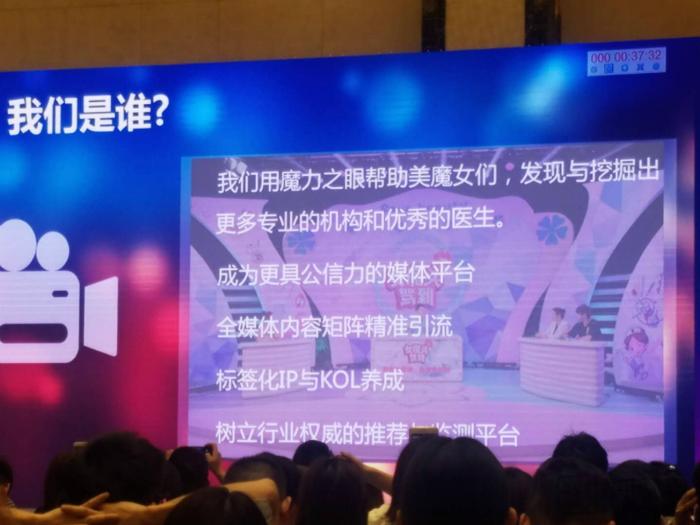
We have an online variety show; in its third season, we will launch cross-platform collaboration between online and television channels, featuring diverse short-form videos, PGC live streams, graphic articles, and offline events, with content distributed across omni-media platforms.
In the future, regardless of the stage—whether it be precise targeting, insights, data accumulation, user reactivation, conversion, or monetization—“The Devil Wears Prada” will provide the most objective interpretation and breakdown based on big data analytics. Moving forward, we will offer comprehensive, multi-dimensional solutions to support the medical aesthetics industry, including full-media content matrix operations, training courses on consumption upgrading, service upgrading, and “Doctor’s Magical Language,” as well as international exchanges and fund support.
“A senior figure in the medical aesthetics industry once told me that this sector is about selling vision—we are peddling imagination of a better future. We aspire to achieve greater transformation through enhanced beauty, making it an endeavor akin to universal salvation. ‘The Devil Wears Beauty’ is committed to walking this path alongside you, never giving up.”
"In such an era, let us join hands to support one another and jointly promote the healthy and orderly development of the medical aesthetics industry."