

Meifang Health Files IPO Prospectus: CEO Liu Yongwang Highlights Consumption Upgrade Driving Rapid Growth in Health Services
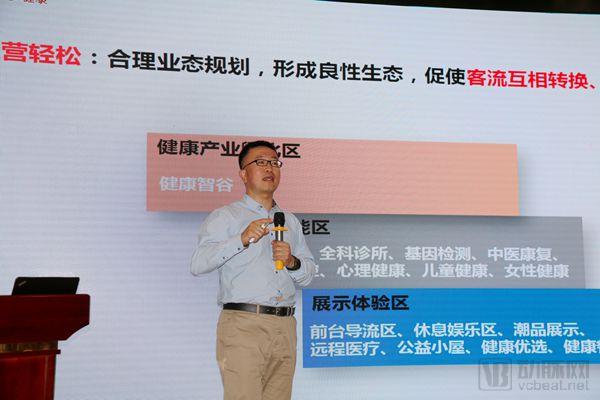
Liu Yongwang
Graduated from:
Tsinghua University School of Economics and Management
EMBA, PBC School of Finance, Tsinghua University
Formerly:
Intel Asia-Pacific Executive
Wanda Group Executive
Current Position:
President of US Health
Against the backdrop of real estate enterprises making significant inroads into the healthcare industry, the China Real Estate and Healthcare Innovation Forum, focusing on the integration of real estate and healthcare, was held at the Shanghai Health Intelligence Valley Building on May 9, 2018. Investors and entrepreneurs from the real estate and healthcare sectors engaged in discussions on how the real estate industry can enter the healthcare market and explore localized cooperation models. Liu Yongwang, President of Meifang Health, delivered a speech titled “Supporting the Health Industry and Empowering Urban Development” at the forum.
Below are the key points from his speech, curated and shared by VCBeat (WeChat ID: vcbeat).
On October 18, 2017, General Secretary Xi Jinping pointed out in his report to the 19th National Congress of the Communist Party of China that the Healthy China Strategy should be implemented. He stated that the people’s aspiration for a better life is our goal, and health is the cornerstone of a better life. The newly established National Health Commission, though differing by only one character from its predecessor, the National Health and Family Planning Commission, reflects the core direction of national policy on the health industry. This change in a single character highlights the central shift in focus from disease treatment to health promotion.
The Big Health sector represents a vast market. According to current statistics, the health service industry is projected to reach a market size of RMB 8 trillion in 2020 and RMB 16 trillion by 2030. Currently, China’s health industry accounts for only 5% of GDP, compared with 17% in the United States, 11% in the European Union, and 10% in Japan. Per capita spending on health services in China stands at just RMB 5,300, roughly one-sixth of Japan’s level and one-fourteenth of the EU’s. On average, household investment in health remains significantly lagging. As health consumption upgrades, resident demand and spending on health are expected to surge at an accelerating pace. These figures suggest that the Big Health market will likely far exceed the RMB 8 trillion and RMB 16 trillion estimates, indicating a market with enormous potential.
Amid the surging prospects of such a vast market, what is the current state of the health services industry? In fact, there are numerous pain points. We can analyze this from three dimensions.
From the government’s perspective, promoting healthy lifestyles, improving the tiered diagnosis and treatment system, and advancing health technology innovation are all urgent issues that need to be addressed. The health industry is in urgent need of upgrading.
From the consumer’s perspective, how to access one-stop health services that are safe, high-quality, readily accessible, and dignified has been a persistent challenge for many years. Despite the presence of highly capable teams, difficulties in seeking medical attention and receiving treatment remain longstanding and intractable issues. Since the Wei Zexi incident, contradictions surrounding safe medical access have become particularly pronounced. In terms of user experience, consumers also seek convenience; they wonder whether health services could be as convenient and timely as today’s food delivery services, where a simple phone call can promptly resolve their needs.
From the perspective of practitioners, establishing a new clinic is inherently challenging. Take Dr. Zhang Qiang, a guest speaker at the event, as an example. Although Dr. Zhang is a medical expert, he had to devote substantial time to personally handle the complexities of opening a clinic—including site selection, negotiations, licensing, design, and renovation—to enable more patients to access efficient and convenient medical services. These myriad administrative tasks consumed much of his valuable time, whereas experts like him would prefer to dedicate that time to patient care, thereby delivering greater benefits to those they serve. The predicament faced by Dr. Zhang is a common dilemma encountered by leaders of most physician groups in China, representing a significant pain point for healthcare operators.
The establishment of Meifang Health aims to address the aforementioned pain points by creating a comprehensive health and wellness service ecosystem that meets the diverse needs of governments, consumers, and operators.
Meifang Health is China’s first operator of integrated health complexes. In developing these complexes, Meifang has prioritized a series of innovations.
Whether it involves the introduction of a single health-related business format or the establishment of a comprehensive “Healthy Mall” model, such approaches have become highly prevalent and mature in developed countries including the United States, Japan, South Korea, and Singapore. According to research by professional institutions, Chinese consumers’ demand for healthcare services within commercial complexes ranks among the highest, surpassed only by their demand for supermarkets, fast fashion, and large-scale cinemas. Consequently, the entry of Meifang Health can significantly enrich the business mix of commercial complexes, clearly communicate the shopping center’s positioning and differentiation to consumers, serve as a “signature” tenant category, and highlight the uniqueness and distinctiveness of the shopping center.
On the other hand, health-conscious consumers often possess strong purchasing power, and health-focused brands enjoy high customer loyalty, which can help diversify and optimize the shopper demographic of shopping malls. Meanwhile, compared with other retail formats, health-sector brands demonstrate more stable leasing intent, contributing consistent rental income to shopping malls. Furthermore, health-related categories such as dental care and optometry deliver high sales per square meter, emerging as the next profit growth engine for shopping malls.
In the future, consumer demand for health services will not be limited to standalone offerings such as medical check-ups; instead, it will integrate leisure, wellness, beauty, exercise guidance, dietary counseling, and disease rehabilitation into a combined consumption model. This shift represents a transition from process-oriented services to venue-based consumption, imposing higher competency requirements on health service providers and even giving rise to the concept of large-scale consumption hubs such as “health complex malls.”
In response to this trend, Meifang Health has pioneered innovation by establishing itself as China’s first integrated operator of comprehensive health services. Its standard stores integrate a diverse range of service offerings, including the Health Intelligence Hub, premium health screenings, modern Traditional Chinese Medicine (TCM), general practice clinics, specialized health management, genetic testing, telemedicine, minimally invasive aesthetic medicine, children’s health, mental health, and trendy health products. Furthermore, Meifang Health promotes novel elements of a healthy lifestyle—such as healthy dining, sports and leisure activities, trendy health products, and parent-child entertainment—by incorporating these health-focused services into commercial complexes, thereby enhancing the health and well-being of local residents.
Taking Jinniu Wanda Plaza as an example, its total sales reached RMB 1.43 billion in 2016, with an annual foot traffic of 24.52 million visits. For health service brands, entering commercial complexes undoubtedly provides a larger market platform. To seize this important sector, various brands have flocked to these venues, yet they often operate in isolation with fragmented distribution. Even within the same complex, different health-related business formats have failed to form an internal ecosystem. Meifang Health’s innovative collaborative model brings a higher-dimensional advancement to the development of these business formats. In selecting commercial complexes for entry, Meifang Health employs a systematic set of screening criteria, a scientific review process, and extensive negotiation experience, working alongside various business formats to jointly select locations across China.
“Making health-related business operations hassle-free and worry-free while boosting performance” is the guiding principle for all health service formats under Meifang Health Services. Taking the Chengdu Jinniu Wanda Plaza branch of Meifang Health as an example, from the interior design and decoration of various health service sectors to submitting and completing all necessary approvals, and finally to opening and operations, the experienced Meifang team has been stationed on the front lines since the initial stages, providing in-depth follow-up and coordination. This has become the strongest support for health service brands that lack—or even have no—experience in operating within commercial complexes.
Another advantage of Meifang Health lies in its capacity for rapid iteration and scalable replication. In the initial phase, Meifang Health will implement its strategic layout through anchor stores, selecting pilot sites within mature commercial complexes in core cities across China—including Chengdu, Wuhan, Shenzhen, Beijing, Shanghai, Tianjin, Chongqing, and Changsha—to accumulate experience, drive iterative development, and achieve rapid expansion. Meanwhile, Meifang Health collaborates with top-tier partners in the broader health industry to continuously enrich its industrial offerings, simultaneously constructing and operating health complexes and large-scale health industry towns nationwide. Meifang Health aims to join forces with more like-minded partners dedicated to the greater health sector, collectively supporting the Healthy China strategy and contributing to the realization of universal health coverage.