

BGI Genomics and Mayinglong Announce Strategic Collaboration to Advance Gut Microbiome Research and Applications in Anorectal Health
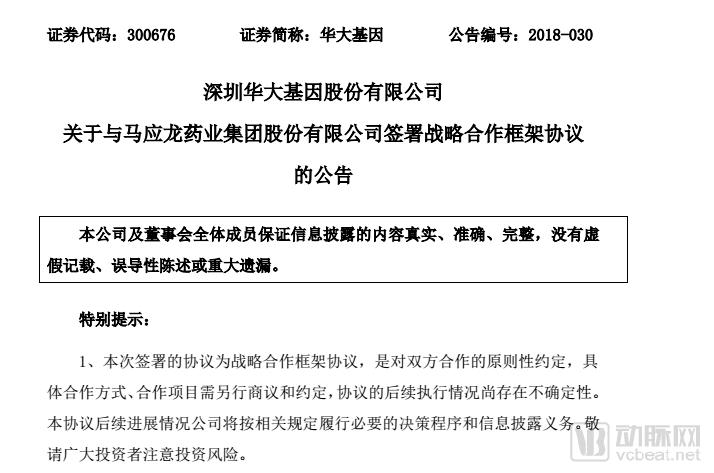
On May 10, 2018, VCBeat learned that BGI Genomics Co., Ltd. (hereinafter referred to as “BGI Genomics”), a leading domestic sequencing institution, and Ma Yinglong Pharmaceutical Group Co., Ltd. (hereinafter referred to as “Ma Yinglong”) signed a strategic cooperation framework agreement in Shenzhen on May 9. The two parties will jointly promote the development of gene technology in the anorectal health industry. In accordance with the agreement, both sides have decided to establish a comprehensive strategic partnership based on the principles of “complementary advantages, talent cultivation, comprehensive cooperation, and mutual development,” leveraging their respective resources and technological strengths.
Ma Yinglong is a China Time-honored Brand enterprise certified by the Ministry of Domestic Trade, founded in 1582 AD. The company focuses on the pharmaceutical and health industry, with its core positioning in the anorectal and lower gastrointestinal tract fields. It has established a full industrial chain encompassing pharmaceutical operations, diagnostic and therapeutic technologies, and medical services, positioning itself as a provider of anorectal health solutions and building a commercial ecosystem. According to the announcement, Ma Yinglong’s total revenue for the full year of 2017 was RMB 175 million, with total assets amounting to approximately RMB 275 million.
Prior to the application of next-generation sequencing (NGS) technology in microbial sequencing, microbiome research was limited to single-species and qualitative analyses, and the understanding of microbial detection was confined primarily to infectious diseases. NGS has enabled multi-species detection and quantitative analysis, revealing correlations between the human microbiome and various conditions previously thought to be unrelated to commensal microbes, such as diabetes and depression.
To a certain extent, next-generation sequencing technology has revolutionized the academic community’s understanding of microbiomics. Consequently, an increasing number of researchers have dedicated themselves to microbiomics research, yielding abundant scientific achievements.
Apart from the skin surface, the external environment most closely associated with human health is the gut microenvironment. Current research suggests that approximately one-third of the small molecules entering the human bloodstream are produced by the gut microbiota. These metabolites play critical roles in essential physiological processes, including immunity and metabolism. Consequently, gut microbiota has become a significant area of focus in medical and health research.
Through collaboration, the two parties can achieve strategic complementarity in their respective business areas and jointly promote the translation of genomic research into practical applications in colorectal health. The specific content can be summarized in the following three aspects:
Following the establishment of a strategic partnership, both parties will leverage genomics as a platform to conduct in-depth basic research and translational applications regarding the role of gut microbiota in healthcare, disease screening, diagnosis and treatment, and rehabilitative care within the fields of proctology and the lower gastrointestinal tract. These efforts include, but are not limited to, fecal microbiota transplantation (FMT), intestinal SPA, and "Chinese proprietary medicines."
+ gut microbiota” and other fields.
Following the establishment of their strategic partnership, both parties will leverage gene sequencing as a platform to conduct in-depth basic research and translational applications in the diagnosis and treatment of anorectal and lower gastrointestinal diseases, including but not limited to early screening and diagnosis of colorectal cancer, inflammatory bowel disease, and irritable bowel syndrome.
Construct a dynamic meta-omics database encompassing metagenomic data, clinical phenotype data, and gut microbiota metagenomic dynamics during gut modulation for anorectal diseases in the Chinese population. Following the establishment of a strategic partnership, both parties will integrate their resources to jointly build a meta-database for anorectal conditions in the Chinese population, leveraging big-data metagenomics research combined with clinical phenotype data.
This document constitutes solely a letter of intent and shall not be binding or enforceable against either party. This agreement shall remain in effect for three years from the date it becomes effective. Upon expiration, if both parties wish to continue their collaboration, they shall negotiate and execute a separate cooperation agreement one month prior to the expiration of this agreement.