

Kuaixiang Healthcare Steps Forward as a Pioneer in Hospital Third-Party Logistics to Navigate the Zero-Markup Era
Amid the backdrop of tight medical insurance funds, the state’s enforcement of medical cost containment is expected to intensify over the long term. With the full implementation of zero-markup policies for pharmaceuticals since 2017, the gradual pilot rollout of zero-markup policies for medical consumables starting in 2018, and the entry of diagnosis-related group (DRG) payment into substantive discussion stages, the implementation of these policies signifies that the circulation of pharmaceuticals and medical consumables within hospitals will no longer generate direct value.
Hospital pharmacy supply and material allocation departments will transition from profit centers to cost centers. The hospital’s operational system will be restructured, with patient-centered, efficacy-driven medical services becoming the absolute core source of revenue.
Against this backdrop, it has become an urgent issue for hospitals to achieve patient-centered care at controllable costs, effectively manage the circulation of pharmaceuticals and medical consumables within the hospital, ensure a smooth supply of these items, and facilitate the sharing of information resources.
2017 was a “major year” for healthcare reform. From the beginning of the year to the present, various competent authorities and local governments have successively issued nearly one hundred policies covering all aspects of pharmaceuticals, medical services, and more, marking the comprehensive entry of healthcare reform into its “deep-water zone.” In terms of reforming medical service pricing, top-level design mandates the principles of “aggregate control, structural adjustment, selective increases and decreases, and gradual implementation.” The reform pathway has become increasingly clear, starting with measures such as separating drug prescriptions from dispensing, introducing medical service fees, controlling the proportion of drug costs, and curbing the consumption of medical consumables.
The introduction of the drug markup policy in public hospitals can be traced back to the mid-1950s. Prior to the implementation of drug markups, public hospitals were fully funded by the government. Medical service prices were kept low, and drugs were supplied at prices close to cost, with the aim of ensuring that low-income populations could afford medical care and medications. During this period, the government repeatedly reduced registration fees and bed charges to further alleviate the financial burden of seeking medical treatment.
In 2009, the “New Healthcare Reform” was launched, initiating measures to address the practice of “subsidizing healthcare with drug profits.” The “Opinions on Deepening the Reform of the Pharmaceutical and Healthcare System” pointed out that drug price reform should start at the grassroots level, transform the operational mechanisms of primary healthcare institutions, reform the drug markup policy, and implement zero-markup sales of drugs.
In the following years, drug price reforms were gradually rolled out. Starting in 2012, the zero-markup policy for drugs was implemented in more county-level hospitals, and from 2013 to 2014, pilot programs for zero drug markups were launched in some provincial and municipal tertiary hospitals. On July 1, 2017, the zero-markup policy for drugs was officially implemented nationwide across China.
Abolishing drug markups has shifted the traditional compensation model to three channels: fiscal subsidies, adjustments to medical service prices, and internal absorption by hospitals. Currently, fiscal pressures are significant across China, and most public hospital directors have publicly stated that increases in fiscal subsidies have been modest. Regarding adjustments to medical service prices, the current scope and magnitude of adjustments remain relatively limited to provide patients with a buffer against price changes.
Following the nationwide elimination of drug markups in public hospitals, the removal of markups on medical consumables is also advancing rapidly. This year, Ningxia, Hubei, Guizhou, Liaoning, and Shandong have successively announced the comprehensive elimination of markups on medical consumables in public healthcare institutions. Together with Anhui, Beijing, Tianjin, and Guangdong, which had already announced such cancellations last year or earlier, a total of seven provinces and two municipalities directly under the central government are now known to have fully launched price adjustments to eliminate markups on medical consumables.
Schedule of the Timeline for the Abolition of Markups on Medical Consumables by Province
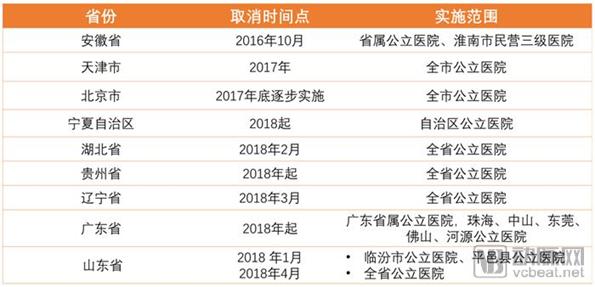
Source: Compiled from public information
Since the deepening of healthcare reform, the scope of public hospital reforms has gradually expanded. The zero-markup policy for pharmaceuticals has been implemented nationwide, transforming drugs from a profit center to a cost center within hospitals. As the external space and potential for hospitals to seek profit margins on drug sales have dwindled, the pressure to reduce internal operational costs has intensified. Under policies such as the zero-markup policy for pharmaceuticals and the “Two-Invoice System,” some hospitals have chosen to collaborate with suppliers through “pharmacy trusteeship” models. This approach has facilitated the separation of hospital pharmacies from hospitals, marking a significant step toward the development of social pharmacies.
In recent years, major pharmaceutical companies have leveraged their own resources to propose the SPD (Supply, Processing, and Distribution) model, which centers on extended supply chain services. By collaborating with hospitals, these companies extend their supply chain services into the hospitals’ central warehouses. This approach not only enhances service delivery to hospitals but also enables pharmaceutical companies to secure control over hospital inventory management, reaching even frontline units such as secondary departments. This strategy plays a decisive role in consolidating and expanding their existing market share.
On May 5, 2011, the Ministry of Commerce officially released the Outline for the Development of China’s Pharmaceutical Distribution Industry (2011–2015). The Outline stated that “the socialization of logistics functions among pharmaceutical distribution enterprises should be encouraged; a demonstration project for the extension of pharmaceutical logistics services should be implemented; and capable enterprises should be guided to extend modern pharmaceutical logistics services to medical institutions and manufacturing enterprises.” In June of the same year, the Ministry of Commerce held an on-site meeting in Beijing on the implementation of the demonstration project for extending pharmaceutical logistics services. At the meeting, the Ministry commended certain pharmaceutical distribution enterprises for their exploratory models of extended logistics services to medical institutions and expressed the hope that such models would be promoted nationwide.
However, as major pharmaceutical companies have poured substantial capital into aggressive market expansion, certain drawbacks of this model have gradually emerged. Relevant national authorities have clearly recognized that supply chain extension services provided by pharmaceutical companies often involve exclusive cooperation agreements with hospitals, creating localized monopolies that hinder market competition. The practice of “pharmacy trusteeship” has also sparked controversy in some regions. Notably, the National Drug Circulation Industry Development Plan (2016–2020), released by the Ministry of Commerce on December 26, 2016, directly removed the provision from the previous five-year plan’s outline that had called for “guiding capable enterprises to extend modern pharmaceutical logistics services to medical institutions and manufacturers.”
In July 2017, the Development and Reform Commission of Guangdong Province drafted the “Anti-Monopoly Law Enforcement Guidelines for Pharmacy Trusteeship,” which clearly identified 11 types of conduct by public hospitals in bidding or selecting pharmacy trusteeship enterprises that may have the effect of excluding or restricting competition; specified 18 types of conduct across three categories by pharmaceutical companies (platform enterprises) that may constitute abuse of market dominance, conclusion of horizontal monopoly agreements, or illegal assumption of administrative functions; and outlined 10 forms of abuse of administrative power, prohibiting government or industry competent authorities from illegally designating service providers, excluding or restricting fair competition among industry enterprises, or depriving market competitors of their statutory pricing rights.
When recounting the decision-making journey behind adopting an in-house third-party model, the Director of the Materials Department at a renowned Grade 3A hospital in Shanghai explained that, traditionally, internal pharmaceutical logistics were primarily managed by the hospital itself. Prior to the implementation of a third-party supply system, various suppliers delivered medications in full cases or standard units to multiple hospital warehouses. These warehouses then distributed the drugs to individual pharmacies either as full cases or as unpackaged loose items. This cumbersome warehousing operation lacked detailed record-keeping, making traceability difficult and resulting in extensive rather than refined warehouse management, excessively high inventory levels, and a disorganized hospital-wide supply network.
To prevent drug shortages and supply interruptions, each link in the hospital pharmaceutical supply chain inflates its demand when placing orders with upstream suppliers. Due to a lack of information sharing and the silo effect, where inventory data is held exclusively by each party, distortion of demand information inevitably occurs. This distortion is amplified at each successive level, ultimately leading to a cumulative increase in pharmaceutical inventories across the supply chain.
At clinical endpoints, pharmacists previously devoted most of their time to logistical processes such as requisitioning, ensuring adequate inventory levels, and accurately managing batch numbers. With the introduction of automated equipment, attention has also shifted to the stability of integration between hardware devices and existing systems. Consequently, drug traceability remains limited to certain nodes, failing to achieve end-to-end traceability.
In light of this, domestic hospitals are increasingly voicing an urgent demand for third-party in-hospital logistics services grounded in quality control and clinical support.
Winning Health Technology Group’s subsidiary, KuaiXiang Medical, currently serves nearly 5,000 hospital clients across China. The substantial demands from these hospital clients have prompted the Group to develop a comprehensive operational plan for internal hospital logistics management, proposing an “Intra-Hospital Super Supply Chain” system.
Kuaixiang Medical In-Hospital Super Supply Chain Model
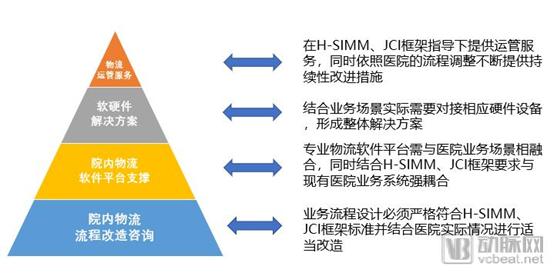
Distinct from traditional SPD models that center on supplier-driven hospital warehousing and logistics reengineering, Kuaixiang Medical’s Super Supply Chain initiates its approach with the construction of a comprehensive material supply chain for hospitals. It encompasses an integrated consulting and transformation strategy covering pharmaceuticals, medical consumables, general supplies, medical equipment, sterile supply services, intravenous admixture center logistics, and even the intra-hospital circulation of laboratory specimens and express delivery services. Leveraging its group’s 24 years of experience in clinical information platforms within the industry, and incorporating modern hospital core competitiveness assessment frameworks such as JCI, Ai Li Bi (Topmed), and HIMSS’s 2018 H-SIMM model, it constructs an intra-hospital super supply chain based on holistic operational services.
The in-hospital super supply chain not only considers the underlying services of the information platform, but also emphasizes the universality of in-hospital supply chain operations, the traceability of integration between the information platform and clinical practices, the compatibility with in-hospital hardware equipment, and the standardization of in-hospital logistics operations. Building on operational experience across multiple hospitals, Kuaixiang Medical has introduced a current standard system for in-hospital logistics operations, detailing action breakdowns for every procedural step. It applies modern logistics concepts and Kanban-based operational management to hospital settings, while continuously optimizing and improving processes through Toyota’s lean management philosophy.
KuaiXiang Medical Super Supply Chain Operation System
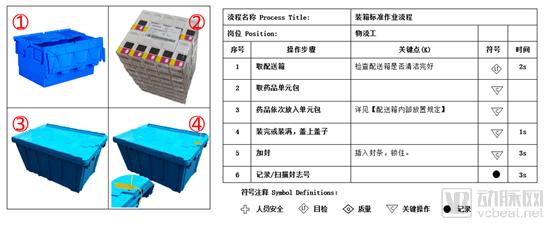
Image source: Provided by the company
The super supply chain places greater emphasis on the tight integration of logistics processes with existing hospital business workflows, positioning logistics operations as the core of continuity in internal hospital operations rather than merely a standalone warehousing and distribution system. At every stage, Kuaixiang Medical benchmarks against globally renowned hospital standard systems and proposes best-practice guidelines tailored to China’s specific context.
Building on supply chain optimization, it is essential to achieve seamless integration with existing hospital diagnosis and treatment information systems, thereby establishing a closed-loop traceability system for the clinical use of pharmaceuticals and medical consumables. The ultimate goal is to ensure the safety and end-to-end traceability of medication and medical device usage, which aligns with the increasingly stringent requirements imposed by the National Health Commission and the National Medical Products Administration in recent years regarding healthcare safety.
Furthermore, the electronic self-service management system has been fully implemented for all qualification documents related to manufacturers and agents of procured items, as well as product-specific documentation such as registration certificates, authorization chain documents, instructions for use, and photographs. This approach integrates the hospital’s previously complex offline paper-based processes through internet information technology, thereby enhancing management quality and reducing administrative burdens for both hospitals and suppliers. All business transactions are conducted within a controlled framework of qualification management, establishing a high-standard access system for hospital material and medical device management.
KuaiXiang Medical Super Supply Chain Business Scope
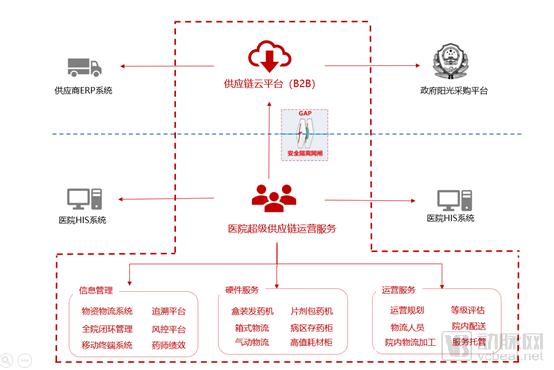
Kuaxiang Medical provides hospitals with more than just a logistics operations system through its hospital super supply chain operational services. It also offers a closed-loop management and traceability platform based on quality safety, a risk control platform based on logistics safety, and a performance evaluation platform covering the entire logistics operation, thereby delivering comprehensive information services for hospital logistics operations. Hospital logistics efficiency relies on repetitive hardware-based tasks for standardized operations and offline personnel services for customized tasks. In addition to providing integrated hardware solutions, Kuaxiang Medical’s offline operational services separate in-hospital material logistics activities from clinical workflows, offering dedicated support throughout the logistics process. This liberates pharmacists and nurses, enabling professionals to focus on their core responsibilities.
More importantly, within the operational framework of a super supply chain, the introduction of Quality Control Circles (QCC) and the Deming Cycle (PDCA), based on the circulation data and processes of pharmaceuticals and medical consumables, can facilitate continuous optimization and improvement of hospital operations. Areas for optimization and improvement include, but are not limited to, the refinement of logistics operational processes, enhanced adaptability of hardware and infrastructure, continuous upgrading of software business functionalities, and ongoing optimization of unit workload based on business data, thereby continuously elevating the level of hospital operational management.
A renowned Grade-A tertiary hospital in Shanghai opted for in-hospital Fast-Share Medical Operational Services during its internal logistics upgrade. Following the renovation, the circulation and delivery of pharmaceuticals with an annual turnover exceeding RMB 300 million are primarily managed by an operations supervisor and six dedicated logistics staff members. This system enables real-time control over in-hospital inventory and consumption, significantly enhancing operational efficiency. It has achieved effective management of pharmaceutical and material flow within controllable costs, ensuring uninterrupted drug supply and shared information resources across the hospital.
Logistics Personnel Hand Over Items to Nurses
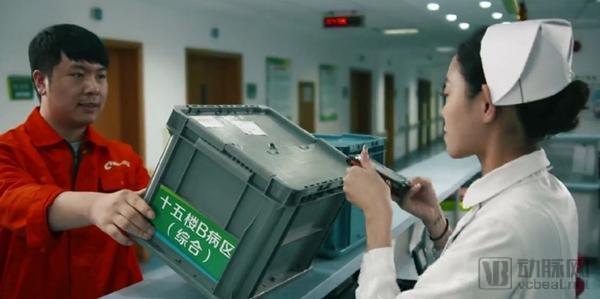
Image source: Provided by the company
Leveraging Winning Health’s years of expertise in hospital information systems, Kuaixiang Medical has not only inherited the team of experts who have been dedicated to hospital information software systems for over a decade but also integrated a specialized team of experts in hospital supply chain logistics. This synergy has created a leading hospital super supply chain logistics service system—a comprehensive in-hospital logistics service framework encompassing logistics consulting, process design, software customization, automated equipment integration, operational management, and physical logistics services.
Kuai Xiang Medical’s General Manager, Xue Zheng, Introduces Products to Users
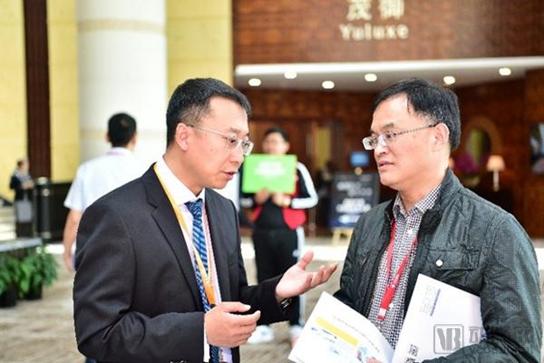
Image source: Provided by the company
Currently, Kuaixiang Medical has launched this collaboration with more than ten Grade A tertiary hospitals in China. Regarding future development, Xue Zheng, General Manager of Kuaixiang Medical, stated that the company aims to go beyond providing third-party logistics management for hospitals. Kuaixiang Medical seeks to leverage its accumulated expertise in hospital operations to support hospitals through collaborations in logistics, patient flow, and information flow. By utilizing its professional advantages, the company intends to enhance operational efficiency, reduce operating costs, ensure the safety of medication and medical device usage, and assist hospitals in transitioning toward a lean management model.