

Tencent Launches First Medical AI Engine 'Tencent RuiZhi' to Enable Intelligent Triage and Precision Doctor Matching
The rapid rise of artificial intelligence technology has brought about breakthrough transformations across various industries, particularly in the healthcare sector. Recently, VCBeat learned that Tencent has launched its first medical AI engine—Tencent Ruizhi pioneered the pre-consultation phase by launching an intelligent triage system at the Guangzhou Women and Children’s Medical Center. Leveraging big data and artificial intelligence to address resource mismatch, the system enables patients to accurately identify the most suitable physicians through intelligent human-computer dialogue, while allowing doctors to screen for patients aligned with their specialties, thereby enhancing the precision and efficiency of medical services from the source.。
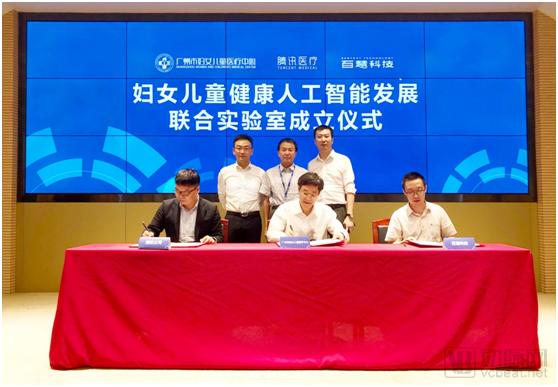
This breakthrough and implementation of the feature are powered by Tencent Ruizhi. As Tencent’s first medical AI engine, Tencent Ruizhi is a research and development outcome of the Tencent Medical Big Data Laboratory. Its greatest advantage lies in its core capability: a knowledge graph built on big data, combined with AI algorithmic models, to enable prediction of diseases and disease progression—a critical component of medical AI applications.
Tencent Ruizhi: Combining the Dual Advantages of Data and Technology. The data advantage lies in the construction of an authoritative, comprehensive, and dynamic medical knowledge graph. A knowledge graph is essentially a semantic network and represents the primary form of knowledge representation in the era of artificial intelligence. Traditional knowledge graphs are mostly constructed through manual extraction, resulting in limited knowledge scale and untimely information updates.
Tencent Ruizhi’s medical knowledge graph is primarily derived from two sources. The first consists of authoritative medical prior knowledge, encompassing nearly 10,000 medical textbooks, tens of millions of academic papers and popular science articles, as well as a comprehensive disease knowledge base covering symptoms and signs, laboratory and diagnostic test indicators, and pharmacological treatments. The second source comprises real-time updated data, including de-identified patient health and medical records. Leveraging artificial intelligence technologies, this vast amount of data is processed to extract entities, attributes, and relationships, thereby constructing and refining the medical knowledge graph to further uncover valuable insights.
From a technical perspective, in addition to its robust big data processing capabilities, Tencent Ruizhi builds its AI core engine around Tencent’s leading Natural Language Processing (NLP) technology, integrated with medical image Optical Character Recognition (OCR) capabilities and AI algorithmic models such as deep learning.
VCBeat has learned that Tencent Ruizhi’s AI engine conducts disease prediction in roughly three stages:
First,Extracting Rich Medical Knowledge from a Vast Corpus of Literature, this extraction process is equivalent to learning and memorizing medical knowledge;Secondly,,Understanding and processing the extracted knowledge, including mapping medical terminology to patient-friendly language, reasoning about the correlations between symptoms and diseases, and managing the logic of question-and-answer dialogues;Finally,Application in Context, for instance, in intelligent triage scenarios, by integrating physicians’ professional specialties and historical clinical experience to construct comprehensive, detailed, and real-time physician profiles, thereby matching patients with the most appropriate medical resources through intelligent consultation.
Tencent Ruizhi pioneered the implementation of intelligent triage to address pre-consultation needs.Focusing on maternal and child health diseases as a breakthrough point,Currently, it covers more than 500 common diseases in the field of maternal and child health. The Guangzhou Women and Children’s Medical Center has been piloting the intelligent triage function for over three months, achieving a disease identification accuracy rate of 94% and a physician recommendation accuracy rate of over 96%. Furthermore, Tencent Ruizhi continues to expand its capabilities in general practice, with its disease coverage now spanning 23 medical specialties and encompassing more than 3,000 disease types.
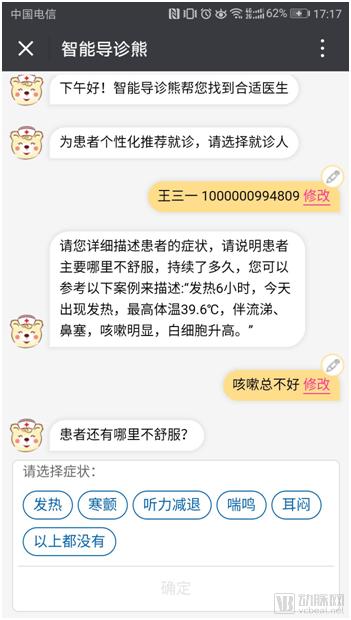
(“Guide Bear” Intelligent Triage Interface)
Intelligent triage is primarily applied in three scenarios: first, for “"Knowing the Symptoms, Not the Disease"”, such as “What condition causes a hard lump under a child’s armpit, and which department should I consult?”; second, addressing ““Knowing the Disease, Not the Specialty””, for example, “Which department should I visit for my baby’s paronychia?”; third, addressing “Consult a doctor directly”, simply enter the doctor’s name to directly access their appointment registration, helping patients in need quickly find the right physician. Meanwhile, Tencent Ruizhi can distinguish between first-time and follow-up patients, recommending the same doctor for follow-up visits to enhance healthcare efficiency and patient experience.
By collaborating with professional medical institutions and experts, Tencent Ruizhi will continue to optimize its AI engine and refine its knowledge graph, while expanding its applications to a wider variety of scenarios. These include intelligent triage before consultation, precise appointment scheduling during consultation, accurate follow-up visits and intelligent patient follow-up after consultation, as well as intelligent Q&A conversations in the broader health sector, thereby infusing AI capabilities into key aspects of healthcare.
As the capability output of Tencent’s medical AI engine, RuiZhi will inject strong momentum into Tencent Healthcare. The Tencent Healthcare Big Data Laboratory will continue to incubate more pioneering technologies and products, helping healthcare institutions improve service quality and efficiency, enhance patients’ medical experience, accelerate deeper and broader integration of technology and healthcare, and promote the innovation and implementation of medical technologies.