

Alibaba Health Ventures into Chronic Disease Management with AI-Powered Diabetes Solution 'Ruining Assist-Sugar' to Enable Standardized Nationwide Care
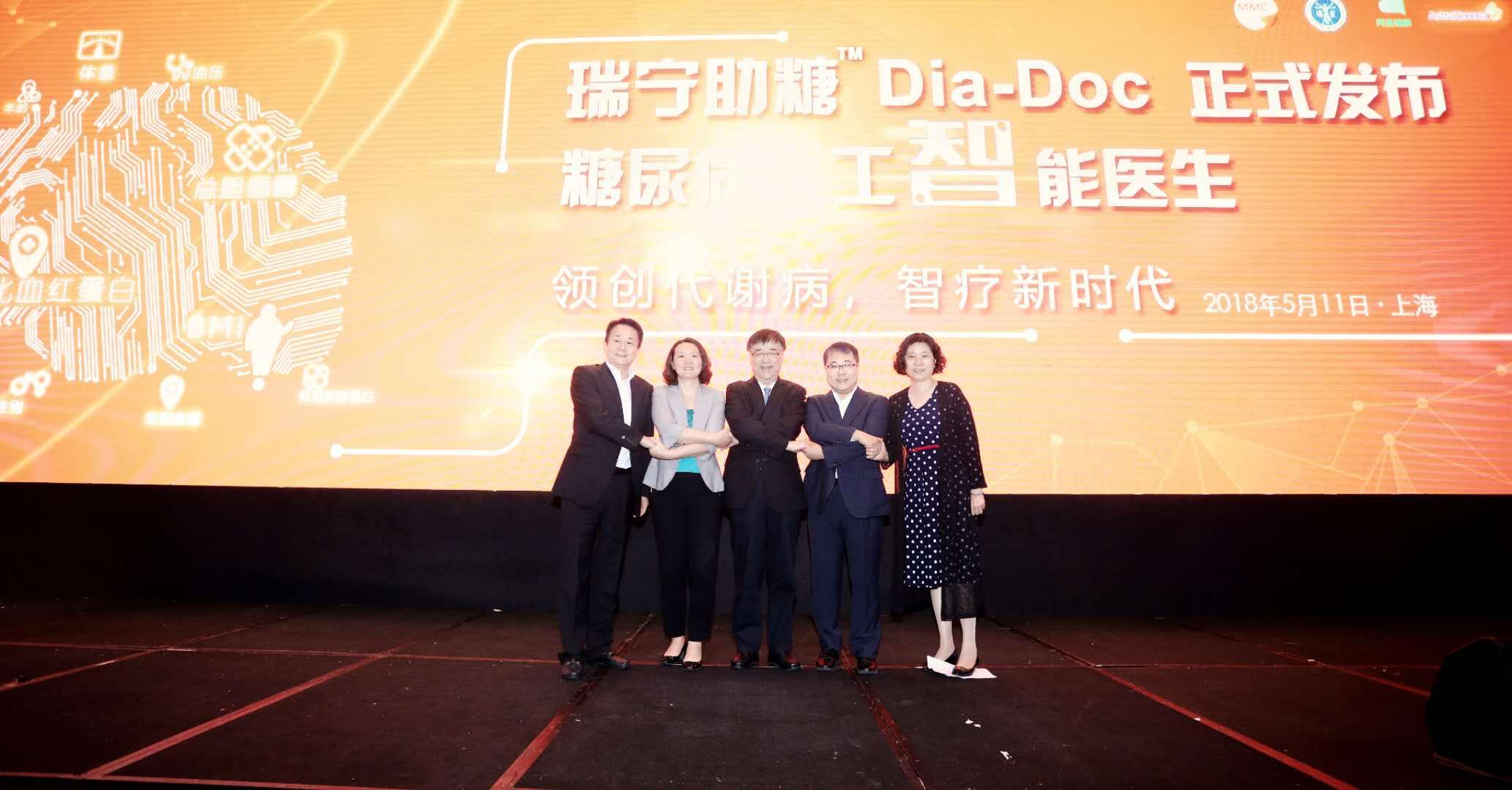
VCBeat (WeChat ID: vcbeat) has learned that on May 11, at the 6th Conference on Consensus from Debate on Diabetes, Obesity, and Hypertension (CODHy) held in Shanghai, a newly launched AI doctor system named “Rui Ning Zhu Tang” attracted significant attention.
This AI doctor was jointly developed by the team of Ning Guang, an academician of the Chinese Academy of Engineering, vice president of Ruijin Hospital affiliated with Shanghai Jiao Tong University School of Medicine, and director of the National Clinical Research Center for Metabolic Diseases, together with the Alibaba Health Artificial Intelligence Laboratory. As a new addition to Alibaba Health’s “Doctor You” series of medical AI products, it has been deployed for pilot use at National Metabolic Management Centers (MMC). In the future, it is expected to benefit over 10 million patients with diabetes, enabling them to access standardized, expert-level diagnosis and treatment services at primary care hospitals close to home.
Reports indicate that China has as many as 114 million people with diabetes. Even based on a ratio of one physician managing 1,000 patients, this would require 100,000 physicians. However, the current number of endocrinologists in China falls far short of this target, leaving many diabetic patients without access to high-quality chronic disease management services. Furthermore, the uneven quality of diabetes diagnosis and treatment across healthcare institutions at different levels adversely affects patients’ treatment experiences.
How can these doctors serve more patients with diabetes? How can standardization of diagnostic and treatment quality be ensured while improving the efficiency of diagnosis and treatment? Since last year, the Alibaba Health Artificial Intelligence Laboratory and Academician Ning Guang’s team at Ruijin Hospital have joined forces to research solutions to these challenges.
Academician Ning Guang introduced that “Rui Ning Zhu Tang,” jointly developed by both parties, is an AI-powered physician for diabetes that revolutionizes diagnostic and therapeutic paradigms through artificial intelligence. It provides auxiliary diagnosis and treatment plans for general practitioners, thereby comprehensively enhancing the standardization of clinical care. During the development of “Rui Ning Zhu Tang,” the collaborative teams innovatively integrated cutting-edge domestic and international pharmacotherapeutic strategies for diabetes, expert clinical experience, and AI data models. Following deep machine learning, the system closely replicates experts’ medication decision-making processes in diabetes management. Based on individual patients’ metabolic profiles, it offers multiple comprehensive recommendations to assist primary-care clinicians in making more scientific decisions.
“Alibaba Health’s vision is to ‘leverage big data to empower healthcare, use the internet to transform health, and provide equitable, inclusive, and accessible pharmaceutical and health services to one billion people.’ Better serving the large population of patients with diabetes aligns with our vision,” said Ke Yan, Senior Vice President of Alibaba Health. “We have always believed that medical AI, which combines artificial intelligence technology with the collective wisdom of experts, can help primary care physicians make more scientific and efficient decisions, continuously access cutting-edge medical knowledge, and enhance their clinical skills, thereby benefiting more patients. This is also the original intention behind Alibaba Health’s development of its medical AI system, ‘Doctor You.’”
As the latest addition to Alibaba Health’s medical AI “Doctor You” product series, “Rui Ning Zhu Tang” will initially be piloted at MMC Metabolic Centers, providing standardized diabetes medication recommendations for more than 100 metabolic centers across China.
“By utilizing ‘Rui Ning Zhu Tang’ for adjunctive therapy, the time primary care general practitioners spend consulting reference materials can be reduced, providing them with standardized references for diagnosis and treatment. This helps them achieve a level of expertise comparable to endocrinology specialists, thereby enhancing diagnostic and therapeutic efficiency. The iterative versions of this system will continuously self-learn, correct, and improve by leveraging vast amounts of real-world case data, including physicians’ actual clinical diagnoses and patients’ regular follow-up information. This provides intelligent support for achieving standardized diabetes diagnosis and treatment across China,” stated Academician Ning Guang.
The Government Work Report delivered at this year’s Two Sessions pointed out the need to strengthen and expand emerging industrial clusters, implement big data development initiatives, enhance the research, development, and application of next-generation artificial intelligence (AI), and promote “Internet Plus” across multiple sectors, including healthcare, elderly care, education, culture, and sports. Against this policy backdrop, an increasing number of medical institutions are partnering with internet technology companies to explore the use of AI for improving healthcare efficiency.
Taking Ruijin Hospital as an example, in response to the low rates of early awareness and control of diabetes in China, the hospital has launched the “Rui Ning Zhi Tang” diabetes risk assessment program, which leverages internet and big data technologies. This program predicts individuals’ potential risk of developing diabetes or metabolic syndrome within the next three years, thereby enabling earlier detection, intervention, and prevention for patients. It also supports the goals of the MMC (Metabolic Management Center): to reduce the incidence of diabetes by 1% and the prevalence of various diabetes-related complications by 10% over a ten-year period.
Last year, Alibaba Health launched “Doctor You,” an AI-powered CT engine for intelligent detection of pulmonary nodules, which was integrated into the remote imaging diagnosis workflow of Wanli Cloud. This year, Alibaba Health has further expanded its medical AI offerings into the management of chronic diseases such as diabetes. Through collaborations with the National Metabolic Disease Center and health IoT companies including AstraZeneca and Zhizhong, these solutions are being deployed across a broader range of healthcare institutions. Serving as professional assistants to primary care physicians, they enable patients with metabolic disorders to access more convenient, precise, and high-quality disease management close to home, thereby promoting the development of endocrinology through innovative diagnostic and treatment models.
National Center for Standardized Management of Metabolic Diseases:
The National Metabolic Management Center (MMC) project, led by Academician Ning Guang and supported by AstraZeneca and Zhizhong Medical, was jointly initiated by the Chinese Medical Doctor Association, the National Clinical Research Center for Metabolic Diseases, and the Shanghai Institute of Endocrinology and Metabolism. It is the first nationwide initiative to create an integrated online-offline, standardized, and regulated whole-course management model for metabolic diseases, leveraging advanced diagnostic and treatment facilities along with Internet of Things (IoT) technology. By adopting the new concept of “One Center, One-Stop Service, One Standard,” the MMC comprehensively manages patients’ metabolic indicators, pioneering a new model for diabetes care that achieves mutual benefits for patients, families, physicians, and society.
The National Metabolic Center leverages a suite of Internet of Things (IoT) management tools, including mobile apps and WeChat, and employs AI-powered screening technologies for fundus lesions and urinary protein. Building on computer deep learning, the center has developed the diabetes and complication screening software platforms “RuiNing ZhiTang” and “RuiNing YuTang,” thereby achieving an “AI-driven” approach to the prevention, diagnosis, treatment, and complication management of diabetic patients. As of the end of April 2018, 250 hospitals across China had successfully registered to join the Metabolic Center, with 75 centers already operational. These centers cover 29 provinces, autonomous regions, and municipalities nationwide, managing nearly 30,000 patients.
Alibaba Health’s “Doctor You”:
Alibaba Health’s “Doctor You” is a medical AI system developed in collaboration with multiple government bodies, hospitals, and academic institutions, featuring modules such as an imaging detection engine, an auxiliary diagnosis engine, and a chronic disease management engine.
Currently, Alibaba Health’s CT pulmonary nodule detection engine has reached a world-class level in both performance and cloud service capabilities. In addition to the newly launched AI-powered diabetes physician, the “Doctor You” platform will gradually deploy its intelligent diagnostic engines for 20 common and prevalent conditions—including lung cancer prediction, electrocardiogram (ECG) analysis, electroencephalogram (EEG) interpretation, and fundus screening—across multiple medical institutions throughout China. This initiative aims to significantly enhance physicians’ work efficiency and quality of care, serving as a valuable assistant to healthcare professionals.