

Jinyu Healthcare Files IPO Prospectus to Capture the Next Billion-Dollar Market with Remote Outpatient Services
What are the fundamental differences among Internet healthcare, online healthcare, and telemedicine? Many people likely confuse these concepts. In essence, however, they differ significantly. The proliferation of online healthcare has led many investors to shy away from telemedicine as well, unaware that the two are fundamentally distinct.
The origins of internet healthcare can be traced back to Premier Li Keqiang’s introduction of the “Internet Plus” concept. Internet healthcare can be broadly categorized into two main services: online medical care and telemedicine, both of which fall within the scope of internet healthcare.
Online healthcare addresses consultations between patients and physicians outside of hospital settings. In contrast, telemedicine encompasses the entire process of patient care within hospitals, involving coordination between upstream and downstream hospitals and physicians. Furthermore, throughout the telemedicine process, physicians from both upstream and downstream institutions participate in accompanying patients during diagnosis and treatment; these constitute the two fundamental distinctions between telemedicine and online healthcare.
In terms of effectiveness, online healthcare can only address health consultations and does not involve disease diagnosis and treatment. In contrast, telemedicine refers to clinical activities conducted within hospitals; it is not only compliant with laws and regulations but also covers the complete process of in-hospital consultation, examination, and treatment.
Only by truly resolving online consultations, online examinations, and remote treatment can “Internet Hospitals” demonstrate their value. In this regard, telemedicine far surpasses web-based medical services.
Teleconsultation Struggles to Deliver Real Value to Patients
The number of doctors and members is the most revered storytelling rule for online healthcare companies, leading to a large amount of zombie data and false value. In comparison, telemedicine is more practical and closer to the essence of medical care.
However, the development and implementation of telemedicine have not been as smooth as imagined.
China only began exploring telemedicine in the 1980s. In the early 1990s, telemedicine first entered public awareness when a female university student in Beijing was diagnosed with thallium poisoning through a remote consultation system. In the late 1990s, Xi’an Medical University established the “Telemedicine Center” with funding from the U.S.-based “Bridge to Asia,” and successfully conducted a Sino-U.S. telemedicine consultation demonstration for U.S. Secretary of State Madeleine Albright. In 2015, Guiyang City established the Southwest’s first telemedicine center—the “China Golden Health Guiyang Telemedicine Consultation Center.”
Even remote consultations have not truly resolved the difficulty patients face in accessing medical care over the past decade.
The standard workflow for remote consultations typically involves physicians from lower-tier hospitals obtaining patient consent and approval from the Medical Affairs Department before submitting an application to the Remote Consultation Center. The higher-tier hospital then coordinates expert availability and returns the scheduled appointment time to the referring hospital, ultimately facilitating the remote consultation.
However, in such cases, experts from tertiary hospitals often fail to respond promptly to remote consultations due to their heavy workloads. As a result, the number of remote consultations conducted by the hospital over the course of a year is often negligible.
The attractive and tidy telemedicine consultation rooms, due to the lack of consultation volume, have rendered even the best equipment merely decorative. To make full use of these resources, hospitals can only utilize them for remote meetings and case discussions, with minimal actual services reaching patients.
In 2014, a brand-new term—“remote outpatient consultation”—appeared in the “Opinions of the National Health and Family Planning Commission on Promoting Remote Medical Services in Medical Institutions.” The guidance clearly stated: to carry outRemote Video Consultation, Pathological Diagnosis, Imaging Diagnosis, Remote Monitoring, Surgical Demonstration and Guidance, Remote Outpatient Consultation, and Remote Teaching Roundstelemedicine services primarily consisting of, etc.
Compared with remote outpatient consultations, remote medical consultations generally adopt the form of remote image interpretation, rather than real-time examinations, and require advance appointments, which usually involve a longer scheduling period. From the perspective of the initiating party, remote outpatient consultations are initiated by patients, whereas remote medical consultations are initiated by physicians. The target audience for remote outpatient consultations has truly shifted from physicians to patients, thereby fully realizing the value of telemedicine.
Beijing Jinyu Hospital Management Co., Ltd. is a startup specializing in remote outpatient services.
A Company with Telemedicine Outpatient Services as Its Core Business
In September 2017, Wang Tiejun, who had nearly a decade of experience in the telemedicine industry and had led teams exceeding 1,500 members, chose to embark on an entrepreneurial venture. A telemedicine company named Beijing Jinyu Hospital Management Co., Ltd. (hereinafter referred to as “Jinyu Medical”) quietly completed its registration.
According to Wang Tiejun, President of Jinyu Medical: “The team began market research in November. At that time, there were 15 members in total, with seven assigned to conduct field visits. Although we had no successful case studies, our innovative business model garnered enthusiastic feedback from primary-care hospitals.”
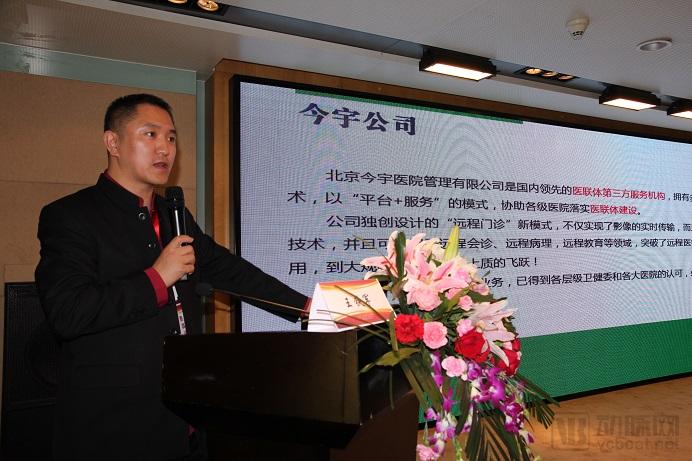
On January 6, 2018, the “Remote Outpatient Clinic” pilot program, spearheaded by the Department of Ophthalmology at Beijing Hospital (directly affiliated with the National Health Commission), was officially launched in Beijing. As a vital component of telemedicine, the remote ophthalmology outpatient service has facilitated the substantive implementation of the ophthalmology medical consortium’s initiatives. During the pilot phase, in addition to remote outpatient services, remote emergency care and remote consultations were also made available.
From November 2017 to March 2018, within a mere 100 days, Jinyu Medical rapidly secured contracts with four upstream hospitals and established operations at nine downstream pilot hospitals. This achievement not only completed the business loop but also generated stable cash flow growth through effective project operations.
All of this is based on the innovative model of remote outpatient clinics.
Telemedicine Outpatient Services: Getting to the Core of Telehealth
In the remote outpatient model, patients first book appointments with specialists at tertiary hospitals via their mobile phones, but the actual consultation takes place at primary care facilities. At these primary care institutions, patients undergo an initial assessment by a local physician and receive preliminary examinations according to standard clinical protocols, after which they proceed to the specialist’s remote consultation session.
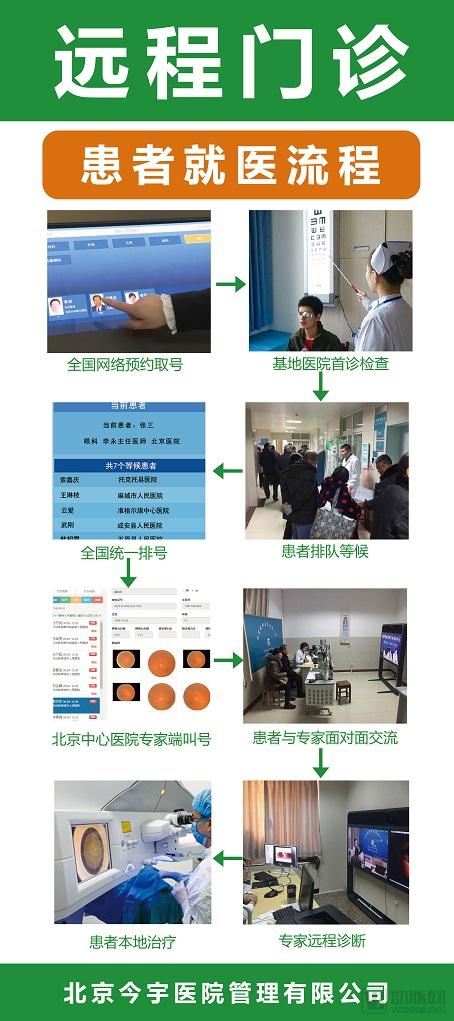
Compared with the remote consultation model, the time for initial diagnosis is infinitely shortened, and consultations have become a form of real-time outpatient service. Furthermore, remote outpatient appointments follow a nationwide registration and queuing system, where all patients across China register via local hospital kiosks or QR codes. As the appointment slots are unified nationwide, remote outpatient services achieve a single, national queue for all patients.
From a procedural perspective, the remote outpatient service created by Jinyu Medical does not overhaul the entire patient care journey, unlike remote consultations. It simply streamlines the process of securing an appointment with a specialist at a tertiary hospital to its utmost efficiency. From registration to diagnosis and treatment, the remote outpatient experience mirrors that of a standard in-person visit. The only perceptible difference is that the specialist is not physically present on-site but provides care via telemedicine.
It is reported that since the launch of the remote outpatient pilot program, Macheng People's Hospital in Hubei Province has provided remote medical services from renowned Beijing specialists to over 300 patients.
Telemedicine Outpatient Services Facilitate the Development of Specialized Medical Consortia
The establishment of specialized medical consortia provides guidance and support to member institutions within the healthcare alliance in areas such as standardizing specialty development, formulating talent training programs, and enhancing technical capabilities. Furthermore, through the new model of remote outpatient consultations, expert resources within the consortium are decentralized to lower-tier facilities, bringing specialist care closer to patients.
Unlike traditional teleconsultation, Jinyu Medical’s remote outpatient system achieves real-time integration with imaging systems. For instance, it establishes a data connection with video slit lamps in ophthalmology to enable real-time transmission of dynamic images. This allows physicians to review images online in real time and simultaneously observe the examination process at primary care facilities. Furthermore, data from the Hospital Information System (HIS) at primary care institutions can be accessed in real time through this platform. Under this model, initial consultations at primary care facilities and remote specialist consultations proceed almost synchronously, with real-time examinations enabling specialists at tertiary hospitals to provide more accurate and confident diagnostic opinions.
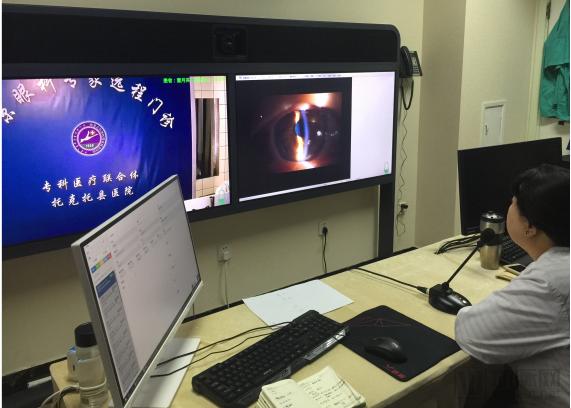
Jinyu Medical’s Innovative Telemedicine Outpatient Model Achieves a Qualitative Leap: From Limited Post-Hospitalization Applications to Large-Scale Outpatient Care
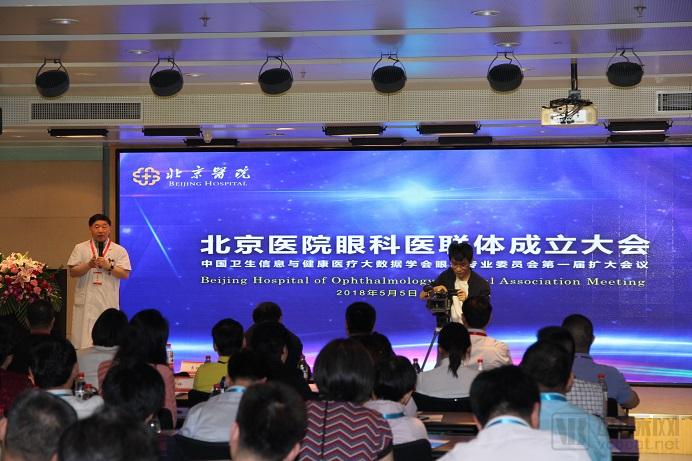
On May 5, 2018, at the inaugural conference of the Beijing Hospital Ophthalmology Medical Consortium, held at the Conference Center of Beijing Hospital (directly affiliated with the National Health Commission), 118 hospital presidents, department directors, and experts from across China jointly witnessed the official launch of the consortium’s remote outpatient services. More than 80 hospitals applied to join the consortium on site.
Patients, Upstream and Downstream Hospitals, and Physicians All Benefit
“Our remote outpatient model offers multifaceted benefits compared to traditional remote consultations,” said Wang Tiejun.
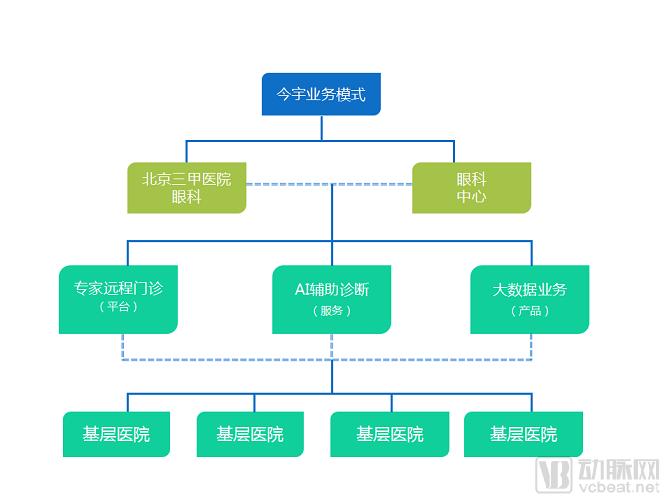
First, patients no longer need to endure the hardships of long-distance travel to seek medical care in northern cities like Beijing. Currently, the fee for a remote consultation with a specialist is RMB 300, which is less than one-tenth of the thousands of yuan in costs and time consumed when traveling from other regions to Beijing for in-person visits. Furthermore, by receiving treatment at local primary healthcare institutions, patients can benefit from higher reimbursement rates compared to those offered by tertiary Grade A hospitals.
Since telemedicine keeps patients at the primary care level, all diagnostic tests, treatments, laboratory analyses, and even inpatient surgical procedures generated during the consultation process are completed at primary care hospitals. This has significantly boosted the overall performance of these hospitals.
Furthermore, for physicians at primary care hospitals, remote outpatient consultations provide real-time mentoring and guidance from specialists at tertiary Grade A hospitals. Assuming a daily volume of eight patients in remote clinics, a primary care physician can accumulate clinical experience with nearly 200 patients under expert supervision within a month—a level of practical training that is unimaginable and unattainable through traditional teleconsultation alone.
In the past, primary care physicians seeking to enhance their professional capabilities had only two options: pursuing advanced training or attending expert lectures. Typically, these physicians faced limited channels for undertaking advanced training at major hospitals, where opportunities for hands-on practice were also scarce. Meanwhile, participation in lectures primarily offered theoretical knowledge, with practical clinical gains requiring physicians to accumulate experience through independent practice and exploration in clinical settings.
Certainly, tertiary hospitals also benefit. For patients with complex comorbidities who cannot be treated at primary care institutions, these facilities can issue referral forms to transfer them to higher-level hospitals for surgical treatment, thereby fulfilling the role of tertiary hospitals as centers for managing complex and rare diseases within specialized medical consortia.
In Jinyu Medical’s remote outpatient consultations, every expert consultation is recorded via four-party video as documentation. From the bilateral audio-video feeds to the archival of electronic medical records, this constitutes valuable case-based teaching material that is highly conducive to scientific research.
Currently, Jinyu Medical is conducting in-depth R&D on its systems. Leveraging big data accumulated from remote outpatient services, the company is developing an online AI diagnostic system to enhance the diagnostic capabilities of primary care physicians.
Establishing Routine Expert Telemedicine Clinics at the Primary Care Level: A Market Worth Billions
In accordance with Jinyu Medical’s strategic planning and varying priorities, remote outpatient services will be primarily implemented in five key departments: Ophthalmology, Internal Medicine, Pediatrics, Gynecology, and Surgery.
Wang Tiejun stated, “Ophthalmology was chosen as the priority specialty because it demands a high level of expertise in image interpretation. At primary-care hospitals, the core strengths lie in internal medicine, surgery, and gynecology, while ophthalmology is often underdeveloped. Therefore, when providing disciplinary support in ophthalmology, primary-care hospitals are generally very willing to engage in collaborative partnerships.”
Regularized specialist outpatient services constitute Jinyu Medical’s core business model. Anchored in ophthalmology and extending to all medical specialties, Jinyu Medical aims to ensure that 70% of outpatient visits at county-level hospitals are general consultations and 30% are telemedicine consultations, thereby providing regularized specialist outpatient services to all county- and city-level hospitals across China.
Jinyu Medical plans to cover 1,000 grassroots county-level hospitals by 2020, with 30,000 patients per day receiving expert diagnosis and treatment services through its remote outpatient platform.
In other words, by adopting a new model of remote outpatient services, Jinyu Medical is poised to establish the “hospital” with the highest daily outpatient volume globally. Undoubtedly, against the backdrop of national policies promoting medical consortia and “Internet + Healthcare,” this represents a billion-dollar market worth exploring.