

Addressing the Care Gap for 40 Million Disabled Elderly: China's Evolving Nursing Ecosystem and the Rising Value of Care Talent
Recently, the National Health Commission held its regular press conference in May. At the conference, Jiao Yahui, Deputy Director of the Bureau of Medical Administration and Hospital Management under the National Health Commission, pointed out: Over the past decade, China’s nursing profession has achieved remarkable results. This is illustrated by the following set of data:
By the end of 2017, the total number of registered nurses in China had exceeded 3.8 million. According to the 13th Five-Year Plan for Nursing Development, the national nursing workforce is projected to reach 4.5 million by 2020.
By the end of 2017, the national nurse-to-physician ratio in China reached 1:1.1, reversing the long-standing trend of an inverted ratio.
In 2017, the nurse-to-physician ratio reached 1:1.54 in tertiary hospitals and 1:1.46 in secondary hospitals. Nearly 800,000 nurses were engaged in nursing work at the primary care level in China. Nurses with an associate degree or higher accounted for 67% of the total nursing workforce, and the level of specialized nursing care continued to improve.
May 12, 2018 marked the 106th International Nurses’ Day. It has also been ten years since the promulgation of the Regulations on Nurses by the Chinese government in 2008. On the eve of International Nurses’ Day, the “2018 Nursing Innovation and Development Forum” was held at the China National Convention Center in Beijing on May 10. The forum, guided by the Talent Exchange Service Center of the National Health Commission, co-organized by Weiren Weiye and Sinopharm-Reed Exhibitions, and undertaken by Hulianwang (Nursing Network), aimed to explore new developments in the nursing profession and innovative models for nurturing nursing talent.
Jiao Yahui, Deputy Director of the Bureau of Medical Administration and Hospital Management under the National Health Commission, and Zhang Junhua, Deputy Director of the Talent Center of the National Health Commission, attended the event and delivered speeches. The forum brought together experts and scholars in the healthcare sector, representatives from various consulates, renowned domestic and international healthcare innovation enterprises, hospital groups, listed companies, investment firms, and industry representatives from medical institutions.
Policy support and demand-driven initiatives, strengthening the nursing workforce, and promoting the reform and development of the nursing profession and industry are key components of implementing the Healthy China Strategy. They also represent an objective requirement for establishing a health service system that covers the entire population and all life stages. Against the backdrop of comprehensive governmental restructuring, how can the nursing industry achieve optimized development? How should the nursing value chain be reconstructed? These were the primary topics of concentrated discussion among representatives from various sectors.
Although historical data indicate significant progress on the supply side of nursing services, the rising proportions of the aging population and individuals with chronic diseases are presenting new challenges to the nursing industry from the demand side.
Zhang Junhua, Deputy Director of the Talent Center of the National Health Commission, stated that China has entered a phase of rapid population aging. In 2016, the elderly population aged 60 and above reached between 230 million and 240 million, accounting for 17% of the total population, while those aged 65 and above numbered 150 million. Among individuals aged 65 and older, more than 40 million were disabled or partially disabled.
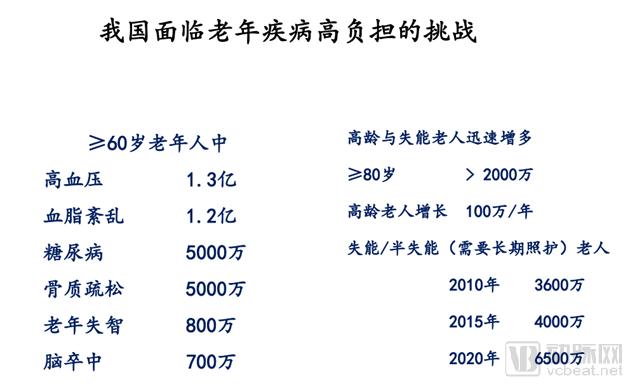
Basic Statistical Data on Geriatric Diseases
Moreover, the proportion of elderly individuals with dementia who also suffer from chronic conditions such as cardiovascular disease and diabetes, as well as mental health issues, has been rising year by year. According to reports from the World Health Organization, preventive interventions such as health management can reduce the incidence of early-stage heart disease, stroke, and type 2 diabetes by 80%, and cancer cases by 40%. Nurse-led health initiatives have demonstrated positive outcomes, helping patients improve their health status and prevent and manage chronic diseases.
Faced with a demand of 40 million, there is a significant gap in the nursing tasks required by the social environment. From the supply side, the annual output of professional nursing talent is far from sufficient. In addition to the hundreds of thousands of nursing school students at the base of the nursing talent pyramid, as described by Zhang Junhua, the majority of care workers are individuals born in the 1940s and 1950s. These caregivers are often labeled as “from rural areas,” “with low educational attainment,” “poorly compensated,” and “highly mobile.” Consequently, professional standards for caregivers have been introduced.
Zhang Junhua pointed out,At this year’s Two Sessions, proposals regarding nursing assistants included the following three points: 1. The nursing assistant system must not be abolished, and certification must be required for practice; 2. Establish diversified channels for the training and deployment of nursing assistants; 3. Develop a reasonable incentive mechanism for compensation and benefits for nursing assistants.
As the demand for nursing talent exhibits a trend toward diversification, the training of nursing assistants is also moving in a diversified direction.
In China, nursing professionals primarily provide medical services in healthcare institutions, with a portion engaged in community nursing at the grassroots level. Only a small fraction work in elderly care facilities or long-term care institutions. At this level, the distribution of nursing personnel largely follows the "siphon effect," whereby top-tier hospitals attract the majority of talent.
The prevailing view is that nurses in primary care institutions suffer from low incomes and limited staff quotas. However, the reality is that, apart from nurses in top-tier tertiary hospitals, even those in ordinary secondary and tertiary hospitals encounter career bottlenecks by their thirties or forties. To some extent, therefore, nursing is a profession that relies heavily on youth.
Zhang Guangpeng, Director of the Health Workforce Research Office at the Health Development Research Center of the National Health Commission, stated, “By the end of last year, there were 2.6 million registered nurses in urban hospitals across China, with approximately 25% aged over 40. Issues regarding the placement and job reassignment of senior nurses aged over 40 exist to varying degrees. Nurses in large hospitals face career development dilemmas; I consulted several hospital presidents, and each typically has forty to fifty transfer requests on their desk that cannot be accommodated.”Prior to July, I also conducted preliminary assessments at several hospitals in Anhui Province.There is a 30% waste in the staffing and utilization of senior nurses.。”
Therefore, in the face of a health service system with enormous demand, as well as nursing systems for rehabilitation, elderly care, and chronic disease management, nursing care“It should play a greater role and can also play a greater role.”
There is a significant gap between the current community health service institution-led primary care nursing model and the public’s growing demand for nursing services. In the context of healthcare reform initiatives in Anhui Province led by the State Council’s Healthcare Reform Office, the practice of senior nurses at the grassroots level has become a typical example of an innovative model for cultivating nursing talent.
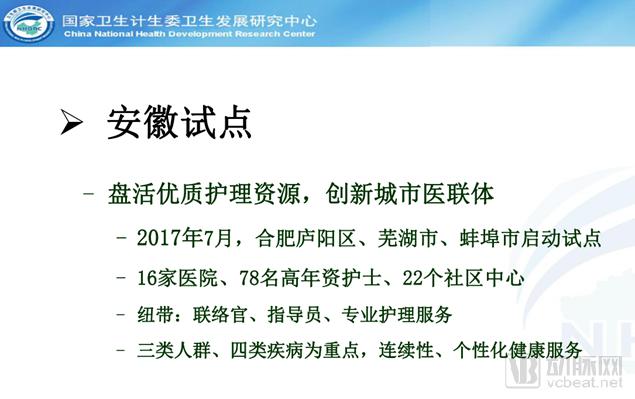
Pilot Practice in the Training of Senior Nurses in Anhui Province
Following training and credentialing, the primary roles of senior nurses in community health centers encompass three key areas:
First, within medical consortia, senior nurses serve as personnel liaisons to strengthen inter-institutional connections;
Second, provide guidance on nursing services, with a particular focus on infection control and nursing management in primary care institutions;
Third, establish specialized nursing outpatient clinics to provide specialized nursing services, with a focus on delivering comprehensive and continuous care for three population groups—older adults, infants and young children, and pregnant and postpartum women—across four conditions, namely hypertension and diabetes in the elderly.
According to Zhang Guangpeng’s statistics,Common diseases such as hypertension, diabetes, the common cold, upper respiratory tract infections, and gastroenteritis account for 70% of primary care cases. For these conditions, the fact that senior nurses with years of hospital-based service are competent in handling these specific tasks is not particularly indicative.“Previously, we conducted a preliminary survey and found that 30% of senior nurses were competent in managing these common conditions, requiring no additional training.”
Currently, in the training practice of senior nurses in Anhui Province, the focus is on developing China’s “CNP” model, which refers to the cultivation of Community Advanced Practice Nurses. This model provides primary care populations with specialized chronic disease management service packages led by nursing services, as well as personalized service packages tailored to community needs in areas such as stroke, coronary heart disease, hypertension, diabetes, maternal and infant care, rehabilitation, and mental health.Exploring the “GP + CNP + …” Community Staffing Model to Enhance Health Management for Key Populations: An Inquiry into Optimizing Human Resource Allocation to Better Meet the Demands of Integrated Rehabilitation and Health Management(Note: The highest-level nurses in the United States are NPs, i.e., Nurse Practitioners, who have prescriptive authority.)
In a social environment characterized by a pronounced aging population and a transition toward consumption upgrading, revitalizing high-quality nursing resources and unlocking the value of nursing services have become key areas for joint exploration by professionals in the nursing industry. By early 2018, this initiative under Anhui’s healthcare reform had been expanded to the entire city of Hefei, as well as seven or eight other prefecture-level cities, including Ma’anshan and Fuyang.
According to the first-ever “Survey Report on the Current Development Status of China’s Nursing Workforce” released jointly by the Hu’ai Fund under the China Social Welfare Foundation and the Hulian Network, nurses deliver multiple values within healthcare institutions, including saving lives, promoting health, and reducing costs.In the new phase of expanding the connotation and extension of nursing, nursing services have become more diversified and refined. Nursing services are gradually extending to communities and families, and the scope of services has expanded from single-disease clinical treatment to areas such as chronic disease management, geriatric care, long-term care, rehabilitation promotion, and palliative care.As a professional service force, nurses' scope of service is continuously expanding.。
In the nursing industry, the elderly constitute the group with the greatest demand, particularly within service sectors involved in elderly care. Wu Danxing, an expert on the integration of medical and elderly care at the National Health Commission, believes that for the elderly care service system, “changes are occurring,” most notably reflected in the care delivery system.
Past care was fragmented. Global care systems have shifted toward integrated care. According to the World Health Organization (WHO) Department of Ageing and Life Course, integrated care is defined as comprehensively considering the input, delivery, management, and organization of services, and linking them with diagnosis, care, rehabilitation, and health promotion.
Wu Danxing believes that,Global Integrated Care refers to policy alignment at the top-level design; connectivity among hospitals, nursing homes, communities, and families at the mid-level operational entities; and the integration of care for individuals into a cohesive system at the grassroots level, rather than fragmenting it across numerous roles.
In traditional nursing education, the focus is often on skills training for nurses, without incorporating content on integrated care; therefore, nurses’ career development requires scientific planning.
Zhang Xueli, founder of HuLianWang, believes that against the current backdrop, demand for nursing care is robust, yet the supply side faces numerous challenges, primarily manifested asThere is a chronic shortage of professional service providers within the existing system; the nursing workforce fails to meet market-oriented demands; a standardized framework for specialized service training has yet to be established; and quality standards for market-based services remain undefined.On these four points.
Addressing the numerous pain points currently affecting the nursing workforce, Zhang Xueli believes thatIt is crucial to address the "efficiency" issue within the nursing workforce.
Over the past decade, through her observations of the U.S. nursing industry, Zhang Xueli has found that home- and community-based healthcare services are particularly important, with nurses serving as key leaders, pioneers, and managers in this field. Therefore,The Focus of Developing the Nursing Industry Lies in Tapping into the “Existing Stock” and Developing the “Incremental Supply” of Nursing Talent。
To address the pain points in nursing talent development, Huliwang, as a third-party nurse service platform, has been committed to enhancing the professional value of nurses and reconstructing the value chain of nursing services since its inception in October 2014.
Traditional nursing care institutions incur costs that are heavily concentrated in labor expenses, resulting in slim profit margins. The fundamental solution to this issue lies in enhancing "efficiency."
“Efficacy is a combination of efficiency and goals; one cannot pursue efficiency alone. If we merely attempt to solve problems by focusing on labor efficiency, it will be difficult to achieve significant results, create substantial value, or drive rapid value growth. Therefore, Hu Hulian believes that we must focus on enhancing professionalism. Nurses, in particular, possess a strong professional background and extensive specialized knowledge. The key question we need to address is how to transform their role,” said Zhang Xueli.
To date, HuLianWang has been dedicated to two things:First, to empower nurses, HuLianWang has developed six major training course systems.
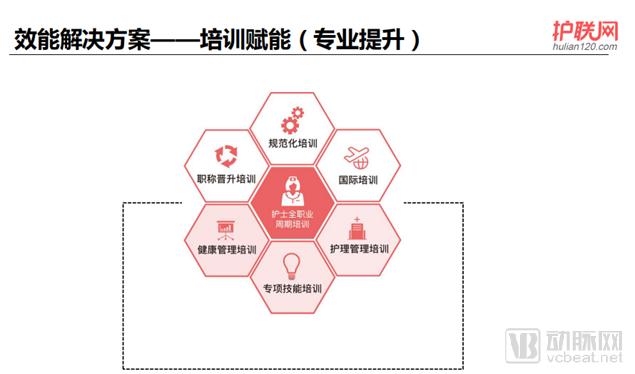
Training on the Six Major Curriculum Systems Developed by HuLianWang
The first part focuses on cultivating the fundamental career path for nurses, while the latter part provides systematic training to help nurses better align with market demands. Zhang Xueli emphasized, “The latter part is the key to truly extending nurses’ professional longevity and securing a promising career future; however, these are precisely the most challenging aspects to implement and execute effectively.”
Due to the relatively high difficulty in standardizing service scenarios for emerging demands, such as those in community and home settings, health insurance institutions, and CROs, therefore,The second initiative undertaken by HuLianWang is to quantify supply and demand.Through training initiatives in recent years, issues related to nurses’ individual skills, regional disparities, and professional competencies have been quantified into data tags to establish a certification system. This approach first digitizes nursing skills from the supply side, thereby standardizing demand, improving operational efficiency, and addressing information asymmetry between supply and demand resources.
As more social capital enters the hospital operation sector, the demand for nursing talent has undergone certain changes. Lin Yanglin, CEO of New Milestone Hospital Group, stated, “We aim to promote the integration of advanced international nursing concepts with local medical practices in China from the perspective of healthcare provision by social capital. The rise of the middle class will drive substantial demand for high-quality nursing care.”
Following the implementation of policies such as the zero-markup on pharmaceuticals, hospitals are driving the need for refined cost management under the backdrop of strict cost control, among which,The refined management of labor costs has become a critical issue for managers.
What impact will refined operational management of nursing talent have on cost management in private hospitals?
Lin Yanglin believes that there are two main impacts: first,First, it will promote nursing performance reforms based on patient satisfaction, thereby decoupling traditional nurses’ compensation from departmental revenue. Second, it will drive the development of third-party nursing outsourcing services, with platforms such as HuLianWang poised for significant growth.
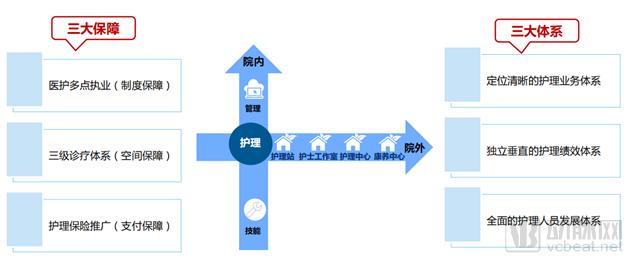
Career Development System for Nursing Staff in Healthcare Institutions
In addition to the demand for nursing talent from traditional hospitals and caregivers, innovative nursing service models across multiple scenarios—including health management and new drug R&D—endow nursing professionals with more diversified value.
When mentioning LifePlans, the largest on-site nursing network in the United States, Zhang Xueli noted that the company primarily provides innovative risk management solutions to more than 30 health insurance companies. Its core workforce consists of nurses, who must possess skills and knowledge related to health management, including professional expertise in insurance.
In the document “Plan for Deepening the Reform of Party and State Institutions,” the description of the National Health Commission comprises 471 characters, with comprehensive, full-cycle health management emerging as a key topic. The current healthcare landscape is undergoing dramatic changes, with the disease-centered orientation gradually evolving into a prevention-centered approach. In several innovative areas, the scenarios for medical and nursing practices are transforming, among which health management stands out as a particularly significant scenario.
He Tieqiang, Head of the Health Management and Resource Integration Department at China Life Insurance Company, described: “In foreign shopping malls and supermarkets, clinic services are offered as an ancillary offering. Although these services are quite granular, they help bridge gaps that many large institutions fail to address. They are termed ‘healthcare,’ which is equivalent to our health management centers.”
Integrating nursing services into new consumption scenarios, including the provision of community health management services in grassroots community settings, still relies fundamentally on nursing professionals as the primary implementers.This further validates the content of health management training provided by Zhang Xueli within the six major training systems. In the market, these institutions represent the most market-oriented entities and constitute a new business model that has emerged alongside consumption upgrades.
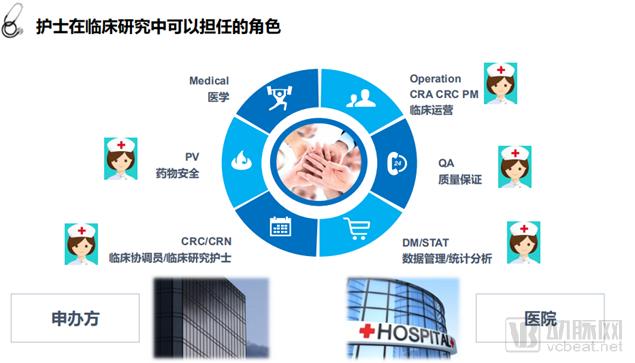
When Ren Ke, General Manager of WuXi AppTec’s Jinshi Medical, raised the topic of the value of nurses in clinical trials of new drugs, it initially left some people puzzled. However, Ren Ke argued that past practices have demonstrated that the role of nurse teams in clinical research for new drug development represents a new professional development direction for the nursing community. Although novel, this field entails substantial demand and holds significant academic value.
The specific roles that nurses can assume in new drug development include patient screening, ensuring medication safety, and data management.
Addressing the demand for nursing talent in traditional medical institutions and nursing homes, the need for new types of composite nursing professionals, and the refined management of nursing personnel have largely drawn on Western experience.
An industry insider in the elderly care sector once revealed to VCBeat, “Elderly care services are person-to-person services, and within this type of service, the most challenging issue is standardization.”
In this regard, leading international enterprises hold significant influence. Orpea Group is a global leader in elderly care and rehabilitation brands, with operations spanning 13 countries worldwide, operating 850 elderly care facilities and providing 80,000 beds. Currently, China and France have formally signed a Memorandum of Understanding on cooperation in the silver economy sector, and Orpea has already established elderly care facilities in Beijing, Nanjing, and Changsha.
Gao Tianli, President of Orpea (Shanghai) Investment Co., Ltd. in China, believes that the Chinese-style one-on-one caregiving model is more likely to lead to elder abuse incidents; therefore,Orpea provides its resident seniors with a comprehensive medical team, delivering a multi-to-one service model. Each team member possesses specialized expertise and distinct responsibilities, while also engaging in mutual oversight to implement timely interventions. Within this framework, the attending physician assumes the role of care manager.
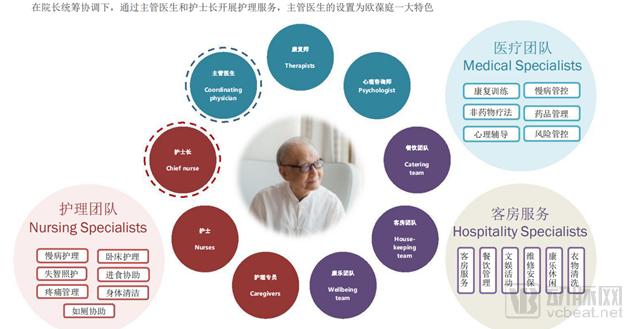
Orpea's Care and Medical Team Structure
Furthermore, with regard to standardization, the key element that Orpea relies on is training, specifically on-site service training"We adhere to the principle that every manager and every employee is a trainer, with the responsibility to train those around them. Moreover, we dedicate at least 30 minutes each day to training and teaching our colleagues, thereby enabling hands-on skills transfer."
Currently, Orpea has already graduated more than 500 individuals from its on-site, hands-on training programs.
Gao Tianli stated, “For manual training, followed by implementation, evaluation, and then improvement. Although the resources invested may be the same, over time, as we continuously improve, the same investment will yield greater returns.”
Shaleen Khatri, Senior Policy Officer for Health and Social Security at the British Embassy in China, pointed out in her sharing that unlike China’s nursing talent education model, which is predominantly specialized, the UK offers caregiver training and education through more than 70 universities. Among the top ten universities worldwide for health-related professions, five are located in the UK.
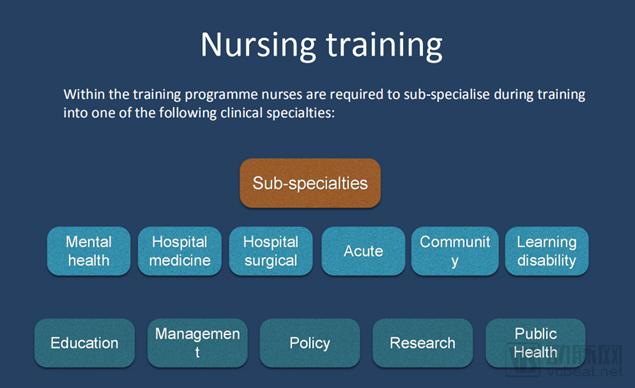
Training Programs for Nursing Professionals in the United Kingdom
At school, 50% of the time is dedicated to classroom instruction, while the remaining 50% is devoted to practical learning. Upon completion of the three-year program, students may choose to further their development in educational management, policy research, or public health, thereby broadening their horizons.
The highest honor in the nursing profession is the “Florence Nightingale Medal.” As the founder of modern nursing, she exemplified not only extraordinary compassion but also, more importantly, the inherent value of nursing care.
According to data presented in the book Awakening Nursing, Florence Nightingale’s nursing services on the battlefield reduced the mortality rate from 42% to 2%—this is the value of nursing.
“When your value can be quantified and demonstrated with numbers, many problems are readily resolved, and people will naturally be willing to invest in your professional future.” Thus concluded Zhang Xueli, one of the initiators of this forum, at the end of her speech.