

2018 China Hospital Development Conference Highlights Talent Management and Brand Building in Healthcare
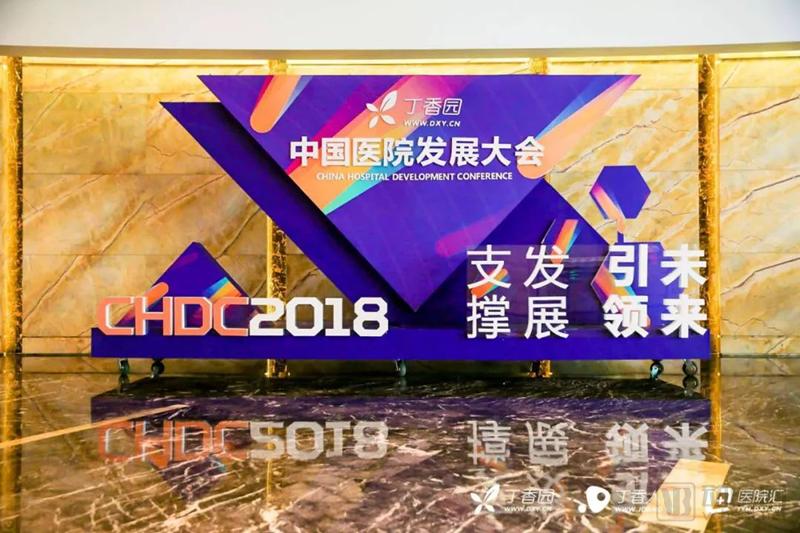
From May 12 to 13, the digital health company DXY held the “2018 China Hospital Development Conference” in Hangzhou, under the theme “Talent Supports Development, Brand Leads the Future.”
At 8:30 a.m. on May 12, the 1,200-seat conference hall at the InterContinental Hangzhou was already filled to capacity. The opening remarks by Li Tiantian, founder and chairman of DXY, kicked off the conference. He noted that as the trend toward multi-site practice becomes increasingly clear, the recruitment and management of hospital talent, as well as the development and promotion of institutional brands, have grown in importance and attracted widespread attention across the industry. “Although Chinese hospitals have made remarkable progress over the past decade, many challenges remain. In particular, there are still numerous areas requiring exploration in the establishment of modern hospital management systems.”
In his opening remarks, Bai Zhiqin, Vice President of the Chinese Hospital Association, stated that the modern hospital management system is an important component of China’s basic healthcare system with Chinese characteristics, wherein human resources management and publicity and organizational work constitute key elements. He affirmed DXY’s efforts over the years and extended his best wishes for the complete success of the conference.
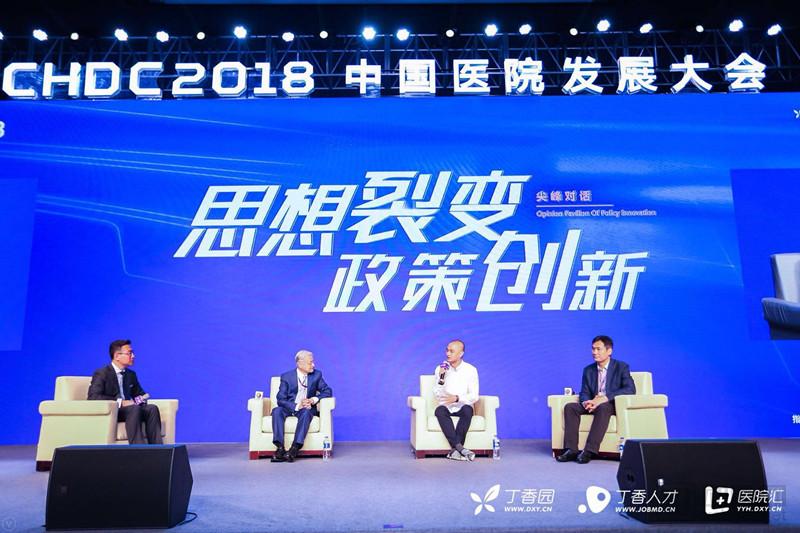
On this occasion, DXY has invited pioneers and practitioners in the field of hospital management to engage in a high-profile dialogue: renowned economist and member of the National Academy of Sciences, Victor W. Hsiao, analyzes the current challenges facing public hospitals from an international perspective; Feng Tang, Senior Managing Director at CITIC Capital, offers a humorous take on hospital directors; and Luo Jie, President of Taihe Hospital—a municipal-level Grade A tertiary hospital located at the heart of healthcare reform in Shiyan, Hubei Province—shares his firsthand experiences.
At the conference, DXY and McKinsey jointly released“2017 China’s Best Employers in Healthcare Institutions” results: the only industry award determined solely by direct ratings from frontline practicing physicians, rather than by expert review.
Based on performance across six key dimensions—career advancement, infrastructure, medical quality, work environment, compensation and benefits, and corporate culture—DXY has compiled the 2017 List of Best Employers in China’s Healthcare Institutions, along with eight category-specific awards.The top-ranked best employer among public hospitals nationwide is the First Hospital of Jilin University (Bethune First Hospital), while the best employer among private hospitals is Shenzhen Amcare Women’s and Children’s Hospital.
In addition, DXY, in collaboration with Qingbo Big Data, released the “2017 Top 100 Hospitals for Brand Communication,” which evaluated and ranked the top 100 hospitals for brand communication in 2017 across 13 data dimensions. Beijing Hospital ranked first among provincial-level public hospitals, while Zhongshan People’s Hospital took the top spot among prefecture-level city hospitals.
At this year's China Hospital Development Conference, in addition to the three main forums—the Main Forum, the Talent Forum, and the Brand Forum—the China Clinic Development Conference was also held concurrently.
Centered on the theme “Breaking Through and Establishing Momentum: Exploring Greater Possibilities for Value-Driven Clinics,” the conference invited a roster of prominent entrepreneurs and industry veterans, including Duan Tao, founder of Chuntian Medical Management; Ji Lianmei, founder of Ask the Pharmacist; Zhao Heng, founder of Cunfu Diary; Yu Ying, CEO of Youlin Clinic; Martin, founder and CEO of Xingren Clinic; and Ou Qian, founder of Zhibei Pediatrics. They engaged in in-depth discussions on the current state of the clinic market, the restoration and recognition of physicians’ value, and strategies to enhance the quality of primary healthcare services.
The two-day conference was packed with content. We hope that the clash of perspectives and the collision of ideas will truly bring a ray of hope to the industry—seemingly insignificant, yet exceptionally powerful.