

With Over 60% of Global Dentures Made in China, Are Dental Implants the Next Profitable Frontier Amid Shrinking Margins?
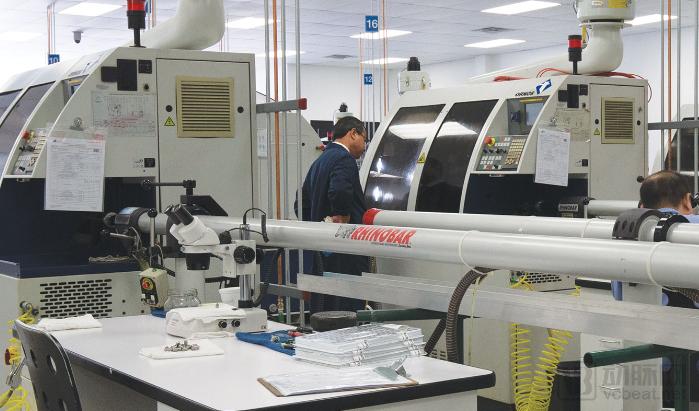
Glidewell Dental Laboratories Workshop, from the Glidewell Official Website
As one of the upstream pillars of the dental industry, the operational model of dental laboratories has long ceased to be labor-intensive. With the widespread adoption of digital technologies and equipment such as CAD/CAM, intraoral scanners, and CBCT, the turnaround time for denture fabrication has been significantly reduced. The dental laboratory sector has effectively transformed into a technology- and capital-intensive industry, poised to further evolve toward greater precision and specialization.
China’s dental laboratory industry is primarily concentrated in the Pearl River Delta region, centered on Shenzhen, and the Yangtze River Delta region, centered on Shanghai. This has formed a landscape dominated by large-scale manufacturers alongside numerous small and medium-sized enterprises. The former group is represented by companies such as Modern Dental, Jiahong, Bairui, Kangtaijian, Jianteng, and Meiguanda. Notably, 60%–70% of the world’s dental prosthetics processing business is conducted in China. In Shenzhen alone, there are more than 100 companies engaged in dental prosthetics manufacturing.
Driven by rising demand for cosmetic dentistry, heightened awareness of oral health, growing disposable incomes, population expansion, and an aging demographic, the denture industry has experienced sustained growth in recent years and is expected to maintain this trend.
With significant capital influx, competition in China’s dental prosthetics industry has intensified, prompting many enterprises to enter a period of adjustment. Currently, the main issues facing the dental prosthetics industry are manifested in the following aspects:
1. Rapidly rising costs for denture processing enterprises, such as facility rent, labor costs, and equipment expenses, have led to continuous profit declines;
2. Dental technicians are mostly trained through a master-apprentice model, lacking formal training, resulting in low professional competence and disconnection from clinical practice;
3. The overall operational workflow is undergoing changes; digital technologies are making denture processing and production more efficient, with increased investment in technology;
4. The industry lacks regulatory self-discipline, with severe cutthroat price competition among enterprises and frequent poaching of technicians;
5. Industrial relocation to low-cost regions. Rising costs and declining profits have led to the outward migration of enterprises and the exodus of technical talent, as seen in China’s shift toward Southeast Asia and other regions.
Overall, the industrialization and large-scale production of denture processing have significantly promoted the development of the oral health industry, leading to homogenized, more standardized, and regulated denture fabrication. In light of this, VCBeat (WeChat ID: vcbeat) has reviewed the current state of the denture (commonly known as false teeth) industry to identify potential future trends for denture laboratories.
Tracing back to its origins, the market-oriented operation of the domestic denture processing industry began inSouthern China in the Early 1990s, with the current number exceeding 4,000. Dental laboratory enterprises in coastal regions early on introduced technical personnel from Hong Kong, China, Taiwan, China, and overseas, resulting in relatively higher levels of technical proficiency. Some earlier-established enterprises possess stronger technical capabilities, hold larger market shares, command higher market prices, and enjoy greater brand recognition. These companies have continuously acquired smaller firms, while leading dental laboratories have established subsidiaries in other regions and are moving towards group-based development. Consequently, domestic dental laboratories are primarily concentrated in East and South China.
Initially, the fabrication of dentures was integrated with traditional dental practice, where general dentists handled both restorative procedures and prosthodontics, allowing individual practitioners or small dental clinics to produce dentures in-house. With the rise of chain dental clinics and increased market specialization in China, independent dental laboratories have become more prevalent.
As the denture industry stillLack of a highly comprehensive supervisory and regulatory system, cutthroat price competition is prevalent within the industry; a significant number of unlicensed dental laboratory facilities operate with substandard hygiene and quality. These so-called “technicians” lack comprehensive professional knowledge and skills, and are unfamiliar with production processes and quality management. This directly exacerbates vicious competition in the clinical dental restoration market, making such entities a key focus of regulatory authorities across various regions.
As the demand for denture processing continues to grow and digital equipment penetrates the industry, the concentration of the denture processing sector is steadily increasing. Many small and medium-sized processing factories, having failed to timely upgrade their technologies, are facing high production costs and low efficiency, thereby risking elimination.
Currently, in large-scale denture manufacturing facilities, a team of several dozen designers and a dozen CAD units can accomplish the work that previously required hundreds of skilled technicians. Porcelain-fused-to-metal (PFM) dentures have become the mainstream product in the contemporary denture fabrication industry. Due to continuous improvements in overall production standards and craftsmanship, coupled with relatively low processing costs, these products have gained recognition from the international dental community and are exported overseas. Nevertheless, large denture manufacturing enterprises are not immune to the loss of technical personnel and potential management issues, and they likewise face market challenges.
Among the products manufactured, domestic dental laboratories primarily focus on the fabrication of fixed prostheses, with removable prostheses serving as a supplementary offering. According to Modern Dental’s 2017 annual report, its product portfolio can be broadly categorized into three product lines: fixed prosthodontic devices (accounting for 72.8% of revenue and 61.5% of sales volume),Accounting for the Vast Majority of Revenue, such as dental crowns and bridges; removable denture products (accounting for 19.3% of revenue and 22.3% of sales volume), such as removable dentures; other products (accounting for 7.9% of revenue and 16.2% of sales volume), such as orthodontic devices, sports mouthguards and anti-snoring appliances, raw materials, dental equipment, and the provision of educational activities and lecture services. The gross profit margins were approximately 48.7%, 48.1%, and 49.8%, respectively.
Generally, dental laboratories specialize in the fabrication of fixed prostheses, with very few focusing exclusively on removable dentures. In terms of materials, options include ceramics, metals, and porcelain-fused-to-metal alloys. Fabrication techniques encompass both traditional mold-based methods and modern 3D printing technologies.
From a technical difficulty perspective,Fixed prostheses are slightly more challenging than removable prostheses., thus reflected in the gross profit margin, which is higher for fixed prostheses than for removable dentures. Within the category of fixed prostheses, all-ceramic crowns generate the highest gross profit margin, followed by porcelain-fused-to-metal (PFM) crowns, while pure precious metal crowns yield the lowest. Overall, even the lowest gross profit margin exceeds 35%.
In terms of scale,Dental laboratories with a monthly output of 10,000 to 30,000 or more porcelain-fused-to-metal (PFM) crowns can be classified as large-scale processing facilities., medium-sized dental laboratories produce 4,000–10,000 porcelain-fused-to-metal (PFM) crowns per month, while small-sized laboratories produce fewer than 1,000–4,000 PFM crowns per month.
Currently, the vast number of low-priced generalSmall-scale denture processing factories account for the vast majority of market share, competition is extremely fierce, primarily among high-end dental laboratories that serve premium clinics or specialize in the outsourced fabrication of dental prosthetics for international markets. Although these laboratories produce high-quality dental prosthetics, their fees are relatively high.
Private denture processing laboratories account for the vast majority of the market, whereas technician laboratories within public hospitals are generally experiencing a gradual decline, with some having been discontinued. Currently, only the denture processing laboratories affiliated with China’s five major higher education systems in stomatology and those attached to certain regional specialized dental hospitals maintain a notable scale of development.
Currently, North America and Europe are the primary export markets for China’s dental prosthetics processing enterprises, with the United States being particularly significant. Due to high labor costs in the U.S., initial production was largely outsourced to Mexican workers, who commanded relatively lower wages. However, as processing costs remained elevated and the market gradually contracted, customers began shifting to foreign competitors offering more competitive pricing. Nevertheless, given the higher profit margins associated with premium-tier dental prosthetics fabrication, a portion of this high-end segment remains within the United States.
Domestic denture products are primarily sold in the United States through the following channels:
1. Acquire local U.S. dental laboratories and material companies, which hold substantial order volumes, and leverage their existing customer bases for sales;
2. Collaborate with local distributors, with a high dependence on U.S. distributors;
3. Partner with the largest dental clinic chain in the United States to operate on a franchise basis and acquire customers directly;
4. Secured orders from various U.S. states, as dental prosthetics for public hospitals in the United States are centrally procured by state governments and then distributed to individual hospitals, resulting in substantial procurement volumes.
A 2017 business survey conducted by the National Association of Dental Laboratories (NADL) revealed that 63% of the surveyed dental laboratories offer a variety of services, typically demonstrating the capability to simultaneously fabricate multiple types of dental prostheses, such as crowns, bridges, porcelain-fused-to-metal restorations, and implant-supported restorations. The remaining 37% of dental laboratories provide only a single service; these establishments are generally smaller in scale and often specialize exclusively in the fabrication of dentures or crowns.
According to Bloomberg data, the number of dental laboratories in the United States stood at 12,250 in 2008 but dropped to only 7,200 by 2016. The current figure is approximately 6,000. Data from the National Association of Dental Laboratories (NADL) shows that as much as 40% of dental prosthetics used in the U.S. are sourced from overseas, offering not only lower prices but also quality comparable to domestically produced ones. Reports indicate that the price difference can be as high as tenfold.
Therefore, in U.S. dental laboratories,Gradually shifting to regions such as China, Vietnam, the Philippines, Thailand, and Malaysia, where labor-intensive processing is relatively inexpensive.. Similarly, in China, processing factories in the Shenzhen area have also begun to relocate to surrounding regions such as Dongguan and Zhuhai.
The North American denture market is growing due to multiple factors. In addition to the aforementioned labor costs, U.S. dentists place greater emphasis on dental functionality, with quality requirements relatively lower than those in the European and Japanese markets. Furthermore, population aging directly drives demand for denture products. Additionally, following the enactment of the Affordable Care Act in 2010, health insurance coverage has expanded. Meanwhile, the U.S. government has allocated funding for oral health, helping to raise public awareness in this area.
According to Modern Dental’s 2017 Annual Report, the North American market generated revenue of approximately HK$687 million, representing an increase of about HK$410 million compared to 2016. This region accounted for approximately 31.5% of the Group’s total revenue, compared to approximately 16.9% in 2016. The revenue growth in the North American market was primarily attributable to the acquisition of the MicroDental Group, as well as an increase in the average selling price and sales volume of overseas-manufactured products.
According to Bairui Dental’s 2017 annual report, overseas sales were primarily derived from denture processing services, accounting for 82.87%, while domestic sales mainly came from its chain of outpatient clinics, representing 17.13%. Currently, large export-oriented denture manufacturers, such as Bairui and Jiahong, all derive over 80% of their sales revenue from overseas markets.
According to NADL data, many dental equipment companies in the United States are currently experiencing a wave of closures due to factors such as overseas competition and industry consolidation. While the low prices of imported dental prosthetics have brought significant benefits to various dental clinics, they have dealt a severe blow to other related industries, particularly dental laboratories.
With the adoption of digital technologies, dental clinics and dental laboratories worldwide can communicate anytime and anywhere. Some U.S. dental laboratory companies are also shifting their focus toward differentiated products, such as personalized custom restorative services. Dental technicians are enhancing their professional competence through training and continuing education, gaining deeper knowledge in clinical dentistry and materials science, thereby becoming indispensable partners to dental practices. These companies emphasize service excellence and price transparency rather than engaging in repeated price cuts to compete, and even provide dental clinics with comprehensive, integrated solutions.
As mentioned above, channel issues are significant; in terms of production cost investment for dental laboratories, the primary component is labor costs for dental technicians. For a single denture, from the time the overseas clinic sends the dental impressions and digital data to the final delivery to the dentist, the entire process can be completed in as little as one week. Of this timeframe, 3–4 days are dedicated to fabrication in the workshop.
In addition to establishing in-house dental laboratories, the more common international model for collaboration between dental institutions and technicians is outsourcing. This approach offers two main advantages: first, it introduces market competition, allowing dentists to flexibly choose based on the quality of products provided by technicians; second, it transforms the collaborative relationship between dentists and technicians, enabling dentists to select high-quality technicians or dental laboratories for their services.
Dentures are personalized, custom-made products meticulously crafted based on dental impressions provided by hospitals and dentists. Particularly with the introduction of the concept of aesthetic restoration, dentures are required not only to be functional but also aesthetically pleasing and comfortable. Their manufacturing process involves extensive manual craftsmanship by numerous personnel, as each denture varies in shape, specifications, dimensions, and color.
To ensure wearer comfort and facilitate proper chewing function, every step of the process—from master cast fabrication, waxing, metal grinding, coloring, high-temperature firing, contouring, glazing, to grinding and polishing—as well as the handling of minute details, relies entirely on the technician’s skill and experience.
In clinical practice, while the dentist’s expertise and treatment plan play a leading role in the series of prosthodontic treatments provided to patients, the final outcome ultimately relies on close collaboration between the dentist and the dental technician. If the dental prostheses fail to meet functional and aesthetic standards due to suboptimal fabrication by the technician, all prior efforts, including the dentist’s design concepts, will be rendered futile. Therefore, clinical dentistry and dental prosthesis fabrication must be integrated and mutually reinforcing.
However, the current reality is that Chinese technicians, compared to those in developed countriesThe educational attainment and overall quality of technicians are generally relatively low., there is also a relative lack of comprehensive educational systems and theoretical guidance in China; the level of professional technical education they receive is not high, generally through “master-apprentice” mentoring or higher vocational education, or even throughTechnical Guidance from Dental Material ManufacturersThis has hindered their professional growth, resulting in generally low overall technical proficiency. The training of technicians relies primarily on higher vocational education. Nevertheless, there is no shortage of highly skilled professionals who have achieved advanced technical expertise through overseas study and self-directed training.
So, what is the current state of dental technician training in China? Professor Wang Xing, Honorary President of the Chinese Stomatological Association, provided the answer in an interview with Today’s Dentistry: “In China, dental technicians are trained through associate degree and bachelor’s degree programs at universities, although such programs are few in number. Additionally, training is provided by vocational and technical education institutions as well as through traditional apprenticeship models. Under the enrollment categories of the Ministry of Education, the specialty for dental technicians is classified as ‘Prosthetic Technology.’ However, there is not yet a clearly defined occupational category for ‘Prosthetic Technicians,’ a matter we have been actively advocating for.”
Due to opaque consumer practices in the dental industry, chaos in the clinic market has created room for low-priced, low-quality denture processing, inevitably leading to vicious price competition at the expense of quality. Furthermore, existing agency communication methods have inherent shortcomings, and the varying competence of agents means that production is often based on the factory’s interpretation after receiving models. As a result, some products fail to meet the expectations of dentists or patients, leading to rework.
Optimal dental restorations should be achieved through collaboration between dentists and laboratories. Dental technicians must understand the specific requirements and improvement suggestions from both dentists and patients, enabling customized fabrication that reduces remake rates and alleviates pressure on distributors. This approach fosters healthy competition while ensuring quality, thereby promoting the development of the entire dental technician profession and the broader dental industry.
Professor Yu Guangyan, President of the Chinese Stomatological Association, stated in an interview with "Dental Today": "It is precisely due to the development of the denture processing industry that clinical work models and processes are undergoing changes, and the requirements for technicians and doctors are also constantly evolving. For technicians, it is crucial to master modern scientific technologies such as digital technology and new materials on the basis of possessing relevant theoretical knowledge in stomatology. Currently, denture processing has gradually transformed from a traditional handicraft into an industry encompassing multiple fields of technology, including digital technology and engineering knowledge. This requires technicians to place greater emphasis on continuing education and keep pace with the latest technologies. At the same time, doctors must also continuously update their knowledge and skills, mastering the latest information and models in denture processing, so as to better serve patients."
Beyond the technician’s own expertise, the application of digital technologies has transformed the workflow and efficiency of denture fabrication, delivering significant benefits to technicians, clinicians, and patients alike. For instance, VR technology enables comprehensive visualization and measurement of denture production, making it possible to assess the rationality of design structures against digital standards. Quantifiable improvements have been achieved in product volume, on-time delivery rate, per-unit output value, and rework rate.
In the past, the mainstream technology for denture fabrication was casting, which involved numerous intermediate steps and a highly segmented workflow. This process often required collaboration among more than ten technicians, covering procedures such as wax pattern fabrication, investing, casting, grinding, polishing, and porcelain layering. Throughout this process, materials such as models, wax, and resin were generated as waste.
The problem caused by such numerous procedures is that manual operations and systematic errors of equipment and materials are inevitable; the more procedures involved, the greater the cumulative error. With the application of digital technology, a significant number of intermediate steps have been eliminated, reducing human error. Parameters such as wax pattern morphology, design thickness, connector size, occlusal height, and proximal contact tightness can all be monitored through digital technologies and auxiliary tools, with timely alerts provided for any deviations.
Additionally,Digital technologies have also facilitated the development and application of dental restorative materials., especially with the application of zirconia-based all-ceramic materials. Among all current materials, all-ceramic materials offer the best biocompatibility and aesthetic outcomes. From 2012 to 2017, the use of all-ceramic products continued to increase, while metal-ceramic products declined month by month.
Zhang Chunbao, Chairman of the Prosthodontic Technology Committee of the Chinese Stomatological Association, stated: “Prior to the application of CAD/CAM technology, the use of all-ceramic materials faced two main challenges: mechanical properties and processing difficulties. All-ceramic dentures were difficult to handle, required high technical expertise, and had low success rates and strength, resulting in very limited clinical application in the past. Currently, with the advent of CAD/CAM digital fabrication and the widespread adoption of zirconia-based all-ceramic materials, all-ceramic restorations now account for more than half of fixed prostheses in economically developed urban areas.”
Finally, digital technologies have also brought about many technical transformations. For instance, digital impression technology has gradually evolved from model scanning and impression scanning toIntraoral Optical Scanning, significantly reducing human error in impression inaccuracies and greatly improving the success rate of final prosthesis placement.
Drawing on representative cases, Glidewell Dental Laboratories, the largest dental laboratory in the United States, launched the Glidewell.io™ digital solution in November 2017. This solution aims to shorten the prescription and delivery time for dental restorations and includes the iTero Element® intraoral scanner, fastdesign.io™ software, and the finalstage.io™ dental ceramic furnace. In late February 2018, the company partnered with Structo, a provider of dental 3D printing solutions, to integrate the Structo Velox desktop 3D printer into the Glidewell.io™ In-Office solution.
This system integrates with Glidewell Dental Lab’s proprietary digital database of restorative data, allowing clinicians to choose between in-office design and manufacturing or digitally transmitting patient data to the Glidewell production facility. Should a patient’s condition change during the course of treatment, the flexibility of the glidewell.io solution accommodates adjustments to the treatment plan without requiring the clinician to start over.
By integrating the Structo Velox and glidewell.io™ solutions, Glidewell is now able to offer a comprehensive suite of solutions encompassing intraoral scanning, chairside milling, and chairside 3D printing. It also provides clinicians with an integrated, in-office laboratory-grade appliance manufacturing solution that consolidates the majority of processes into a single step. Technicians can complete the entire manufacturing workflow at their computers, which not only reduces errors and labor intensity but also enhances the overall accuracy of dental prostheses and expands the range of available products.
Digitization is an inevitable development trend for denture processing enterprises in the future. The application of digital technology combined with 3D intraoral scanning has improved production efficiency, reduced labor demand for certain products, and further lowered production costs.
From a macroscopic structural perspective, small-scale dental laboratories remain the dominant model both in Europe and the United States and in China, characterized by a fragmented landscape similar to that of dental clinics. However, in recent years, mirroring the proliferation of chain brands, large-scale dental laboratories have increasingly begun to acquire smaller dental technician facilities.
The denture industry is characterized by suppliers primarily bearing responsibility for the research and development (R&D) of raw materials for dentures, while R&D efforts are more focused on the product itself, resulting in relatively lower R&D pressure.
On the other hand, patients’ awareness of oral health has improved to varying degrees, driving rapid growth in demand for mid-to-high-end dental services, represented by oral care, teeth whitening, orthodontics, and dental implants.Full-arch Edentulous Implantology and Complex Implant CasesWhether for dental clinics or dental laboratories, it is aKey Growth Areas, consumer demand has led many dental prosthesis manufacturers to launch dental implant services, and due to the high technical barriers involved, dental implants remain a highly promising market for domestic enterprises.
According to BaiRui Dental's 2017 annual report, dental implants were a newly added denture processing business in 2017, primarily targeting overseas markets. The dental implant business represents the future direction of oral care development, and its proportion is expected to increase further in 2018.
Data shows that the price of dental implants in the United States is actually similar to that in China, with the U.S. costing around $3,000 and China approximately RMB 20,000. However, the implantation rate in the United States is 100–120 implants per 10,000 people, whereas in China it is only 2 implants per 10,000 people, indicating a substantial gap in market volume.
Despite the aforementioned opportunities for future development, denture manufacturers also face certain challenges. For instance, as the number of large-scale chain clinics they partner with increases, these institutions leverage their bargaining power to demand deeper discounts and lower prices. To boost sales, manufacturers are compelled to concede profit margins to some overseas clients.
Data shows that in the U.S. market, approximately 40% of dentists now practice in group settings or work within so-called Dental Support Organizations (DSOs). Capital in China has also begun to heavily invest in dental clinics, and the growing number of clinic locations has enhanced their bargaining power.
Furthermore, the majority of profits in the denture industry are concentrated in the product sales segment. The prices at which dentures are sold to dental clinics in the United States are significantly lower than the final prices charged to patients. Consequently, clinics and dentists actually achieve the highest profit margins, leaving denture manufacturers with relatively minimal profits.
Meanwhile, as 3D printing technology matures, it may become possible for dentists to produce denture products in-house at their clinics, thereby transcending the spatial limitations that previously necessitated collaborations primarily with in-house dental laboratories of medical institutions or regional denture processing centers.
The integration of digital equipment in denture laboratories has introduced new challenges to the professional structure of dental technicians. While the demand for manual dexterity has decreased, there is a higher expectation for technical knowledge. Currently, the industry faces a significant shortage of highly skilled, multidisciplinary technicians who possess expertise in stomatology, computer science, and CNC equipment operation. Denture processing facilities must not only manufacture and supply products to dentists but also transition into providers of comprehensive treatment planning solutions.
It is worth noting that many denture processing factories, in addition to their upstream denture business,Also established downstream clinics.. According to Bai Rui Dental’s 2017 annual report, the proportion of revenue from dental medical services increased significantly during the reporting period. This was primarily due to the company’s vigorous expansion of its chain of dental outpatient clinics in 2017. The number of facilities grew from one chain dental clinic in 2016 to ten chain dental clinics and one dental hospital in 2017. Among these, two dental clinics were newly established by the company itself, while eight were acquired through mergers and acquisitions. Consequently, the revenue share grew rapidly, accompanied by a substantial increase in costs. Whether this expansion will yield favorable synergistic effects remains to be seen.
Note: All data presented in this article are compiled from public sources and corporate annual reports.
References:
Today’s Oral Health: A Group That Should Not Be Overlooked in the Dental Industry | Today’s Exclusive Interview
“Today’s Exclusive Interview” Wang Xing and Professor Yu Guangyan Discuss the Development of the Dental Laboratory Industry
The Rise of Dental Services: Where Lie the Opportunities in the Upstream Industry? ── VBInsight Industry Insights Series (30)