

MUTU System Files IPO Prospectus: Extending Postpartum Fitness App User Lifecycle and Creating Long-Term Value
Whether it is lipstick or gold, female purchasing power in the era of the “She Economy” cannot be underestimated. Some argue that, following the laws of consumption upgrading, spending will ultimately shift from goods to services, particularly in sectors such as medical aesthetics, weight loss and fitness, postpartum recovery, and mental health. Women’s investment in their own health and image will become a driving force behind consumption upgrading, making the acquisition and retention of female users a key priority.
VCBeat (WeChat ID: vcbeat) has learned that abroad, an app focused on postpartum fitness for women has evolved from selling paid courses into a community for women’s postpartum rehabilitation. How did it extend its product lifecycle through brief 15-minute sessions, leverage its aggregated user base to create value, and enhance the product’s added value?
MUTU System Fills a Market Gap and Addresses User Needs
Apps focused on women’s fertility are not uncommon in the Chinese market, with most positioning themselves around maternity and childcare or preconception care. In contrast, MUTU’s app, named “A Million MUTU Mama Workouts,” specializes in postpartum recovery. According to MUTU’s official website, the MUTU System is a postpartum fitness and rehabilitation support system certified and recommended by women’s health physical therapists. Under the step-by-step guided instruction of the MUTU System, each workout session takes only 15 to 20 minutes. The full suite of paid courses costs $169, and the platform currently has over 38,000 paying users. Whether your child is six years old or just six months old, postpartum mothers can find support on MUTU. Through its postpartum recovery exercise guidance and nutritional and lifestyle recommendations, the MUTU System helps postpartum mothers regain confidence and sensuality.
A report from the American College of Obstetricians and Gynecologists indicates that women face several psychological and physiological challenges postpartum, including sleep deprivation and fatigue, breastfeeding difficulties, exacerbation of mental health issues, and urinary incontinence. Unlike urinary incontinence caused by hormonal changes during pregnancy, which typically resolves within three months after delivery, urinary incontinence resulting from muscle and nerve damage incurred during childbirth persists. The process of pregnancy and childbirth can weaken or even injure the pelvic floor muscles, leading to pelvic floor dysfunction. This dysfunction manifests as declined physiological function, with symptoms such as urinary incontinence and uterine prolapse. Many women continue to experience abdominal protrusion years after childbirth; this is not due to obesity but rather diastasis recti abdominis caused by the rupture of some elastic fibers. Inappropriate exercise will only exacerbate, rather than alleviate, the condition.
Mutu’s paid courses guide mothers in strengthening their core through exercise, addressing diastasis recti and pelvic floor issues. Regain your physical vitality, transitioning from merely watching your children play to actively participating with strength and energy. Transform a flabby abdomen into a toned core with defined abdominal lines.
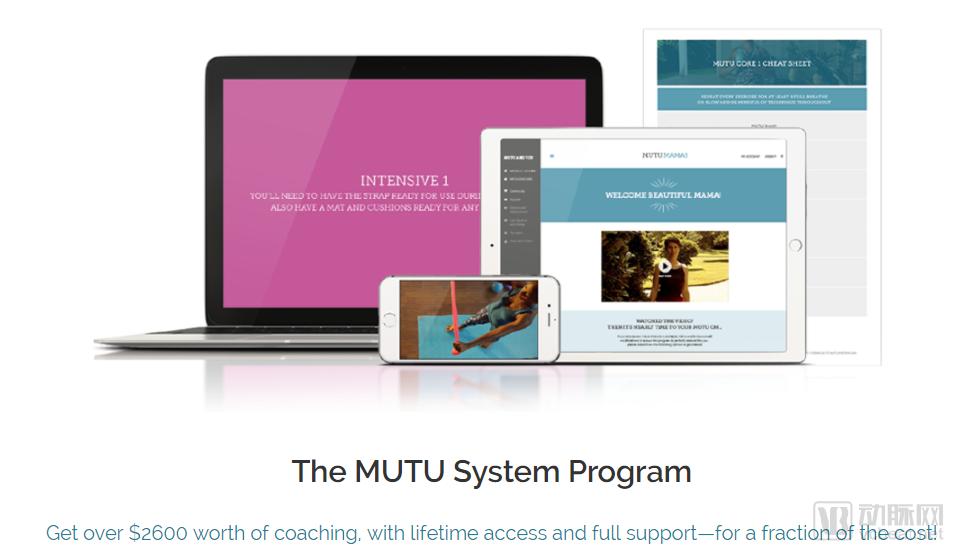
Image from the official website of Mutu System
From Professional Physical Therapist to Internet Product Manager
According to available information, Wendy Powell, the founder of MUTU, is a world-renowned postpartum rehabilitation physiotherapist and fitness coach who graduated from the University of Birmingham. Her postpartum fitness programs have consistently been among the best-selling internationally and have received numerous recommendations from physiotherapists and nutrition experts. Following the successful launch of her online postpartum fitness courses, Wendy Powell is now dedicated to advocating for women at international conferences and on women’s issues, aiming to raise awareness about women’s health and disseminate relevant knowledge. In collaboration with the UK National Health Service (NHS) and its Women’s Physiological Health Department, she shares resources on diastasis recti abdominis and postpartum recovery to ensure patients receive optimal treatment and care, thereby enhancing brand influence.
Initially, Wendy Powell simply produced and sold DVDs of her postpartum fitness courses for women. Now, she has launched the online MutuSystem platform, providing professional guidance to clients remotely, while also enabling users to share their experiences within the community.
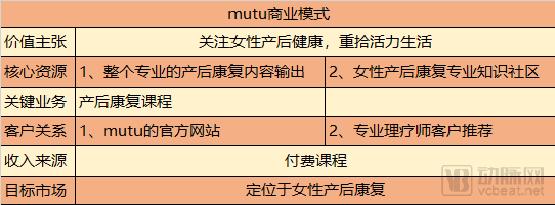
Marketing Customized Products to Penetrate Professional Community Users
Wendy Powell, with a professional background as a physiotherapist, has made physician and expert endorsements a key selling point of her product. The Mutu website features recommendations and introductions from over a dozen physiotherapists. In terms of professionalism, in addition to being endorsed by nutritionists and physical therapy experts, Mutu positions itself not merely as a seller of fitness videos and products, but as a platform that empowers users. It teaches users how to exercise while emphasizing strategies for maintaining consistency. The program includes courses comparable in volume to its video content, guiding users to understand their bodies, master the fundamental principles of exercise and fitness, and independently adjust their workout routines.
Midway through the course, Mutu addresses user complacency and waning motivation in later stages by providing support from a professional team to help users regain confidence. Mutu also offers an online platform and offline fitness schedules, utilizing personalized interactive diaries to track user progress in real time, thereby enhancing accountability and motivation. Each user’s personal program hub is updated in real time and retains progress data for every visit. This ensures that the entire fitness process is measurable, evaluable, and traceable.
Mutu has implemented a series of integrated marketing campaigns targeting postpartum mothers. Recognizing that new mothers are often too busy to prioritize fitness, Mutu prominently highlights in its physician recommendations and product descriptions that the entire exercise routine takes only 15–20 minutes. Furthermore, by integrating the product into real-life maternal scenarios, Mutu demonstrates that it can be used seamlessly while caring for children or performing household chores.
The community on Mutu’s official website is divided into two main sections: one where professionals provide expert answers, and another where users ask questions and share their experiences. Mutu has created a dedicated FAQ section for postpartum recovery issues, categorizing questions to ensure ease of use and comprehensive understanding. This provides customers with a free online knowledge base for postpartum repair, enhancing user stickiness and loyalty. Community knowledge adds value to the products, bringing infinite worth to limited video offerings.
Founder Wendy Powell stated that Mutu will evolve into a platform, inviting more professional fitness coaches and physical therapists to join, thereby providing greater opportunities for them to share their skills and expertise.
What other competing products are there in the same industry?
The postpartum rehabilitation industry in Europe and the United States has been developing for nearly 40 years. A report from Persistence Market Research indicates that in recent years, exercise and psychological therapies have gained greater popularity in the postpartum rehabilitation market compared to pharmacological interventions. Many professional physical therapists and fitness specialists are increasingly packaging their services into streaming-based products, offering online guidance through established digital platforms.
VCBeat has observed that there are relatively few products on the market specifically focused on the postpartum period; most products are designed for women’s entire life cycles. Postpartum fitness offerings also largely overlap with general fitness products. In contrast, preconception tracking products are numerous and secure funding rapidly. For example, BLOOMLIFE, which provides wearable devices to monitor pregnancy, raised $6 million in 2016. The certified contraceptive app Natural Cycles secured $30 million in financing last November.
Glow
In 2014, the fertility-tracking app Glow launched postpartum support and labor assistance features. The app primarily provides a range of services related to pregnancy, contraception, and postpartum care by tracking women’s menstrual cycles. After three rounds of financing, Glow’s total downloads reached 1,358,883; however, the download growth rate was only 10.38%, and monthly page views were also declining. Total funding amounted to $2.3 million.
squeezy
Focusing on postpartum rehabilitation, the app Squeezy was also designed by physiotherapy expert Myra Robson. Having previously served in the NHS, Robson combined her clinical experience there with feedback from millions of users to develop an application with a user-friendly and clear interface. The app sends scheduled reminders for exercise sessions, allowing users to engage in interactive training with on-screen bubbles. It is recommended that users utilize the app in conjunction with their physiotherapists, who can help establish appropriate training plans and provide timely monitoring. The app is available for download at just $2.99 and also offers a version for men.
MY PFF
MY PFF is also a similar postpartum rehabilitation exercise app. It allows users to track exercise duration through color changes on the screen, but it lacks sufficient information.
THE ELVIE
Pelvic Floor First
Pelvic Floor First, developed by physiotherapists and fitness professionals based on the Continence Foundation of Australia’s Pelvic Floor First website, is an app that integrates pelvic floor muscle exercises with other physical activities, enabling users to discreetly engage their pelvic floor muscles while performing other workouts.
mom in fitness
Mom in Fitness, a brand focused on postpartum fitness founded by world-renowned fitness expert Lindsay Brin, provides fitness and nutrition guidance for pregnant women and new mothers. Products can be purchased through the official website.
In summary, within the postpartum rehabilitation sector, many apps have captured specific user market segments by focusing on niche areas. In comparison, Mutu’s advantages lie in its high-quality, professional content output and a robust community that ensures strong user retention. Unlike platforms offering solely video-based courses, Mutu extends the application’s lifecycle and leverages users to create value. However, its product offerings are relatively limited; compared to other wearable device brands, Mutu has lower brand influence and demonstrates insufficient innovation capacity for future development.
Domestic Postpartum Rehabilitation Service Industry in China
China is the second-largest consumer market for maternal, infant, and child products, trailing only the United States. With 20 million new mothers added annually in China and the implementation of the universal two-child policy, the postpartum female population has grown rapidly. As consumption upgrades take hold, people are placing greater emphasis on health. Data from Babytree indicates that the maternal and infant product market will exceed RMB 3.5 trillion in 2020, while the pregnant women’s services market will reach a scale of RMB 16.7 billion, accounting for only 0.0046% of the entire maternal and infant market. The growth rate from 2015 to 2020 reached as high as 51%. The market for pregnant women’s products will amount to RMB 125.4 billion, representing merely 0.03% of the overall maternal and infant market. The market potential is enormous.
The growing demand for postpartum services in China is reflected in all aspects of consumption upgrading. The latest report on the professional development of fitness coaches, released by the General Administration of Sport of China, also shows that the demand for professional training among fitness coaches is mainly focused on rehabilitation, postpartum rehabilitation, and the use of small equipment as well as comprehensive physical fitness enhancement.
In China, 71.2% of users access mobile women’s health platforms from home. According to data from Bida Consulting, the future development of mobile women’s health platforms in China will trend toward specialization, intelligent healthcare integration, and commercialization. Currently, the predominant business model for women’s health apps relies on tool-based products—such as menstrual cycle and physical condition tracking—as their core competency. These platforms leverage a large user base to evolve into online communities for women, which are subsequently converted into e-commerce platforms. The primary constraint on their growth is the severe homogenization and insufficient professionalization among existing mobile women’s health apps in China.
A similar pelvic floor exercise app in China primarily focuses on enhancing sexual experience rather than women's health, resulting in a narrowed product scope. Currently, its paid conversion rate remains low.
The key to Mutu’s achievement of a 100% customer satisfaction rate lies in enhancing product added value. Its product architecture is structured with video-based offerings as the foundational layer, while the intermediate layer features community-driven knowledge sharing and plans to onboard more professional physical therapists and fitness coaches in the future. This differentiated positioning among postpartum rehabilitation products has earned substantial user trust.