

Future Medical Launches 'Asthma Robot' and Collaborates with Over 100 Experts to Pioneer an IoT-Based Management Model for Childhood Asthma
On May 12, 2018, hosted by Qingdao Future Mobile Healthcare Technology Co., Ltd. (hereinafter referred to as “Future Healthcare”)"Connecting You and Me, Embracing a Comfortable Future"The IoT-Based Management Summit for Pediatric Asthma, the Semi-Annual Review Meeting of the China Pediatric Asthma Action Plan (Shandong Province), and the Launch Ceremony of IoT-Based Asthma Management 2.0 Were Grandly Held in the Beautiful Coastal City of Qingdao
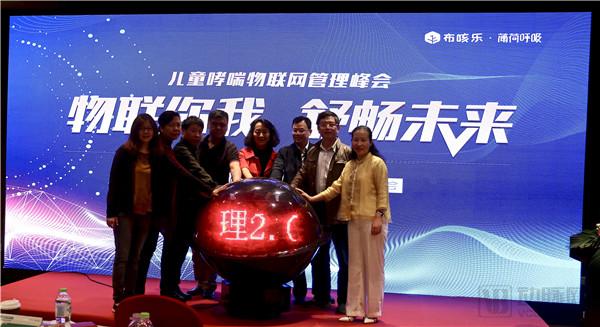
Professor Shen Kunling, initiator of the China Children’s Asthma Action Plan, President of the Asian Society for Pediatric Respirology, Vice President of Beijing Children’s Hospital, and Director of the National Clinical Research Center for Respiratory Diseases; Professor Lin Rongjun, Head of the Asthma Collaboration Group under the Respiratory Section of the Pediatrics Branch of the Shandong Medical Association and Director of the Department of Pediatrics at the Affiliated Hospital of Qingdao University; Professor Qu Zhenghai, Vice President of the Affiliated Hospital of Qingdao University; Professor Li Fuhai, Director of the Department of Pediatrics at Qilu Hospital of Shandong University; Professor Sun Yuemei, Director of the Department of Allergy at Yantai Yuhuangding Hospital; Professor Shen Zhaobo, Director of the Department of Internal Medicine at the Children’s Hospital Affiliated to Zhengzhou University; and Professor Xi Xia, Secretary-General of Dongying Municipal Children’s Hospital, along with nearly 100 other experts and department directors in the field of respiratory medicine and asthma across China, were invited to attend the event.
Guests delivered insightful presentations and engaged in in-depth discussions on the theme of “IoT-Based Management of Pediatric Asthma,” analyzing the current status of pediatric asthma management in China and sharing the achievements and experiences gained from the implementation of the Pediatric Asthma Action Plan in Shandong Province over the past six months.VCBeat (WeChat ID: vcbeat)As a supporting media outlet, VCBeat provided exclusive coverage of the event.
Current Status of Asthma Management in Chinese Children
At the outset of the conference, Dean Shen Kunling, serving as the chair of this summit, delivered the opening address. She stated that children are the future of the nation; a strong pediatric population means a strong China, and Chinese pediatricians bear the responsibility for the health of the 300 million children across the country.
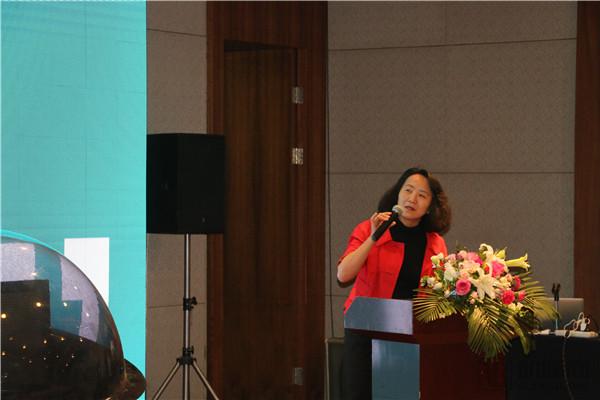
Professor Shen Kunling, Vice President of Beijing Children’s Hospital
Asthma, as the most prevalent chronic disease among children, has long been referred to as a “ticking time bomb” threatening their lives. According to relevant data,The prevalence of childhood asthma in China continues to rise at a rate of more than 50% per decade.
However,Currently, the overall control rate of childhood asthma in China is not ideal: 53% of cases are uncontrolled, 44% are partially controlled, and only 2.5% of pediatric asthma patients achieve well-controlled status.. The primary reason for this is poor treatment adherence among patients. According to comprehensive reviews of domestic and international literature, the adherence rate to inhaled corticosteroid therapy in asthma patients remains below 50%.
For many years, in response to the Millennium Development Goals proposed by the World Health Organization to reduce infant and under-five child mortality, medical experts worldwide have been exploring effective asthma management strategies. In 1991, the first U.S. asthma guideline introduced the concept of creating an individualized management plan for each asthma patient, known as an Asthma Action Plan. This initiative aimed to reduce acute asthma exacerbations, unscheduled medical visits, emergency department visits and hospitalizations, as well as absenteeism from school and work.
Since 1991, more than 80 countries worldwide have implemented asthma action plans, leading to a significant improvement in asthma control rates following their adoption.In February 2017, China launched its first pediatric asthma action plan, aiming to further improve the management of childhood asthma in the country through this initiative.According to Dean Shen Kunling, an asthma action plan for adults is also expected to be launched this year.
However, several issues have emerged during the implementation of asthma action plans in recent years. For instance, accessibility has been a concern: initial asthma action plans were paper-based, making them difficult to store and challenging to ensure that every patient had a copy, resulting in low accessibility.
In recent years, with the development of the internet, asthma action plans have gradually become digitalized, significantly improving their accessibility. The advent of the Internet of Things (IoT) era has made monitoring methods more convenient and real-time, ushering in a new management model for pediatric asthma.
Shandong Province’s Innovative Model for Pediatric Asthma Management
Shandong Province has been at the forefront of exploring childhood asthma management, with the asthma prevention and control efforts led by Professors Lin Rongjun and Qu Zhenghai serving as a national model for China.
On December 16, 2017, Shandong Province launched the China Children’s Asthma Action Plan, vigorously promoting IoT-based asthma management for children. Seizing this opportunity, Qingdao Future Mobile Health Technology Co., Ltd. introduced its“Mint Breathing,” the IoT management platform for the Pediatric Asthma Action Plan, is widely utilized by specialists and has received consistent acclaim.
This platform has become the digital vehicle for China’s Childhood Asthma Action Plan, converting the previously paper-based action plans into electronic formats and establishing electronic medical records for each patient. This facilitates physicians in monitoring, intervening, and assessing the progress and efficacy of asthma treatment. Meanwhile, by providing guidance on management and medication during acute exacerbations, as well as popular science education on nebulization and asthma, the platform enhances patients’ self-management capabilities and delivers patient education through multiple channels.
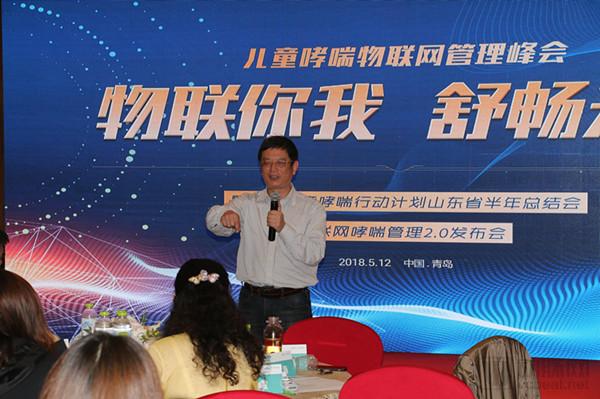
Professor Lin Rongjun, Director of the Department of Pediatrics, The Affiliated Hospital of Qingdao University
At the conference, Professor Lin Rongjun unveiled for the first time the Operational Map of the Shandong Province Asthma Action Plan.From last December to April 28, in less than half a year, an Asthma Action Plan was implemented across 16 cities in Shandong Province, including Qingdao, Jinan, Yantai, Dongying, and Weifang. This initiative achieved IoT-based asthma management, covering 59 hospitals and 109 physicians in the Shandong region, with a total of 8,621 electronic health records established.
Regarding the “Medical-Research-Enterprise“Dean Shen Kunling spoke highly of the collaboration model. She stated that it is an innovative disease management model that has set an excellent example nationwide.”
“In the future, I hope to see more physicians engage in internet-based disease management and more enterprises actively participate in pediatric asthma care, thereby achieving better control of childhood asthma in China. With tens of millions of children affected by asthma in China, conventional approaches reliant on a limited number of physicians are insufficient for effective management. Therefore, leveraging internet-based solutions is essential, albeit a formidable and complex task.“Shen Kunling said.”
Meanwhile, Professor Lin Rongjun also expressed his hope that, through collective efforts, the asthma management model in Shandong can be promoted nationwide and globally.
Managing Childhood Asthma in the Internet of Things Era
As the organizer of this conference, on that day,Future Healthcare also to the guests presentThe company introduced its core business and mission, showcasing its latest achievements: the Bohe Respiratory 2.0 Platform and the Asthma Robot—Bukele All-in-One Asthma Diagnosis and Treatment Device.
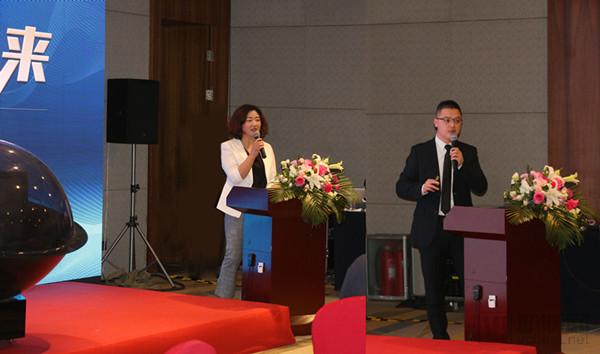
Wang Xiaoli, Sales Director of Future Healthcare (left), and Chi Jian, Marketing Manager (right), introduce the new product.
Ms. Wang Xiaoli, Sales Director at Future Healthcare, stated that the company’s core business focuses on intelligent medical devices and AI-driven innovative systems. Guided by its philosophy of “prioritizing healthcare, technology, and humanity,” Future Healthcare aims to leverage technological solutions and collaborate with various stakeholders to jointly fulfill its mission as the “Guardian of Children with Asthma in China.”
Professor Shen Kunling expressed strong endorsement of Future Healthcare’s corporate philosophy and mission, expressing her hope that the company will remain committed to innovation and play a more significant role in the management of pediatric asthma in China.
Mint Breath 2.0
At the event, Chi Jian, Future Healthcare Market Manager, demonstrated the features of the new product to the audience. Mint Breath is an asthma management platform fully based on Asthma Action Plans, leveraging computer technology to digitize paper-based Asthma Action Plans.
By entering in-hospital information and collecting out-of-hospital management data, the platform generates clinical profiles and family profiles, respectively. The integration of these two profiles establishes a comprehensive, whole-course management system for pediatric asthma that bridges in-hospital and out-of-hospital care. As the patient base on the platform expands, the system accumulates massive amounts of data, which can be leveraged for academic research, online consultation support, and evidence-based medicine studies.
The newly released Mint Breathing 2.0 adds two new features on top of the original version:Online Consultations Based on Patient Data and Systematic Patient Education。
First,Online consultations based on patient data mean that the clinical profiles and home management records previously generated by patients will be fully presented to physicians on the platform during the online consultation process.
As a result, physicians gain a clear understanding of patients’ clinical and family histories, which enhances the efficiency of online consultations and improves the accuracy of data-driven diagnoses. For patients, it becomes highly convenient to locate their initial consulting physician through the platform and convey their medical conditions quickly and accurately, without cumbersome procedures.
Secondly,As an AI assistant for physicians in patient management and scientific research, Bohe Huxi enables doctors to conduct accurate, personalized patient follow-ups and education. Through intelligent, highly tailored content delivery, it helps parents of children with asthma gain a comprehensive understanding of the disease, thereby improving treatment adherence and enhancing platform engagement.
Asthma Robot
In addition to the software upgrade, Future Healthcare also unveiled its latest hardware product on the same day—the Bukèle Asthma Diagnosis and Treatment All-in-One Machine.A single device achieves dual functionality as both a nebulizer and a pulmonary function tester by swapping different connectors.Future Medical holds the exclusive global patent for this product.
The nebulizer represents an inheritance and upgrade of the first-generation Bukèle product. The first-generation device was a smart gaming nebulizer with excellent nebulization performance, featuring a breath-actuated mechanism that prevents aerosol generation during exhalation. It also integrated a gaming app, allowing patients to play games while undergoing nebulization therapy, thereby improving medication adherence and enhancing pulmonary drug deposition.
The second-generation product not only fully inherits these advantages but also features upgrades. An electronic display and two buttons have been added to the device, facilitating real-time monitoring of nebulization data and adjustment of the nebulization rate. Compared with the first-generation model, it offers an improved user experience.
Meanwhile, the second-generation product also functions as a spirometer, capable of measuring six parameters including PEF, FEV1, FVC, and their respective percentages. It features data transmission and cloud storage capabilities, ultra-low power consumption, and extended standby time. Leveraging patented multi-sensor algorithms, the device benchmarks against international high-end brands, with an error rate reduced to less than 3%.
The Importance of Pulmonary Function Testing in the Management of Childhood Asthma
When discussing pulmonary function testing, Professor Shen Zhaobo, Director of the Department of Respiratory Medicine at the Children’s Hospital Affiliated to Zhengzhou University, shared his profound insights.

Professor Shen Zhaobo, Director of the Department of Respiratory Medicine, Children’s Hospital Affiliated to Zhengzhou University
He stated that currently, many people, including physicians, have a very limited understanding of lung function. Although the examination and clinical research of lung function have a history spanning more than 300 years—far predating cardiac function testing—societal awareness of pulmonary function testing remains significantly lower than that of cardiac function assessment. Medical institutions in China, particularly primary-care hospitals, face challenges such as low knowledge dissemination, insufficient attention, and inadequate staffing regarding pulmonary function testing.
However,Pulmonary function testing is crucial for both disease diagnosis and treatment evaluation, serving as an important objective indicator in respiratory disease research. The quantification of pulmonary function parameters facilitates a scientific and accurate assessment of disease prognosis. As a key applied technology in pulmonology, it is essential for academic exchange and professional training.
Among respiratory diseases, the incidence of asthma has remained persistently high. The primary challenge in the prevention and treatment of asthma lies in the lack of clear diagnostic criteria, as diagnosis requires a comprehensive assessment combining clinical symptoms and examination findings. Generally, there are two key bases for diagnosing asthma: a history of variable respiratory symptoms and confirmation of variable expiratory airflow limitation, the latter of which involves pulmonary function testing.
In the field of bronchial asthma, pulmonary function testing is primarily used for diagnosis and differential diagnosis, assessment of disease severity, evaluation of treatment efficacy, and guidance of pharmacotherapy.One important method involved is the measurement of peak expiratory flow (PEF). Traditional pulmonary function tests are highly complex, particularly for pediatric patients, as they require the coordinated use of multiple instruments to meet clinical needs.
Future Healthcare’s newly launched asthma robot is not only a nebulizer but also a compact and portable spirometer. It can detect six parameters, including PEF, FEV1, FVC, and their percentages, meeting the basic requirements for pulmonary function testing. Additionally, it can store three months of pulmonary function data, allowing doctors and patients to review the information at any time.
More IoT Management Practices for Pediatric Asthma
Whether it is the Mint Breath Management Platform or the Bukele Smart Nebulizer, products launched by Future Medical have always been highly favored by respiratory specialists.
Sun Yuemei, Director of the Department of Allergy at Yantai Yuhuangding Hospital, shared her experience in using the Mint Breath Platform for the digital management of pediatric asthma. She remarked, “The development of the Internet has enabled the complex and difficult-to-manage asthma records to be aggregated digitally, facilitating physicians’ rapid access to patient information. Moreover, the mining and analysis of case data form the foundation for our academic research, evidence-based medicine, and personalized healthcare.”
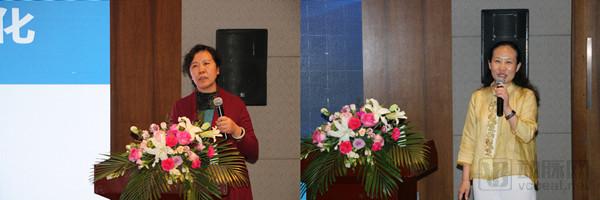
Director Sun Yuemei (left) and Director Xi Xia (right) sharing practical insights
Additionally, Director Xi Xia from Dongying Municipal Children's Hospital shared her series of home nebulization IoT management practices after joining the Bohe Respiratory Platform. She stated that Bohe Respiratory is an excellent home IoT nebulization management platform.
First, it can clearly collect patients' basic information in electronic format that is network-enabled, facilitating timely retrieval by physicians during follow-up visits. Second, asthma is a heterogeneous disease requiring personalized treatment and patient education. Through the Bohe Respiratory Platform, physicians can mine and leverage individualized patient data to deliver more precise and targeted nebulization therapy regimens.
Meanwhile, with the platform's assistance, physicians can also monitor patient information to improve adherence.“Modern treatment is delivered with warmth; when patients sense this compassion, their adherence will undoubtedly improve. I am pleased to see that the new product launched by Future Healthcare today incorporates pulmonary function testing, enabling physicians to better monitor disease progression and facilitate greater doctor-patient interaction through the Bohe Health IoT management platform.”Xixia said.
Clearly, experts have given high praise to future medical products. However, as Professor Shen Kunling stated, the management of childhood asthma in China is a daunting and complex task that requires collaborative efforts from multiple stakeholders.
In response, Chi Jian stated, “We firmly believe thatAsthma management must follow the ‘DANCE’ model, namely Data + Algorithm + Network + Cloud + Exponential Hardware.“Although we may still be some distance away from realizing the full potential of artificial intelligence, I am confident that this day will come sooner or later. We hope that an increasing number of industry experts will join us in establishing and scaling up this IoT-based management model for pediatric asthma.”