

YiE Medical Partners with Rothman Institute Enterprise to Pioneer COE Management Model for Orthopedic Specialty Hospitals in China
In recent years, significant changes in the healthcare system and policies—such as the “Two-Invoice System,” stricter controls on high-value consumables, and the elimination of markups on pharmaceuticals and medical devices—have profoundly impacted the development of orthopedics in China. In orthopedic hospitals where surgical interventions are predominant, the previously extensive growth model is no longer sustainable. It is imperative to innovate management models, optimize operational efficiency, and compete through quality excellence.
On May 13, 2018, the China Orthopedic Hospital Management Forum was held in Hangzhou. Attendees included Wang Yan, President of the Chinese Orthopedic Surgeons Association; Richard H. Rothman, Founder of the Rothman Institute Enterprise (hereinafter referred to as “RIE”); Liu Zhengrong, Founder and CEO of Weiyi; Professor Wu Haishan from Shanghai Changzheng Hospital and Shanghai Ninth People’s Hospital affiliated with Shanghai Jiao Tong University School of Medicine; Tian Xiaobin, President of Guizhou Provincial People’s Hospital; Cui Yan, President of Shandong Zibo Lianchi Orthopedic Hospital; and Huang Bei, Deputy General Manager of Zhejiang Boner Medical Investment Management Co., Ltd. Group, among other industry professionals.
Over 20 experts, hospital presidents, and entrepreneurs from the orthopedic industry engaged in a discussion on the topic of “How Orthopedic Specialty Hospitals Can Improve Management Efficiency, Maximize the Release of Medical Productivity, Enhance Physician Value, and Optimize Patient Care Experience.”
Orthopedics is a specialty situated between consumer healthcare and specialized medical care, characterized by a high proportion of service-based items, extensive use of high-value consumables, and high gross profit margins.
According to the National Health Services Survey conducted every five years, as recorded in the *China Health and Family Planning Statistical Yearbook*, the prevalence of musculoskeletal and connective tissue diseases among residents aged 15 and above in China reached 3.73% in 2013. Conservatively estimated, the number of new orthopedic cases in China each year is at least 2 million.
The enormous demand has tested the resource allocation of orthopedic diagnosis and treatment institutions. In the context of tiered diagnosis and treatment, the distribution of medical capabilities across hospitals at different levels is unbalanced; therefore, it is crucial to enhance the overall competence of primary-care physicians and improve educational standards.
In May 2017, the General Office of the State Council issued the “Opinions on Supporting Social Forces in Providing Multi-level and Diversified Medical Services,” which advocates maintaining government leadership while appropriately introducing competitive mechanisms in the realm of basic medical and health services, and ensuring market vitality in the sector of non-basic medical and health services.
Supported by national policies, the development of specialized orthopedic hospitals has ushered in a springtime, with such institutions emerging rapidly. However, there is a shortage of high-end specialized orthopedic care, and talent and operational management are key to the development of specialized institutions.
Liu Jia, Key Account Manager at Zimmer Biomet Medical International Trade Co., Ltd., believes that although Document No. 44 provides unprecedented support to private hospitals, these institutions still face challenges in talent acquisition and operational models. “Talent refers to two categories: one is experts and scholars; the other is hospital administrators.”
Wang Yan believes that “to establish an orthopedic hospital, we must first strengthen training to enhance the overall competence of physicians; second, leverage ‘Internet Plus’ and technological means to improve hospital management efficiency; and finally, collaborate with world-leading hospitals such as RIE to introduce advanced management practices. Only in this way can we accelerate the development of orthopedic hospitals in China and create a globally leading management model for orthopedic care.”
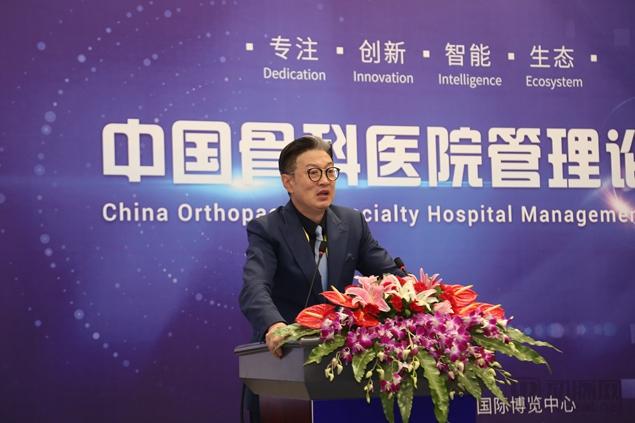
Wang Yan, President of the Orthopedic Surgeons Branch of the Chinese Medical Doctor Association
For specialized orthopedic hospitals, a patient’s rapid transition from the acute postoperative phase to rehabilitation is not merely a technical issue. Cui Yan, President of Zibo Lianchi Orthopedic Hospital in Shandong Province, believes that while technology serves as the foundation, it is primarily through robust management that multidisciplinary collaboration is effectively implemented. By integrating anesthesia, nursing, rehabilitation, and even logistical and administrative support services, hospitals can truly deliver high-quality care. “Management plays a key role in leveraging technology as the driving force and fostering cross-departmental cooperation through multidisciplinary collaboration, thereby maximizing the effectiveness of hospital management.”
Following the issuance of Document No. 44 by the State Council, market competition mechanisms were introduced. Professor Rothman proposed the concept of “survival of the fittest.” The Rehabilitation Institute and Enterprises (RIE), which he founded, operates two orthopedic specialty hospitals, nine surgical centers, and 31 clinics across the United States. By implementing a Center of Excellence (hereinafter referred to as “CoE”) management model, RIE has achieved significant results in improving hospital management efficiency, enhancing research capabilities, standardizing medical services, and controlling costs.
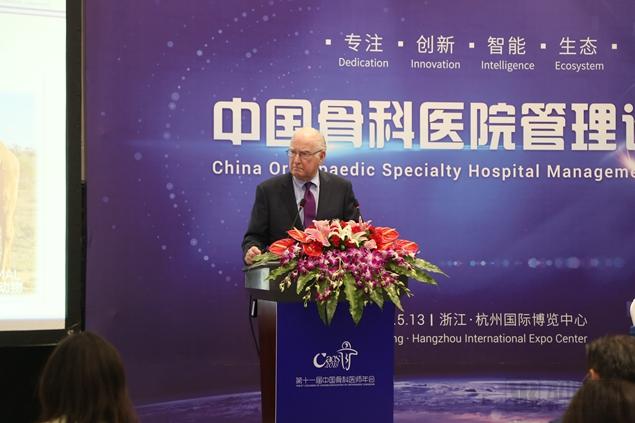
Richard H. Rothman, Founder of the Rothman Institute Enterprise
According to Professor Rothman, the management model for Centers of Excellence (CoE) was proposed by Professor Charnley in the 1970s. The CoE encompasses four core objectives: “reducing complications,” “reducing costs,” “improving clinical outcomes,” and “enhancing efficiency.”
Over the past few decades of exploration, he has developed a comprehensive hospital management model through continuous adjustments and optimizations in several areas, including “process management,” “recruitment,” “team building,” “evaluation systems,” and “innovative management approaches.” This model has enhanced management efficiency, ultimately reducing costs while ensuring the quality of medical services, thereby providing patients with healthcare that is “convenient, accessible, and affordable.”
Professor Rothman stated, “Our core challenge lies in controlling costs while ensuring quality. As a healthcare service provider that is also a private enterprise, how do we balance profitability with our medical mission, and how do we reconcile the conflicting objectives between medical specialists and administrators? In the face of such challenges, the CoE model is the perfect choice.”
Zhao Hui, Chief Medical Officer of Weiyi, believes that orthopedic diseases mainly fall into three categories: congenital malformations, acquired trauma, and degenerative lesions. These conditions are characterized by their ease of standardization. Therefore, through standardized management and the accumulation of a large volume of cases, it is possible to standardize the diagnosis and treatment processes in orthopedics. This standardization serves as the foundation for establishing Centers of Excellence in Orthopedics.
To establish the Center of Excellence (COE) model in China, three major objectives must be achieved in healthcare management: enhancing patient experience, restoring the value of physicians, and implementing standardized clinical management. Furthermore, efforts must be intensified not only in optimizing medical processes but also in standardizing disciplinary education and training, as well as increasing investment in scientific research.
Zhao Hui believes that, based on the substantial data accumulated by Weiyi over the past five years—during which 130,000 of China’s 150,000 orthopedic surgeons have registered on the Weiyi platform, with 50% coming from tertiary Grade A hospitals—the platform has amassed nearly 80,000 academic datasets of various types. It has also established databases on physician behavior and medical products to facilitate data mining. “These academic data enable us to better understand clinical diagnosis and treatment practices as well as physician behavior, thereby allowing us to develop diagnostic and therapeutic protocols better suited to China’s specific healthcare context.”
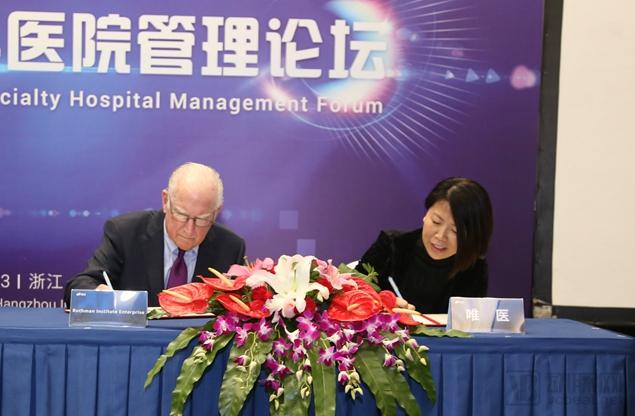
RIE Founder Richard H. Rothman and Weiyi Founder and CEO Liu Zhengrong Sign Strategic Cooperation Agreement
To jointly build China’s Orthopedic Center of Excellence (COE), Weiyi and RIE announced a strategic partnership at the forum. Liu Zhengrong, Founder and CEO of Weiyi, stated that both parties would leverage their respective resource advantages to collaborate on exploring new models for specialized orthopedic hospital management, providing clinical skills and hospital administration training for orthopedic surgeons, pursuing joint investment and development targeting orthopedic hospitals and related industries, establishing an international referral network for orthopedics, and advancing research and innovation based on orthopedic big data.
According to the introduction, the offline physical orthopedic hospital network system of Weiyi will include three models: flagship hospitals positioned as high-end integrated centers for medical care, education, and research; standard hospitals undertaking core regional diagnostic, therapeutic, and surgical tasks; and cooperative orthopedic centers.
Through this collaboration, Weiyi will comprehensively draw on the management expertise of the RIE Orthopedic Hospital Group, including its management structure, information systems, and standardized processes. Meanwhile, both parties will jointly explore a new hospital management model that integrates “online and offline” services, creating a novel business model for orthopedics.
Discussing the vision for future development, Liu Zhengrong stated, “Professor Richard H. Rothman made a significant contribution to cost containment across the United States by reducing Medicare expenditures for knee arthroplasty from $35,000 to $20,000. Over the next 30 years, Weiyi also aims to contribute to the advancement of orthopedic hospitals in China.”
Applications and Practices of “Internet+”: Its Significant Value Lies in Addressing Pain Points Across Multiple Industries. Current pain points include: For physicians, there is a mismatch between patient needs and professional expertise due to information asymmetry; the burden of writing numerous repetitive medical records; inefficient postoperative follow-up; and the difficulty of leveraging large volumes of unstructured data for accurate screening and scientific research. For patients, information asymmetry hinders their ability to identify suitable hospitals. Meanwhile, orthopedic patients, in particular, face considerable challenges such as long travel distances and a poor healthcare experience characterized by “two hours of waiting for a five-minute consultation.”
An ideal orthopedic hospital should break away from the traditional “one doctor per room” model, integrating both an online platform and physical clinics to achieve a seamless online-offline synergy. Hao Jing, President of Weiyi, stated, “Medical resources are no longer confined to individual hospitals, enabling maximized resource sharing for greater social value. This is our vision for the future: to establish a new concept of orthopedic hospitals that combines virtual (‘airborne’) and offline services.”
From smart internet hospitals to physical clinics, hospitals, and surgical centers, patients can transition from online consultations and intelligent triage to offline treatment, followed by subsequent follow-up and rehabilitation. Throughout this process, patient health data—derived from multiple sources and integrated across the entire care continuum—will be consolidated. This integration not only supports artificial intelligence analysis but also provides timely feedback to enhance each stage at the front end of the orthopedic care chain.
Hao Jing stated, “We should not tackle difficult tasks in isolation. The underlying data infrastructure for different models cannot be built by a single company alone; we need to collaborate with large, leading companies to pilot applications. Within the entire ecosystem, all partners are indispensable to us. To establish a Center of Excellence (CoE), we must pool our resources to achieve this goal.”
By providing end-to-end services that integrate “online consultations with offline specialized hospitals,” Weiyi connects physicians, medical device and pharmaceutical manufacturers, and orthopedic patients. The company has already partnered with enterprises such as Meinian Onehealth Healthcare and Alibaba Cloud to jointly build an orthopedic ecosystem chain. Benefiting from favorable policies promoting “Internet + Healthcare,” Weiyi’s internet hospital was launched in Yinchuan as early as March 2017, and its physical orthopedic specialty hospitals are gradually being established across China.
Through collaboration with various stakeholders, Weiyi aims not only to build a one-stop orthopedic platform encompassing China’s largest orthopedic physician education program, orthopedic pharmaceutical and medical device marketing, an orthopedic internet hospital, physical orthopedic hospitals, and an intelligent orthopedic diagnosis and treatment system, thereby providing integrated services for the entire orthopedic industry chain (physicians, patients, and businesses), but also to establish supporting peripheral industries, including a medical R&D platform, professional cooperation platforms, clinical surgery centers, and rehabilitation centers, with the goal of creating an internationally standardized orthopedic industry chain.