

MileBot Secures Tens of Millions in Pre-A Funding to Build Intelligent Rehabilitation Ecosystem with Exoskeleton Robots
VCBeat has learned that on May 16, Shenzhen MaiBu Robotics Technology Co., Ltd. (hereinafter referred to as “MaiBu Robotics”) announced the completion of its Pre-A financing round, amounting to tens of millions of yuan, in April this year. The round was led by FenXiang Investment, with Lenovo Capital and Incubation Group participating as a co-investor. Including the angel round previously led by Lenovo Capital and Incubation Group, MaiBu Robotics has garnered favor from multiple investment institutions within just one and a half years since its establishment.
Dr. Chen Gong, CEO of MaiBu Robotics, stated that this round of financing will not only provide substantial support for product iteration and clinical trials but also accelerate the company’s market expansion and recruitment of high-end talent.
Exoskeleton Rehabilitation Robot Based on Soft Actuators
Maibu Robotics was founded in Shenzhen in September 2016 by a team of PhD holders who returned to China from overseas and seasoned professionals from the robotics industry. The company is dedicated to building an intelligent rehabilitation system, leveraging technologies such as robotics, the Internet of Things (IoT), and big data to enhance the efficiency and effectiveness of rehabilitative medical care. With dozens of invention patents to its name, Maibu Robotics demonstrates robust R&D capabilities and a strong commitment to innovation.
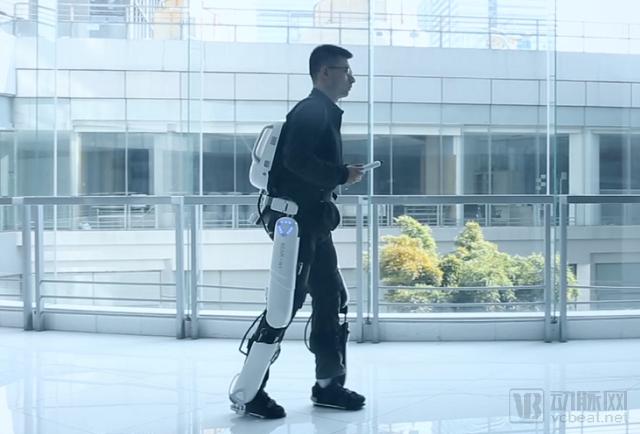
Centered on its core technology—robotic interaction technology based on flexible actuators—the company has developed several medical rehabilitation robotic products, including lower-limb rehabilitation exoskeleton robots. It is reported that this technology has reached a world-leading level in the field of rehabilitation robotics. This lower-limb rehabilitation exoskeleton robot (Figure 1) is also an exoskeleton rehabilitation robotic product based on flexible actuators.
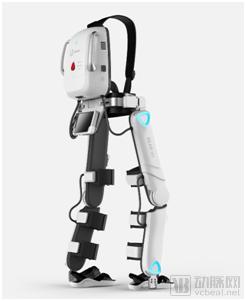
Gait Lower Limb Rehabilitation Exoskeleton Robot
Regarding the reasons for securing financing,Dr. Chen Gong attributes this to three factors: first, the company’s team, comprising two PhD holders who returned from overseas and seasoned entrepreneurs in the robotics industry, is young and passionate; second, the company boasts a strong professional background, leveraging the two PhDs’ years of research achievements abroad to translate technology into tangible products; and third, the rehabilitation market represents a vast blue ocean with significant untapped potential.
The Exoskeleton Robot Market: A Vast Blue Ocean with Limitless Prospects
Currently, the market for medical rehabilitation exoskeleton robots remains a vast blue ocean. China has over 10 million stroke patients, with the number surging by 1.5 to 2 million annually. The National Health and Family Planning Commission predicts that this figure will reach 31 million by 2030. However, in the face of this enormous demand for professional rehabilitation personnel, China’s current workforce of approximately 20,000 rehabilitation professionals is far from sufficient. By leveraging advanced technology, Maibu Rehabilitation Robots provide patients with comfortable, safe, and precise rehabilitation training, thereby improving rehabilitation efficiency. This makes them an inevitable choice for resolving the imbalance between supply and demand.
Dr. Chen Gong believes:“We must recognize the industry’s growth prospects while also paying attention to certain challenges faced by domestically produced rehabilitation robots in entering the market. First, there is insufficient integration with clinical practice; currently, this aspect remains inadequate, which may prevent some products from fulfilling their intended purposes. Second, regarding coverage under the national medical insurance scheme, some new products may not be initially included in the reimbursement catalog, resulting in excessively high rehabilitation costs for patients. Third, hospitals place insufficient emphasis on rehabilitation departments, as these units generate relatively low economic revenue.””
Strong Team Strength, Recognized by Multiple Investment Institutions
Within just a year and a half, MileBot has garnered favor from numerous investment institutions. Huang Fanzhi, Partner at Fenxiang Investment, the lead investor in this funding round, stated: “Fenxiang Investment is a typical venture capital firm. Our core investment thesis in healthcare centers on staying at the forefront, looking toward the future, and identifying innovation. MileBot’s exoskeleton robots equipped with flexible actuators align perfectly with this core logic, and the rehabilitation market they target holds immense potential. Furthermore, the founding team’s professionalism, efficiency, and pragmatism are key factors valued by investors.”
Meanwhile, Lenovo StarVest, which led the initial round and continued to increase its investment in this round, stated: “Beyond market potential, we place greater emphasis on the technical accumulation of the MaiBu team. Dr. Chen Gong (CEO of MaiBu) and Dr. Ye Jing (CTO of MaiBu) have long been engaged in interdisciplinary research combining robotics with medical rehabilitation. The control algorithms and engineering implementation of their core technologies present significant challenges and establish strong barriers to entry. Furthermore, their flexible actuators can serve as core components to empower other industries and sectors, offering scalability not found in other similar teams. The decision to further increase investment was driven by the remarkable changes observed within the team over just one year—changes that even exceeded expectations. The team has demonstrated outstanding performance in achieving set targets, product iteration, operational effectiveness, and business expansion.”
Dr. Chen Gong stated that he also has a very clear plan for future development.On one hand, the company will build an intelligent rehabilitation system centered on exoskeleton rehabilitation robots, enabling more patients to access advanced rehabilitative therapies. On the other hand, leveraging its core technology—flexible actuators—the company aims to develop a broader range of solutions in the field of human-computer interaction.。