

Dutch AI Health Tech Firm SkinVision Eyes China Expansion with 1.2M Users and 3.5M Dermatological Images
Can cancer be detected with a simple scan? This is no longer novel in the industry. As early as 2012, SkinVision, a company from the Netherlands, launched an app for skin cancer detection, becoming the world’s first company to use “images + algorithms” for this purpose.
Since 2015, numerous skin detection companies have emerged. Most AI-driven dermatology firms serve physicians as auxiliary diagnostic tools, while a few companies, such as Voxel Technology and Hangzhou Xiaofu Technology, focus on patients by providing skin health management services.
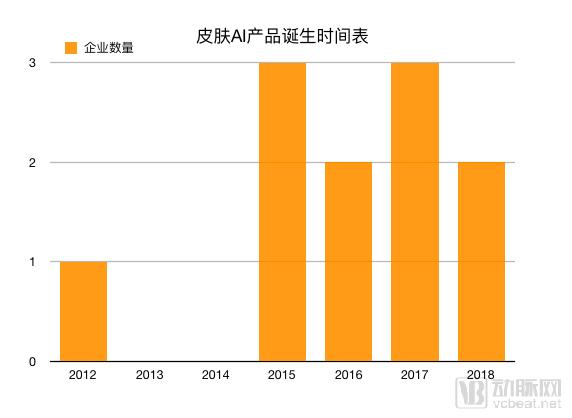
Unlike the aforementioned companies, SkinVision has positioned its services toward consumer-focused dermatological detection and management since its inception. Leveraging favorable local policies, SkinVision is able to provide risk indicators to customers, ensuring that individuals seek medical attention at the appropriate time.
Recently, VCBeat interviewed Matthew Enevoldson of SkinVision. Mr. Enevoldson shared with VCBeat the company’s journey and insights, hoping to inspire like-minded professionals, foster collaborations through joint discussions, and facilitate SkinVision’s early entry into the Chinese market.
Why SkinVision Chose Skin Disease Detection: This May Be Related to Regional Conditions.
Last year, the European Union’s statistical office, Eurostat, stated that cancer-related deaths accounted for 26% of all deaths in the EU, while the Netherlands had the second-highest cancer mortality rate in Europe, with 31% of Dutch people dying from cancer.
In 2016, a total of 15,836 people in the Netherlands were diagnosed with some form of skin cancer, making it one of the most common types of cancer in the country. Moreover, this number continues to rise year by year, showing no signs of abating.
SkinVision, taking into account national conditions, sought to develop a time-efficient and accessible method to help people prevent and manage skin cancer, leading to the creation of the SkinVision skin-checking app.

Simple Skin Cancer Screening (Image Source: SkinVision)
Surpassing the Diagnostic Proficiency of Specialist Physicians
SkinVision uses scientifically validated algorithms to examine skin spots in photos for signs of skin cancer. Developed and tested through collaboration between software engineers and dermatologists, the algorithm determines whether a patient has a form of skin disease by analyzing lesion color, texture, and shape irregularities.
SkinVision uses proprietary algorithms to calculate the fractal dimension of skin lesions and surrounding skin tissue, and constructs structural maps of the different growth patterns of the tissues involved. The software indicates to patients which skin spots should be monitored and provides a risk assessment within 30 seconds based on the image analysis.
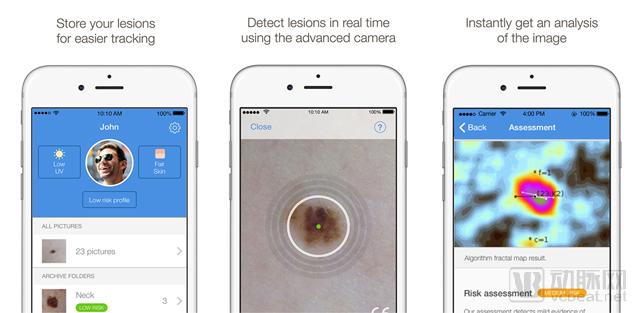
Usage Example (Image Source: SkinVision)
Recent clinical data show that SkinVision’s detection service has a sensitivity of 94% and a specificity of 80%, far exceeding the detection sensitivity of general practitioners (60%), dermatologists (75%), and even specialist dermatologists (92%).
Upon detecting high-risk images, SkinVision automatically forwards them to the team’s image recognition specialists and dermatologists for secondary review, ensuring the quality of the software’s performance. All users who upload high-risk photos will receive additional advice from a SkinVision physician within 48 hours.
Today, SkinVision has accumulated 1.2 million users and processed over 3.5 million images. This dataset has enabled SkinVision to enhance the sensitivity of its algorithm far beyond that of its competitors, with its accuracy now surpassing that of melanoma specialists.
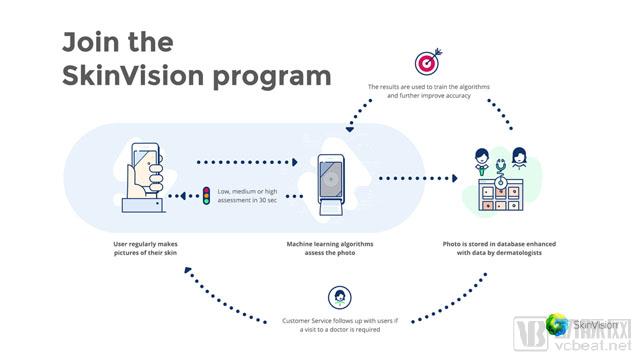
How to Join the SkinVision Community (Image Source: SkinVision)
SkinVision’s revenue streams consist of two components. On one hand, the SkinVision app offers a subscription service priced at €24.99, which allows subscribers to undergo an unlimited number of image-based skin assessments within a one-year period for prevention and disease monitoring purposes.
On the other hand, SkinVision has partnered with health insurance companies, which provide free app subscriptions to all policyholders and pay subscription fees to SkinVision.
Matthew told VCBeat, “We prefer the second model, under which patients can use SkinVision free of charge. Motivated by their own health concerns, patients are more inclined to utilize this service; meanwhile, insurers stand to achieve substantial potential savings, thereby reducing the cost of insurance services. With more precise customer targeting and a broader client base, we are highly enthusiastic about collaborating with insurance companies.”
In the context of China, the “Internet + Healthcare” model is still evolving. Most users have no experience subscribing to medical services, and public awareness regarding prevention for specific diseases remains weak, making it challenging to launch the first type of business model. Targeted outreach to users in collaboration with insurance companies may be a more practical approach.
Erik de Heus, CEO of Skinvision, is the primary driving force behind the company’s growth. Initially, Erik handled daily management and product sales at HP, frequently traveling between the Netherlands, the United States, and Switzerland.
He served as CEO of OXXIO for seven years, growing the company from scratch at its inception to nearly 800,000 customers through mergers and acquisitions. OXXIO was acquired by Centrica in 2005 and conducted an initial public offering (IPO) in mid-2005.
After leaving OXXIO, Erik joined Wellness Solutions as a partner and served as its Chief Executive Officer, where he launched multiple business ventures for Philips Asset Holding Company.
Dick Uyttewall has been Erik’s constant companion, helping SkinVision achieve its current standing. Dick also previously worked at HP, providing financial software packages to tech startups. After leaving HP, Dick launched the Macha Works project, which aims to deliver internet services to the most remote communities in Zambia.
Data show that in 2012, there were 232,000 new cases of cutaneous melanoma worldwide, with 55,000 deaths. The incidence rate in Western countries ranged from 21.9 to 55.9 per 100,000 population, while in Asia it ranged from 0.2 to 0.65 per 100,000 population. In 2014, a total of 4,000 people died from cutaneous melanoma, with a mortality rate of 0.27 per 100,000 population.
Another domestic data study shows that melanoma accounts for 1% to 3% of all malignant tumors in China, with an annual incidence growth rate of 3% to 5%. Although the incidence rate in China is far lower than that in Western countries, the large population base means the number of patients remains significant.
Clinically, more than 80% of cutaneous melanomas in Caucasians originate from the head and neck region, whereas in Asian populations, melanomas predominantly arise from acral skin and mucosal sites. Most Caucasian patients with melanoma present with early-stage skin and mucosal lesions at Stage I. In contrast, the vast majority of patients in China are diagnosed at Stage II (58.3%) and Stage III (25.2%), a discrepancy likely attributable to the concealed location of primary tumors and insufficient public awareness of the disease. Mucosal melanoma has a low incidence in Western countries, accounting for only 1.3% of all melanoma cases, whereas it represents up to 22.6% of cases in China. One-third of patients with mucosal melanoma are already at Stage III or IV at the time of diagnosis. There is an urgent need in China to strengthen education and training on this disease.
Regarding the Chinese market, Matthew stated: “The incidence of skin cancer in China is lower than in Europe, yet the mortality rate remains high at 1.19 per 100,000 people (compared to 2.35 per 100,000 in Germany). This elevated mortality rate may be attributed to a combination of factors. First, the Chinese population lacks inherent resistance to skin cancer. Furthermore, there is limited public awareness of the symptoms and causes of skin cancer, meaning many patients do not receive timely diagnoses. Finally, given China’s large population, the relatively low per capita healthcare expenditure and the small ratio of licensed physicians to the total population also contribute to the high mortality rate.”
“Data from the Hong Kong Cancer Registry show that between 2005 and 2014, the annual number of new non-melanoma skin cancer cases in Hong Kong rose by 65%, from 569 to 941. During the same period, the number of patients with more aggressive melanoma skin cancer increased by 56%, from 50 new cases to 78. Although we cannot extrapolate findings from Hong Kong alone to the entire country of China, few studies have provided data more comprehensive than those cited above.”
As Matthaw stated, if data from Hong Kong indicate that this trend is emerging in other parts of the country, or even in certain regions, skin cancer may become a significant public health issue in China within a few years.