

BodyPlus Technology Files IPO Prospectus: Revolutionizing Long-Term ECG Monitoring for Cardiovascular Chronic Disease Management in Medical Consortiums
Cardiovascular disease has long been referred to as the “number one killer” among diseases. According to data from the Report on Cardiovascular Diseases in China 2016, cardiovascular disease ranks as the leading cause of death among both urban and rural residents. It is estimated that there are currently approximately 290 million patients with cardiovascular disease, indicating a period of rapid growth and high prevalence of chronic diseases. Over the next decade, the field of cardiovascular treatment holds immense potential for development.
In addition to in-hospital diagnosis and treatment, pre-hospital screening and prevention, as well as post-discharge follow-up and intervention, play a crucial role in controlling the incidence and recurrence rates of cardiovascular diseases. Due to their continuous monitoring capabilities and convenience in various usage scenarios, wearable medical devices are commonly used for pre-diagnostic screening and for tracking patients’ conditions during post-treatment follow-up.
According to incomplete statistics, there are more than 70 mainstream wearable ECG monitoring devices on the market, primarily in wearable and portable forms, with highly similar functionalities. In the highly competitive field of ECG monitoring, how has BodyPlus differentiated its product form, and what makes its products unique? Recently, VCBeat conducted an exclusive interview with Gao Xiangdong, Founder and CEO of BodyPlus.
Gao Xiangdong, who began his career in electronic measurement instruments, had long served the military and aerospace sectors while also working to localize high-end electronic measurement instruments. In his own words, he spent the previous decade “dealing with signals.” When mobile healthcare began to rise in 2014, he recognized the niche and closed nature of the military industry. Leveraging his foundation in the electronic measurement instrument sector, he joined forces with his former team to launch a startup focused on wearable medical devices for health management.
Gao Xiangdong pointed out that currently, the primary method used by hospitals for long-term ECG monitoring is 24-hour ambulatory electrocardiography, commonly known as “Holter” monitoring. A characteristic feature of such devices is that, although they can be used outside the hospital setting, their electrophysiological sensors employ wet electrodes. These electrodes rely primarily on electrolyte gel between the sensor and the patient’s skin to enhance the sensor’s ability to detect bodily electrical signals. Meanwhile, patients are required to attach fewer than 10 electrodes to their bodies and carry a recording box.
Such products have, to some extent, caused inconvenience for patients in terms of both clinical visit experience and user experience.
Benchmarking Israel’s Healthwatch wearable ECG monitoring device, the team conceived a product that patients could wear on their bodies. After two years of research and development, BodyPlus officially launched its ECG shirt to the market. Although it appears to be an ordinary T-shirt, it is essentially a real-time dynamic health monitoring and early warning system for cardiac electrical activity. The system continuously analyzes output signals from proprietary flexible sensors embedded in the T-shirt, enabling long-term ECG data monitoring.
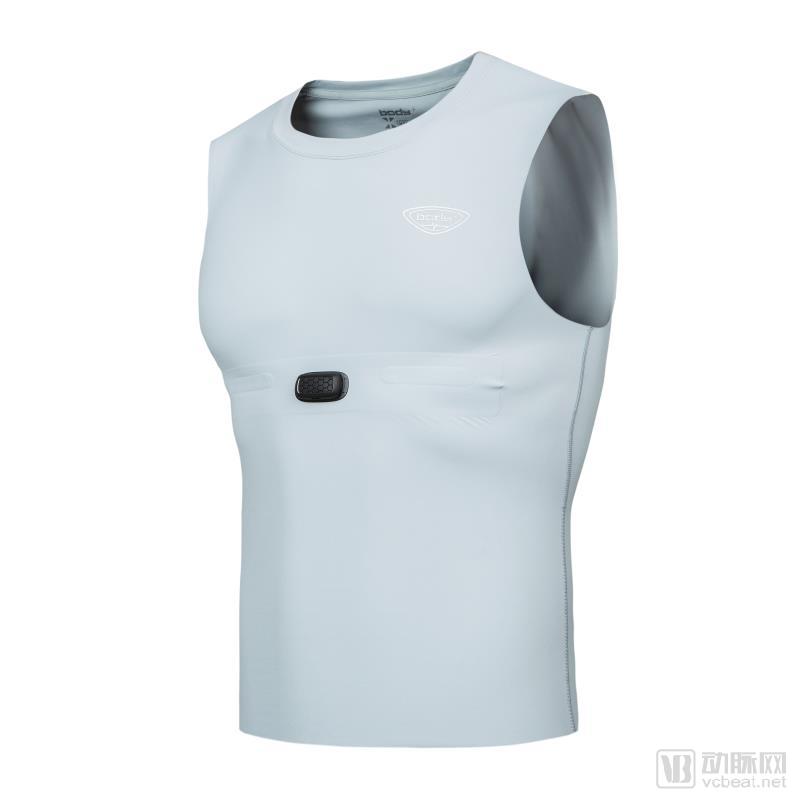
BodyPlus ECG Vest (Image provided by the company)
BodyPlus’s current product portfolio is divided into two segments. The first consists of hardware products focused on electromyography (EMG) and electrocardiography (ECG). Among these, EMG devices are primarily used in scientific research, sports rehabilitation, and neurological rehabilitation, while ECG devices are mainly employed for screening and follow-up management of chronic cardiovascular diseases. The second segment comprises software solutions, primarily in the form of mobile apps and PC-based applications, including a cloud platform for monitoring and analyzing ECG data.
For BodyPlus, the primary challenge is ensuring data accuracy. Electrocardiogram (ECG) monitoring adheres to the principle of non-invasiveness and typically employs surface electrodes. Electrodes that do not require conductive gel are referred to as "dry electrodes"; their impedance, polarization characteristics, and stability significantly impact measurement precision.
Current biomedical sensors cannot be integrated into clothing and lack stretchability, resulting in poor wear comfort. Additionally, their weak anti-interference capability leads to poor skin contact during movement, compromising reliability and affecting the transmission of biomedical signals. Consequently, collecting continuous dynamic electrocardiogram (ECG) data from the human body via clothing presents significant challenges.
Gao Xiangdong told VCBeat, “From an electrical perspective, clothing is actually a relatively ‘noisy’ environment. Friction between fabric layers generates static electricity, and such electrostatic interference—along with factors including electrode materials, electrode placement methods, and signal transmission modalities—can all affect data acquisition.”
To address the aforementioned challenges, BodyPlus entered into a strategic partnership with DuPont, a global leader in the chemical industry. Over a two-year period, they developed flexible sensors and flexible sensor modules based on conductive ink printing technology. This module resolves the poor contact issues associated with traditional dry electrodes, while also addressing core challenges related to stretchability, bendability, and washability. Gao Xiangdong believes that this achievement represents the development of “dry electrodes with accuracy closest to that of wet electrodes.” He stated, “While ensuring product efficacy, the smart garments can withstand 100 washes, with each item having a service life of approximately one year.”
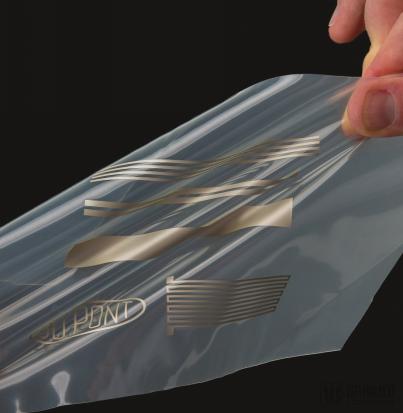
BodyPlus Smart Clothing’s Flexible Sensors (Image provided by the company)
In accordance with the comparative testing protocol specified in YY 1079-2008 for ECG monitors, BodyPlus Smart Garment achieved accuracies of 99.7%, 99.8%, and 96.5% in QRS complex detection sensitivity, QRS complex detection positive predictive value, and PVC positive predictive value, respectively.
After ensuring data accuracy, Gao Xiangdong then addressed two further challenges—comfort and aesthetics—taking into account the garment’s form. In his view, BodyPlus products “should not resemble a Holter monitor that requires users to carry a ‘bulky box’ when going out, thereby labeling them as patients.” Instead, they should be an ordinary-looking vest capable of protecting the heart, serving as our close-fitting “armor.”
In terms of materials and built-in smart hardware, BodyPlus’s ECG shirt primarily uses nylon and Lycra fabrics. It is equipped with the world’s smallest high-precision system for acquiring, storing, and transmitting ECG and respiratory signals, weighing only 7.8 grams, enabling continuous 24-hour acquisition and recording of ECG data.
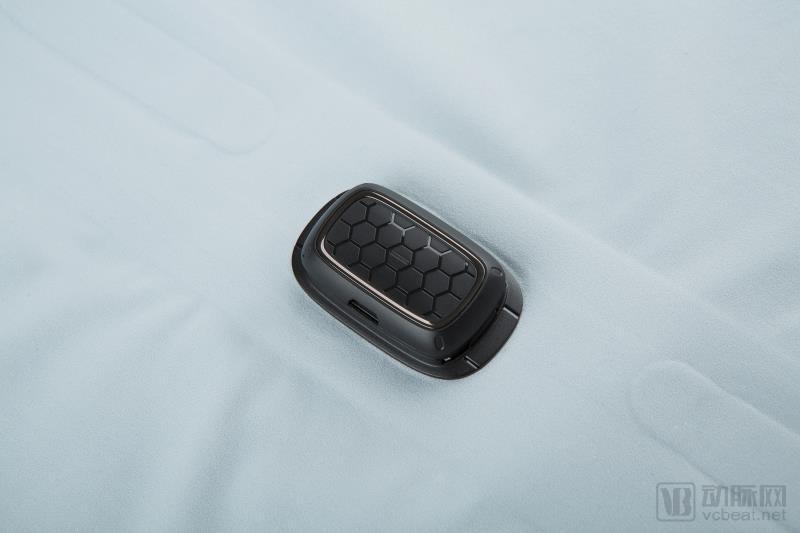
High-Precision ECG and Respiratory Signal Acquisition, Storage, and Transmission System (Image Provided by the Company)
In terms of cost, although technical challenges exist, the availability of automated manufacturing processes is the key determinant of whether a product can achieve “mass production.” Gao Xiangdong believes, “Such products should not become ‘luxury items.’ Automated processes must be employed to reduce production costs, ensuring reasonable pricing so that everyone can afford them.” Currently, the BodyPlus ECG shirt with embedded sensors is priced at a level nearly comparable to that of ordinary clothing.
In terms of application areas, BodyPlus primarily focuses on the medical sector, while also extending its reach to sports and industrial applications. 2018 marked the first year that BodyPlus made significant strides in the medical field. In fact, since its inception, BodyPlus has targeted the medical market. In the healthcare domain, BodyPlus mainly serves B-end clients, empowering partner institutions with products such as its ECG smart shirts. By leveraging smart clothing to connect patients with medical institutions, BodyPlus acts as an entry point for medical and health big data, serving as a tool platform for healthcare service providers.
Academician Zhang Yun, a renowned cardiovascular expert and member of the Chinese Academy of Engineering, has pointed out that two major challenges must be actively addressed in China’s current landscape of cardiovascular disease (CVD) treatment: first, the substantial volume of patients being referred from tertiary hospitals to primary care institutions; and second, the urgent need to enhance diagnostic and therapeutic capabilities at the primary care level. With 290 million CVD patients in China, the distribution of specialists is highly uneven, and the quality of CVD diagnosis and treatment across primary care hospitals remains inconsistent. Consequently, various models of specialized medical consortia focused on cardiovascular care have emerged across different regions.
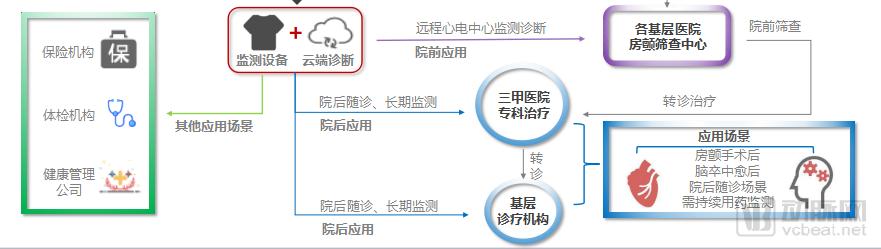
BodyPlus Product Application Model (Image Provided by the Company)
To address these pain points, BodyPlus has partnered with organizations such as the Heart Alliance and Xinyi International to facilitate remote diagnosis and treatment of cardiovascular diseases. By leveraging cloud-based algorithms, BodyPlus provides remote services to enterprises and manages data for patients at the primary care level. In collaboration with its partners, BodyPlus is jointly establishing atrial fibrillation screening centers in primary hospitals, while also building a comprehensive healthcare system that encompasses pre-hospital screening, post-discharge follow-up, and long-term monitoring.
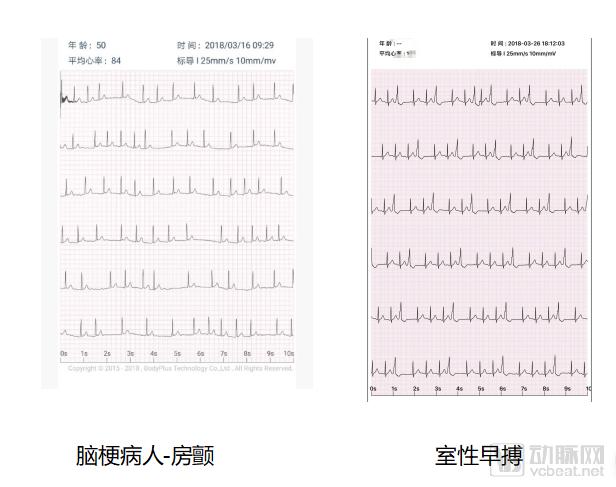
By utilizing the smart ECG vest and its companion mobile application, long-term ECG monitoring and event-based ECG recording can be achieved. The system performs 24-hour ECG data acquisition and recording for patients, generating PDF reports of electrocardiograms. Meanwhile, it identifies events such as arrhythmias based on predefined indicators. When abnormalities are detected by the ECG vest, specific events are flagged, and ECG tracings from one minute before and after the event are recorded. Once the data is uploaded to the cloud, healthcare institutions can access the data and reports via a web-based platform to review patient conditions.
Collaborate with Beijing Anzhen Hospital on a post-discharge chronic disease management program for patients to monitor adverse events.
BodyPlus facilitates connections between patients and primary care institutions through its collaborations with healthcare organizations, serving as an entry point for medical and health big data and as a tool platform for healthcare service providers. Through a series of solutions, it addresses the lack of data collection methods, limited data interpretation capabilities, and inability to monitor and manage patients in primary care settings, thereby improving the accuracy of diagnosis and treatment at these institutions. In terms of remote follow-up, physicians can also leverage the platform to manage patients outside the hospital setting.
Gao Xiangdong emphasized that within the medical consortium system, BodyPlus serves as a data collector. “Pre-hospital care focuses on screening, while post-hospital care centers on management. In these two stages, data acts as a bridging link for continuity of care. The challenge lies in encouraging users to generate such data and ensuring its accuracy.”
Gao Xiangdong believes that the team has primarily been engaged in signal processing, with a core composition of electronic engineers who possess extensive experience in signal processing and analysis. Therefore, the medical professionalism of our solutions depends on collaboration with physicians and expert teams from institutions such as the Heart Alliance and Beijing Anzhen Hospital. The overall product development strategy, professional rigor, and usability validation have all benefited significantly from the input of our collaborative network of specialized medical experts.
Furthermore, the significance of collaborating with a team of medical experts lies in the ability to make timely adjustments to products during the research, development, and production phases in response to physicians’ clinical needs. Physicians assist BodyPlus by continuously validating requirements throughout the R&D process, serving as both product testers and advisors.
Gao Xiangdong told VCBeat, “From the very beginning, BodyPlus products were developed based on requirements raised by physicians. Throughout the R&D process, physicians periodically helped us validate and refine the product. As a result, when the product was finally launched, it matched exactly what physicians had in mind.”
According to Gao Xiangdong, in addition to using traditional sensors for ECG monitoring, the company is also collaborating with research universities on the development of artificial intelligence (AI) technologies. High-quality data is a prerequisite and foundation for AI-based diagnosis, with data quality being critical to diagnostic accuracy. He stated, “In AI data processing, 80% of the time is spent on data preprocessing, and the accuracy of data annotation directly affects the accuracy of the results.”
Therefore, in terms of data acquisition, BodyPlus has chosen to collaborate with physician groups to obtain a large volume of high-quality, annotated medical case samples, thereby facilitating algorithm iteration and developing more accurate data models. “In the cloud, we partner with several medical consortia. The substantial amount of data generated requires annotation and verification by physicians. As the annotated data undergoes continuous iteration, the artificial intelligence algorithms will become increasingly precise.” In Gao Xiangdong’s words, artificial intelligence serves as another strategic pillar for BodyPlus.
Prior to the revenue-sharing model for its algorithm services, BodyPlus’s primary business model centered on the sale of product devices. Additionally, by leveraging collected ECG data to provide users with vital sign analysis and collaborating with medical institutions, BodyPlus monetized multi-scenario services such as online consultations and medical diagnostics.
Currently, BodyPlus has secured three rounds of financing totaling tens of millions of yuan, with investments from institutions such as Shuzhi Jiangren and Tengfei Technology. In the future, BodyPlus will leverage smart devices to perform high-frequency, continuous collection and analysis of vital signs, utilizing the accumulated data to support medical research and insurance cost containment.