

Auris Health: Revolutionizing Robotic-Assisted Surgery with the Monarch Platform – Acquired by Johnson & Johnson for $3.4 Billion
On February 13, Johnson & Johnson announced in a high-profile manner that it would acquire Auris Health, a surgical robotics company, for $3.4 billion in cash. This transaction enables Johnson & Johnson to obtain the latter’s surgical robotic technology for airway surgery and lung cancer detection.
Just half a month ago, Johnson & Johnson revealed an acquisition price of $2 billion. This clearly fell short of Auris Health’s expectations, causing the agreement to temporarily fall through at that time.
What’s more intriguing is that, following the announcement of this acquisition, the stock price of a company named Auris Medical surged unexpectedly, simply because its name bore too close a resemblance to Auris Health, leading some investors to mistakenly purchase its shares.
At 10:40 a.m. on February 13, Auris Medical’s stock price rose by 9.4%, having earlier surged as much as 30%.

Image source: Bloomberg
What exactly is the appeal of Auris Health that compelled Johnson & Johnson to acquire it at a hefty price? To answer this, we need to delve into the company’s development history.
"Silent until it strikes, then stunning the world."
Auris Health, originally named Auris Surgical Robotics, was founded in 2007 and is headquartered in San Carlos, California, USA. It was established by Dr. Frederic Moll, known as the “father of surgical robotics,” who also serves as its CEO. In fact, Auris is the fourth surgical robotics company founded by Dr. Moll.
Prior to joining Auris Health, Dr. Moll founded three companies, including the renowned publicly traded company Intuitive Surgical (da Vinci Surgical System), which has been in operation for 22 years and currently boasts a market capitalization exceeding $60 billion.
Another company, Hansen Medical, which specialized in developing tools for catheter manipulation, was founded by Dr. Moll in 2002 and went public in 2006. However, Hansen’s market influence was far less than that of Intuitive. In the summer of 2017, the company was acquired by Auris for $80 million.
Another company was the medical device firm Origin Medsystems. The company later became the operating entity of the medical device company Guidant and was acquired by Eli Lilly in 1992.
“Dr. Moll is a tireless entrepreneur, determined to win the recognition of doctors, patients, and skeptics.”
“He is a human who will never be replaced by robots!”
“He will not give up on anything; he can even silence all his opponents.”
Dr. Moll’s investors, friends, and colleagues speak of him in these terms.
Among Dr. Moll’s “Four Golden Flowers,” Auris Health is a rather enigmatic company. Since its inception, Auris has operated in stealth mode, disclosing virtually no information, leaving the outside world to simply refer to it as a “Silicon Valley company.”
In fact, while raising substantial venture capital, the company has maintained a low profile, quietly developing a suite of tools driving the robotic surgery revolution.
In a 2015 report published by IEEE Spectrum, one can only gain a limited glimpse into Auris Health through its patent information. The patents describe the company’s three-dimensional coordination system for medical robotics:
This low-profile stance persisted until 2016.
In June 2016, Auris Health announced that its ARES (Auris Robotic Endoscopy System), an endoscopic robot for treating lung diseases, had successfully received FDA approval. As endoscopic procedures do not require large incisions or general anesthesia, ARES simplifies endoscopic examinations, thereby benefiting patients who are unable to tolerate the trauma and pain associated with conventional surgery.
The American Society for Gastrointestinal and Endoscopic Surgeons estimates that, in the areas of obesity and reflux disease alone, endoluminal therapies with ARES are expected to help more than 1 million patients annually in the United States.
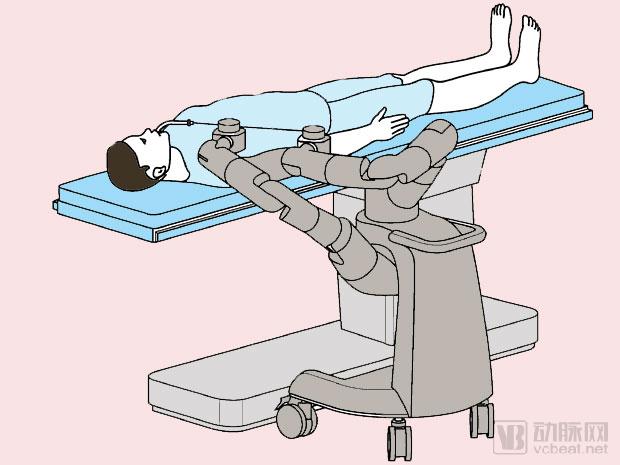
Image source: Auris Health
Like the renowned da Vinci Surgical System, Auris Health’s robotic platform is also remotely controlled by a surgeon at a console. The physician operates the robot using a three-dimensional map generated from a series of two-dimensional CT scans, and employs electromagnetic sensors, accelerometers, and even automated video tracking for device localization.
The launch of this product officially sounded the starting gun for Auris Health’s rapid ascent. In 2017, Auris Health completed a $280 million Series D financing round, reaching a valuation in the billions of dollars and joining the ranks of newly minted unicorns alongside prominent Chinese internet companies such as Zhihu, Toutiao, NIO, and Ofo.
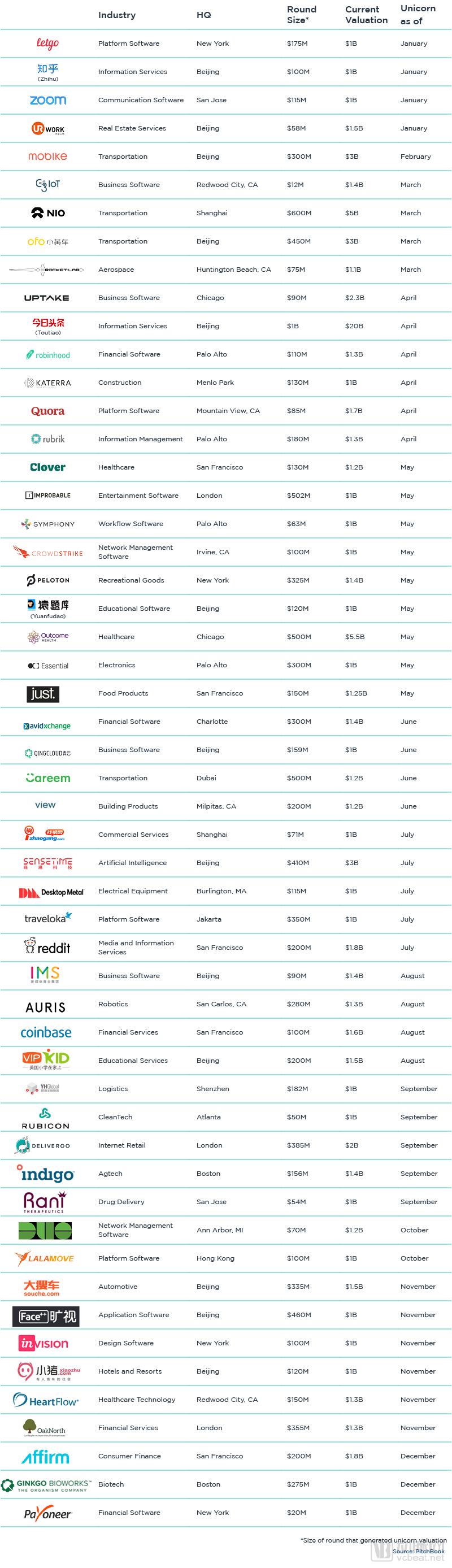
Image source: PitchBook
RevolutionaryThe Monarch Platform is Launched
In March 2018, Dr. Frederic Moll publicly announced that the Monarch robotic endoscopy platform, a revolutionary product under Auris Health, had received FDA approval. This product also served as the catalyst for Johnson & Johnson’s subsequent acquisition of Auris Health.
The Monarch robotic platform was initially designed for the treatment of lung cancer, but its FDA approval for use in diagnostic and therapeutic bronchoscopy procedures demonstrates that the platform’s design has evolved beyond a single indication.
Auris Health stated that the Monarch platform is a revolutionary flexible endoscopic technology. The system enables more accurate diagnosis and treatment of small, hard-to-reach nodules in the peripheral lungs, holding promise in the fight against lung cancer.
The Monarch Platform features a familiar, controller-like interface that enables physicians to navigate a flexible robotic endoscope around the lungs, thereby enhancing reach, visualization, and control. By integrating computer-assisted navigation based on a patient-specific 3D model of lung anatomy with conventional endoscopic views, the Monarch Platform provides physicians with continuous bronchoscopic visualization throughout the procedure.
Furthermore, the Monarch system does not rely on an outdated single-handed interface that requires users to manipulate the endoscope by twisting; instead, it enables more ergonomic control via a gamepad-like device.

Image source: Auris Health
In addition, the Monarch platform features other distinctions from traditional endoscopes, including a telescoping, nested endoscope that facilitates easier navigation through S-shaped anatomical structures.
Following FDA clearance, the interventional pulmonology team at El Camino Hospital in Mountain View, California, quickly and successfully performed an innovative robotic bronchoscopy using the Monarch system to visualize the interior of a patient’s lungs and obtain tissue samples. This marks the first successful clinical application of a robotic bronchoscopy system in the United States.
According to the American Cancer Society, lung cancer is the second most common cancer in both men and women and remains the leading cause of cancer-related deaths among Americans, with a mortality rate higher than that of prostate, colorectal, and breast cancers. Each year, approximately 220,000 Americans are newly diagnosed with lung cancer, and more than 155,000 die from the disease. Therefore, early and accurate diagnosis of lung cancer is crucial.
“Traditional bronchoscopy is susceptible to human error, exhibits significant variability, and, due to its bulky size, cannot access the smallest branches of the lungs, posing a formidable challenge to the diagnosis of potentially cancerous pulmonary nodules,” said Dr. Ganesh Krishna, Medical Director of Interventional Pulmonology at El Camino Hospital.
According to him, at El Camino Hospital, physicians typically employ various minimally invasive procedures to visualize internal structures, obtain tissue samples, and diagnose pulmonary diseases. With the adoption of the Monarch platform, clinicians have now begun to standardize the diagnostic evaluation of suspicious pulmonary nodules. As robotic bronchoscopy enables deeper access into the lungs and precisely guides biopsy instruments to even the most challenging nodules, this technology offers the capability to diagnose lung cancer at an earlier stage.
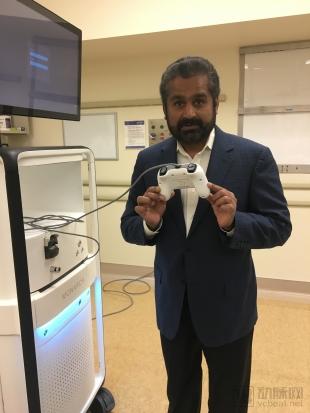
Dr. Ganesh Krishna of El Camino Hospital. Photo: Kevin Forestieri
Furthermore, the Monarch platform consists of two components: a robotically guided bronchoscopy tool and a control device that maintains the camera’s video input. The device’s sleek white plastic frame and glowing blue LED lights shine brightly in the operating room within El Camino Hospital’s old building. In the dimly lit corridors, it exudes an even stronger sense of futurism.
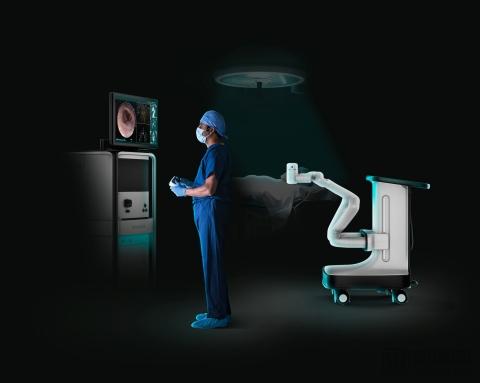
Image source: Auris Health
In 2015, a study published in the New England Journal of Medicine found that half of the 500,000 bronchoscopies performed annually in the United States were conducted for suspected lung cancer, with 43% of these cases yielding “nondiagnostic” results. In other words, additional testing is required to determine whether patients have cancer, which may involve more invasive procedures such as transthoracic needle biopsy and surgical lung biopsy.
The study found that 35% of patients with benign lesions underwent invasive surgery following indeterminate results.
Against this backdrop, Eric Davidson, Vice President of Marketing at Auris Health, stated publicly: “Lung cancer and chronic obstructive pulmonary disease (COPD) are health challenges that need to be addressed globally, particularly in regions with poor air quality and high smoking rates. Therefore, he expressed hope that the technology Auris is developing will play a significant role in countries with high lung cancer incidence, such as China.”
Marrying into a Wealthy Family
In May 2018, Auris Health announced that the company had entered into a collaboration agreement for joint development and commercialization with NeuWave™ Medical, Inc., a subsidiary of Johnson & Johnson and part of Johnson & Johnson Medical Devices. The company’s objective is to achieve robot-assisted bronchoscopic ablation of pulmonary lesions.
The agreement requires all parties to jointly develop an integrated system for robotic control, navigation, and microwave ablation delivery via bronchoscopy. The bronchoscope is equipped with a miniature camera and an accessory channel, allowing instruments to be introduced into the lungs through the mouth. The jointly developed protocol also includes technology optimization and procedural development.
Following the signing of the cooperation agreement, Dr. Moll, CEO of Auris Health, stated publicly: “From the outset, our vision has been to create a platform capable of advanced diagnosis and treatment for a range of diseases using minimally invasive methods. We are honored to partner with Johnson & Johnson. Together, we will strive toward our ultimate goal of diagnosing and treating lung cancer through the body’s natural orifices.”
Unexpectedly, in less than a year, Johnson & Johnson acquired the highly promising Auris Health for $3.4 billion.
Following its acquisition, Auris has certainly not halted its progress. As its founder, Dr. Moll, stated, “Lung cancer is Auris’s first market, but by no means its only one; robotics will become increasingly prevalent precisely because of their precision.”
People remain full of expectations for the future of surgical robots...
1、First Surgical Robot from Secretive Startup Auris Cleared for Use——Mark Harris
2、UPDATE: Moll’s Auris wins FDA nod for Monarch robotic endoscopy platform—— FINK DENSFORD
3、Auris Health Unveils the FDA-Cleared Monarch Platform, Ushering in a New Era of Medical Intervention——Krysta Pellegrino
4、A breath of fresh air in fight against lung cancer——Kevin Forestieri
5、Robotic-Surgery Pioneer Seeks Lung Cancer Revolution——WSJ PRO