

New Structure Unveiled: Hot Trends and Cold Challenges in Policy-Driven Health Management
Data shows that China’s health industry has maintained an annual growth rate of over 10%, with its market size exceeding RMB 3.2 trillion by the end of 2016. The market size for health management has surpassed RMB 110 billion and is projected to expand to RMB 203.9 billion by 2020.
According to the "China Health Management and Health Industry Development Report (2018)," the state of development of China's health management and health industry in 2017–2018 was characterized as: "Overall positive upward trend, yet with numerous challenges and issues."
Among these, the “hot” trends are manifested in ten aspects: national macro policies and industrial planning, theoretical research and academic exchanges, intelligent health and smart elderly care, health checkups and chronic disease management, and health data and group standards.
The challenges associated with the “cold” sector lie more in shifting development paradigms, building disciplinary talent pools, constructing systemic models, enhancing health literacy, and ensuring service delivery.
By the end of 2017, there were more than 10,000 health management (physical examination) institutions at all levels and across all categories in China, 90% of which were established by public medical institutions (including those operated by military medical institutions). In 2017, the estimated number of outpatient visits for medical services in China exceeded 8 billion (compared to 7.9 billion in 2016), while the volume of health management (physical examinations) was only 500 million. Moreover, health management services offered were limited in variety, with over 95% still focused primarily on physical examinations and lacking post-examination services.
In 2017, with the implementation of the National Medium- and Long-Term Plan for the Prevention and Control of Chronic Diseases, and the in-depth advancement of the National Basic Public Health Services Program and the construction of Comprehensive Demonstration Zones for Chronic Disease Prevention and Control, chronic disease health management began to receive unprecedented attention.
This is specifically reflected in the following three aspects:
First, chronic disease health management has been formally incorporated into the “Healthy China 2030” Strategic Plan and the “Medium- and Long-Term Plan for Chronic Disease Prevention and Control in China (2017–2025).”
Second, chronic disease health management is promoted and implemented as part of the National Basic Public Health Services package, alongside child health management, elderly health management, and maternal health management.
Third, the National Health and Family Planning Commission is formulating guidelines for the establishment of demonstration institutions for chronic disease health management and promotion services, to accelerate the standardized and orderly development of chronic disease health management.
Meanwhile, as high-tech innovations such as the Internet of Things (IoT), big data, and artificial intelligence continue to be developed and mature, the health management industry has evolved from simple self-management to specialized, real-time management, further enhancing service experience and public awareness.
In terms of industrial structure, in addition to online mobile health management platforms based on the internet, offline health management centers have extended their services to communities with the aim of covering the smallest units. This not only responds to the national call for tiered diagnosis and treatment but also reduces the cost of health management for the public. Health management has gradually evolved from an initial high-end service into a universally accessible service.
Following the institutional reforms, comprehensive and full-cycle health management has become a critical issue. The current healthcare landscape is undergoing dramatic changes, with the disease-centric model gradually evolving into a prevention-oriented approach. In terms of top-level design, how are policies changing? How should the market respond? What transformations are public hospitals, which deliver the vast majority of health management services in the market, currently undergoing? What new technologies are empowering healthcare institutions to improve the efficiency of chronic disease management?
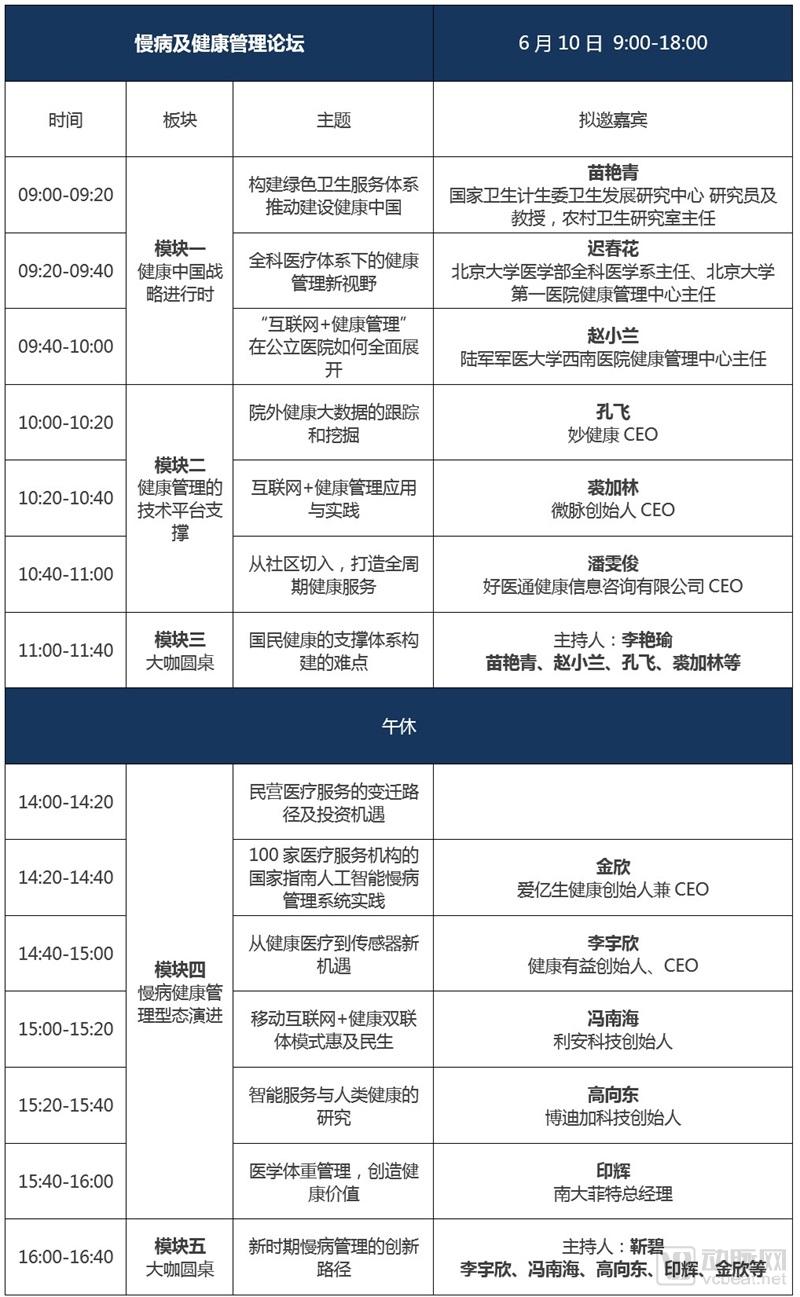
At the Health Management Sub-forum of the New Infrastructure – Primary Healthcare Summit, a one-day discussion will be held with participation from policy researchers, experts from public hospital health management centers, entrepreneurs exploring new health management models, and corporate representatives providing tool-based products from a technical perspective. The discussions will center on policy trends, family doctor contract services driving community-based chronic disease management, new opportunities in smart health management, as well as the current status, opportunities, and challenges in chronic disease management.

On June 10, we invited more than ten industry experts, investors, and entrepreneurs to discuss the challenges and opportunities in health management and chronic disease management. The preliminary agenda is as follows:
Limited-Time Special Offer on Ticket Prices
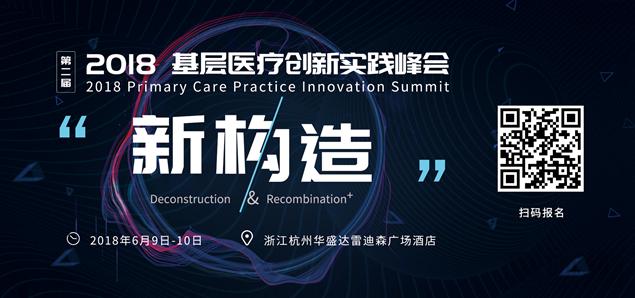
Scan the QR code to register

Scan the QR code to join the group and get the report!