

Choutu Tech: Revolutionizing Hepatic Disease Diagnosis with Label-Free Digital Pathology from Singapore to China
“A wise person foresees what has not yet emerged.” This left the deepest impression on VCBeat during the half-hour interview with Dai Qishang.

Dr. Dai Qishang, Founder of ChouTu
At a time when the domestic market widely regarded liver fibrosis as irreversible and many pharmaceutical companies had yet to launch relevant products, he foresaw the future rise of the liver fibrosis treatment market. He founded HistoIndex, a company specializing in fibrosis diagnostic equipment, in Singapore in 2008, and established Choutu Technology in China in 2013. The company focuses primarily on the quantitative assessment of liver fibrosis, aiming to provide physicians with quantifiable data reports through novel fibrosis detection devices, thereby offering critical reference for clinical treatment.
After earning his Ph.D. from the University of Auckland, Dai Qishang has remained active in the field of scientific research. He previously worked at the University of Pittsburgh Medical Center. In the past two years, he has secured over RMB 50 million in project funding and published 14 papers in SCI-indexed journals. When asked why he chose to embark on an entrepreneurial venture, he replied, “I find business and commercialization more interesting.”
Initially, Dai Qishang worked on ECG R&D at a U.S. company that was later acquired by Medtronic, Inc. Leveraging the technology from this acquisition, Medtronic developed the CardioInsight Mapping Vest. This realization led Dai to understand that his research could be translated into clinical products for patient use.
“In 2007, an opportunity for industry-academia-research collaboration arose in Singapore, so I went there,” he recalled. “The local technology transfer environment was excellent, and the government even connected me with angel investors.”
During his research tenure in Singapore, he met his current co-founder, Gideon Ho, who was then responsible for industry translation and commercialization efforts.
After several collaborations, Gideon Ho developed a strong interest in Dai Qishang’s technology, recognizing it as a highly promising companion diagnostic technology. They decided to partner up and launch the project.
“We are both technical professionals and may not be particularly well-versed in the market,” he stated. This led to the addition of another partner, Dr. Nore Moore. At the time, this European executive served as the President of Asian Sales for a multinational corporation, and Dai Qishang recruited him to serve as the company’s CEO.
Those familiar with the healthcare industry know that chronic diseases represent a sustained and substantial market. While cardiovascular-related products are undoubtedly the most dynamic segment, they may not necessarily be the optimal choice for a startup company.
“At that time, many drugs for liver disease had entered clinical trials and would soon reach the market. ‘As therapeutic options proliferate, companion diagnostics will become valuable,’ Dai Qishang told VCBeat.”
Both in diagnosis and treatment, the field of liver disease has progressed more slowly than cardiovascular disease. Yet this slowness presents an opportunity for pioneers.
Their first product is a quantitative diagnostic solution for liver fibrosis. Fibrosis is a reparative process; for instance, the scar tissue that forms after a wound heals is a result of fibrosis. If the skin surface sustains continuous injury, the healed area will consist entirely of scar tissue, lacking healthy cells. Similarly, due to the persistent attack of viruses on the liver, abnormal proliferation—namely, fibrosis—remains even after recovery.
Any liver injury involves a process of hepatic fibrosis during repair and healing; if the injurious factors are not removed over a prolonged period, the persistent fibrotic process will progress to liver cirrhosis.
He stated, “This must be cleared, but there were no such drugs available at the time.”
Taking Gilead’s Sofosbuvir as an example, this drug represents a milestone in the treatment of liver disease, capable of rapidly clearing the virus, but it has no effect on liver fibrosis. At that time, the drug was still undergoing clinical trials.
Dai Qishang believes that once the medical community resolves the treatment challenges for hepatitis B and hepatitis C, the next inevitable focus will be the treatment of liver fibrosis.
Their first product, called Genesis, is a non-stained digital imaging system for tissue fibrosis. Unlike traditional histopathological diagnosis of liver tissue sections, Genesis leverages the intrinsic optical properties of tissues to perform direct scanning and imaging. The photons only excite biological tissues, inducing nonlinear effects without being absorbed, thereby causing no damage to biological samples. Genesis imaging eliminates the need for staining, thus avoiding phototoxicity associated with dyes and physical damage incurred during the staining process.
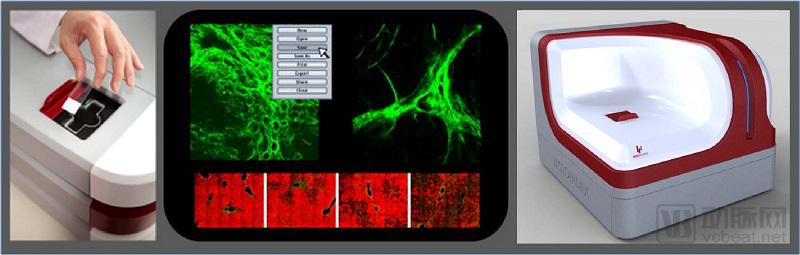
Genesis Non-Stained Tissue Fibrosis Analysis System
It took the team more than five years to go from R&D to product completion. Due to his work experience, Dai Qishang was more familiar with the U.S. market. Therefore, the company initially entered the European and American markets and established an office in the United States. However, they later realized that the largest liver disease market is, after all, in China.
After achieving a certain level of brand recognition in the European and American markets, they established a subsidiary in Hangzhou, China—Hangzhou Choutu Technology Co., Ltd.—with the aim of introducing their products to the Chinese clinical market.
“But it wasn’t smooth sailing at the beginning,” revealed Dai Qishang.
When the product first re-entered the domestic market, nearly all physicians believed that liver fibrosis was irreversible. In their efforts to engage key opinion leaders, they encountered numerous rejections. “Clinicians tend to adopt a conservative stance toward new products,” he added. “This is understandable, as they bear responsibility for patient safety.”
In the early years, in vitro diagnostic products (typically elastography ultrasound) were commonly used in clinical practice to detect liver cirrhosis. There was hope that this non-invasive approach could replace invasive testing. Unfortunately, however, an increasing body of clinical data has demonstrated that this method lacks sufficient accuracy and cannot be used for definitive diagnosis.
“Elastography can only serve as a qualitative test to determine whether liver cirrhosis is present. However, it cannot answer questions such as the severity of fibrosis or which medications should be prescribed,” said Dai Qishang.
Original medical products (whether devices or drugs) must undergo regulatory approval, which requires substantial clinical trial evidence to ensure their safety and efficacy. They must persuade physicians to adopt these products, thereby generating real-world clinical data through their use.
However, not all data are valid; often, only 10 out of 100 data sets are useful. If 500 data sets are required, it may be necessary to collaborate with 50 physicians.
Subsequently, Gilead’s drugs raised awareness of the correlation between liver disease treatments and genotypes, leading clinicians to embrace Genesis and utilize this instrument for clinical research trials.
Currently, the company has established collaborations with leading hospitals specializing in liver disease treatment, such as Peking University People's Hospital and Beijing Friendship Hospital, and has also secured a cohort of top-tier expert clients in Europe and the United States.
The product submitted its CFDA certification application in 2017 and has currently obtained innovative approval for Class II medical devices in Zhejiang Province. Benefiting from accelerated registration and approval processes, it is expected to be launched on the market by the end of 2018.
Besides liver fibrosis, what other potential markets exist in the field of liver disease treatment?
Dai Qishang believes that companion diagnostics for fatty liver disease may warrant attention. “As of April 2018, there were approximately 150 clinical trials worldwide for drugs targeting fatty liver disease. Many pharmaceutical companies have also embarked on large-scale acquisitions, reflecting a growing recognition that this is a condition requiring treatment,” he told VCBeat.
Fatty liver disease is not an independent condition; historically, it was considered unnecessary to treat. However, as its incidence continues to rise and affects increasingly younger populations, fatty liver disease has become the second most common liver disease after viral hepatitis. Currently, Europe and the United States have classified it as a chronic disease.
“The most dangerous aspect is that people do not regard it as a disease,” added Dai Qishang. “Furthermore, in light of China’s specific circumstances, drug-induced liver injury also warrants attention.”
China is a region with a high incidence of drug-induced liver injury (DILI), which is actually influenced by dietary patterns and the medication environment. In Europe and the United States, medication management is very strict, so the incidence of DILI is not as frequent; whereas in underdeveloped medical regions, due to inherent difficulties in accessing medications, DILI is almost non-existent.
“Drug-induced liver injury has become one of the four major types of liver injury in China,” explained Dai Qishang.
Since 2013, Chitu Technology has been developing Laennec, a digital pathology product for fatty liver disease. As Genesis had laid the market foundation, the promotion of Laennec to the research community proceeded much more smoothly.
“Experts are now very willing to understand what we are doing,” he revealed to VCBeat. Dai Qishang told reporters that whenever digital pathology for liver disease is mentioned, experts worldwide invariably think of their team. Their product has been incorporated into the guidelines for liver fibrosis assessment. In 2017, he himself joined the Live Forum Committee, becoming the only Chinese digital pathology expert invited to serve on it.
Currently, Laennec is primarily targeted at research users and has not yet been opened for clinical use. But if patients are to benefit, isn’t the ultimate application of the product in the clinical setting?
Laennec is a completely original new product; to obtain clinical qualification, evidence demonstrating its efficacy is required.
“Once the safety and efficacy of such products are fully substantiated, we will proceed to promote their clinical adoption,” Dai Qishang revealed. He noted that the current opening of these products to the research community is, in fact, laying the evidentiary groundwork for subsequent clinical advancement.
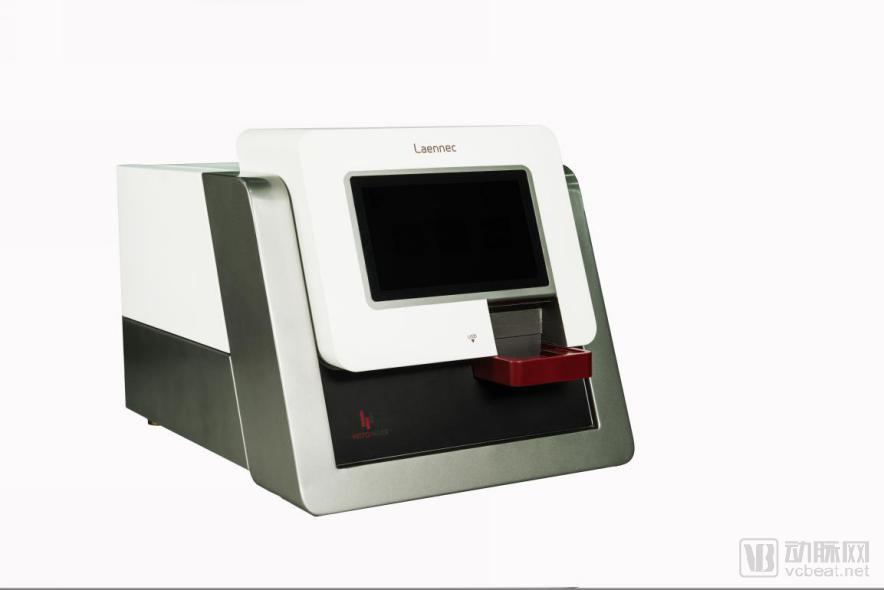
Laennec Machine Display Image
“In addition to liver disease, China also has a very large population of patients with chronic conditions such as diabetes and cardiovascular diseases. ‘However, the cardiovascular disease market is already highly mature, with high barriers to entry, making it difficult for small companies to break in,’ revealed Dai Qishang.”
“However, in terms of product attributes, imaging technology is not limited by specific organs. ‘It can be applied to any organ, so our next step is to establish a cross-disease platform, which we expect to complete by 2020,’ said Dai Qishang. After accumulating certain experience and expertise within the company, he hopes to break into the cardiovascular disease market and obtain corresponding qualifications in China, the United States, and even Europe and America.”
After being established in China in 2016, Chutu Technology completed an angel financing round, with the raised funds primarily allocated to clinical trials and research and development (R&D) for its products. Now, as its first product is on the verge of completing clinical approval procedures, the company will shift part of its focus to marketing and sales.
Dai Qishang revealed that the first product is expected to complete clinical approval by the end of 2018, and its production will be launched accordingly.
Currently, they have established partnerships with the corresponding product distributors. This approach aims to secure sales channels for their products while allowing sufficient time to be dedicated to the research and development of new products. It is understood that during this period, they are seeking to introduce Series A investors with a background in healthcare services or medical device investment.
In addition, the design of the company’s cross-disease platform will also be carried out in 2018. They hope to collaborate with more experts in endocrinology and medical devices to establish this cross-disease work platform.
“We handle the final step of the entire diagnostic process, giving us access to complete case data. Leveraging this data, we can develop algorithm-based products for in vitro diagnostics,” said Dai Qishang. “We aim to transform these into platform-based products.”
It is reported that ChouTu is currently seeking new investors to join.