

China Establishes First Research-Oriented Committee on Patient and Clinician Experience with Jiang Baoguo as Inaugural Chair
From May 16 to 17, the Inaugural Meeting of the Professional Committee on Patient-Provider Experience Management and Evaluation under the Chinese Research Hospital Association (hereinafter referred to as the “Professional Committee”), along with the First China Summit on Patient-Provider Experience, was held in Beijing. The Professional Committee was initiated by Jiang Baoguo, President of Peking University People’s Hospital, and received approval for establishment from the Chinese Research Hospital Association. Jiang Baoguo was elected as the inaugural Chairman of the Professional Committee.
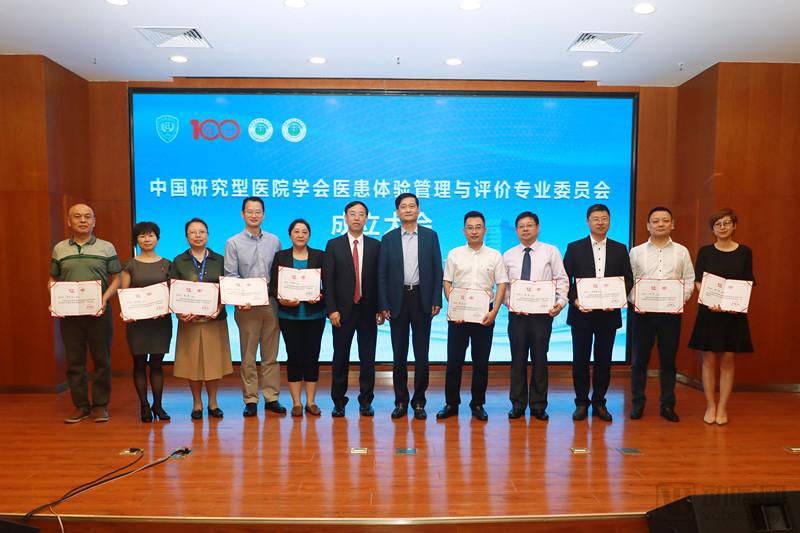
According to the introduction, the Special Committee will primarily engage in systematic research on the management needs of doctor-patient experience for government bodies and medical institutions, as well as standard-setting research on evaluation benchmarks and processes for doctor-patient experience. As a technical partner of the National Health Commission’s “Doctor-Patient Experience Research Base” and one of the organizers of this conference, Zhidao Medical Management joined 239 committee members in witnessing the establishment of the first special committee in China dedicated to research in this field.
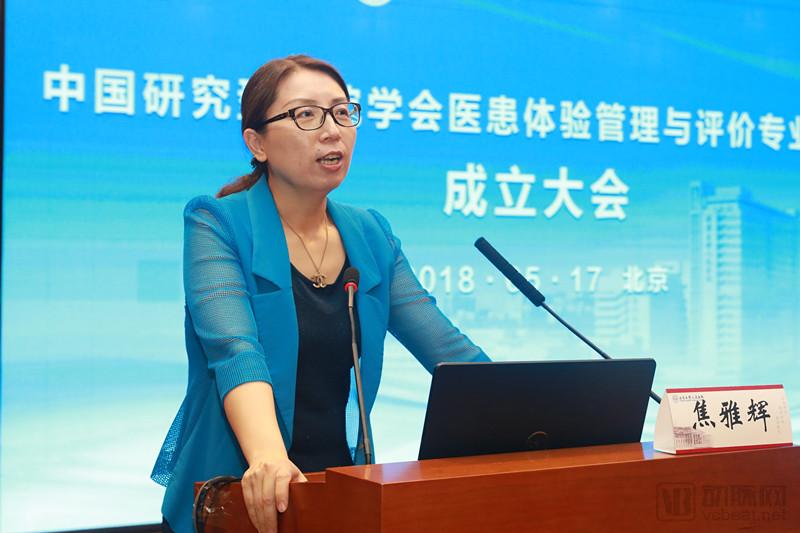
It is reported that Jiao Yahui, Deputy Director of the Bureau of Medical Administration and Hospital Management under the National Health and Family Planning Commission, also attended the event and delivered a speech at the conference. The following is the full transcript of her speech:
Not long ago, I visited a well-known tertiary Grade-A hospital to pick up a prescription, bringing nothing but my mobile phone. At the payment window, I was told that only bank cards or cash were accepted; mobile payment options were unavailable. I believe many of the hospital leaders present here today have numerous vivid examples and experiences related to improving patient experience.Throughout the entire healthcare service delivery, patient experience and perception at medical institutions serve as a critical indicator for evaluating the quality of our services.Over the years, the nation has made in-depth efforts to advance healthcare reform, with substantial investments, infrastructure development, and numerous new initiatives. However, the general public is largely unaware of policies such as zero-markup drug pricing, centralized bidding and procurement, compensation system reforms, or the modern hospital management system. Instead, people experience healthcare services directly when they visit hospitals. We ourselves also fall ill at times; if we seek medical care outside our own institutions, observing the hospital environment, doctors, and nurses, we gain a completely different perspective on the quality of healthcare services.
The establishment of the special committee indicates that the healthcare industry is increasingly recognizing the social and humanistic dimensions of medicine, beyond its natural scientific attributes, signaling a move toward more compassionate medical services.
A few years ago, when we compared the U.S. Joint Commission International (JCI) hospital accreditation standards with China’s hospital accreditation standards, the most significant difference lay not in the closed-loop management and tracking systems for medical quality, but rather in the substantial emphasis placed on evaluating the experiences of patients and their families within the U.S. standards.In recent years, we have increasingly emphasized patient experience. As healthcare reform advances, we have also begun to focus on the experiences of medical professionals. Only by improving the satisfaction of medical staff can we enhance patients’ care experiences and satisfaction.
Establishing such an evaluation system is of paramount importance. Many regions are implementing performance assessments, both external and internal to hospitals, which determine bonus distribution. One requirement that is widely recognized is that, in addition to accounting for physicians’ workload and the risks and responsibilities associated with their positions, patient satisfaction serves as a key performance indicator. However, methodologies and approaches vary across regions, leading to discrepancies in reported patient satisfaction levels. For instance, our internally measured satisfaction scores are consistently high, whereas third-party assessments often rank us near the bottom. We are actively reflecting on these disparities.
There are numerous methods for conducting surveys and evaluations of the doctor-patient experience, each with its own advantages. However, issues such as online sample size and data authenticity remain prevalent. We aim to identify a relatively objective, fair, and efficient approach through extensive practices across China, thereby reflecting the current experiences of medical professionals and patients in a fact-based manner. We encourage active participation in this project to research and develop a Chinese model of experience evaluation—with distinct Chinese characteristics—that can serve as a reference for international peers. This effort will contribute to improving medical services and the doctor-patient experience, and support the realization of the Healthy China strategy.
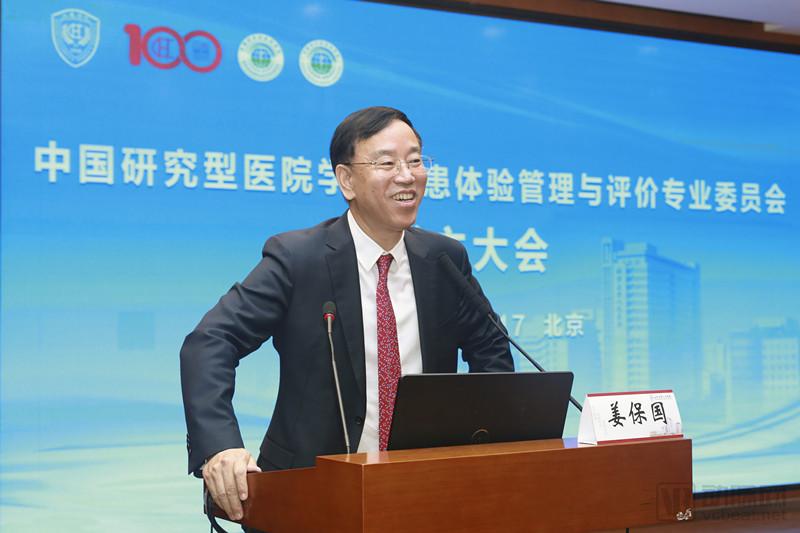
At the conference, Jiang Baoguo was elected as the inaugural Chairman of the Special Committee, and Wang Faqiang presented him with the certificate of appointment. In his speech, Jiang stated that the Special Committee would organize more physicians and hospital administrators to examine the quality of medical services, quantify management evaluation indicators, refine specific items for improvement, and enhance the performance management system, all from the perspective of patient-physician experience data.
Furthermore, the Special Committee will conduct in-depth mining of big data on doctor-patient experiences to provide hospital management departments with comprehensive, multi-dimensional decision support, thereby continuously enhancing the quality of regional medical services and ensuring medical safety.
At the meeting, Wang Faqiang expressed his hope that the Special Committee would become a top-tier domestic academic exchange platform and a platform for translating achievements and projects in the field of patient-physician experience, thereby constructing an innovative model of modern healthcare management and shaping the optimal patient-physician experience.