

From Ancient Medicine to Medical 'Black Tech': The Spirit of Exploration as the Driving Force Behind Medical Advancement
The history of medical progress is a chronicle of human development. In the earliest human civilizations, both the East and the West gave rise to “ancient medicine.” However, as human understanding of the world was then primarily based on experience and observation, phenomena such as disease and death could not yet be interpreted from a scientific perspective. Consequently, medicine was often intertwined with “theology” and “divination.”

Raphael Sanzio (1483–1520) “The Transfiguration”
Raphael Sanzio’s *The Transfiguration*, also known as *The Transfiguration of Christ*, reflects the contemporary understanding of medicine and disease, which held that illness was a punishment resulting from sins committed in this life or a previous one, and that divine power could effect cures; thus, the painting depicts the Transfiguration of Jesus as an act of healing on earth.
Ancient Oriental medicine emerged in Egypt, Babylonia, India, and China. These four regions transitioned earlier from primitive societies to slave-holding societies, laying the material and social foundations for the development of “medicine.”
In ancient Babylon and Egypt, there were two types of physicians: one group consisted of priests who treated diseases through incantations and prayers, while the other comprised lay practitioners with practical experience. In ancient India, the medical profession emerged around the 4th century AD, by which time procedures such as amputation, ophthalmic surgery, and cesarean section were already being performed. In ancient China, the renowned physician Bian Que appeared in the 5th century BC; he was the first to diagnose diseases using the four methods of inspection, auscultation and olfaction, inquiry, and pulse-taking. By the Spring and Autumn and Warring States periods, a systematic theory of Traditional Chinese Medicine had been established.
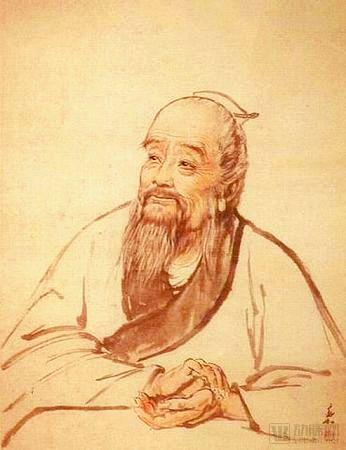
Famous Physician Bian Que - Baidu Encyclopedia Image
Ancient Western medicine originated in Greece. From the 7th to the 6th century BC, Greece transitioned from a primitive society to a slave society. Greek medicine served as the foundation for the development of medicine throughout Europe after the Roman era. Even today, many medical symbols used in Europe, such as the staff and the bowl, are derived from Greek medicine.
Modern medicine originated in the West, referring to the medical practices that emerged after the Renaissance. Following the Renaissance, anatomy was established first, providing humanity with a deeper understanding of bodily structures. In the 17th century, the application of experimental and measurement tools such as thermometers, pulse meters, and microscopes brought life sciences onto the path of scientific inquiry. In the 18th century, pathological anatomy and preventive medicine began to develop. By the 19th century, modern medicine had basically taken shape, and since then, the modern medical system has continued to improve.
In recent years, medicine and technology have increasingly converged, giving rise to cutting-edge innovations such as medical artificial intelligence, various wearable devices, gene editing technologies, and cell therapies.
The advancement of modern medicine owes much to individuals with a spirit of exploration and breakthrough. Notable examples include Santorio Santorii (1561–1636), who pioneered the use of measurement instruments in medicine by developing the thermometer and pulsilogium; Thomas Willis (1621–1675), who identified the characteristic features of urine in diabetic patients through clinical observation; and Edward Jenner, whose invention of smallpox vaccination via cowpox inoculation significantly reduced the incidence of smallpox infection.
Explorers who dare to break conventions, challenge authority, and confront difficulties are the greatest driving force behind the advancement of human medicine. Today, we witness the emergence of new companies in the healthcare sector every day. Some are dedicated to treating diseases with novel approaches, others to monitoring physiological status using the most convenient and safe devices, and still others to providing medical services to the general public with minimal cost and maximal efficiency. They propel medicine forward, delivering better healthcare services to humanity.
On the path of medical innovation, various challenges arise. How can an “idea” be transformed into a product or service? How can investors be attracted? How can marketing resources be secured? And how can a promising business concept be brought to fruition? What kind of “incubation” do innovative enterprises need to help them grow from tiny seeds into towering trees? These are the questions innovators must contemplate.
Fortunately, innovation is no longer a lone warrior’s last stand or a single company’s solo act. Governments, markets, investors, and large corporations are providing innovators with diverse and thoughtful support services. “Let innovators focus on innovation; leave the success to us.”
Bayer, a multinational pharmaceutical company with a strong DNA for innovation, has devoted significant efforts to innovation incubation in recent years by launching the “Bayer G4A” program, which aims to support the sustained growth of innovative projects in the global healthcare sector. Now, the Bayer G4A program has come to China, seeking to identify and nurture high-quality healthcare innovation projects in the country and to share both the challenges and rewards of the innovation journey with domestic innovators.
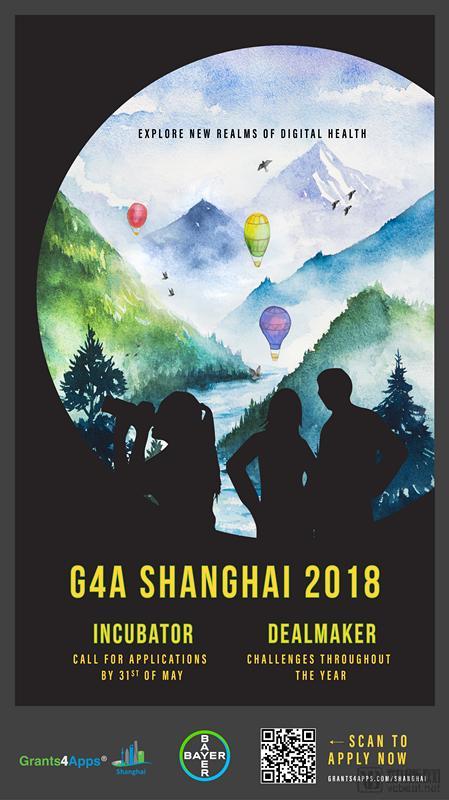
(Scan the QR code in the image to apply for the project)
Grants4Apps Project Application Website:http://www.grants4apps.com.cn/
For more information about the project, please visit:http://www.grants4apps.bayer.com
As an observer and recorder of innovation in China’s healthcare industry, VCBeat has always strived to document this momentous era with our pen, capturing the sweat and tears shed in the pursuit of medical innovation.
Since the launch of the first cohort of the “Bayer G4A” program in 2016, Bayer has partnered with VCBeat for three years, inviting innovative healthcare projects in China to join the “Bayer G4A” program and jointly drive advancements and progress in medicine.
This year, the “Bayer G4A Shanghai” program is proceeding as scheduled, comprising two components: the “Incubator Program,” which targets healthcare innovation startups, and the “Dealmaker” track, which is open to companies capable of addressing business challenges posed by Bayer.
We have systematically compiled information regarding the “Bayer Grants4Apps” program, including the types of projects we seek and the benefits participants can gain. We also interviewed Ms. Zhu Lixian, President of Bayer Group Greater China, as well as the winning teams from the 2016 and 2017 “Bayer Grants4Apps” competitions. The former will share Bayer’s expectations for the startup program, while the latter will draw on their firsthand experiences to convey what it is like for innovators to participate in the initiative.
The Grants4Apps project, an open innovation initiative focused on the healthcare sector, originated in Berlin, Germany. In 2016, the project began its global expansion. As a key hub in this worldwide rollout, Bayer China launched the “Bayer Start-up Program Shanghai” under the Grants4Apps umbrella in Shanghai.
In 2016, dozens of projects entered the “Bayer G4A Startup Program,” with three teams ultimately standing out: Huashengmi (Flexible Smart Thermometer), Wubei (Smart Medicine Box), and Ruijia (Medical Image Processing). In 2017, more than 100 projects were shortlisted, and four teams emerged as winners: Tuoxiao Intelligence (Yunting), Huiyuntang, Nuotong, and Drop Technology.
Zhu Lixian, President of Bayer Group Greater China, said
“Innovation is in Bayer’s DNA. For over 150 years, innovation has been the key to our growth, and it will remain indispensable to our future development. At Bayer, innovation means finding new ways to address the various challenges facing society and delivering solutions that make a positive impact on the world. This core philosophy of innovation is the foundation of Bayer’s global G4A program and reflects our strong desire to seek better solutions through external collaboration. In response to China’s firm commitment to innovation, its technological advantages in numerous sectors including digital health, and its entrepreneurial spirit, Bayer decided to launch G4A in China in 2016.”
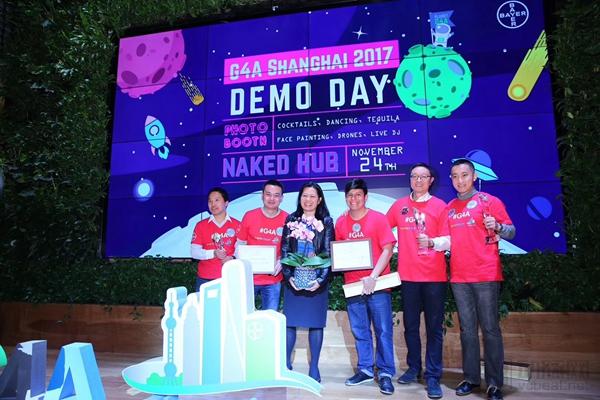
Zhu Lixian, President of Bayer Group Greater China (third from left), participates in the “G4A” event
“The Chinese government strongly supports technological innovation across various fields that benefit the Chinese people, including health and nutrition. This undoubtedly provides fertile ground for both established enterprises and startups to explore new ideas and solutions. Bayer has actively responded to this call by leveraging our G4A Shanghai program to incubate startups and connect them with investors. During the 88-day G4A Shanghai program, startups can exchange ideas and learn from each other in collaboration with Bayer. Through this initiative, we help startups bring their products and business models to market, thereby benefiting a broad range of patients and consumers. I greatly look forward to the launch of the 2018 G4A Shanghai program!”
2016 Winner—Jiang Botao, CEO of “Peanut Seek”
“Peanut Seek” is an innovative wearable smart thermometer. Featuring a fully flexible design, it conforms more closely to human skin, significantly enhancing user experience—particularly for infants and young children—and improving measurement accuracy. This project was one of the three winning teams in the 2016 “Bayer Startup Initiative.”
Jiang Botao, CEO of “Huasheng Mi,” stated that they learned about Bayer’s startup initiative through VCBeat and decided to participate in the competition with a tentative approach. Bayer places significant emphasis on its “Startup Initiative,” as evidenced by the presence of multiple senior executives at the initial roadshow.
After being selected for Bayer’s startup program, “Huasheng Mi” received multifaceted support in funding, networking, market access, and marketing. Currently, Huasheng Mi has completed its first round of financing, amounting to RMB 6 million, with the investors introduced through Bayer. The company’s products are also on the verge of entering mass production.
“We come from a technical background, so our business acumen is not particularly strong, and our understanding of product commercialization is only superficial. The Bayer G4A startup program has provided us with a range of support, including access to internal Bayer resources, helping us better understand both technology and the market,” said Jiang Botao. He noted that participating in the Bayer G4A startup program broadened his horizons, secured valuable resources, and marked a critical step in his company’s growth.
2017 Winner — Zhou Hongyuan, CEO of Tuoxiao Intelligence (Yunting)
Shanghai Tuoxiao Intelligent Technology Co., Ltd. was established in October 2015, dedicated to the research, development, and operation of an intelligent diagnostic system for cardiopulmonary auscultation. The system comprises digital stethoscopes, artificial intelligence algorithms, and a cloud-based big data platform for cardiopulmonary sounds. It leverages AI algorithms to automatically analyze cardiopulmonary sounds for the auxiliary diagnosis of pneumonia, asthma, and heart diseases.
TuoXiao Intelligence’s current product, the “YunTing” Pediatric Smart Stethoscope, focuses on cardiopulmonary health monitoring and management for children aged 0–5. Integrated with the YunTing Health APP, it leverages patented algorithms to transform physicians’ auscultation expertise into visualized lung sound waveforms with diagnostic prompts, while displaying quantitative health index results.
Zhou Hongyuan, founder and CEO of Tuoxiao Intelligence, told VCBeat that the product has obtained a CE Class II medical device license, accumulated over 20,000 valid cardiopulmonary sound data points, partnered with Shanghai Children’s Hospital and Liaoning Provincial Hospital of Traditional Chinese Medicine, and is being piloted in community hospitals in Wuhu City, Anhui Province.
Tuoxiao Intelligence participated in the 2017 “Bayer G4A Shanghai” program and was one of the four winning teams. Zhou Hongyuan told VCBeat that after being selected for the “Bayer G4A” program, the company received support in areas such as resources, training, and market access. Currently, Yunting has secured a new round of financing, with its new product expected to launch in the fall of 2018.
“Participating in the ‘Bayer G4A Startup Program’ is a learning process for both startups and Bayer. Startups present their entrepreneurial concepts and ideas, bringing fresh perspectives to Bayer’s employees and encouraging them to maintain innovative vitality. For us, the program not only provides support in terms of startup resources but also opens up opportunities for business collaboration with Bayer,” said Zhou Hongyuan.
The 2018 event marked the third edition of Grants4Apps “Bayer Startup Program Shanghai,” which continued to comprise the “Incubator Program” and the “Dealmaker Program.”
The “Incubator Program” will solicit innovative projects from across China, primarily targeting startups (including teams with innovative projects that have not yet registered a company). Bayer will ultimately select three winning enterprises/teams to provide support and mentoring. The “Dealmaker Program,” initiated by Bayer, presents business challenges and is mainly aimed at mature startups (Series A/B or later stages). If you have a solution, you are welcome to apply, engage in high-quality discussions with Bayer experts, and explore potential collaboration opportunities to finalize deals.
The “Incubator Program” officially opened for applications on April 10, 2018, with the submission deadline set for May 31, 2018; meanwhile, the “Dealmaker Program” ran throughout 2018, during which Bayer periodically issued business challenges to Chinese innovative enterprises via the official Grants4Apps website.
[Incubator Program]
Application Period: April 10, 2018–May 31, 2018
Application Address:http://www.grants4apps.com.cn/
Application Requirements: Innovative Projects/Startups
Selection Criteria: Company maturity, existing product prototypes, team, and the applicant’s fit with Bayer’s areas of expertise.
Selection Process and Results: On May 31, 2018, Bayer will select the top eight innovative companies/teams from all applicants and engage in further communications with them. The final three companies/teams will be chosen on July 9 and invited to participate in an 88-day training program at Bayer’s China office (Citigroup Tower in Lujiazui Financial Center, Shanghai).
I. What types of projects is Bayer seeking?
"Innovative Projects in the Health Sector"
Bayer maintains an open attitude toward topics in any health-related field, with particular attention to key areas relevant to its business. This year, Bayer will focus on self-health management, smart packaging, environmental protection, medication adherence, intelligent processes, physician and patient management, and optimization of medical resources. Beyond these priority areas, Bayer also warmly welcomes startup teams that offer innovative solutions capable of advancing the development of China’s healthcare industry.
II. What Will Participating Enterprises Gain?
“88 Days in Bayer”
Startup teams (3–5 members) will be invited to Citigroup Tower in the Lujiazui Financial Center, Shanghai, Bayer China, to undergo an 88-day project training and mentoring program (July 9, 2018–October 4, 2018). The training content will include, but not be limited to, business model development, market analysis, and investment strategy formulation.
Bayer will provide customized courses based on the actual needs of the selected participants. A mentorship team composed of Bayer China’s senior executives will offer professional guidance to the selected teams, comprehensively assisting startups in resolving various challenging issues they have encountered or are likely to face during their development.
“1 Demo day”
Following the 88-day project training and coaching program, each entrepreneurial team will present their products and business development achievements to the public on Demo Day. Bayer partner companies, investors, fellow entrepreneurs, major media outlets, and Bayer employees will be present to learn about the startups’ projects, thereby enhancing the industry visibility of these ventures.
“360° Interpersonal Relationship Achievement”
During the “Incubator Program,” innovative project teams can engage in close exchanges with Bayer China personnel, investors, healthcare experts, and other entrepreneurs to build their professional networks, integrate industry resources, and promote project development.
In previous incubation programs, selected participant “Huasheng Mi” leveraged the network connections built during the “Incubator Program” to secure a spot in the Dubai 100 training camp and obtain financing. In addition to securing funding and establishing a partnership with DXY, “Ruijia” gained numerous partners through this “Incubator Program,” embarking on a new chapter of growth.
[Dealmaker Program]
Application Period: May 21, 2018 - June 30, 2018
Application Address:http://www.grants4apps.com.cn/
Eligibility Criteria: Mature startups that address the business challenges identified by Bayer (startups that have completed Series A or B financing rounds, or are more mature)
Selection Criteria: Market traction, prior sales record, company background, financing, business model, and profile of the commercial partnership team.
Selection Process and Results: Companies participating in the “Dealmaker Program” will engage in in-depth business discussions with Bayer’s expert team. If your solution aligns with Bayer’s expectations, we will submit it to our teams in Shanghai or Beijing for joint discussion of collaboration plans and deal closure.
I. What Does Bayer Need?
“Innovative enterprises that meet the application criteria and can address the business challenges raised by Bayer”
II. What Benefits Will Participating Enterprises Receive?
“Engage in in-depth business exchanges with Bayer’s expert team to obtain professional insights from Bayer’s experts”
“Will have the opportunity to collaborate with Bayer”
If a company wants to accelerate its development and secure Bayer as a potential client,
Welcome to sign up for the Grants4Apps program!
Click here to apply for the Bayer G4A programhttp://www.grants4apps.com.cn/
Click here to sign up for the Bayer Dealmaker Programhttp://www.grants4apps.com.cn/