

New Policy Allows Online Prescription Drug Sales: Is Spring Coming for China's Pharma E-commerce?
On May 21, online reports indicated that the National Medical Products Administration (NMPA) planned to release the “Measures for the Supervision and Administration of Online Drug Sales,” which would permit retail drug enterprises to sell prescription drugs via the internet. However, such enterprises must meet requirements for real-time sharing and interoperability with electronic prescription information from medical institutions, ensuring that prescriptions are authentic and traceable.
The following is a document circulating online:
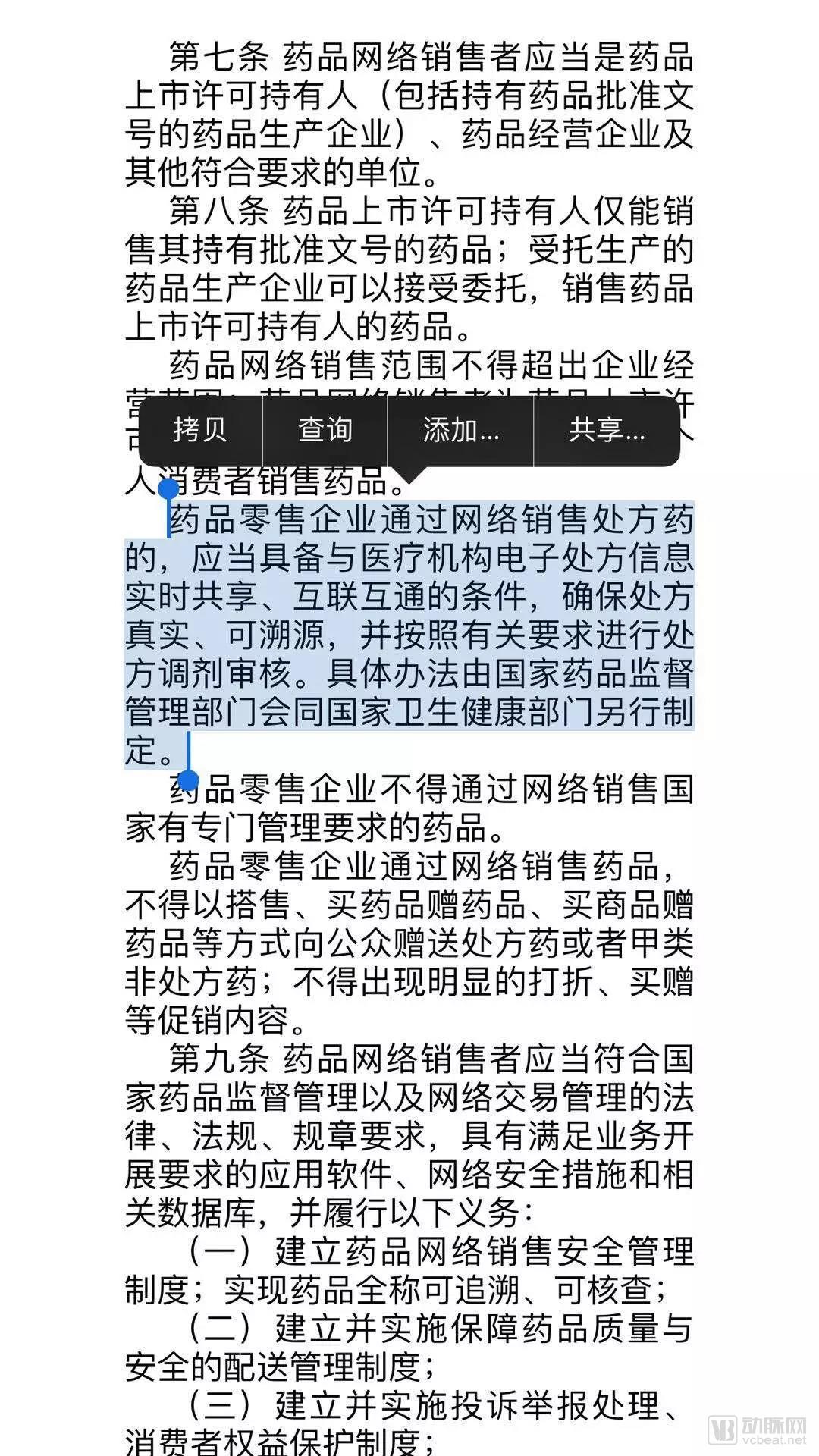
Image source: Medicine 4.0
“The Measures” specify that the scope of online drug sales shall not exceed the scope permitted under the enterprise’s Drug Operation License. Where the operator is a drug manufacturer or wholesaler, it shall not sell drugs to individual consumers;Operators that are pharmaceutical retail chain enterprises shall not sell prescription drugs via the Internet., drugs subject to special state management requirements, etc.
In addition, the Measures also stipulate that “websites selling drugs to individual consumersPrescription drug information shall not be published online."This regulation may have a significant impact on the current pharmaceutical e-commerce sector, particularly on online pharmacy operations."
On February 9, 2018, the China Food and Drug Administration released the Measures for the Supervision and Administration of Online Drug Sales (Draft for Comments) (hereinafter referred to as the “Draft for Comments”).
“The Consultation Draft” points out that online drug sellers should be pharmaceutical production enterprises, pharmaceutical wholesale enterprises, and pharmaceutical retail chain enterprises that have obtained the qualifications for drug production and operation. Other enterprises, institutions, and individuals are not allowed to engage in online drug sales, except as otherwise stipulated by laws and regulations.
"The Draft for Comments" also points out that,Websites that sell drugs to individual consumers shall not publish information on prescription drugs via the internet.
These two policies have undoubtedly served as a stark wake-up call to the rapidly developing pharmaceutical e-commerce sector. With mandates stating that “prescription drugs and drugs under special state management shall not be sold online” and that “websites selling drugs to individual consumers shall not publish prescription drug information online,” the online sale of prescription drugs has encountered a regulatory dilemma characterized by a one-size-fits-all approach.
Rapid Market Growth Drives Policy Change
China's pharmaceutical e-commerce sector is primarily composed of B2B and B2C platforms. B2B pharmaceutical e-commerce platforms mainly serve institutional clients, with purchasers including hospitals, primary healthcare institutions, and retail pharmacies. B2C pharmaceutical e-commerce platforms primarily provide medication purchasing services to individual consumers. Based on whether the operations are self-run, B2C models are further categorized into marketplace-based B2C and self-operated B2C. The former resembles the Taobao model, where various pharmaceutical merchants are onboarded onto the platform, which provides services such as product display, transaction facilitation, IT support, and data analytics. The latter involves procuring medications independently and selling them through a self-built platform.
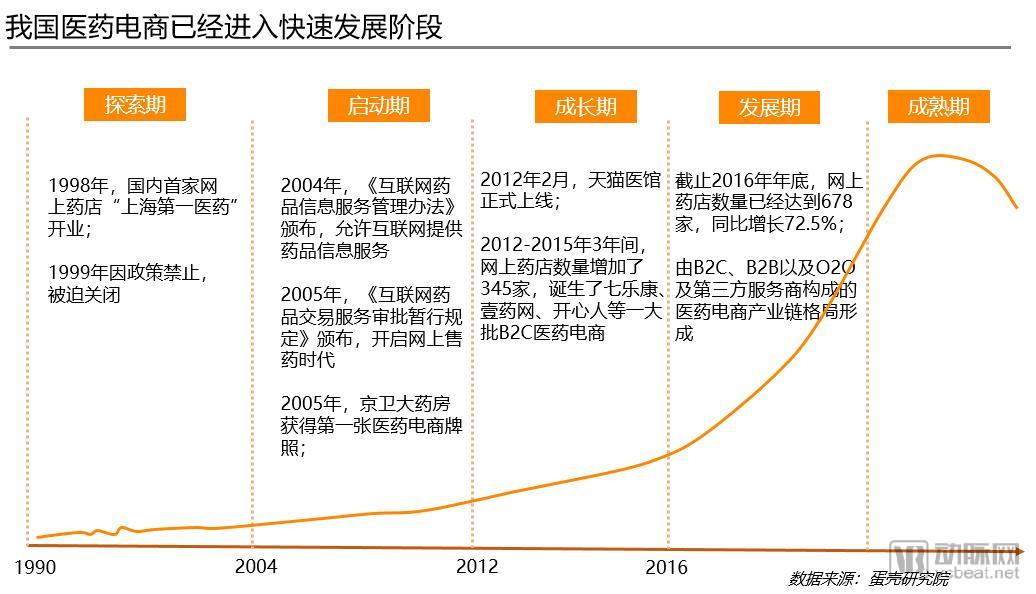
While there are constraints on the development of pharmaceutical e-commerce in China, an examination of market size trends in recent years reveals that the compound annual growth rate (CAGR) of pharmaceutical e-commerce sales over the past six years has reached 55.5%. Meanwhile, the CAGR of pharmaceutical e-commerce’s share of the terminal drug market has been as high as 37.6%, indicating that China’s pharmaceutical e-commerce sector has entered a phase of rapid growth.
Regarding the prohibition on online sales of prescription drugs mentioned in the draft for public comment by the China Food and Drug Administration, most enterprises and experts hold negative views, arguing that it would hinder innovation in pharmaceutical distribution, dampen corporate enthusiasm for innovation, and prove detrimental to the development of pharmaceutical retail.
However, there is no consensus within the industry on whether online sales of prescription drugs should be liberalized, and if so, to what extent. The most critical issue is that current regulatory frameworks, operational requirements, and market maturity for online prescription drug sales remain inadequate. Only after sufficient accumulation in these areas can a gradual liberalization be attempted.
Potential issues should not serve as grounds for imposing restrictions. It is essential to recognize the trend of “Internet Plus” pharmaceutical innovation and the alignment between pharmaceutical e-commerce and healthcare reform policies. Adhering to the regulatory principle of “consistency between online and offline operations,” restrictions should be gradually relaxed to guide market self-regulation and foster new business models.
Perhaps the new policies from the National Medical Products Administration (NMPA) are a response to market demands. We look forward to the release of the official documents, which will provide positive guidance for the development of the pharmaceutical e-commerce industry.