

Indian AI Radiology Startup Predible Health Files for IPO to Scale Cloud-Based Cancer Diagnostic Platform
According to a World Health Organization report, cancer is a leading cause of death worldwide, with lung, liver, and stomach cancers being the three most prevalent types. In 2008, 7.6 million people died from cancer (accounting for approximately 13% of all deaths), and global cancer-related deaths are projected to continue rising to more than 13.1 million by 2030.
In fact, many cancers can be prevented by controlling modifiable risk factors, such as unhealthy lifestyle habits (including smoking and alcohol consumption), irregular sleep patterns, and insufficient physical activity. Furthermore, if detected early, a significant proportion of cancers can be cured through surgery, radiotherapy, or chemotherapy.
However, cancer is a progressively developing disease. From its inception to overt manifestation, the process can take anywhere from a few years to several decades. The initial phase progresses slowly, whereas the symptomatic phase advances rapidly. Early-stage cancer is largely asymptomatic, and since the vast majority of people do not adhere to regular health screening schedules, they typically seek medical evaluation only after noticeable symptoms emerge. By that time, diagnoses are predominantly at intermediate or advanced stages.
With the booming development of artificial intelligence in the medical field, its application to processing and analyzing voluminous medical data has become inevitable. Within this constantly evolving entrepreneurial ecosystem, a growing number of companies are striving to achieve greater breakthroughs in assisting physicians with cancer diagnosis, among which Predible Health is one.
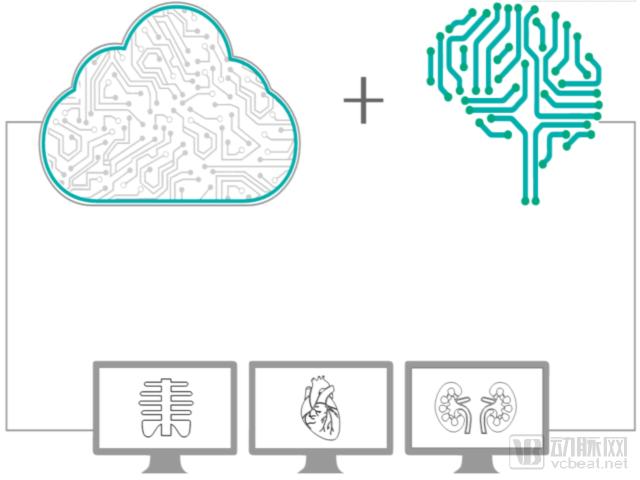
Combining the power of deep learning and cloud computing to analyze medical images, providing radiologists with easily accessible, personalized treatment solutions (directly accessible via web browsers).
Predible is an Indian startup co-founded in May 2016 by Suthirth Vaidya, Abhijith Chunduru, and Deepak Mohan from the Indian Institutes of Technology (IIT). The company assists radiologists in analyzing medical imaging files for cancer diagnosis, and its AI-powered cloud software can also diagnose liver and lung cancers.
Predible stated that they “can interpret medical scan images with greater precision and at a faster speed.”
Predible Products
Predible has currently developed two flagship products: PREDIBLE LIVER and PREDIBLE LUNG.
PREDIBLE LIVER: This product was developed in collaboration with radiologists, the Health Promotion Board (HPB), and transplant surgeons.
PREDIBLE LIVER assists surgeons in the precise planning of liver transplants and tumor resections through real-time analysis and 3D visualization of liver injury and hepatic structure. Hospitals across India can connect to PREDIBLE LIVER via the internet to obtain analytical diagnostic results, providing decision support for surgical planning and reducing postoperative recurrence rates.
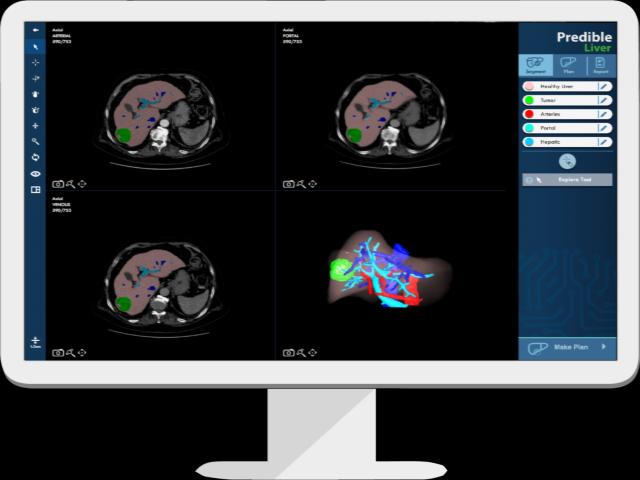
Press the analysis button to automatically perform liver segmentation and describe liver injuries, providing surgical planning and outcome assessment.
1) Liver Injury Description—Use complex algorithms to segment the liver in a simple workflow and accurately detect and describe all hepatic lesions and liver injuries.
2) Provide surgical planning—utilize automated segmentation and 3D interactive tools (such as virtual resection) for liver volume measurement.
3) Efficacy Evaluation – Longitudinal quantitative tracking of tumor viability using the mRECIST (modified Response Evaluation Criteria in Solid Tumors) protocol to facilitate more precise treatment recommendations.
PREDIBLE LUNG: This product was developed in collaboration with radiologists and oncologists.
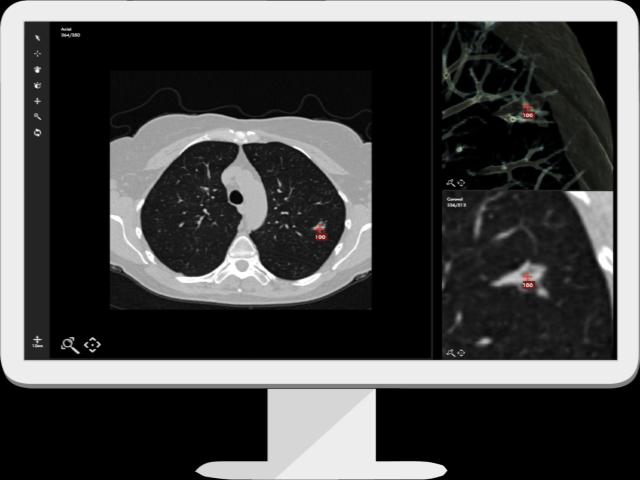
Press the analysis button to automatically perform malignant tumor scoring, nodule tracking, and efficacy evaluation.
1) Malignancy Score—Non-invasive diagnosis assisted by malignancy detection and CT image risk scoring for lung cancer.
2) Nodule Tracking—Conduct nodule tracking in accordance with standard protocols to screen for lung cancer in high-risk patients.
3) Efficacy Assessment—Enabling more accurate evaluation of treatment outcomes through longitudinal, quantitative tracking of nodules.
By leveraging artificial intelligence to provide rapid clinical interpretations for liver and lung cancer, radiologists are enabled to understand imaging data more quickly and accurately, thereby accelerating the cancer diagnosis process. Predible stated that since the launch of PREDIBLE LIVER and PREDIBLE LUNG in 2016, it has processed over 2 million images, with plans to reach a cumulative volume of 500 million images by December 2020, while continuously improving product accuracy during the processing. Currently, Predible is collaborating with MumbaiTata Memorial Hospital, partnerships with medical institutions such as Mahajan Imaging in Delhi and Narayana Health in Bangalore.
Predible Patient Privacy Policy
When users (physicians or patients) utilize Predible services, they will provide basic personal information such as name, age, and contact details, as well as medical information related to disease diagnosis and treatment, including imaging data. Such personal data will be collected and processed solely for the intended purposes. Predible will safeguard this information appropriately and will not disclose users’ personal data to any third party for other purposes without their consent.
Users send data requiring analysis to Predible, which will use only such data to perform the requested analyses, store the results, and transmit them back to the users. Additionally, users have the right to access information regarding the storage of their personal data, as well as the right to request Predible to correct or delete portions of their data.
Predible has a dedicated cybersecurity team committed to safeguarding user information. The team conducts regular vulnerability assessments, addresses unauthorized access incidents, and prevents hackers from infiltrating systems to steal user privacy. As technology advances, Predible’s security measures are continuously being enhanced.
Predible Announces Completion of Pre-A Round Financing
Predible Health announced the completion of its pre-A funding round on March 2, 2018. The specific amount raised was not publicly disclosed, with the investment coming from Unitus Seed Fund, which focuses on seed-stage investments. According to Srikrishna Ramamoorthy, a venture partner at Unitus Seed Fund, the funding amount is estimated to be between ₹20–25 million (approximately $300,000–$400,000). Predible stated that it plans to leverage this latest financing to accelerate the development of its artificial intelligence platform and launch additional new products.
Milind Shah of Unitus commented on Predible’s development over the past year: “Predible has rapidly built an AI-powered cancer radiotherapy platform that helps radiologists and surgeons accurately and quickly diagnose pathological tissues and assess tumor size. This not only significantly improves the work efficiency of radiologists but also delivers clinical outcomes that reduce patient mortality.”
In addition to Predible, other startups dedicated to cancer treatment are headquartered inBangaloreOncoStem Diagnostics, a company specializing in cancer stem cell diagnostics, was founded in 2011. It focuses on developing algorithms to predict the likelihood of cancer recurrence in patients, conducting patient testing, and formulating personalized cancer treatment plans. Other notable entities include Invictus Oncology, a cancer therapy startup backed by the Tata Group (Ratan Tata), Celon Labs, and iGenetics Diagnostics.
AI technology has gained significant momentum in the medical field in recent years, with competition among companies centering on technological prowess. “To enhance Predible’s competitiveness in the market, we will leverage Unitus’s latest investment to further strengthen our AI-powered cancer diagnosis platform. Additionally, we will allocate a portion of the funds toward regulatory approvals for our existing products,” said Suthirth Vaidya, CEO of Predible. “Our ongoing clinical validation studies have already demonstrated positive results, and we are currently working to integrate our products into clinical practice.”
Beyond commercial product development, Predible also aims to collaborate with more leading medical institutions, dedicated to advancing research on deep learning technologies in cancer detection and treatment, thereby providing more efficient and accurate solutions for the healthcare sector in developing countries such as India.