

WuXi AppTec Surges with 11 Consecutive Daily Limits, Market Cap Exceeds RMB 80 Billion; YuHeng Pharma Rebounds with Limit-Up on Resumption—Will Their Deep Biologics Collaboration Continue to Thrive?

Gloria Pharmaceuticals
Pharmaceutical R&D Developer
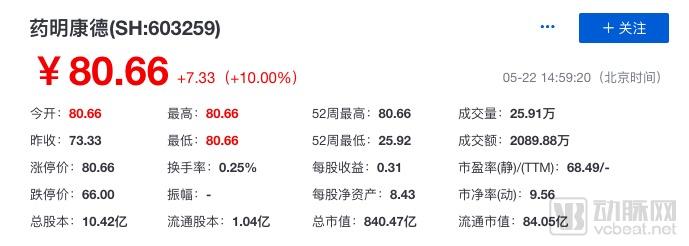
Yesterday (May 22), just over ten days after WuXi AppTec’s listing, the company’s share price had surged from RMB 31.1 to RMB 80.66 per share, with its market capitalization reaching RMB 84.047 billion!
The highly anticipated biopharmaceutical “unicorn” WuXi AppTec has hit the daily price ceiling since its market debut, once again creating a capital myth in the biopharmaceutical sector.
On the same day, Gloria Pharmaceuticals resumed trading after a silence of over three months, immediately hitting the daily upper limit with a 10.02% gain.
Coincidentally, the two companies have long-standing ties. In August 2017, WuXi Biologics and Gloria Pharmaceuticals established a close partnership, exclusively licensing the international rights to GLS-010, a jointly developed fully human innovative PD-1 antibody, to the U.S. company Arcus Biosciences, with total contract value reaching up to $816 million.
Notably, this represents a recent successful case in China where overseas rights to a PD-1 inhibitor were genuinely sold to foreign entities.
Not only did these two listed companies perform strongly, but biotech firms including Berry Genomics, Autobio Diagnostics, and Weixinkang also saw robust performance on the day. The overall positive momentum for biotech companies is a general trend, but what were the drivers behind the limit-up gains for WuXi AppTec and Gloria Pharmaceuticals? Next, VCBeat (WeChat ID: vcbeat) will provide a brief analysis from macro to micro perspectives.
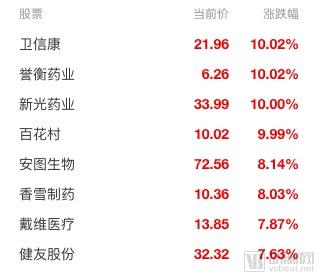
Biotech Listed Companies See Widespread Gains on May 22
Biopharmaceutical innovation is a major trend, with WuXi AppTec and Gloria Pharmaceuticals positioned at the forefront.
On October 25, 2016, the State Council issued the “Outline of the Healthy China 2030 Plan,” which serves as the action guide for advancing the construction of a Healthy China over the next 15 years and calls for innovative development in the pharmaceutical industry to enhance its international competitiveness.
As one of the most critical components of healthcare, pharmaceutical innovation has naturally become a key focus.
From 2006 to 2016, China’s biopharmaceutical innovation landscape underwent transformative changes, all driven by a series of policy reforms. Among the many major national special projects, innovative drugs were explicitly highlighted as a distinct focus.
The consistency evaluation of generic drugs, the release of the "Opinions on Deepening the Reform of the Review and Approval System to Encourage Innovation in Drugs and Medical Devices," and China's accession to the ICH have demonstrated an increasingly resolute commitment to biotechnological innovation, paving the way for sustained long-term progress.
In addition to policy incentives and mandates, the industry has received substantial financial support. Apart from direct government subsidies, 15 medical funds managed by “state-team” capital have prioritized investments in biomedical innovation, with venture capital participating in more than 12 pharmaceutical innovation projects. In a sense, “state-team” capital represents the will of the state.
Moreover, some listed companies not originally rooted in the biopharmaceutical sector have also begun to position themselves through capital market strategies such as investment and mergers and acquisitions. For instance, prior to 2005, Livzon Pharmaceutical Group primarily focused on generic drugs, but subsequently started to expand into the biologics industry. Similarly, Hengrui Medicine initially specialized in generic drugs; however, after its first self-developed novel drug passed U.S. FDA review, Hengrui gradually emerged as a representative enterprise of pharmaceutical innovation in China.
In Gloria Pharmaceuticals’ resumption-of-trading announcement, it was also stated that the company will fully transition toward biologics and the broader health sector for chronic diseases. The GLS-010 injection, a PD-1 immune checkpoint inhibitor jointly developed by Gloria Pharmaceuticals and WuXi Biologics, has currently initiated multiple Phase Ib/II clinical expansion studies.
In addition, preclinical pharmaceutical research on the innovative fully human anti-LAG3 antibody drug has already been initiated. Pilot-scale production of three batches for preclinical studies is expected to commence in the second half of 2018 or early first half of 2019. It should be noted that LAG3 represents a new innovative immune checkpoint antibody drug jointly developed by Gloria Pharmaceuticals and WuXi Biologics, marking their renewed collaboration following the GLS-010 project.
It is evident that this wave of innovation in biologics, which originated in the primary market, is exerting an increasingly strong influence in the secondary market. In China, where technological innovation is receiving growing emphasis, it will undoubtedly spark a revolution centered on innovation within the pharmaceutical market, propelling the nation from being a major pharmaceutical country to a powerful pharmaceutical powerhouse.
Betting on the Right Track: Gloria Pharmaceuticals and WuXi Biologics Jointly Develop Monoclonal Antibody Drug
In the field of innovative biologics, particularly in the monoclonal antibody sector, primary market enthusiasm has been especially high. Among the 45 financing deals that occurred between 2015 and 2017, 75.58% were related to monoclonal antibodies.
It can be said that monoclonal antibodies are the mainstream of the biopharmaceutical boom. Within the large family of monoclonal antibodies, drugs targeting the two hot spots PD-1 and PD-L1 have attracted the most attention. According to data from CICC, the global market size for PD-1 is expected to reach $35.8 billion by 2025, while the market size for PD-L1 is estimated at approximately $10.7 billion.
The pioneers, Bristol-Myers Squibb’s Opdivo (nivolumab) and Merck & Co.’s Keytruda (pembrolizumab), have left a profound impression on the entire pharmaceutical industry. To date, Roche, Pfizer, Merck & Co., and nearly all major pharmaceutical giants have joined the race in the PD-1/PD-L1 arena.
Although no such drugs have yet been approved for marketing in China, industry giants and frontrunners with substantial strength, such as Hengrui Medicine, Innovent Biologics, Junshi Biosciences, and Gloria Pharmaceuticals, have entered the fray, continuously ramping up R&D investment, leading to unprecedentedly fierce competition in the sector.
Among these, GLS-010 injection, a PD-1 immune checkpoint inhibitor jointly developed by Gloria Pharmaceuticals and WuXi Biologics, has entered Phase I clinical trials to explore its safety and efficacy, laying the foundation for further expansion into additional oncology indications.
According to VCBeat, GLS-010, a tumor immunotherapy drug, is the first fully human PD-1 monoclonal antibody for which clinical trial applications have been submitted by a domestic research institution. It can stimulate the immune response of immune cells against tumor cells, thereby killing them. Meanwhile, it has the potential to treat various types of tumors and is expected to become a broad-spectrum anti-tumor drug.
The most distinctive feature of GLS-010 is that it is a fully human monoclonal antibody. Generally, achieving complete humanization for drugs such as PD-1 antibodies is highly challenging; most retain some structural components derived from animals like mice. Prolonged use can trigger the human immune system to produce antibodies against the PD-1 antibody, resulting in an immune rejection response that leads to drug resistance. In contrast, fully human antibodies significantly reduce such rejection reactions, thereby ensuring more durable and stable therapeutic efficacy.
Gloria Pharmaceuticals has already initiated multiple Phase Ib/II clinical expansion studies for the GLS-010 injection, including pivotal registration trials.
In addition to in-house R&D, WuXi Biologics and Gloria Pharmaceuticals exclusively licensed the international rights to the fully human innovative PD-1 antibody GLS-010 to Arcus Biosciences, a U.S. biotechnology company focused on developing innovative cancer immunotherapies, in August 2017. This marked the first time that preclinical rights for a domestic PD-1 antibody were transferred to an overseas company.
“The mechanisms underlying cancer are highly complex, consisting of a series of mutations. When one mutation is suppressed, the tumor may escape through another mutation; therefore, there is no one-time, permanent cure. This reality establishes PD-1 inhibitors as a foundational therapy in oncology, with combination therapies representing the future trend,” said Dr. Meng Haijin, Chief Medical Officer at Gloria Biopharmaceuticals.
However, under China’s drug registration regulations, pharmaceutical companies must currently complete monotherapy clinical studies before initiating combination therapy trials.
In this scenario, Gloria Pharmaceuticals adopted a dual-track strategy across domestic and international regulatory environments. By engaging in extensive communication and collaboration with Arcus Biosciences, the two companies independently designed and advanced clinical research programs tailored to their respective markets, while concurrently conducting PD-1 clinical trials under the regulatory frameworks of both China and overseas markets.
Such a strategy, on the one hand, helps to enhance independent R&D capabilities and build R&D teams in accordance with international standards; on the other hand, within China’s policy framework, it aligns with national reforms by simultaneously developing treatment regimens best suited to the current Chinese disease diagnosis and treatment landscape, while standing ready to rapidly introduce overseas research findings once policies mature.
In terms of progress, Gloria Pharmaceuticals was not the first domestic pharmaceutical company to file for a PD-1 antibody, but this has not deterred it from steadfastly pursuing its original mission of developing combination therapies with optimal efficacy.
Dr. Meng Haijin stated that the primary focus of Gloria Pharmaceuticals’ PD-1 clinical development is safety and durable efficacy. The speed of progress does not tell the whole story; true market acceptance is won through a sufficiently high-quality product, recognition by physicians and patients, and broad accessibility. Among these, product quality is undoubtedly the most critical factor.
To date, Gloria Pharmaceuticals has preliminarily developed PD-1 treatment regimens for nine major types of cancer, including lung, gastric, esophageal, and liver cancers, which have the largest patient populations in China. In later stages, Gloria will expand the indications for its PD-1 inhibitor to additional cancers with urgent unmet medical needs, based on the efficacy observed in Phase Ib clinical trials.
According to VCBeat, Gloria Pharmaceuticals will promptly adjust its R&D strategy in line with the latest international scientific advances, aiming to address the most pressing needs of Chinese patients. To this end, the company has made it a primary strategic priority to develop scientifically sound, cost-effective oncology treatment solutions.
Deep Ties with WuXi AppTec Bring Positive Benefits
To most observers, WuXi AppTec is a CRO that does not engage in drug discovery and development on its own. Yet even this company, swayed by the allure of the PD-1/PD-L1 market, launched its first innovative collaboration in biologics R&D—namely, GLS-010, developed in partnership with Gloria Pharmaceuticals.
As early as 2015, Gloria Pharmaceuticals signed a RMB 1 billion “Strategic Cooperation Framework Agreement on Biopharmaceuticals” with WuXi AppTec, initiating its exploration and strategic layout in the field of biologics.
The first relevant announcement dates back to January 2015, when Gloria Pharmaceuticals disclosed a board resolution stating that the company had signed the "Strategic Cooperation Framework Agreement on Biopharmaceuticals" with WuXi AppTec. Under the agreement, Gloria Pharmaceuticals will furtherFuture5Year-to-Date Cumulative Capital Contributions10RMB 100 million, selected5approximately [number] candidate biopharmaceuticals as the targets for collaborative R&D between the two parties.
The R&D work for these projects was not solely undertaken by Gloria Pharmaceuticals, but was conducted in collaboration with WuXi AppTec.To foster the company's growth into a leading biopharmaceutical enterprise in China and globally.。
WuXi AppTec also reserves the right to opt for a collaborative R&D model based on risk-sharing and benefit-sharing. Here, WuXi AppTec proposed, for the first time and as the only company in China, a risk-sharing and benefit-sharing model for collaborative R&D.。
Dr. Chen Zhisheng, CEO of WuXi Biologics, commented, “The innovative service model featuring proportional risk-sharing with Gloria Pharmaceuticals represents a new endeavor by WuXi Biologics to support biological drug innovation among its domestic partners.”
Li Guochun, Vice President and Chief Scientist of Gloria Pharmaceuticals, argued that unlike WuXi Biologics’ previous buyout-style collaboration model, Gloria Pharmaceuticals opted for a deeply integrated partnership. This approach was indeed highly innovative at the time, enabling both parties to maximize their respective strengths.
Four months later,Gloria Pharmaceuticals once again disclosed the announcement regarding the "Strategic Cooperation Agreement on Chemical Innovative Drugs" signed with WuXi AppTec. The company will select target indications and, leveraging the capabilities of WuXi AppTec's chemical new drug R&D platform, commit to developing chemical drugs with independent intellectual property rights.1.1Development of novel drug candidates, and obtained the clinical trial approval from the China Food and Drug Administration.
The primary focus selected by both parties this time is pulmonary diseases,Upon the product’s entry into the clinical development stage, WuXi AppTec shall have the right to participate in co-investment, joint development, risk-sharing, and benefit-sharing.
Less than a year after the two parties signed the “Framework Agreement on Strategic Cooperation in Biomedicine,” Gloria Pharmaceuticals submitted an Investigational New Drug (IND) application to the Heilongjiang Food and Drug Administration for GLS-010, an innovative fully human PD-1 antibody injection.
2017Year7month, Gloria Pharmaceuticals and WuXi Biologics jointly announced that they would grantUnited StatesArcus Biosciences,Inc.GLS-010 Exclusive Development and Commercialization in Designated Overseas RegionsAnti-PD-1Encouraging Innovation in Antibody Rights.
Under the agreement, WuXi Biologics and Gloria Pharmaceuticals are eligible to receive up to $422.5 million in milestone payments, as well as up to $375 million in commercialization milestone payments, bringing the total potential contract value to $816 million. Both parties will also be entitled to sales royalties of approximately 10% on net sales after the product’s launch.
Leveraging the international backgrounds of WuXi Biologics and WuXi AppTec, as well as Gloria Pharmaceuticals’ years of experience in pharmaceutical R&D, the development of GLS-010 is not only at a leading position domestically but also expanding into overseas markets through Arcus.
In addition to the PD-1 antibody program, Gloria Pharmaceuticals and WuXi Biologics signed the “Cooperative Development Agreement for Fully Human Innovative Anti-LAG3 Antibody Drugs” in November 2017, marking another joint effort by the two parties to co-develop innovative immune checkpoint antibody therapeutics.
This collaboration has further deepened the strategic alignment between Gloria Pharmaceuticals and WuXi AppTec.
Currently, both parties have initiated the preclinical pharmaceutical research for the strategic LAG3 product project. Three pilot-scale production batches are scheduled for the second half of 2018, alongside the commencement of pharmacological and toxicological studies.
Following its delisting from the U.S. stock market, WuXi AppTec successfully returned to China through a “one-into-three” restructuring. Its subsidiary, PharmaBlock (formerly known as Hequan Pharmaceutical), was listed on the New Third Board in April 2015, marking the first step in its return. In 2017, WuXi Biologics went public in Hong Kong, completing the second phase of the spin-off. In May 2018, the main entity of WuXi AppTec was listed on China’s A-share market, signifying the successful completion of its “one-into-three” capital market listing following its delisting from U.S. exchanges.
Currently, the combined market capitalization of WuXi Biologics and WuXi AppTec has exceeded RMB 90 billion. WuXi AppTec has already recorded eleven consecutive limit-up sessions, making it highly likely that its total market capitalization will surpass RMB 100 billion.
Gloria Pharmaceuticals, which is deeply tied to WuXi AppTec, hit its daily price limit shortly after resuming trading yesterday. Given the momentum from biopharmaceutical innovation and WuXi AppTec’s streak of 11 consecutive limit-up sessions, can Gloria Pharmaceuticals’ future growth potential still be considered limited?