

Prelude Fertility Files for IPO: How America's Leading Fertility Chain Captured Millennial Women with Its 'Pause Button' Strategy
This article is from Parenting Business Journal and is republished with authorization from VCBeat.
From artificial insemination to in vitro fertilization (IVF), and from preimplantation genetic diagnosis to surrogacy, human assisted reproductive technology has garnered global attention amid ongoing debates over whether it is a “devil or an angel,” achieving breakthrough after breakthrough. Assisted reproductive medicine has gradually entered the public eye.
According to data previously reported by Parenting Business Journal, the global assisted reproductive technology (ART) market was projected to surpass $21 billion in 2020. Huachuang Securities estimated in its research report, “Special Report on China’s Assisted Reproductive Technology Industry,” that the potential size of China’s ART market could reach RMB 107.2 billion.
The vast market, rapid growth, and high gross margins have quickly attracted capital favor, with hot money flooding in. According to estimates by the financing information platform PitchBook, startups in the U.S. assisted reproductive technology (ART) vertical sector secured over $178 million in venture capital funding in 2017. Among these, the egg freezing industry, driven by strong demand, has emerged as a rapidly growing hotspot.
Egg Freezing, commonly known as “egg freezing,” is formally termed “Oocyte Cryopreservation.” Over the past decade, the egg-freezing industry has flourished in the United States.
According to data from the Society for Assisted Reproductive Technology, the number of women in the United States choosing to freeze their eggs has increased 11-fold since 2009. During this period, the American Society for Reproductive Medicine also officially removed its designation of oocyte cryopreservation as “experimental.” Currently, egg freezing services in the United States have become a standardized medical service.
According to China News Service, public data indicate that fewer than 20 children have been born in China through egg-freezing technology, a figure far lower than that in the United States, suggesting substantial potential for growth. This is primarily because China prohibits the use of assisted reproductive technologies (ART) for couples and single women who do not comply with national population and family planning laws and regulations. Only married couples diagnosed with infertility are permitted to freeze eggs, and they must provide three required documents: their national ID cards, marriage certificate, and birth permit. Even though population control measures have been relaxed in recent years, including the universal implementation of the two-child policy, restrictions remain in place. Furthermore, medical institutions must hold strict medical licenses to perform oocyte cryopreservation as part of in vitro fertilization (IVF) procedures.
“Chinese people remain lukewarm toward reproductive technologies, primarily due to the government’s concerns that these technologies could have adverse effects on population policies and might give rise to issues such as a black market for eggs,” said Wang Hongxia, a researcher at the Shanghai Academy of Social Sciences specializing in urban and population development.
Director Wang Xingling of the Reproductive Medicine Center at the Third Affiliated Hospital of Zhengzhou University stated, “The oocyte cryopreservation techniques implemented by hospitals across China are medical interventions based on specific pathological conditions, primarily aimed at addressing infertility, and are employed as a last resort.”
However, egg freezing is no longer an unfamiliar concept to young women. The practice has surged in popularity, particularly after celebrities such as Kim Kardashian, Lin Chi-ling, Michelle Reis, and Xu Jinglei publicly announced their decisions to freeze their eggs. Given the widespread belief that egg viability is significantly higher in youth than in middle age, a growing number of young women are opting for oocyte cryopreservation as a form of “life’s regret medicine,” even sparking the rise of domestic “egg-freezing tourism” in China.
Guo Wenwen, Chief Operating Officer of Fertility & Surgical Associates of California in Los Angeles, pointed out that the number of Chinese clients grows by approximately 10% to 15% annually.
Prelude Fertility (hereinafter referred to as “Prelude”), founded to cater to young millennials, has tapped into the substantial demand in this niche market by establishing a chain of offline clinics.
Unlike the approach reported earlier by *Parenting Business Journal*, in which Celmatix built a smart platform from an online perspective, Prelude has focused on developing core one-stop products. Through strategic asset allocation and the acquisition of leading offline clinics with strong reputations, it has thoroughly integrated downstream industry resources, achieving annual revenue of $35 million in its third year of operation.
This strategy not only addresses the fragmentation of the assisted reproductive technology (ART) market and the lack of standardized products, but also provides younger customers with more affordable, flexible, and comprehensive ART services. The extensive asset barrier built through acquisitions has also brought a large volume of primary medical data and high gross margins into Prelude’s moat, making it possible to develop multiple product lines, achieve greater profitability, and establish the first national chain brand for assisted reproductive medical services in the United States.
Given that commercial egg freezing has not yet been liberalized in China, if Prelude can successfully establish the first nationwide assisted reproductive technology (ART) brand in the United States or become the largest chain of egg-freezing medical providers, it would undoubtedly emerge as a top potential partner for Chinese institutions in the U.S. ART sector.
See how it keeps assets, brands, and users firmly in its grasp.

Martin Varsavsky is of Argentine descent and later immigrated to the United States, where he earned a Bachelor’s degree in Public Affairs Management and an MBA from Columbia University. A serial entrepreneur, Varsavsky had already gained significant renown in the technology and biopharmaceutical sectors across Europe and North America before founding Prelude, having previously founded seven companies. His string of successful ventures has accumulated his personal net worth to $300 million.
Varsavsky’s second wife, Nina, encountered infertility issues at the age of 31. After facing numerous challenges during treatment, she successfully achieved pregnancy through in vitro fertilization (IVF). This experience prompted Varsavsky to consider innovations in the field of assisted reproductive medicine. Starting in 2010, Varsavsky began laying the groundwork for founding Prelude. In 2015, Prelude was established in San Francisco, California, positioning itself as a provider of early-stage assisted reproductive solutions for young women.

Pictured are founder Martin Varsavsky and his wife Nina. Source: Forbes
Years of entrepreneurial experience led Varsavsky to realize that, unlike technology startups, the assisted reproductive medicine industry is subject to more regulatory oversight, exhibits more pronounced individual differences among its customer base, and presents greater challenges in controlling supply and product chains. Nevertheless, the sector has already attracted significant interest. Consequently, Varsavsky decided to start by partnering with existing clinics. This meant he needed to seek support from private equity firms rather than venture capital investors.
The U.S. assisted reproductive technology (ART) market offers excellent prospects, possessing two key factors that attract private equity investment: scale (with an annual output value of $2 billion) and growth rate (10% year-over-year). Additionally, the highly fragmented nature of the market and the absence of a dominant leader have naturally drawn significant attention. Prelude ultimately chose to partner with the New York-based private equity firm Lee Equity Partners, securing $200 million in financing.
Lee Equity Partners focuses on controlling acquisitions and growth capital financing, primarily investing in the middle market, with typical investments ranging from $50 million to $100 million per transaction. Collins Ward, head of Lee Equity Partners, expressed strong optimism about the assisted reproductive technology (ART) healthcare sector, stating, “Prelude’s comprehensive resources and leadership provide a powerful combination of medical innovation and marketing expertise that will drive consumer education and enable millions of people to effectively plan and grow their families.”
Varsavsky, Chairman of Prelude, was also the company’s first client. In January 2017, his third child with Nina was born using Prelude’s services, becoming the first “Prelude baby.”
Currently, Prelude, which has been in operation for just two years, has established a presence in 31 clinics across the United States. Forbes magazine reported that its annual revenue has exceeded $35 million, and its founder, Varsavsky, has appeared on the cover of Forbes magazine thanks to Prelude’s success.
 Martin Varsavsky Lands on the Cover of Forbes Magazine with Prelude Source: Forbes
Focusing on Comprehensive Assisted Reproductive Technology Solutions
Currently, Prelude is deeply focused on a single product, Prelude Method. It primarily addresses the pain points of fragmentation and opacity in the assisted reproductive technology (ART) market by productizing medical processes and offering bundled full-process services. This approach not only aligns with the consumption habits of millennials but also facilitates the efficient integration of B-side resources.
Prelude Method is essentially a one-stop assisted reproductive technology (ART) medical solution featuring a “four-step” approach, covering the entire patient journey. In other words, by purchasing Prelude Method, patients gain access to all essential ART services: egg freezing, sperm freezing, genetic testing, embryo culture, and single-embryo transfer. Users of Prelude Method can receive these medical services at any clinic within Prelude’s network.
Specifically, the process is as follows: If you are between 28 and 32 years of age, you may opt for the Prelude Method service. Upon purchase, you can undergo egg retrieval at a Prelude-affiliated clinic. Prelude will cryopreserve your eggs and, if applicable, your partner’s sperm. When you are ready to use the frozen eggs, Prelude will culture and select the optimal embryo, perform genetic testing on it, and then transfer the embryo into the uterus, ultimately achieving a successful pregnancy.
All users need to do is pay a monthly fee, as low as $199 per month, for a minimum of three years. If users wish to use their frozen eggs at any time after the three-year period, no additional fees will be charged for the entire process. Users may also opt out of the Prelude Method at any time.
By this calculation, if a user chooses to use their frozen eggs after ten years of subscribing to the Prelude Method, they would only need to pay $199 × 12 × 10 = $23,800, whereas a single cycle of traditional IVF often costs more than $50,000.
To address users’ varying needs and financial circumstances, the Prelude Method offers two tiers of solutions:

After completing the egg freezing procedure, users may choose to pay only for egg storage, with monthly fees as low as $99. However, if users later decide to use the frozen eggs, they will need to pay the full price for genetic testing and embryo implantation.
For C-end users, the Prelude Method addresses the issues of opaque pricing, non-standardized processes, and fragmented information in the assisted reproductive technology (ART) medical journey.
Beyond process standardization, Prelude’s clinics continue to uphold the traditional medical principle of “tailoring treatment to the patient,” ensuring personalized and differentiated services.
From the perspective of B-side clinics, the deployment of Prelude Method into clinics not only reduces customer acquisition costs but also facilitates more efficient integration of resources across multiple clinics, thereby lowering the overall cost of assisted reproductive services and generating higher profits.
Target User Profile: Young, Middle-Class, Professional
Prelude was not the first startup aiming to break into the assisted reproductive technology (ART) sector. Prior to Prelude, more than 500 accredited ART centers had already been established across the United States, and the ART healthcare startup landscape had undergone a period of “wildcat growth,” with competitors already widespread. Consequently, Varsavsky decided to carve out a different path.
It is widely believed that assisted reproductive technology (ART) is intended for middle-aged women who have already entered the phase of declining oocyte viability. Consequently, most existing players in the market primarily target older female clients. In contrast, Prelude has identified an untapped niche: egg freezing options for younger women.
“Young, middle-class, professional” are the three keywords Varsavsky used when discussing Prelude’s target customer base. Prelude’s products are specifically aimed at middle-class white-collar women aged 28 to 32.
In the United States, the success rate of in vitro fertilization (IVF) is not high. According to data from the Society for Assisted Reproductive Technology (SART), the clinical pregnancy rate is actually less than one-third. Although there is ongoing debate within the medical community regarding whether egg freezing can absolutely guarantee IVF success, there is a consensus that retrieving oocytes at an earlier age results in greater oocyte viability and higher chances of success.
Dr. Zsolt Peter Nagy of Reproductive Biology Associates in Atlanta has found that a single egg retrieval cycle in women aged 32 typically yields approximately 15 to 20 oocytes, ultimately resulting in 4 to 8 viable embryos. In contrast, patients aged 40 produce fewer than three viable embryos, with some yielding none. This finding is corroborated by the U.S. Centers for Disease Control and Prevention (CDC), which reports that the probability of a successful pregnancy through in vitro fertilization (IVF) is around 50% for women aged 32, but drops to below 20% for those aged 42.
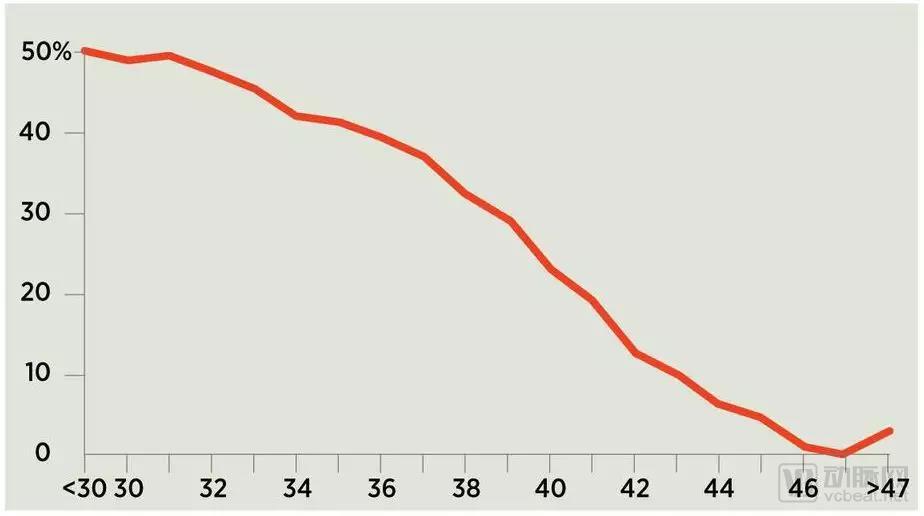
On the other hand, the rise of feminism in recent years has led millennial women to desire the same freedom from age-related constraints on fertility as men, granting them greater control over their life trajectories. They have more defined perspectives on questions such as “when” and “how” to have children. As emerging middle-class consumers, they exhibit higher receptivity to information and possess greater disposable income, making them an ideal customer base for high-margin industries such as assisted reproductive technology (ART). As the concept of “consumer choice” gradually permeates the healthcare sector, Prelude’s market positioning is tailored to meet the needs of these women by offering a solution to “turn back the biological clock.”
Online Traffic-Offline Asset Integration
“Parent-Child Business Journal” research found that among the leading U.S. startups currently focused on female reproductive health, most have opted for a “light-asset,” platform-based approach to reduce costs, rapidly scale their user base through a snowball effect, and ultimately achieve B-side integration by serving C-side customers via SaaS or PaaS models. Only Prelude has adopted an Online-Merge-Offline (OMO) business model, which integrates online traffic with offline assets. The core logic behind this strategy is to leverage online marketing and traffic generation to drive users to offline channels, thereby facilitating product implementation and integrating downstream resources.
The platform business model in vertical sectors is primarily based on monetizing online traffic. For instance, as previously reported by Parenting Business Journal, Progyny achieved O2O cross-marketing and rapid snowball growth through a platform leveraging precise data matching, ultimately monetizing by charging referral fees.
In contrast, Prelude’s online platform serves solely to drive traffic, with virtually no emphasis on monetization. As such, it provides only coarse-grained introductory information online, allowing users merely to locate nearby Prelude-affiliated clinics. For more detailed information, users must either submit a form with partial personal details or visit an offline facility.
It is important to recognize that while customer acquisition costs for online traffic are continuously rising, the cost for users to switch platforms is decreasing. Offline traffic is often overlooked; however, when leveraged effectively, it can facilitate faster and more efficient monetization, thereby promoting business centralization.
“The Three Carriages” Ensure Corporate Profitability
Profitability remains a persistent concern for many startups in the assisted reproductive technology (ART) sector.
“Parent-Child Business Journal” reported that although Progyny has taken the “top spot” in corporate insurance for infertility, its annual revenue is less than $2.5 million, so it will rely on financing for a long time. What profit models does Prelude adopt to achieve an annual revenue of more than $35 million?
1. Innovative Payment Models Generate Cash Flow
U.S. business media outlet Business Insider noted in an article that Prelude’s medical technology is nothing particularly special; what is innovative is its payment model.
The intermediary fee monetization model under the low-price platform strategy is not only unstable but also prone to causing customer churn on both sides. In contrast, Prelude sells its products in the form of medical financing, charging a relatively low fee similar to a “membership fee,” and binds users with terms ranging from 3 to 10 years, significantly enhancing user stickiness and generating stable operating cash flow for the enterprise.
Some argue that Prelude’s approach is no different from insurance. However, the Healthcare Research Group of Parenting Business Journal contends that Prelude does not assume the role of an insurer. The fees users pay to Prelude Method constitute prepayment for future medical expenses, thereby bypassing issues related to deductibles and out-of-pocket costs that typically arise among patients, clinics, and insurers in conventional payment processes. For users, Prelude Method enhances healthcare access efficiency, expands choice, and reduces costs.
2. Egg Donation as a Supplemental Revenue Stream
From a certain perspective, the monthly subscription model of Prelude Method is also attempting to alleviate the anxiety modern professional women face in balancing family and career, thereby providing young white-collar women with a degree of emotional value.
If users choose not to use their frozen eggs, they can opt to donate them through Prelude’s integration with MyEggBank. Egg donation is a highly lucrative business. Users can receive $7,000 from Prelude for their first donation and $7,500 for their second, while third and subsequent donations yield $8,000 each. However, Prelude limits each user to a maximum of six donations.
On the other hand, Prelude and MyEggBank identify women aged 30 and 40 or older, as well as those experiencing premature menopause, poor egg quality, or a family history of genetic disorders, as potential recipients. For these recipients, the price for a batch of six eggs is $11,000.
This model creates a “triple-win” situation for Prelude, users, and recipients, while also delivering strong profitability for Prelude.
3. Equity Dividends from Hospital Revenue
“Parent-Child Business Journal” previously reported that the assisted reproductive technology (ART) medical industry boasts extremely high gross margins, reaching up to 90%, with net profit margins as high as 50%. As Prelude holds majority equity stakes in its affiliated clinics, it naturally captures a substantial portion of these profits.
In the past two years, the influx of capital has created favorable conditions for the chain expansion of assisted reproductive technology (ART) clinics. Brands such as IntegraMed, CCRM (Colorado Center for Reproductive Medicine), and ARC Fertility have begun to emerge in the market, adopting a “network/alliance of ART clinics” model. Notably, within these brand alliances, the individual clinics continue to operate independently.
Take IntegraMed, a leading brand once listed on the NASDAQ, as an example. After its privatization and delisting in 2012, the company primarily provided clinics with services such as information systems, operational management, marketing strategies, risk control, human resources, and medical finance solutions, thereby incentivizing clinics to join its network. It was not until July 2017 that IntegraMed announced its first equity partnership with the Reproductive Medicine Institute of Illinois. As the largest assisted reproductive technology (ART) clinic alliance in North America, IntegraMed has united 39 clinics across 32 U.S. states.
In contrast, establishing a true medical chain requires substantial upfront “heavy” investment. In this regard, Prelude was born with significant financial advantages; shortly after its founding, it acquired the largest assisted reproductive technology clinic in the southeastern United States, Reproductive Biology Associates of Atlanta (hereinafter referred to as RBA), and MyEggBank, the largest egg-freezing bank in the United States, where more than 40% of all donated frozen eggs in the country are stored.
Based on publicly available information from Prelude, Parenting Business Journal has compiled Prelude’s acquisition roadmap:

Source: Compiled by Parent-Child Business Journal based on public M&A information
Multiple successful acquisitions have fueled Prelude’s rapid growth, building a substantial asset moat, co-creating brand IP, and achieving scale. In just two years, Prelude has established a presence in 31 clinics across the United States.
Over the past decade, a trend of consolidation and mergers and acquisitions (M&A) in healthcare assets has emerged in the United States. According to a report published by Deloitte, there were 750 hospital M&A transactions in the U.S. between 2008 and 2014, with 60% of the country’s more than 5,000 hospitals already belonging to large-scale healthcare systems. Survey data indicate that M&A activities have significantly improved hospitals’ operational performance, cash flow, and operational efficiency.
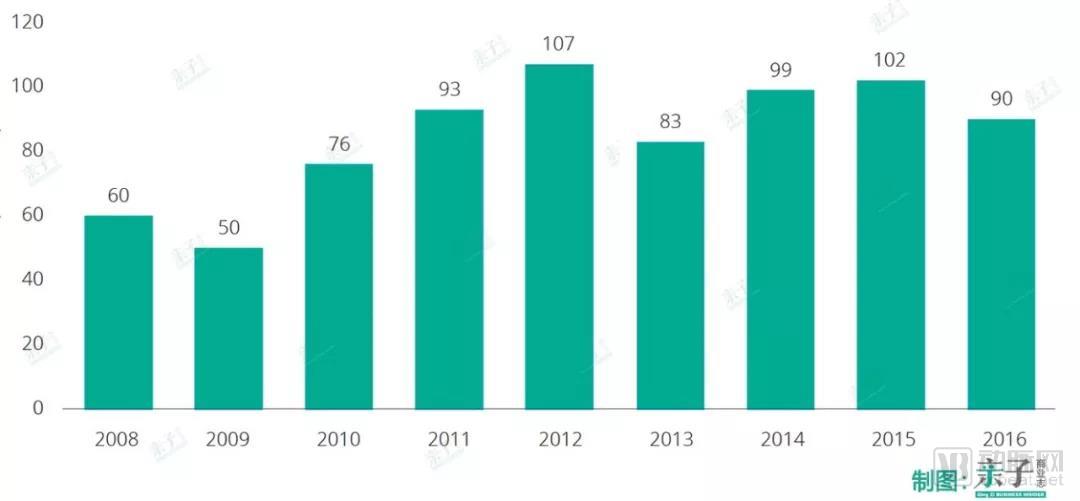
The number of hospital M&A deals has continued to rise in recent years. Source: Deloitte, “Hospital M&A: When done well, M&A can achieve valuable outcomes”
On the other hand, a report released in the first quarter of 2017 by investment bank Capstone Partners showed that the assisted reproductive technology (ART) market remains highly fragmented, dominated by small-scale regional clinics with a scattered distribution. Even IntegraMed, currently the largest regional chain clinic brand in the United States, holds a market share of only 7.7%.
Differences in market entry strategies, the strong interest of local assisted reproductive technology clinics in acquiring medical assets, and the absence of a dominant player in the market have placed Prelude’s acquisition model on a “fast track” from the outset, with competitors largely absent.
In a highly fragmented market, effective target selection is the key to making acquisitions “twice as effective with half the effort.”
“Parent-Child Business Journal” analyzed Prelude’s acquisition targets and concluded that, in the process of acquiring healthcare assets, Prelude primarily adhered to the following principles when selecting targets:
1. Select only top-tier, highly reputable clinics in the industry
Prelude selectively acquires only top-tier clinics with strong industry reputations, using diagnostic capabilities, medical technology, regional rankings, years in practice, and pregnancy success rates for egg freezing and in vitro fertilization as key evaluation metrics.
For example, RBA was the first clinic in the Western Hemisphere to successfully achieve pregnancies for patients using frozen eggs, with over 30,000 successful cases to date. Meanwhile, its recent acquisition, the Advanced Fertility Center of Chicago, is the clinic with the highest in vitro fertilization (IVF) success rates in Illinois and Wisconsin.
Although acquiring top-tier clinics requires substantial capital investment, their strong reputation in the healthcare industry is sufficient to attract more potential customers and help Prelude build technological barriers, ensuring its sustainable development within the sector.
2. The “1+1>N” Acquisition Model Highlights the Cost-Effectiveness of Clinics’ Location Advantages
During the acquisition process, Prelude skillfully leveraged the strategic locations of the acquired clinics to rapidly expand its brand across China with optimal cost-effectiveness.
“Parent-Child Business Journal” compiled and produced a map of Prelude clinic locations:

Having established a presence in 31 clinics across more than 13 states nationwide, Prelude has completed only four acquisitions. The secret lies in its target selection strategy: prioritizing clinics with multiple locations and avoiding redundant acquisitions within the same state.
For example, the Houston Fertility Institute, acquired in October 2017, operates 12 clinics in the Houston metropolitan area; Vivere Health, acquired in December of the same year, comprises a total of 22 assisted reproductive technology centers; and MyEggBank owns five egg bank facilities and more than 100 IVF-embryo culture centers.
This “1+1>N” acquisition model enabled Prelude to rapidly scale up with optimal cost-effectiveness.
3. Addressing the Needs of Special Customer Groups and Planning for the Future
In recent years, egg freezing has gained popularity among Chinese women. Due to stringent domestic restrictions, those with the means have opted to travel to the United States for the procedure. Prelude, with its keen market insight, identified this business opportunity.
Pacific Fertility Center, located in San Francisco, California, is the third clinic acquired by Prelude. Although it is not a multi-location clinic, Prelude was attracted by its Chinese-speaking team and specifically highlights on its website that Mandarin-speaking patients can receive dedicated support from a specialized team.
Currently, a significant portion of Prelude's funds is being allocated to large-scale marketing campaigns.
Founder Varsavsky has publicly stated that he has no concerns about Prelude’s medical technology; if it ultimately fails, it will inevitably be because Prelude failed to teach young people to plan ahead.
He believes that there is currently a huge “Educational Gap” in the assisted reproductive technology industry: many young women, when thinking about reproductive healthcare, consider it irrelevant to themselves or associate it solely with contraception and abortion procedures, rather than with fertility and family building. Prelude ambitiously aims to bridge this gap with a $200 million investment.
In terms of marketing strategy, Prelude leans more towards education rather than intimidating potential users with lower pregnancy success rates. With appropriate and consistent marketing efforts, brand concentration can naturally be achieved, facilitating a shift in consumer behavior within the assisted reproductive technology (ART) sector.
Online Science Popularization + Local Promotion
“Parent-Child Business Journal” research found that due to the sensitivity and privacy of assisted reproductive technology topics, overly aggressive marketing can instead trigger market backlash. For example, Extend Fertility, an egg-freezing clinic located in Manhattan, New York, ran large-scale advertisements on Instagram with the slogan “Freeze your egg!”, which drew significant criticism.
Unlike aggressive product promotion, Prelude’s online advertisements make no mention of its own offerings. Instead, they focus on popularizing scientific knowledge about the correlation between infertility and age, thereby downplaying the commercial tone and highlighting the social responsibility embodied in the advertising.
Upon analysis, Prelude’s online advertising is primarily divided into three series:
1. “Know Your Facts” Series
This article primarily lists some widely misunderstood or lesser-known scientific facts in the field of assisted reproductive technology.

“Know Your Facts” Ad Campaign Source: Prelude Facebook Page
2. “True or False” Series
Such advertisements often present a common misconception, such as “I practice yoga regularly and am in great shape, so age will not affect my fertility,” and then proceed to refute or explain this viewpoint.

“True or False” Ad Series Source: Prelude Facebook Page
3. “Press Pause” Ad Campaign
Such advertisements all feature the faces of young, confident women as a backdrop, accompanied by the simple tagline “Press Pause.” By leveraging peer influence, they implicitly convey the message: “If you are as independent and confident as they are, you will also wish to take control of your fertility.”

“Press Pause” Ad Campaign Source: Prelude’s Instagram Page
On the other hand, Prelude also emphasizes offline local promotion.
It is worth noting that although Prelude’s target audience consists of B2C consumers, the company has adopted an “indirect strategy” by marketing to obstetricians and gynecologists at offline clinics, thereby reaching its target customers indirectly.
Meanwhile, to alleviate millennials’ resistance and anxiety toward assisted reproductive technology, Prelude has renovated the storefronts of some of its offline clinics to resemble day spas, thereby reducing the solemn atmosphere typically associated with hospitals.
Leveraging Executive Influence
Given that the target customer base is predominantly female, the “soft” influence of female executives cannot be underestimated.
To better align with female consumer psychology, in June 2017, founder Varsavsky announced his resignation as CEO, handing over the role to Susan Hertzberg, who brings 25 years of management experience in the healthcare industry. Since then, Prelude has undergone multiple leadership changes; currently, the company’s CFO, Head of Operations, Head of Commercial Affairs, and Head of Human Resources are all women, with only one male executive among the senior leadership team.
On its official website, Prelude proactively highlights the “soft power” of its female executives, stating, “As women, mothers, sisters, and daughters, we better understand your personal needs.”

Susan Hertzberg, current CEO of Prelude
Meanwhile, Prelude also enjoys inherent marketing advantages: Dr. Mehmet Oz, a prominent key opinion leader in the U.S. pharmaceutical sector, serves on Prelude’s Board of Directors. As a Professor of Surgery at Columbia University College of Physicians and Surgeons, Dr. Oz hosts *The Dr. Oz Show*, which reaches millions of viewers, and has won eight Daytime Emmy Awards, underscoring his significant influence.
Prelude’s current CEO, Susan Hertzberg, stated in a media interview that the company will continue to expand its nationwide footprint over the next two years by acquiring 10 to 12 partner clinics, with the ultimate goal of becoming the largest chain brand for assisted reproductive technology (ART) in the United States.
“Parent-Child Business Journal” analysis suggests that, leveraging its currently stable cash flow, Prelude’s strategy of entering the offline market through its products will enable it to effectively capture first-hand data from assisted reproductive medicine. This approach readily addresses the most significant data challenge in the field of medical AI and removes barriers to the clinical implementation of its technology in hospitals. In the future, in addition to further asset allocation, Prelude may also choose to expand its product line and offer SaaS services powered by its data and artificial intelligence capabilities.
References:
[1] Capstone Partners. Fertility Clinics 2017 Q1 .capstoneheadwaters.com.
[2] Forbes.2016.10.17. Meet Prelude Fertility, the $200 Million Startup That Wants To Stop The Biological Clock. forbes.com.
[3] Business Insider. 2016.11.19. A startup that raised $200 million wants you to think about fertility long before you want to start a family. businessinsider.com.
[4] Biospace. 2018.01.04. What You Need to Know About Prelude Fertility. biospace.com.
[5] The Atlantic Journal. 2017.06.26. Kempner: Atlanta-based practice offers would-be parents a sort of fertility 401(k). myajc.com.
[6] Statnews. 2017.12.04. Investors see big money in infertility. And they’re transforming the industry. statnews.com.
[7] Deloitte. Hospital M&A: When done well, M&A can achieve valuable outcomes.
Original Title: Sprinting to Become the Top U.S. Egg-Freezing Medical Chain: How Did Prelude Rapidly Rise and Capture the Hearts of Young Middle-Class Women?