

Nanshan Summit Unveils China's Strategy to Address Global Aging Challenge
As the “Healthy China” strategy advances, the integration of aging care and health services has become increasingly close, and achieving a coordinated approach to medical and elderly care is gradually becoming a social consensus.
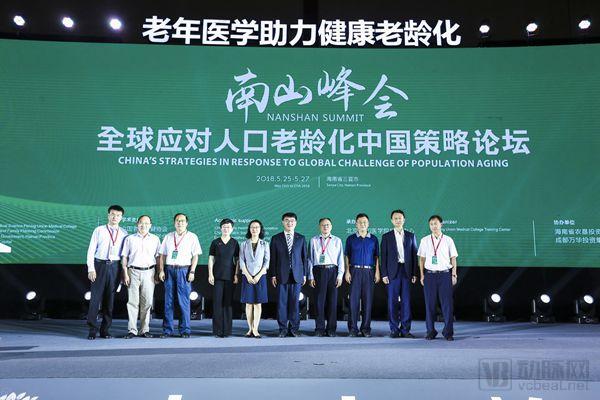
On May 26, the inaugural “Nanshan Summit – China Strategy Forum on Global Response to Population Aging,” co-hosted by the Chinese Academy of Medical Sciences and Peking Union Medical College, the Health and Family Planning Commission of Hainan Province, the People’s Government of Sanya City, Hainan Province, and China Development Bank Capital Co., Ltd., opened in Sanya, Hainan.
Nearly 100 top experts from China, the United States, Australia, Singapore, and other regions convened in Hainan to jointly discuss the “Chinese Solution” for addressing population aging. A reporter from VCBeat (WeChat ID: vcbeat) attended the entire event and provided coverage.
According to data from the China National Committee on Ageing, by the end of 2017, China's population aged 60 and above reached 241 million, accounting for 17.3% of the total population, with the annual increase in the elderly population exceeding 10 million for the first time in 2017.
China is rapidly advancing into an aging society. The elderly population is projected to peak at 487 million by around 2050, accounting for 34.9% of the total population.
The report of the 19th National Congress of the Communist Party of China proposed actively responding to population aging, establishing a policy framework and social environment for elderly care, filial piety, and respect for the elderly, promoting the integration of medical and elderly care services, and accelerating the development of undertakings and industries related to aging. Leveraging the critical role of medical technology to ensure effective health management for the elderly and extend their healthy life expectancy has become the “lifeline” for building a happy and healthy aging society.
Zheng Zhongwei, Vice President of the Chinese Academy of Medical Sciences and Peking Union Medical College, stated that as China’s population aging accelerates, the lack of a robust social response mechanism has become increasingly prominent. There is an urgent need for top-down policy discussions, drawing on insights and perspectives from academic research, medical technology, social policy, and industrial development.
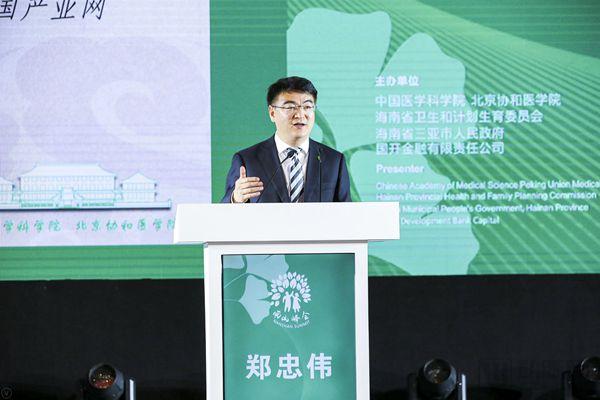
Zheng Zhongwei, Vice President of the Chinese Academy of Medical Sciences and Peking Union Medical College
It is reported that the current Nanshan Summit, themed “Geriatrics Empowering Healthy Aging,” has brought together over 400 participants, including authoritative experts from six countries such as the United States, Germany, France, and Australia; representatives from university research institutions and medical organizations exemplified by the Chinese Academy of Medical Sciences and Peking Union Medical College; as well as members from associations and professionals in the health and elderly care sector, to jointly discuss the development blueprint for China’s healthy aging society. Leaders from the National Health Commission, the Ministry of Civil Affairs, the Hainan Provincial Health and Family Planning Commission, and relevant departments of the Sanya Municipal Government attended the opening ceremony.
At the opening ceremony, Zhu Yaoyin, Deputy Director of the National Working Commission on Aging, pointed out that China’s aging-related initiatives have entered a new era. The discussions at the “Nanshan Summit” not only align with China’s strategies for actively addressing population aging and building a Healthy China, but also focus on the nation’s actions to proactively respond to population aging, demonstrating strong foresight, policy relevance, and practical applicability.
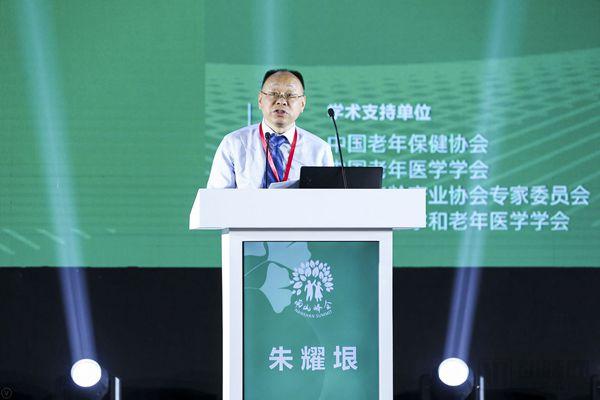
Zhu Yaoyin, Deputy Director of the National Office on Aging
Du Jianwei, Deputy Inspector of the Hainan Provincial Health and Family Planning Commission, stated that the establishment of the “Nanshan Summit” in Sanya has brought learning opportunities to Hainan and holds significant importance for innovating elderly care models and building Hainan into a “Health Island” and “Longevity Island.”
During the main forum of the summit, Liu Yuanli, Dean of the School of Public Health at Peking Union Medical College, also moderated the roundtable dialogue on “China’s Perspectives on Addressing the Challenges of Population Aging,” during which Chinese and foreign experts engaged in in-depth discussions on related issues.
As one of the organizers of the summit, the Chinese Academy of Medical Sciences and Peking Union Medical College stated that the “Nanshan Summit” aims to establish an international and professional platform for dialogue on elderly care. Renowned experts in the field of aging research from China and abroad have offered their insights and recommendations, with the expectation that the convergence of Chinese wisdom and international experience will provide scientific and intelligent solutions to address population aging in China and around the world.
According to VCBeat, this year’s Nanshan Summit is a two-day event featuring five sub-forums: “Healthy Aging and Sustainable Development,” “Value-Based Geriatric Care Models,” “Elderly Care Investment and Industry Trends,” “Construction of Elderly Care Security Systems and Smart Innovations,” and “International Advances in Geriatric Healthcare.”
For the first time, the summit integrated health and medicine into a comprehensive, all-encompassing discussion on elderly care, launching an international dialogue and knowledge-sharing initiative to address China’s current eldercare challenges and jointly explore the “Chinese Solution” to population aging.