

Daoqin Clinic: A Lightweight Model for Family Doctor Services in China's Primary Care Sector
In the past two years, the development of primary care clinics has leveraged national policies, exhibiting a surge in growth akin to bamboo shoots after rain, with significant influxes of capital and private sector participation. Positioned as the most fundamental medical units within the tiered diagnosis and treatment system, primary care clinics place family physician services at the core of their functions.
So, how can private primary care clinics assume the role of providing family doctor services? Daoqin Clinic has its own explorations and practices.
Chengdu Wuhou Daoqin Clinic Co., Ltd. (hereinafter referred to as “Daoqin”), established in 2016, was founded by Wang Rong with the original intention of creating an oncology clinic. However, in practice, she found that patient acquisition was the greatest challenge.
According to Wang Rong, all the patients visiting the clinic were referred from other medical institutions. Many of them were even unaware of their own medical histories, making it difficult for the clinic’s physicians to manage their care and resulting in fragmented and disorganized record-keeping.
To address this challenge, Wang Rong reasoned that it would be more impactful to root himself in grassroots healthcare, starting with the daily health management of the general public, by providing continuous monitoring and documentation of individual health status, which holds greater significance for patients.
Therefore, Wang Rong gradually solidified his commitment to focusing on family doctor services, striving to deliver tangible benefits to enrolled users and provide high-value family physician care.
Although the signing of family doctor contracts has been advancing in an orderly manner across China, several issues persist: first, there is a shortage of personnel and uneven distribution of resources in primary public health institutions; second, service implementation is inadequate, with many areas experiencing “signing without actual services”; third, local residents have not received the healthcare services they should have obtained through family doctor contracts, significantly undermining the original intentions and expected benefits of this initiative.
According to Wang Rong, the primary issue is that medical institutions lack enthusiasm because they are passively meeting signing targets under administrative mandates. Currently, community health service centers serve as the main entities for family doctor contracts. On one hand, there is a significant supply-demand mismatch between these limited institutions and the national signing targets; on the other hand, such traditional primary care institutions lack support from informatized and intelligent tools, resulting in low service efficiency. Due to trust issues, private medical institutions and other social organizations have not yet substantively participated in family doctor services. Furthermore, contracted residents do not easily access family doctor services and often need to make repeated trips to the contracting institutions.
“To reverse this situation, Daoqin must first establish its own high-standard general practice clinics to change the long-standing perception of being a brandless and untrusted provider, which has made it difficult to gain recognition and resulted in poor customer acquisition capabilities,” said Wang Rong.
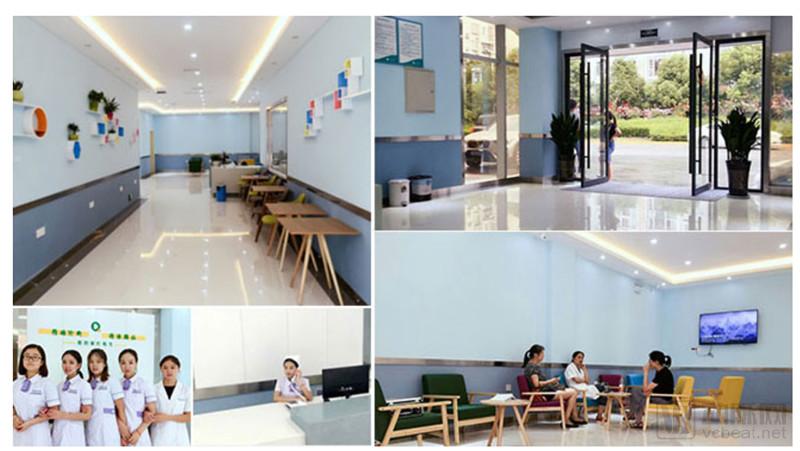
In September 2017, in Lizhou District, Guangyuan City, Sichuan Province, Wang Rong established the first Daoqin General Practice Clinic, integrating both software and hardware dimensions.
On the software side, the clinic employs excellent general practitioners who undergo regular assessments and training to ensure high medical standards. “We have reached a cooperation intent with Haodf Online’s 550,000 doctors, leveraging their high-quality physician resources through an asset-light model that enables remote consultations anytime, anywhere, as well as in-person offline visits locally.”
On the other hand, it established its own technical team to deepen the informatization of primary care clinics and introduced an AI-powered clinical decision support system to assist physicians in making clinical decisions, thereby minimizing missed and incorrect diagnoses. By pursuing these two strategies in tandem, the company is committed to providing users with precise diagnostic services.
“This technical team was established two years ago when Daoqin was just founded. We prioritize the application of artificial intelligence and healthcare informatization at the primary care level, as this constitutes both a competitive advantage for clinics and an essential requirement for their scalable growth,” added Wang Rong.
In terms of hardware, in addition to basic high-standard decoration and the establishment of a foundational department for integrated traditional Chinese and Western medicine rehabilitation, Daoqin Clinic has also established its own independent clinical laboratory, which is rare among clinics.
“Emphasizing laboratory testing and establishing the Daoqin Laboratory Center is what distinguishes Daoqin Clinic from general clinics, and it also serves as the foundation for enhancing the family physician service capabilities at Daoqin Clinic.”
Laboratory testing serves as the foundation for diagnosis; prioritizing testing enables more precise diagnostic outcomes. Daoqin Clinic has not only established its own independent laboratory to facilitate small-scale routine tests but has also built upon this infrastructure to implement Point-of-Care Testing (POCT). This approach utilizes portable analyzers and supporting reagents to perform clinical and bedside testing directly at the patient’s side, aiming to deliver test results as rapidly as possible.
The clinic conducts routine diagnostic services while actively acquiring suitable users for its family physician group through various channels. This includes collaborating with the Lizhou District Public Health Department and engaging in business negotiations with insurance institutions, key banking clients, labor unions of central state-owned enterprises, local state-owned enterprises, government agencies, public institutions, and property management committees, all aimed at driving customer acquisition for Daoqin Clinic’s family physician services.
As an increasing number of clinics open in compliance with policy directives, the capacity of primary healthcare continues to strengthen. However, severe homogenization among clinics has led to intense competition.
For primary care clinics to survive, they must unite for mutual support; going it alone offers little prospect. “We aim to establish an Island Piano Alliance.” This initiative is intended not only to foster the development of the clinics themselves but, more fundamentally, to promote their core family physician services.
The Daoqin Alliance is a tightly integrated clinic network with coordinated top-down and bottom-up linkages, rather than a loosely affiliated organization operating under a shared brand. The Alliance provides member clinics with a standardized health information system free of charge, facilitating digital transformation to enhance operational standardization. It also supports clinics in expanding their service departments and physical facilities, and enables shared access to the Daoqin Clinic’s laboratory services. These initiatives empower independent clinics to meet the qualifications and capabilities required for delivering public health and family doctor services, while also driving patient referrals to partner clinics and achieving shared economic benefits.
“Our first alliance clinic also opened in March this year,” Wang Rong added. “Each Daoqin Alliance Clinic is responsible for ten family doctor service stations. Among every five adjacent alliance clinics, one serves as a flagship clinic, known as the Daoqin Core Clinic, which provides basic examination and testing services. This structure ultimately forms a networked family doctor service model that expands from key points to cover broader areas. Such an approach enables residents within the region to access family doctor services provided by our clinic alliance more conveniently, reducing travel distances.”
“At the same time, to further ensure the effective delivery of family doctor services and enable users to access their health data without leaving home, our technical team has developed a WeChat interface for users based on the clinic system, with each wearable device linked to the system to facilitate real-time data transmission.”
According to Wang Rong, the professional wearable devices offered by Daoqin Clinic are characterized by miniaturization, intelligence, and wearability. Their primary function is to help patients with chronic diseases monitor vital signs such as blood pressure, blood glucose, heart rate, and blood oxygen saturation. Currently, the wearable devices available at Daoqin Clinic include electrocardiogram (ECG) monitors, continuous glucose monitors (CGM), ambulatory blood pressure monitors, and health smartwatches, which can meet the various health monitoring needs of enrolled residents.
These smart devices monitor users’ vital signs and transmit the data in real time to the Daoqin Data Center, enabling physicians to provide treatment recommendations in advance. In this way, Daoqin Clinic’s home-based family doctor services can be delivered to users promptly, serving a preventive function by addressing health issues at their earliest stages.
Regarding the delivery of health data, Daoqin Clinic determines the push timing based on individual user needs. Users receive data alerts via WeChat and can log in to the “Daoqin Health” official account at any time to check their health indicators independently. Any questions can also be addressed through direct online communication with their family doctor via WeChat.
Besides serving family physicians, Wang Rong believes that alliance clinics also face the following issues:
First and foremost, patient acquisition remains a critical challenge for clinics. Currently, the growth rate of patient visits to clinics and outpatient departments is lagging behind the expansion rate of the clinics themselves. As more clinics emerge in the future, competitive pressure on their survival will inevitably intensify. Therefore, clinics must strive to expand their patient base by delivering higher-quality medical services and exploring broader acquisition channels.
Secondly, the management of chronic diseases in the elderly needs to be repositioned. As China’s population aging intensifies, primary healthcare reform should prioritize rehabilitative care, chronic disease prevention and control, and the integration of medical and elderly care services. Therefore, clinics should appropriately consider their target demographics when designing departmental structures, specifically addressing the needs of the elderly population with chronic conditions.
Furthermore, clinics should be positioned in the high-end segment. Driven by the wave of consumption upgrades and strong capital interest, the market for clinics targeting mid-to-high-income populations is emerging and growing rapidly. Consequently, mid-to-high-end clinics capable of delivering high-quality, efficient medical services will establish a firm foothold in major cities.
Finally, the acquisition of high-quality physicians. This has long been a persistent challenge in primary healthcare. Future clinics will require the participation of more outstanding physicians; whether doctors are willing to leave the public system and whether multi-site practice can be implemented smoothly will significantly impact the future shortage of medical positions.