P-Care 2018: Six Key Segments of Primary Healthcare Enter a Pivotal Year of Opportunity, Over 70 Industry Leaders Gather to Launch the 'New Tectonics'
Against the macro backdrop of the new healthcare reform vigorously promoted by the government, and driven by the dual forces of innovative technologies and capital momentum, China’s primary healthcare service system is undergoing profound and far-reaching transformations.
The new systemic reforms will inevitably bring about the deconstruction and reshaping of China’s primary healthcare industry. Primary healthcare is poised to become the key patient-traffic gateway for future medical services. Its industrial upgrading and transition follow the initial trajectory of plate tectonics—through evolution, distribution, and structural combination—to form a new material state.
As an industry observer and recorder, VCBeat, in collaboration with the National Engineering Laboratory for Internet Medical Systems and Applications and the Internet Healthcare Industry Alliance, has jointly created a highly informative forum—2018 Primary Care Innovation Practice Summit。
Here, you will find the most professional insights, the most forward-looking trends, cutting-edge technological innovations, and proven models of innovation. Here, you will connect with the experts, entrepreneurs, and industry professionals who share your focus on primary healthcare.
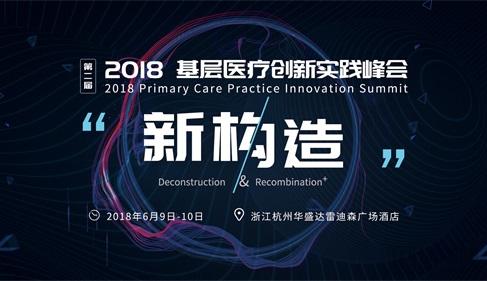
Name: “New Structure” – 2018 Summit on Innovative Practices in Primary Healthcare
Time: June 9–10, 2018
Location: Radisson Plaza Hotel Huashengda, Hangzhou, Zhejiang Province
Registration Address:http://vcbeat.top/P-Care2018

Scan the QR Code to Register
Six Key Sectors Enter a Pivotal Year for Growth: Six Forums Invite You to In-Depth Discussions
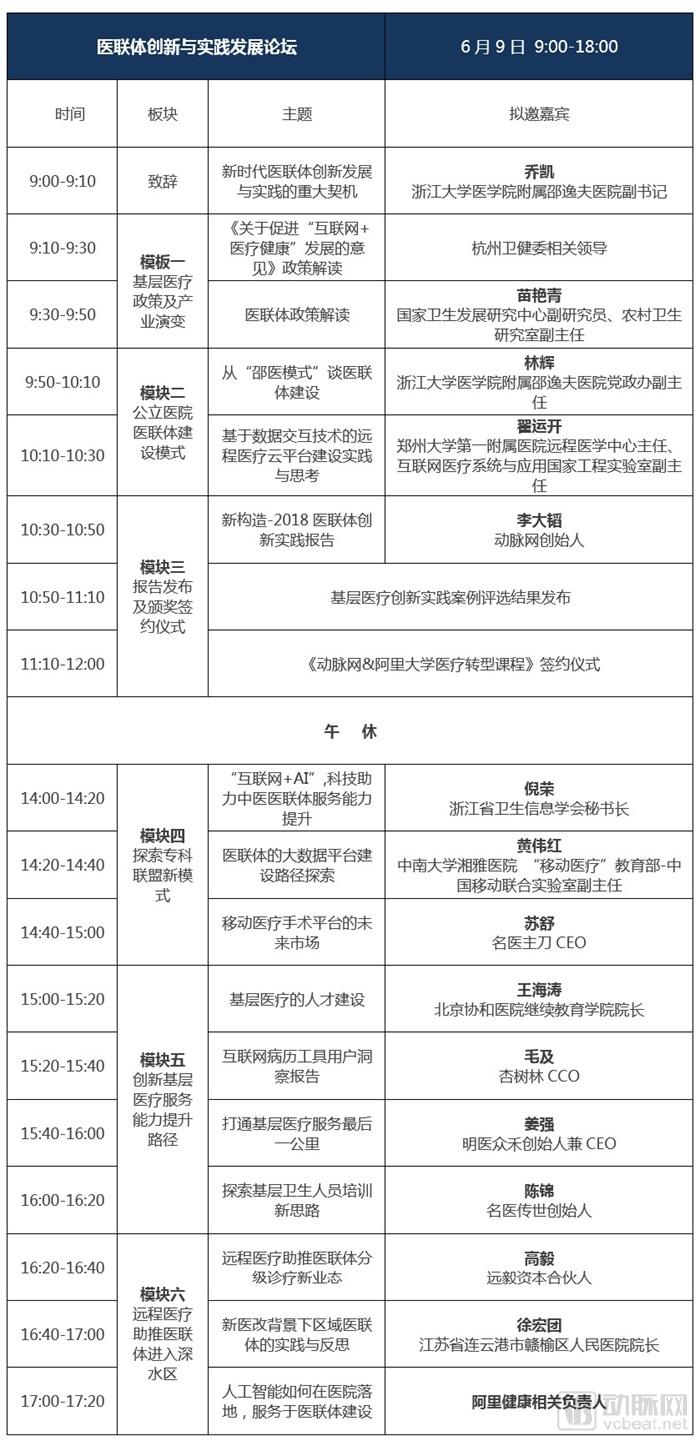
Forum on Innovation and Practical Development of Medical Consortia
Under the backdrop of the new healthcare reform, Medical Consortiums have been entrusted with significant responsibilities in the new era as a key driver for implementing tiered diagnosis and treatment. By the end of 2017, 2,134 public hospitals across China had participated in pilot programs for Medical Consortiums, while the number of specialized Medical Consortiums surged from one to fifty within five years. Consequently, Medical Consortiums have garnered widespread attention and discussion within the industry.
Under the four models of medical consortiums—urban medical groups, county-level medical communities, cross-regional specialty alliances, and telemedicine collaboration networks—how can tertiary hospitals, secondary hospitals, and community hospitals effectively fulfill their respective roles while maintaining close cooperation? Against the backdrop of the new healthcare reform, from which scenarios will innovative enterprises enter the medical consortium market? ……
This forum will invite leaders from relevant government agencies, administrators of medical institutions at all levels, senior executives of listed companies involved in Medical Consortiums, and founders of enterprises specializing in healthcare informatization, telemedicine, and pharmaceutical distribution services. The one-day discussion will focus on key themes including the construction and development of Medical Consortiums, collaboration and development among member institutions within these consortiums, and the advancement of informatization in Medical Consortiums.
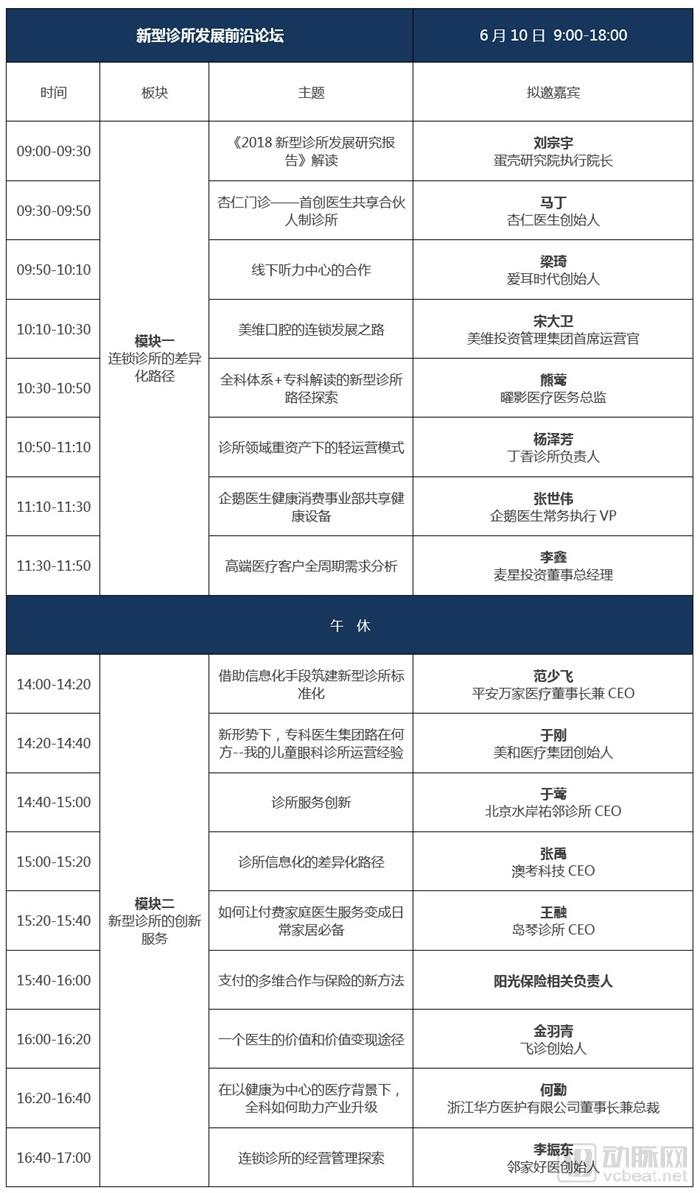
Frontiers in the Development of New Clinics Forum
The new industrial system model, driven by consumption upgrading, has reshaped the structure of essential needs in terms of relationships, scenarios, and products. This has created a strong demand for innovative operational models in primary healthcare. Meanwhile, the emergence of branded, scaled, and standardized new-type clinics presents new opportunities for standardizing primary healthcare services.
In 2017, more than 10 internet healthcare companies, including WeDoctor and DXY, expanded into the clinic sector. Real estate giants such as Wanda Group and Country Garden partnered with hospitals to establish clinics. Last year, 12 emerging clinic chains, including Zhuozheng Medical, Johnson Medical, and Arrail Dental, secured financing. These new-type clinics have attracted significant attention and favor from the industry, particularly from investors.
How Can New-Type Clinics Expand Their Reach? How to Build an Information Technology Platform as an Online Traffic Gateway? This forum will invite relevant government officials, experts and presidents of traditional large public hospitals, senior executives from listed companies involved in new-type clinics, founders of internet enterprises that have transformed by entering the core of healthcare through online channels, and senior investors in related fields. They will engage in a one-day discussion focusing on themes such as expansion and standardization of new-type chain clinics, business models, and customer acquisition costs.
Frontier Forum on Chronic Disease and Health Management
Against the backdrop of the new healthcare reform, community medical services are developing rapidly, with family doctor programs and community medical institutions beginning to take shape. However, many challenges remain, including a monolithic clinic management model, a lack of experience in chronic disease management, and the need for further exploration of family doctor service models.
This forum will invite executives from listed companies, founders of startups, and investors in relevant fields to jointly discuss hot topics such as “Implementation of Community Health Management” and “Insurance + Health Management.” This parallel forum will center on the theme “Innovation in Health Management Products and Service Implementation,” featuring one day of discussions.
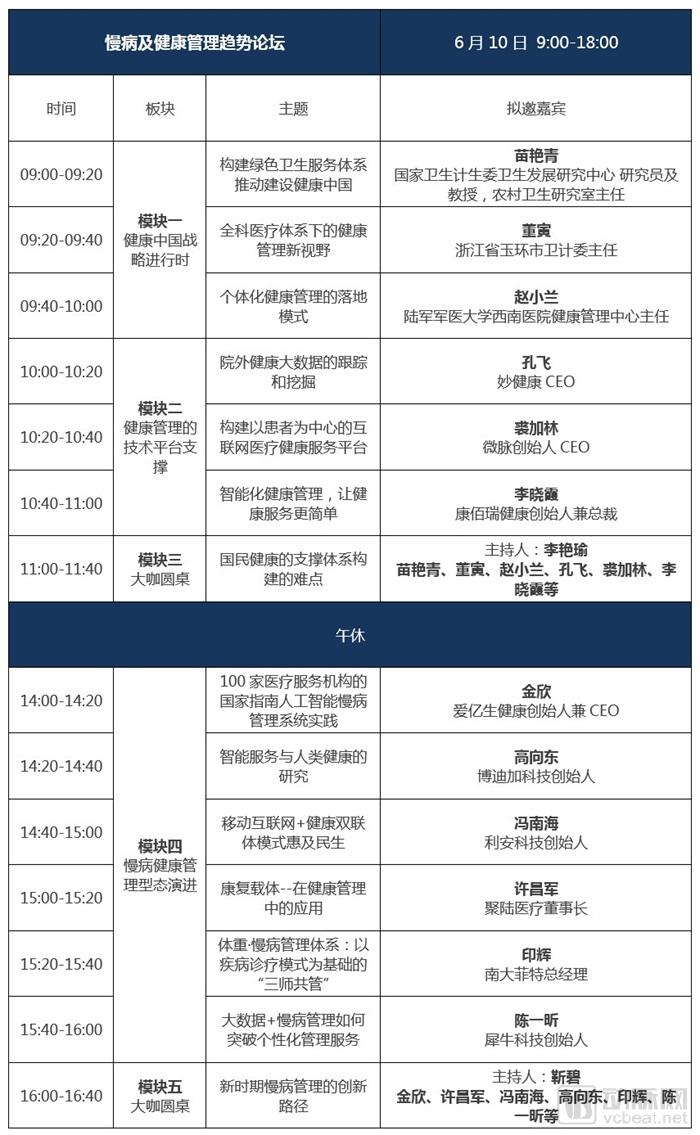
Forum on the Development of Pharmaceutical Retail and Distribution
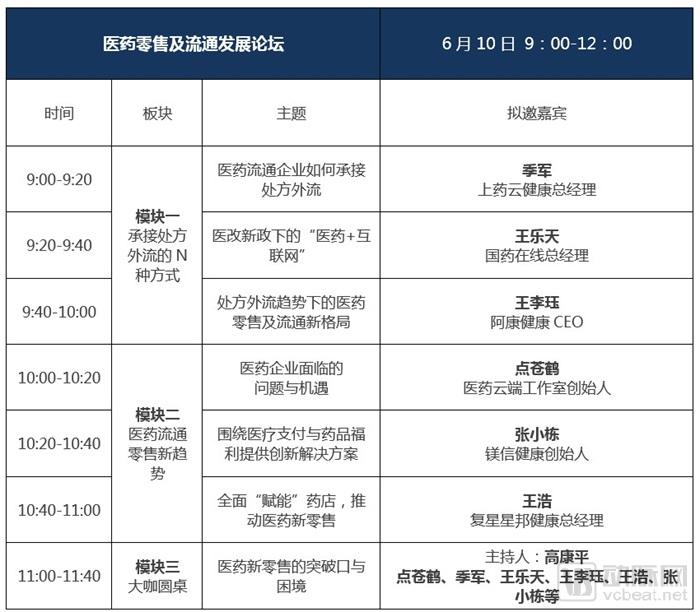
China’s pharmaceutical retail industry has entered a pivotal year of opportunity. In 2017, significant progress was made in two key initiatives: the sharing of information among medical insurance providers, hospitals, and retail pharmacies, and the implementation of a tiered and classified management system for retail pharmacies. The pharmaceutical retail sector has benefited from multiple favorable developments, including the advancement of comprehensive reforms in public hospitals, the accelerated separation of prescribing from dispensing, and the expanding outflow of prescriptions from hospitals. As a result, pharmaceutical retail is gradually replacing hospitals as the primary channel for pharmaceutical distribution.
This forum will invite relevant government officials, senior industry experts, scholars, and heads of well-known pharmaceutical retail, commercial, and manufacturing enterprises across China to attend. They will engage in a half-day discussion centered on topics such as how to capture the market for outsourced prescriptions and explore models integrating pharmaceutical retail with commercial health insurance.
Third-Party Medical Imaging Development Forum
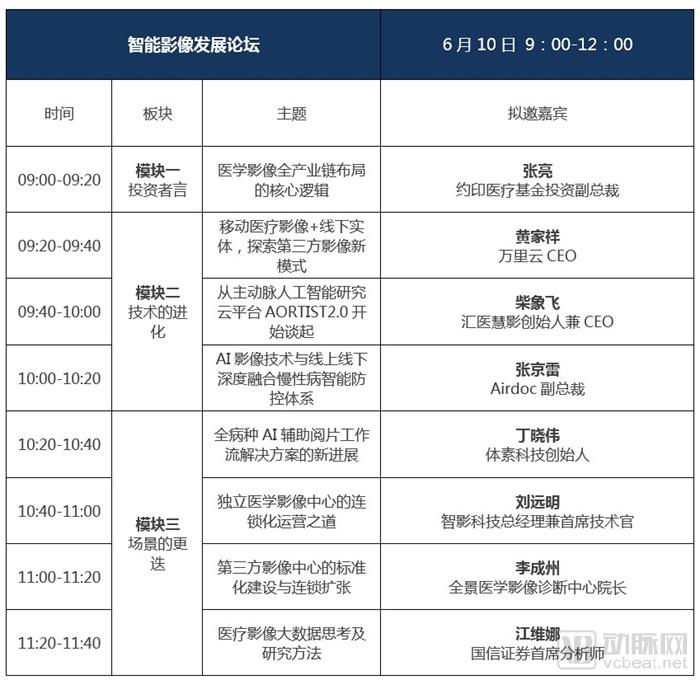
In August 2016, the National Health and Family Planning Commission issued the "Basic Standards for Medical Imaging Diagnostic Centers (Trial)," giving a green light to third-party medical imaging centers from the perspective of national policy. Encouraged by this policy, various capitals rushed into this market, hoping to seize territory and capture market share. However, this field has high barriers to entry; without strong operational capabilities, heavy asset investments may lead to significant difficulties.
How to Overcome the Three Major Barriers: Medical Licenses, Equipment Configuration Certificates, and Patient Acquisition? What Is the Current State and Future Outlook of the Third-Party Medical Imaging Market? This forum will invite relevant government officials, expert hospital directors from medical institutions, executives from leading enterprises across various sectors, and social capital investors. Participants will engage in a half-day discussion focusing on the current development status and business models of third-party medical imaging services, as well as collaboration with traditional large public hospitals and primary healthcare institutions.
Third-Party Hemodialysis Center Development Forum
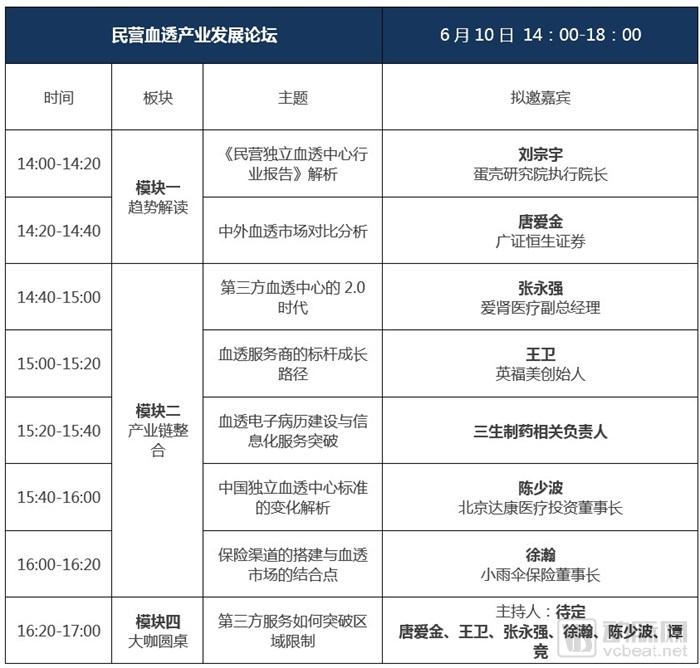
“Document No. 67” was issued, defining independent hemodialysis centers for the first time and signaling the state’s encouragement of chain-based and group-oriented development in the hemodialysis sector, as well as its openness to private capital.
What are the chain cooperation models for hemodialysis centers? What are the key points in the approval and practice acceptance processes for hemodialysis centers? How can customer acquisition strategies for hemodialysis centers be developed? This forum will invite leaders from relevant government agencies, managers of hemodialysis centers, executives from listed companies involved in the hemodialysis sector, as well as founders of foreign-funded companies and industry startups. The half-day discussion will focus on themes such as the construction and development of hemodialysis centers, and the collaboration and development between hemodialysis centers, hospitals, pharmaceutical companies, and medical device manufacturers.
We will invite 1,500 industry professionals to participate in the conference, including:
Invited leaders from relevant national commissions and bureaus;
Leaders from health commissions at all levels, heads of departments for medical administration and hospital management, and heads of primary healthcare departments; heads of information centers and telemedicine centers; senior executives from relevant health institutions, including those responsible for disease control, maternal and child health, health supervision, and blood centers;
Heads of various medical consortiums; senior executives, directors of information centers, and other management personnel from medical institutions such as large hospitals, county-level hospitals, community health service centers, and rural health clinics;
Teaching, research, and industry experts engaged in primary healthcare research;
Relevant person in charge of an investment institution engaged in grassroots medical project investments;
Executives of listed healthcare companies, founders of innovative enterprises, and primary care practitioners focused on grassroots healthcare.
We will release three reports covering the following sub-sectors: Medical Consortia, New-Type Clinics, and Third-Party Medical Services:
As a platform for releasing innovation trends in China’s primary healthcare industry, we will publish an industry trend report annually at the Summit on Innovative Practices in Primary Healthcare.
Last year, we released China’s first research report on innovative practices in primary healthcare—《2017 White Paper on Innovation in the Primary Healthcare Industry》Compiled by eight researchers from VCBeat Research Institute over a period of nearly four months, this report examines policy directions, pilot regions, primary healthcare institutions, technological breakthroughs and applications, and family doctor services. By surveying more than 300 innovative enterprises in the primary healthcare sector, it clarifies the development trajectory of China’s primary healthcare industry and presents a comprehensive overview of the landscape.
This year, we will release three reports covering medical consortiums, new-type clinics, and third-party medical services—stay tuned.
We are seeking the most outstanding primary healthcare cases in China and invite you to share them at the conference:
In 2017, VCBeat launched a case solicitation campaign themed “The Power Downward: Seeking Best Practices in China’s Primary Healthcare” for the primary healthcare industry. From more than 100 primary healthcare enterprises that passed the initial screening, over 20 outstanding enterprise-level best practice cases were selected and reported.Case Roundup: Over 20 Outstanding Primary Care Cases Worth Watching in 2017—Join the Conversation!)
Following the report, primary healthcare enterprises represented by Community 580, Xinkang Medical, Mixi, Johnson Medical, Dr. Lv Chain Clinics, Huimei Medical, and Micro-Nano Core have received over one hundred investment matchmaking requests and attracted the attention of tens of thousands of industry professionals.
On April 2, 2018, VCBeat and Eggshell Research Institute launched a call for case studies themed “Seeking Best Practice Cases in China’s Primary Healthcare,” targeting the primary healthcare industry. The initiative focused on addressing prevalent challenges in primary care by selecting innovative practice cases in areas such as medical consortia, chain clinics, health management, pharmaceutical retail, and third-party services.
Outstanding cases will be featured in the “Grassroots Healthcare Innovation Practices” article series and promoted across VCBeat’s official website, official WeChat account, event website, and media matrix, reaching over 100,000 industry professionals, more than 1,000 investors, and 2,000+ industry stakeholders.
Outstanding case studies will also be invited to deliver presentations at our forum. To this end, we have partnered with Probes Capital to create a dedicated venture capital and private equity session, inviting 50 top-tier investment institutions deeply entrenched in the primary healthcare sector to attentively listen to your insights. This will provide you with opportunities to connect with industry capital and facilitate multi-dimensional, multi-stage business collaborations.
If you are
Government agencies related to primary healthcare, such as the National Health and Family Planning Commission and local health bureaus
Senior Executives of Listed Companies with a Strong Focus on Primary Healthcare
Primary healthcare practitioners, including directors of county-level hospitals, heads of community health centers, and clinic managers
Primary Healthcare Solution Provider, Including Equipment, Instruments, Laboratory Testing, Medical Imaging, Pharmaceuticals, and Training Institutions
Family Physician Promotion Organizations, Including Medical Associations at All Levels and General Practitioner Organizations
Investors Focused on Primary Healthcare
……
Registration Open

(Registration QR Code)