

Seven Medical AI Companies Partner with Chongqing Medical University Affiliated Hospital No.1; Radiology Director Emphasizes Clinical-Centric AI Solutions
As medical AI products continue to mature, an increasing number of offerings from medical AI companies are being deployed in hospitals for pilot trials and iterative refinement.Especially in the field of radiology, some top-tier tertiary hospitals have even partnered with more than 10 medical AI companies. In the Department of Radiology at the First Affiliated Hospital of Chongqing Medical University, there are seven medical AI companies seeking collaboration.
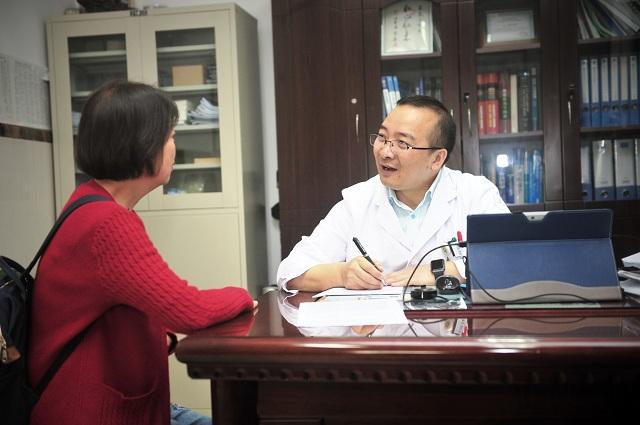
Director Lv Fajin (Image provided by the interviewee)
How Does the First Affiliated Hospital of Chongqing Medical University Select Among the Many Medical AI Products on the Market? What Are Their Motivations for Adopting These Technologies? In response, VCBeat interviewed Dr. Lv Fajin, Director of the Department of Radiology at the First Affiliated Hospital of Chongqing Medical University, to gain insights into their process of implementing medical AI products.
Medical AI Originated from Clinical Screening Needs
Director Lv Fajin told VCBeat that the First Affiliated Hospital of Chongqing Medical University began engaging with medical AI products in early 2017, when the hospital was conducting lung cancer screening for its entire workforce of over 6,000 employees.
This initiative was launched in 2016, with a screening volume of over 2,000 individuals, resulting in the detection of 22 early-stage lung cancer patients. The Department of Radiology at the First Affiliated Hospital of Chongqing Medical University comprises 18 specialists and 42 physicians. While managing routine clinical consultations, the department also completed the hospital staff screening program within two months.
The screening volume surged to over 6,000 cases in 2017, yet there was no significant increase in departmental staff. Director Lv Fajin clearly felt the strain of insufficient manpower in striving to complete screening tasks within the stipulated timeframe while maintaining routine clinical consultations. Indeed, a shortage of radiologists has become a predicament faced by hospitals nationwide.
By 2017, medical AI products had already made frequent appearances at major medical conferences, with lung nodule screening solutions being a hot topic in professional discussion groups. Consequently, Dr. Lv Fajin envisioned leveraging these AI tools to assist his department’s physicians in managing the substantial screening workload.
Therefore, since 2017, products from multiple medical AI companies have been successively introduced into the Department of Radiology at the First Affiliated Hospital of Chongqing Medical University.Faced with the multitude of medical AI products, Director Lv Fajin stated that not all products undergo clinical refinement, training, and trial use; they are subject to assessment before entering clinical practice.
Physicians prioritize accuracy and practicality.
Director Lv Fajin told VCBeat that due to differences between the training data of medical AI products and hospital-specific data, these AI products may exhibit performance variations when used at the First Affiliated Hospital of Chongqing Medical University. Therefore, pre-clinical assessment is essential.
The assessment method involves the department establishing a pilot zone based on routine clinical workflows, followed by validation using clinical data from the First Affiliated Hospital of Chongqing Medical University. Only products that pass the test are permitted to proceed to clinical trials. Products that fail the test are prohibited from clinical use and are returned to the manufacturer for self-correction.
By testing medical AI products to assist radiologists in detecting nodules, radiologists can also identify the strengths and weaknesses of these products and provide feedback to manufacturers, helping them continuously improve their offerings. After a period of use, frontline radiologists not only focus on the accuracy of the products but also value ease of operation and whether the products integrate seamlessly with existing clinical workflows.
Director Lu Fajin stated that accuracy is a prerequisite for medical AI products to enter clinical trials. To date, only three companies have passed validation, among which Infervision’s solution stands out for its on-site development capabilities.Radiologists perform their daily tasks within hospital information systems, utilizing dedicated Picture Archiving and Communication Systems (PACS) for the transmission, storage, and retrieval of imaging data. Consequently, radiologists expect medical AI-assisted diagnostic systems to be integrated into PACS. In this regard, Infervision’s AI products...Provided significant support to physicians.
In contrast, offline systems that require physicians to manually copy and transmit data will increase image interpretation time from 10 minutes to 30 minutes. Such products are bound to be phased out, as convenience is of paramount importance to physicians.
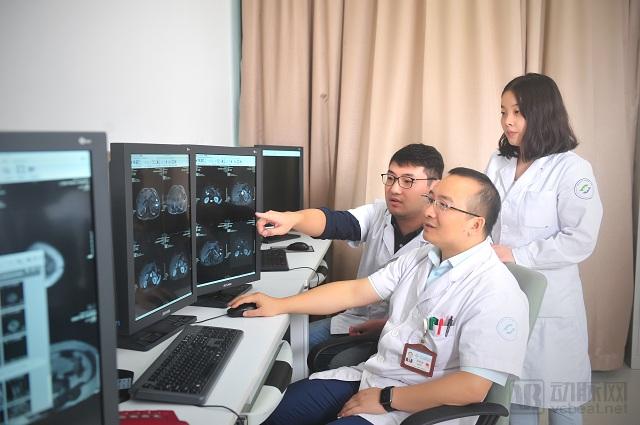
AI Systems Serve as the First Line of Defense in Medical Image Interpretation
In the face of the rapid development of the medical AI industry, Director Lv Fajin believes that this is a welcome phenomenon, but the industry should also clearly recognize the current limitations of medical AI products. For instance, most medical imaging AI systems can only detect pulmonary nodule abnormalities, whereas lung diseases encompass far more than just pulmonary nodule screening.
When reviewing lung imaging, radiologists must also screen for thoracic conditions such as emphysema, bronchiectasis, pneumonia, mediastinal lesions, chest wall abnormalities, and upper abdominal lesions within the scan field.。Front-line radiologists hope that future AI systems can conduct comprehensive examinations of thoracic diseases, similar to physicians, and then generate preliminary examination reports.。
Director Lv Fajin told VCBeat that every imaging examination currently undergoes a two-tier review process. Junior physicians first prepare an initial report based on the medical images, which is then submitted to specialist physicians for review and signature. Clinicians subsequently make clinical diagnoses and determine subsequent treatment plans by integrating these imaging reports. He expressed hope that future medical AI systems could perform pre-processing by generating a preliminary screening report before junior physicians interpret the images. This report would then be reviewed by both junior and specialist physicians, thereby providing an additional layer of safety assurance for patients.
Regarding the safety liability issues that have recently drawn industry attention, Director Lv believes that all screening and medical examination reports are currently signed off by physicians. Even if medical AI products are used during image interpretation, they serve merely as one of many tools employed by physicians. Therefore, in the event of a missed diagnosis or other medical malpractice, liability should rest with the physician rather than the tool.
AI-Empowered Primary Healthcare Institutions
Regarding the application scenarios of AI products for medical imaging, Director Lv Fajin stated that radiology departments in tertiary hospitals are not the only setting for their use. For radiologists at tertiary hospitals, they can interpret medical images accurately even without the assistance of AI-powered medical imaging tools; however, without such AI support, there would be a bottleneck in daily patient volume, making it difficult to fully meet the growing demand for diagnostic examinations. Nevertheless, this challenge could also be addressed by allocating more time.
Furthermore, Director Lu emphasized that medical AI systems do not increase the volume of health checkups at hospitals. The rise in the number of individuals undergoing health screenings is correlated with population disease incidence rates and public health awareness, rather than being inherently linked to physicians’ use of such tools. Therefore, the claim that medical AI will boost hospital health checkup volumes is problematic.
For primary healthcare institutions, grassroots physicians have limited ability to interpret medical images and are reluctant to make independent diagnoses. Since missed diagnoses entail medical liability, these physicians cannot jeopardize their careers. Therefore, even with advanced imaging equipment, primary healthcare institutions remain hesitant to accept patients with such diagnostic needs.
In the future, as medical AI systems continue to mature and gain approval from the National Medical Products Administration (NMPA), they will bolster diagnostic confidence among primary care physicians, facilitate health screening services, increase revenue for primary healthcare institutions, and alleviate the patient volume burden on tertiary hospitals.
Medical AI systems hold great promise for primary healthcare institutions in the future.
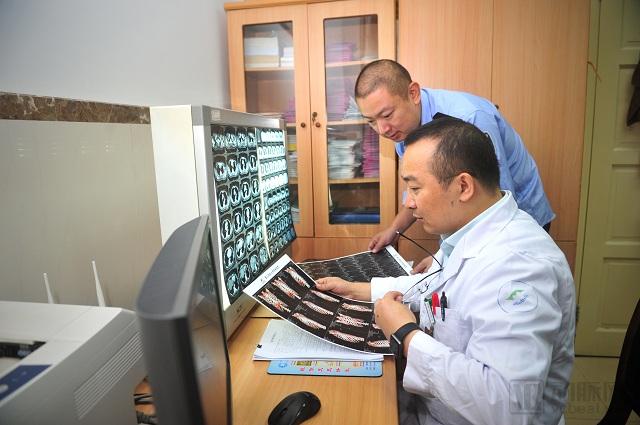
Responsible for the implementation of products
When discussing competition in the healthcare industry, Director Lv Fajin expressed his hope that medical AI companies would take responsibility for their products. At this stage, medical AI products still require continuous improvement and need doctors and IT engineers to work together to refine and iterate them, rather than simply deploying them in hospitals. Like Infervision, which is deeply rooted in clinical practice, companies should continuously iterate their products based on doctors' feedback, making deployed medical AI solutions feel as if they were custom-built for each hospital. This will enable doctors to use these tools with increasing ease, integrating them seamlessly into their daily workflows.
For physicians, once they become accustomed to using a particular product, it becomes difficult for other similar products to gain entry. Therefore, companies must cherish the opportunity to enter hospitals and take responsibility for the medical AI products they deploy in these institutions.
Last but not least, in recent interviews, reporters have observed that for medical AI companies to get their products adopted by hospitals and used by physicians, three prerequisites must be met:
First,Excellent and Experienced Sales Team. The healthcare industry has relatively high entry barriers, and sales professionals with experience and background serve as a stepping stone;
Second,The product's performance must meet the required standards.. The sales team serves merely as a stepping stone; whether physicians adopt the company’s products in clinical practice depends entirely on product performance. Admittedly, a highly competent sales force or other factors may also facilitate product entry into hospitals;
Third,The product team maintains close communication with clinicians and engages deeply in clinical practice.Any medical AI product requires refinement before being deployed in a new hospital. Otherwise, if issues arise during clinical use and are not resolved promptly, physicians will abandon the product, given the wide array of alternatives currently available to them.