

Sunloading: Building a Medical-Grade Postpartum Recovery Leadership Brand with Over 1,000 Stores in 9 Years
Postpartum recovery has emerged as a hot sector in recent years. From a business model perspective, it encompasses multiple attributes, including aesthetics, rehabilitation, and medical care, demonstrating strong industrial extensibility.
Postpartum mothers constitute a special demographic. Issues such as postpartum confinement-related ailments, stretch marks, obesity, declined physical constitution, and facial skin aging require timely conditioning and care.
Due to low entry barriers, the market has seen a surge of competitors, with first-tier cities already embroiled in price wars and characterized as a "red ocean." As a leader in postpartum recovery, Chongqing New Sun Health Industry Co., Ltd. (brand name: Jiaoyang Landuo, hereinafter referred to as Jiaoyang Landuo) is committed to building comprehensive health management for women throughout their life cycle. The company has made significant investments in medical expertise, integrating cutting-edge postpartum recovery concepts, specializing in the research and development of globally advanced postpartum recovery products and equipment, and mastering advanced postpartum recovery technologies.
Starting in Chongqing and covering mainstream second- and third-tier cities, how has Jiaoyang Landuo attracted over 1,000 franchisees and built its competitive moat in the postpartum recovery sector? To find out, VCBeat (WeChat ID: vcbeat) interviewed Ms. Huang Huan, Chairwoman of Chongqing New Sun Health Industry Co., Ltd.
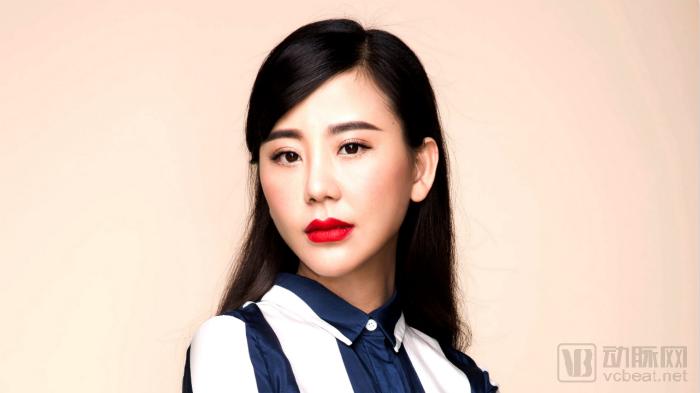
Ms. Huang Huan, Chairwoman of Chongqing New Sun Health Industry Co., Ltd.
Postpartum recovery services, such as lactation promotion, pelvic floor restoration, and lochia discharge management during the puerperium, have gradually gained acceptance among women. “Initially, however, postpartum women lacked awareness of postpartum recovery, often perceiving it merely as a cosmetic salon service, with misconceptions about pelvic floor restoration and lactation support. Now, recognizing that pregnancy and childbirth induce physiological changes leading to pelvic floor dysfunction disorders—such as uterine prolapse, anterior and posterior vaginal wall prolapse, and stress urinary incontinence—at least 95% of new mothers undergo pelvic floor restoration or engage professional lactation consultants to reduce the risk of mastitis,” said Huang Huan. Postpartum recovery has now become a prominent niche sector within the maternal and infant industry.
"In the early stages of the industry's development, barriers to entry were relatively low due to its non-purely medical nature, leading to an influx of market participants and a lack of clear regulatory policies. 'Many people regarded it merely as a branch of beauty salons, resulting in a mix of genuine and substandard providers. Therefore, practitioners need to raise competitive barriers to demonstrate the tangible effectiveness of postpartum care to mothers.'"
From a macro perspective, data from the National Bureau of Statistics shows that the number of births in 2017 was 17.23 million, with slight declines in both the number of births and the birth rate. The state is promoting the implementation of “maternal and child health services.” In particular, the number of first births is declining. From the standpoint of national population strategy, with the opening of the two-child policy, the government will undoubtedly continue to vigorously develop the maternal and infant industry. Unlike the treatment of diseases such as cancer, maternal and child care emphasizes prevention over treatment. Through experiential services, it aims to minimize health issues for newborns and mothers. Currently, approximately 5% of the 20,000 public hospitals across China have established postpartum rehabilitation departments, reflecting the commitment to deeply embed preventive health services. The future direction of postpartum recovery will certainly trend toward greater specialization and refinement.
What Issues Can Postpartum Recovery Address? Huang Huan Revealed That It Mainly Focuses on Three Areas: Reproductive Health, Breast Care, and Skin. “The first is the reproductive system, such as the uterus and ovaries. Gynecological inflammation and uterine cancer originate from the reproductive system, requiring pelvic and pelvic floor muscle rehabilitation. The second is breast care. Postpartum lactation promotion can improve blood circulation in the breasts, unclog milk ducts, and address difficulties with milk ejection in new mothers. Additionally, postpartum weaning, breast shaping, and breast health maintenance can help prevent sagging, lateral expansion, and atrophy. The third is skin. Postpartum women often experience skin laxity; stretch mark removal and scar repair help reconstruct damaged skin, improving its color and elasticity.”
Some treatments are also offered by beauty salons, such as skin care. However, reporters have learned that, compared with dermatological procedures in plastic surgery clinics, postpartum recovery centers emphasize both internal and external rejuvenation, with some even requiring medical-grade devices, yielding directly visible results.
How can Jiaoyang Landuo strengthen its competitive moat and differentiate itself from ordinary postpartum recovery centers? Huang Huan revealed the company’s upgrades in medical-grade products and services. “We continuously introduce the latest equipment available on the market. Moreover, services such as weight loss and breast enhancement require special cosmetic qualifications, and we adhere to the nation’s most stringent standards. In terms of intellectual property protection, we hold over 100 copyrights and trademarks, and many postpartum care centers use our teaching materials for their training curricula. Jiaoyang Landuo is striving to become an industry standard-setter; it has also collaborated with the Ministry of Human Resources and Social Security to compile examination question banks for two professions: Postpartum Rehabilitation Therapist and Pediatric Tui Na Therapist.”
In 2009, the first store of Jiaoyang Landuo Postpartum Recovery Center was opened. Initially, it operated as a direct-sale chain, with one store located in Jiefangbei, Yuzhong District, Chongqing, covering an area of 1,200 square meters, and another in Jiangbei District, Chongqing, covering an area of 600 square meters.
“After achieving successful operations, many merchants requested to join our franchise network. At this point, we encountered practical challenges. Direct ownership and franchising are two entirely different models. Due to their asset-heavy nature, directly operated stores are difficult to scale nationwide, making them more suitable for building strong regional brands. We also allocated resources preferentially to our directly operated stores. Ultimately, we made the tough decision to adopt the franchise model.”
The development of Sunland's franchise business has progressed through several stages:
Phase I: Franchisees address survival challenges. With limited control over franchisees and low brand recognition, franchisees, in their struggle to survive, often engage in services beyond postpartum recovery, such as manicures and semi-permanent makeup. This is the most difficult phase, characterized by misalignment between franchisees’ operational management and the headquarters’ strategic rhythm.
Phase II: Unite franchisees and establish standards. Proactively engage franchisees to develop detailed management and service standards, implement a points-based system with clear rewards and penalties, and terminate contracts with non-compliant franchisees. Identify and highlight franchisees with leadership qualities as role models, and adopt a “mentorship” model where experienced franchisees guide new ones to cultivate emerging franchise partners.
Phase III: Strengthening the Brand and Perfecting Services. Against the backdrop of consumption upgrading in the maternal and infant sector, once a strong brand presence is established, franchisees’ proactive engagement intensifies. They not only accept management oversight and actively assume responsibilities but also provide numerous recommendations based on frontline market insights. With a clear understanding of bottom lines and core principles, they work collaboratively to safeguard the brand’s interests.
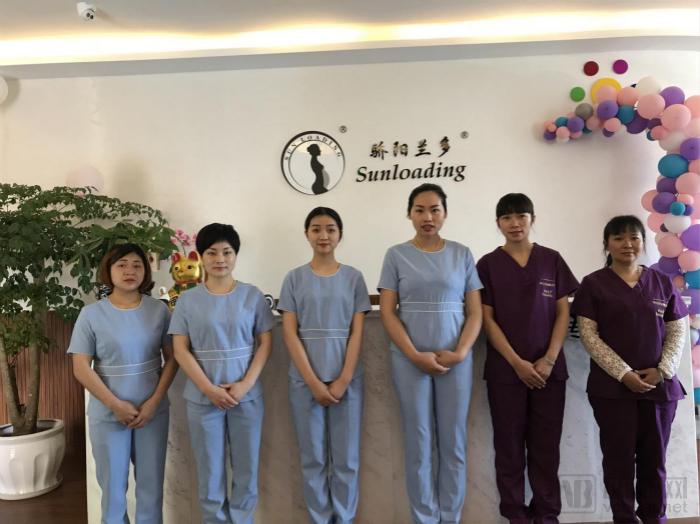
New Sun Landuo, Chongqing Yubei Jintong Road Store
The core challenge of the franchise model lies in being “connected but not unified,” a dilemma that all enterprises must confront. Huang Huan stated, “Many franchise organizations, although operating under the same brand name, function independently. Some companies adopt a strategy of raising funds and then exiting, without engaging in brand management, market cultivation, or in-depth development; their future strategic direction is often unclear. This is particularly evident in the postpartum recovery sector, which integrates multiple attributes from the beauty industry, general health and wellness, and healthcare.”
Currently, the franchise fee for Jiaoyang Landuo ranges from 189,800 to 500,000 yuan. The company does not sell territorial rights and operates without an agency model. Among its franchisees are many professional obstetricians and gynecologists, including department directors.
Driven by strong financial performance and market presence, Jiaoyang Landuo was officially listed on the National Equities Exchange and Quotations (NEEQ) in April 2017. “It took us two years to complete the NEEQ listing, whereas the process typically requires only six to eight months. Our securities firm conducted comprehensive site visits to all our franchisees, rather than relying on spot checks as other firms do, primarily to thoroughly assess the strength and future potential of the Jiaoyang Landuo chain. We have managed to sustain a business model that was initially viewed with skepticism, and now we hear consistent recognition of our brand. I believe our nine years of hard work have truly paid off.”
Huang Huan told reporters that Jiaoyang Landuo has already obtained the status of a well-known trademark. In 2018, the company will not only move towards the capital market but also focus on upgrading its medical sector, including projects related to the pelvis, pelvic floor muscles, and uterus. It has already begun cooperating with many regional Grade II Class A hospitals.
It has been reported that Jiaoyang Landuo’s revenue from its Shangpin product line now accounts for nearly 40% of total sales. The brand currently operates more than 1,000 franchise stores across multiple provinces and municipalities, including Shandong, Henan, Anhui, and Jiangsu, with a primary focus on second- and third-tier cities. “Especially in populous regions such as Shandong and Anhui, where price wars are intense in first-tier cities, second- and third-tier cities offer lower rental costs and stronger consumption potential. End consumers in these cities demonstrate significantly higher brand awareness and loyalty, as they face less survival pressure and tend to prioritize quality over cost-effectiveness.”
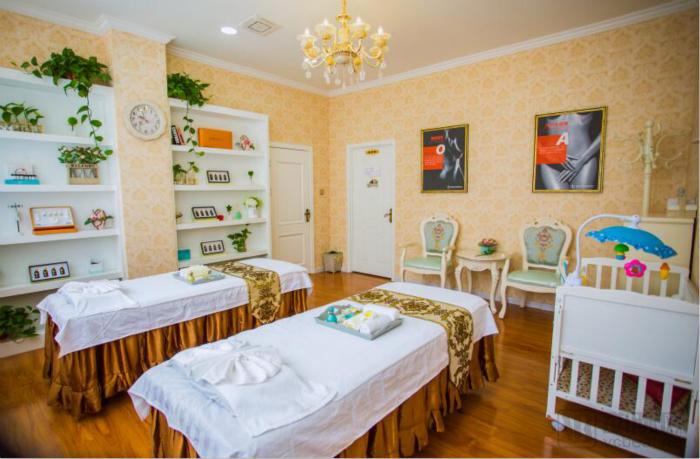
For renovation and projects, achieve precise localization based on local conditions.
Huang Huan revealed that in cities like Yichang, a single store with an area of 200–300 square meters can achieve an annual net profit of approximately RMB 3 million. Jiaoyang Landuo focuses on empowering franchisees through standardization and brand management, offering the following services: 1) Professional knowledge training covering store opening, upgrades, sales, and other aspects, delivered through on-site support, live streaming, online courses, and its proprietary business school; 2) Provision of professional equipment and products; 3) Customer acquisition strategies, including online platforms such as Meituan, Dianping, and Mama.cn, as well as offline hospital-based maternity classes and lectures. Jiaoyang Landuo has also developed its own postpartum tracking app, “Postpartum 365 Days”; 4) Facilitation of consumption upgrades, including organized sales events, recruitment, and the placement of talent such as store managers and postpartum rehabilitation specialists.
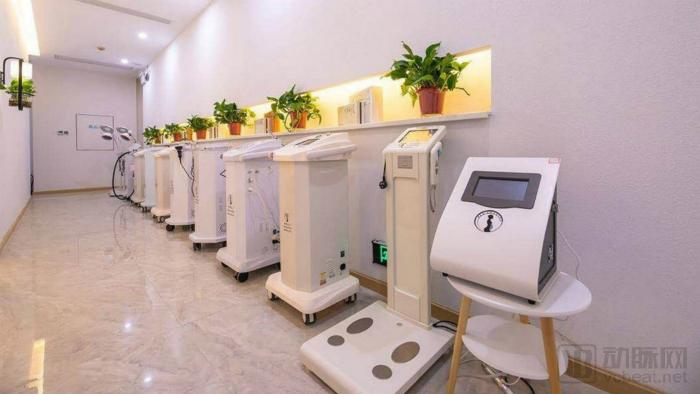
Chongqing New Sun Health Industry Co., Ltd. conducts annual upgrades of its professional equipment and products.
“We also have several sets of standard manuals, covering storefronts and terminals, among others. These manuals detail every aspect, such as hygiene inspection protocols and disinfection procedures for equipment and bed linens. Supervision is conducted through phone calls, video monitoring, and unannounced visits. This is indeed a highly complex systematic endeavor.”
“Every year, Sunyoung Land upgrades its devices and expands further into the medical field to provide treatments for postpartum conditions such as uterine prolapse and urinary incontinence. In addition, we collaborate with several medical universities to implement early-warning systems for high-risk factors in advanced maternal age pregnancies, offering medical-grade prevention for conditions such as gestational hypertension, preterm birth, and severe hemorrhage. We have also observed other brands’ postpartum recovery centers, which tend to resemble cosmetic surgery hospitals more closely. I believe that postpartum recovery must evolve toward a medical orientation, as postpartum women constitute a special population requiring specialized treatment.”
Across China’s numerous provinces and municipalities, consumer habits and customs vary significantly from region to region. Huang Huan highlighted an intriguing phenomenon: “People in northern China are more prone to weight gain and place great emphasis on postpartum conditions (‘yuezi bing’), making weight-loss services the best-selling offerings. In contrast, consumers in southern China tend to prioritize body contouring and improvements in physical constitution, with breast care being a particular area of concern.”
Due to climatic factors, such as the low temperatures in China’s three northeastern provinces, essential oil products tend to solidify, necessitating an increase in molecular density, which inadvertently raises costs. “Currently, special-use cosmetics in China require regulatory filing with clearly specified ingredients. For instance, arbutin, derived from bearberry extract, has skin-whitening effects. It may be permitted this year but banned the next; if so, all products containing it would have to be destroyed. The same applies to devices: after chip upgrades, older machines must be entirely replaced. The purpose of these updates is to better serve mothers and address their practical challenges.”
Regarding the expansion of the postpartum recovery business, Huang Huan stated that future efforts will extend into sectors such as postpartum care centers, genetics, and anti-aging. “Postpartum care centers and postpartum recovery centers can be easily integrated; some of our franchisees have already begun doing so. Compared with postpartum care centers, postpartum recovery centers boast higher bed turnover rates, require fewer caregiving staff, offer higher profit margins, and present controllable risks. Patients often see rapid results, which encourages them to voluntarily promote our services.”
“During a recent study tour for franchisees to Taiwan, we connected with some of the most premium postpartum care centers, universities specializing in maternal and infant care, and sales training programs in Taiwan. Postpartum recovery can extend into many areas, such as infant care and anti-aging treatments for menopause, which I believe will definitely be in demand in the future. Jiaoyang Landuo will launch postpartum recovery services within Taiwan’s postpartum care centers and plans to expand its entire business across Taiwan and Malaysia in the future.”
Jiaoyang Landuo has positioned itself as a healthcare and health management service provider for women throughout their entire life cycle, offering specialized treatment and care. Furthermore, to support children from vulnerable groups, Jiaoyang Landuo established the Jiaoyang Moms Fund, which is dedicated to helping children with autism or cerebral palsy address their specific needs. The company has also sponsored several maternal-fetal medicine associations and plans to launch a dedicated fund for menopausal women in the future.
Reflecting on the past nine years of entrepreneurship, Huang Huan candidly stated, “With each step forward, my perspective has evolved. We have already applied for delisting from the New Third Board and are preparing to transition to either Hong Kong-listed red-chip shares or A-shares. Many franchisees have been with Jiaoyang Landuo for seven or eight years, growing from small family-run workshops into our partners. It is precisely the strong cohesion of these franchise partners that has brought us to where we are today. In the coming years, we will leverage capital to drive another round of upgrades.”