

Russia Mobilizes Over 6,500 Doctors to Deliver World-Class Medical Support for 2018 FIFA World Cup
From June 14 to July 15, the 21st FIFA World Cup, long anticipated by football fans worldwide, will officially kick off. Twelve stadiums across eleven Russian cities will serve as the venues for this grand football spectacle.
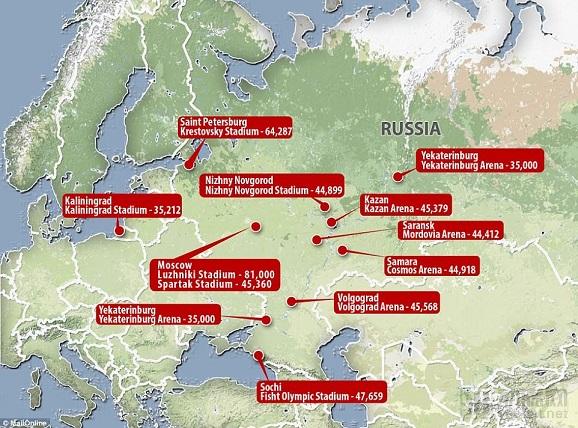
Image source: footballcitymediacenter.com
These 11 lucky cities include: Moscow, Kaliningrad, St. Petersburg, Volgograd, Kazan, Nizhny Novgorod, Samara, Saransk, Rostov, Sochi, and Yekaterinburg.
Alexei Sorokin, CEO of the Russia 2018 Local Organizing Committee, once excitedly told the media: “Hosting the 2018 FIFA World Cup will ensure Russia’s GDP growth over the next five years.” According to him, the total economic impact during the World Cup preparation period amounted to 867 billion rubles, accounting for approximately 1% of Russia’s annual gross domestic product. In addition, the World Cup created around 220,000 jobs.
It is hardly surprising that the “fighting nation” would be so eager to host this event.
The World Cup’s Medical “Sea, Land, and Air Forces”
Medical services are a core component of every major sporting event, and the World Cup is no exception. A key aspect of World Cup preparations is ensuring medical services of the highest standard, including providing first aid and emergency support to participating teams, FIFA delegations, guests, and spectators during the tournament.
This important task is typically led by Professor Dvorak, FIFA’s Chief Medical Officer. Representatives from the 11 Russian host cities were required to provide detailed introductions to their organizational structures and offer updates on preparation efforts. All participants needed to have a clear understanding of the FIFA World Cup Medical Services and Doping Control Handbook, which VCBeat (WeChat ID: vcbeat) has also summarized.
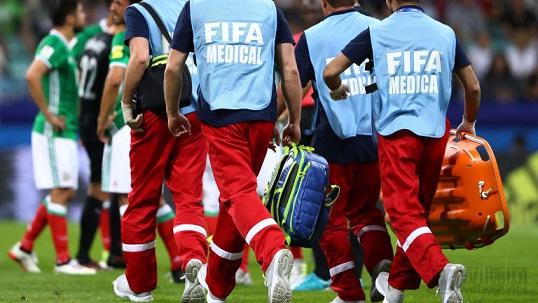
Image source: FIFA.com
“The medical facilities and services provided by Russia are impressive, reflecting the specialization and high quality of its healthcare institutions. From a medical perspective, Russia is fully prepared to host the tournament.” This was the praise offered by Professor Dvorak, Chief Medical Officer for the past six World Cups, prior to the start of the competition.
At this World Cup, Russia’s medical team can be described as luxurious.
According to Russian Health Minister Veronika Skvortsova, approximately 6,500 physicians participated in the 2018 FIFA World Cup, all of whom had received one-on-one expert training covering a wide range of topics.
These medical personnel were equipped with ample first-aid kits and then organized into mobile teams. Each mobile medical team comprised at least three specialists, including an emergency physician responsible for acute care, an orthopedic surgeon, a sports medicine physician, and a medical staff member. The first-aid kits included potent analgesics, anxiolytics, medications suitable for the timely management of stress-related seizures, and defibrillators.
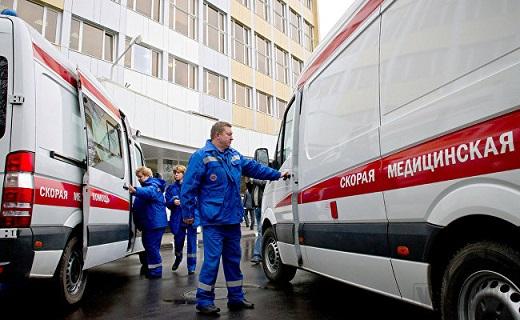
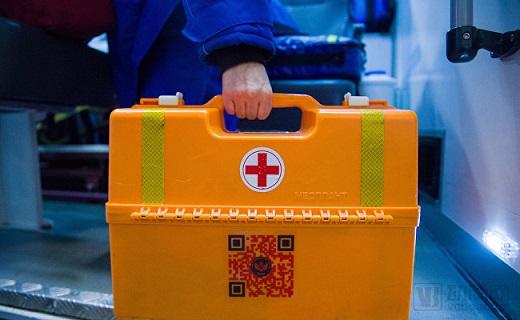
Image source: footballcitymediacenter.com
Taking Moscow as an example, according to reports from the Mayor of Moscow and the official website of the Moscow City Government, nearly 200 healthcare professionals—including doctors, care workers, and nurses—from the Moscow healthcare sector underwent training from February 1, 2018, until early March.
Medical personnel are required to master resuscitation techniques using modern automated external defibrillators (AEDs), thereby comprehensively enhancing their emergency response skills, stress resilience, and crisis management capabilities within the technological domain. It is reported that these training courses will be provided by the Moscow Academic Research Center for Medical Rehabilitation, the Center for Restorative Sports Medicine, the Academic Research Center for Emergency Medical Care, and other organizations.
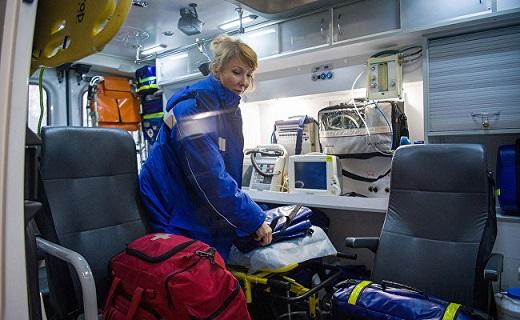
Image source: footballcitymediacenter.com
According to Alexei Khripun, head of the healthcare department, this training enables medical personnel to clearly understand how to act swiftly and consistently among the public. For many doctors and nurses, it was a completely new experience. He also revealed that ambulance staff follow a special protocol for the emergency evacuation of patients when necessary.
As the “armored warrior” of mobile workstations for medical personnel, ambulances also play a crucial role. In this regard, the Kaliningrad Oblast government has purchased nine Class C intensive care ambulances for the city.
Seeing these vehicles adorned with gold and red, Alexander Kravchenko, the region’s Minister of Health, couldn’t help but praise them: “These vehicles fully meet FIFA’s requirements.”
According to reports, these ambulances are capable of traveling long distances continuously and are equipped with the medical devices necessary to maintain patients’ vital functions. Each ambulance team can utilize modern “smart” defibrillators to determine whether a patient requires defibrillation.
Nikolai, a chief physician with the Moscow Ambulance Service, stated: “Moscow’s ambulance fleet is the only one required to provide team support services during the FIFA World Cup. Our coverage includes hospitals, training grounds, stadiums, and match venues. To ensure effective operations, we have specifically established an additional ambulance station for FIFA.”
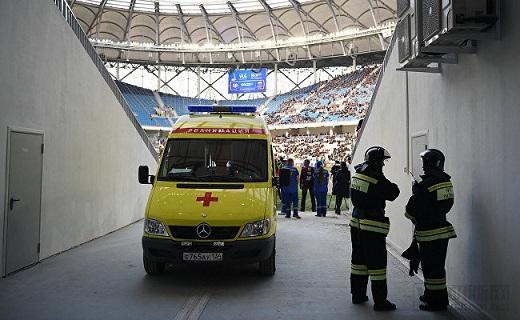
Image source: footballcitymediacenter.com
It is understood that the new ambulance station has a total of 53 ambulances, which will operate according to an approved schedule during the World Cup. Meanwhile, these newly added ambulances will also strengthen Moscow’s ambulance fleet.
Apart from ambulances, the importance of hospitals goes without saying.
of Samara OblastPirogov Hospital, which is thisOne of FIFA’s accredited medical institutions. During the World Cup, this hospital will provide medical services to participants and spectators.
To meet FIFA requirements, the hospital’s operating rooms and intensive care units underwent major renovations, and new modern equipment was purchased. In the admissions department, the operating rooms were also refurbished; additional general surgery and X-ray rooms were opened, and the ultrasound, MRI, and computed tomography (CT) suites were upgraded to a more modern standard. Meanwhile, the hospital acquired new artificial ventilation and anesthesia equipment, cardiac monitors, endoscopic devices, and medical furniture.
It is reported that Pirogov Hospital can simultaneously accommodate 14 emergency patients and up to 60 outpatients.
Furthermore, the hospital has, for the first time, divided its admission department into three zones: Red—for emergency cases; Yellow—for patients with hemorrhage, fractures, and stroke; and Green—for ambulatory patients. Ambulance physicians will provide appropriate treatment based on the severity of the patients’ injuries.
Like the Chinese, Russians face a long-standing challenge with their English proficiency. In Russian primary and secondary schools, foreign language study is typically optional, with German being the most commonly chosen subject. Indeed, German can be considered their primary foreign language. Even President Vladimir Putin, often portrayed in popular culture as tough enough to “ride a bear bare-chested,” studied German in school. Moreover, Russians have a strong sense of national pride and regard Russian as the superior language, often showing disdain for foreign languages. Consequently, English proficiency became a key focus in the preparations for the World Cup.
By the end of 2017, a total of 180 Moscow doctors had completed English language courses. These courses were stratified by spoken proficiency levels and focused on medical terminology. In Samara, another host city, medical personnel also underwent “specialized training” at regional clinics. Professional language instructors taught them how to speak and comprehend conversational English, while the medical staff actively engaged with the language experts, utilizing medical vocabulary and simulating scenarios likely to arise during the World Cup. At the conclusion of the courses, all participants took a standardized oral examination.
A pediatric emergency anesthesiologist at a clinic in the Samara Region told reporters, “All medical team members must know how to ask patients about the cause of their illness and what kind of assistance they need. In addition, they must be able to describe in English the interventions and treatment plans they are about to implement.”
In the Kaliningrad region, a large number of medical professionals have completed English language courses in preparation for the 2018 FIFA World Cup. Among them, 112 staff members involved in ambulance services were the first to receive professional certification. Upon completion of the training, each of these healthcare workers received a booklet containing a list of the most commonly used phrases and medical terminology.
As a military powerhouse, Russia cannot afford to lack aerial support capabilities. For this World Cup, Moscow mobilized personnel from three brigades to establish an air medical team. They are stationed at 31 helicopter landing pads across Moscow, on standby at all times.
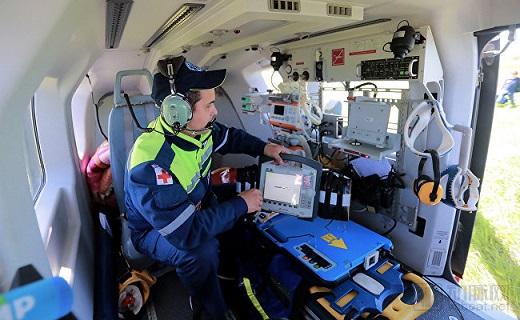
Image source: footballcitymediacenter.com
Doping Scandal and the McLaren Report
When it comes to the Russia World Cup, one cannot help but mention the doping scandal that previously brought widespread condemnation upon Russia.
On December 9, 2016, Richard McLaren, the lawyer commissioned by the World Anti-Doping Agency (WADA), released the final version of the “McLaren Report” in London, disclosing numerous details regarding the scandal of systematic doping in Russia. The final version of the “McLaren Report” stated that more than 1,000 Russian athletes were involved in systematic doping between 2011 and 2015, under the direction of Russian sports authorities.
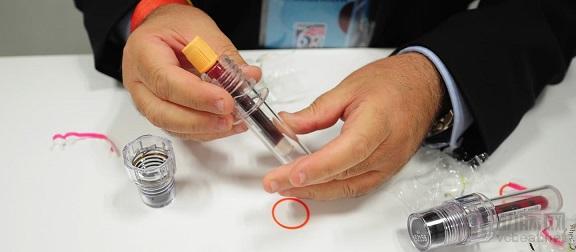
Image source: FIFA.com
The final version of the McLaren Report also revealed that during the 2014 Sochi Winter Olympics, agents from Russia’s Federal Security Service (FSB) personally participated in stealing athletes’ doping samples from the laboratory. These samples were replaced with clean ones to help the tested athletes evade penalties. Even more astonishingly, Russian officials not only assigned specific personnel to distribute specially formulated cocktails containing anabolic steroids to athletes, but also allegedly fabricated fake urine samples using salt and coffee for those who tested positive, in an attempt to deceive authorities.
IOC President Bach stated that the release of the final version of the McLaren Report would pose a new and immediate challenge to the International Olympic Committee, not only further triggering an earthquake in Russian sports but also exerting a profound impact on the global sports landscape.
Following the release of the McLaren Report, FIFA, as the governing body of the World Cup, also launched investigations into potential anti-doping rule violations by football players. They prioritized the screening of high-profile players, particularly those likely to participate in the 2018 FIFA World Cup Russia™.
On May 22, 2018, FIFA released an update on its investigation following the McLaren Report. The investigative report confirmed that the inquiries into all Russian players involved in the FIFA World Cup had been completed, and the results indicated insufficient evidence to prove violations of anti-doping rules. FIFA notified the World Anti-Doping Agency (WADA) of its conclusions; WADA concurred with FIFA’s findings and announced the closure of the case.
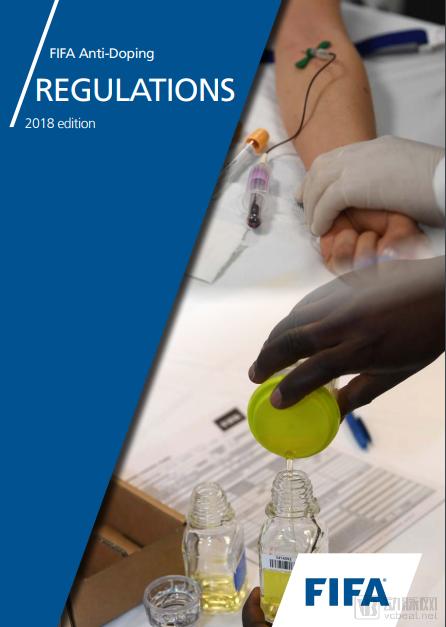
Image source: FIFA.com
It is understood that FIFA's investigation includes the following:
1. Evaluate all information and evidence in the McLaren Report with the support of scientific and legal experts;
2. Contact Professor McLaren to obtain further details and discuss the approach FIFA should adopt;
3. FIFA reanalyzed the collected samples, as well as samples stored from all participants certified by the World Anti-Doping Agency, for prohibited substances, and all results were negative;
4. The World Anti-Doping Agency reanalyzed the samples seized from the Moscow Laboratory and stored at the Lausanne Laboratory for prohibited substances, with all results returning negative.
5. Forensic analysis was conducted on these samples using methods recommended by the World Anti-Doping Agency (WADA) and adopted by FIFA; none of the analyzed samples exhibited typical signs of tampering, and no suspicious values were detected in the urine.
6. Send the results to Dr. Grigory Rodchenkov and evaluate his judgment with the support of scientific and legal experts;
7. Data were evaluated with the support of scientific and legal experts;
8. During the investigation, FIFA conducted several unannounced doping tests, making the Russian team one of the most heavily tested squads prior to the FIFA World Cup.
Thus, before the start of the World Cup, Russia ultimately managed to avert disaster.
Russia's Healthcare System
In the wake of the large-scale doping scandal, let us turn our attention to Russia’s healthcare system.
The Russian Federation inherited its healthcare system from the Soviet Union. Article 41 of the 1993 Constitution of the Russian Federation stipulates that everyone has the right to health protection and medical care. The government shall provide medical care to residents free of charge, funded through corresponding government budgets, insurance contributions, and other sources. Structurally, this operates through a state-planned medical insurance scheme known as the Compulsory Medical Insurance (OMI) system.
Health insurance funding is derived from medical taxes levied on all registered employers, amounting to more than 3% of each employee’s monthly income. The state provides the majority of the overall healthcare budget. Although the system appears structurally appealing, total healthcare expenditure accounts for less than 4% of the gross domestic product (GDP). This figure is notably low in comparison, as the average among industrialized nations ranges between 8% and 11%.
As a result, its public healthcare system has faced significant criticism. Due to a weak organizational structure, insufficient government funding, outdated medical equipment, and low staff salaries, many Russian citizens have been unable to access reliable medical services within Russia. Take Saint Petersburg as an example: its 5 million residents are served by 170 community clinics, meaning each clinic is responsible for nearly 30,000 people on average.
Private health insurance market, known in Russia as Voluntary Health Insurance (VHI), offers an alternative to the state-mandated compulsory health insurance system. Private health insurance is most prevalent in major Russian cities, such as Moscow and St. Petersburg. However, due to the low income levels of residents in most parts of Russia, private health insurance has failed to generate significant demand or impact.
Bloomberg once ranked 55 developed countries worldwide based on the efficiency of their healthcare systems, with Russia embarrassingly landing in last place. Russian citizens share a similar view; according to a 2016 survey by the Moscow-based polling agency Levada Center, only 2% of respondents expressed pride in Russia’s healthcare system.
In 2011, Russian Prime Minister Vladimir Putin announced a large-scale healthcare reform and pledged to allocate more than 300 billion rubles (approximately $10 billion) over the coming years to improve medical services. He also stated that the mandatory health insurance contribution rate for health insurance companies would increase from 3.1% in 2011 to 5.1%.
In May 2012, Putin signed the May Decrees, which included a plan to double the wages of healthcare workers by 2018 and gradually privatize state medical services. As a result, in November 2014, wage increases in Moscow led to the closure of 15 hospitals and the layoff of 7,000 employees.
A 2016 report by the Russian Institute for Modern Development stated that physician training in Russia is significantly lagging, with many practicing doctors educated during the Soviet era falling far behind their Western counterparts in terms of professional competence. In 2015, only 5% of Russian citizens had health insurance, most of whom resided in major cities. Furthermore, Russia’s average life expectancy was approximately 71 years, substantially lower than the Organisation for Economic Co-operation and Development (OECD) average of 80 years.
Public hospitals in Russia employ some excellent private physicians, but they are constrained by the system, suffering from both low salaries and long working hours.
Although seeking care through private health insurance can be faster, public hospitals often have substandard facilities and long waiting times. Therefore, residents in Russia typically schedule appointments by calling clinics directly. Since a resident’s general practitioner maintains their medical records, they usually receive better quality care than what is available at state-run clinics.
Medical Exchanges Between China and Russia
Over the past decade, China’s medical industry has developed rapidly. While meeting and serving domestic market demand, China’s medical product exports have maintained strong momentum. Bilateral trade between China and Russia has shifted from a trade deficit prior to 2006 to a pattern dominated by Chinese product exports, with export growth rates consistently reaching double digits.
Although bilateral trade has declined to some extent due to the 2009 financial crisis and Western sanctions imposed in the past two years, Russia has remained China’s 15th largest export market, ranking first among the Commonwealth of Independent States (CIS) countries.
To further enhance the quality of pharmaceuticals in Russia and ensure medication safety for its population, Russia initiated GMP upgrades and overseas inspections in 2016. Formal GMP assessments were implemented in January 2016, requiring both domestic manufacturers and foreign producers entering the Russian market to pass Russian GMP inspections. A total of 13 Chinese companies submitted documentation for review, prompting Russian experts to conduct on-site audits in China. As of August 2017, two companies had obtained certification, one had failed, and the remaining applications were still under review.
The implementation of numerous policies in Russia and the establishment of pharmaceutical industrial parks have enhanced the innovation drive and international competitiveness of Russia’s pharmaceutical industry, while also promoting more standardized development of the Russian healthcare market. However, considerable efforts are still required to achieve the Russian government’s expected targets, such as having 90% of the medicines on the National List of Essential Medicines produced domestically by 2020, reaching a per capita pharmaceutical consumption of USD 250–300, and achieving a 50% domestic production share in the national pharmaceutical market.
In response, Russia has expressed a strong desire to strengthen industrial and technological cooperation with China’s pharmaceutical sector, offering maximal support for Chinese enterprises investing in manufacturing facilities and engaging in scientific research collaborations within Russia. Given the significant increase in medical device innovation in China in recent years, the two countries’ markets are highly complementary. Consequently, Chinese companies possess both the willingness and the capability to participate in the development of Russia’s healthcare industry.
Amid the influence of China’s new economic policy under the Belt and Road Initiative, healthcare industry cooperation is poised to become a focal point of bilateral innovative collaboration.
References
China Business News Network — China-Russia Medical Cooperation Opens New Directions
Tencent Sports — McLaren Report’s Final Version Lacks Novelty; IOC Hesitant to Impose Harsh Penalties on Russia
Sohu Sports — McLaren Report: Russian Government Orchestrated Doping Program with Over 1,000 Athletes Involved
Russian healthcare: The Russian healthcare system explained
Wikipedia:Healthcare in Russia
FIFA.com