

China's EDC Market Enters Fierce Competition Amid Booming Innovation Drug Sector
The EDC market is an overlooked segment within the healthcare informatics industry.
In the 21st century, with the rising costs of pharmaceutical R&D, cost control and efficiency improvement have become focal points for biopharmaceutical and CRO companies as well as research institutions in the United States, Japan, and Europe. By 2013, approximately 75% of new drug trials worldwide had abandoned traditional paper-based Case Report Forms (CRFs) and adopted electronic Case Report Forms (eCRFs), utilizing Electronic Data Capture (EDC) systems to collect eCRF data from study participants.
The collection of Case Report Forms (CRFs) is a critical component of conducting clinical research. Compared with traditional paper-based processes, the use of Electronic Data Capture (EDC) systems offers many obvious advantages. The core benefits lie in timeliness, remote accessibility, and standardization.
These changes are primarily reflected in two aspects:
First, the extensive use of centralized monitoring is increasingly replacing on-site monitoring;
Second, risk-based quality control enables monitoring to be more focused, purposeful, and efficient. The advent of Electronic Data Capture (EDC) systems has allowed data management to participate synchronously in clinical research. EDC design must integrate international standards such as CDISC, MedDRA, and WHODrug to further standardize data management.
Multi-stage data analysis based on clinical research informatization enables faster decision-making, allowing researchers to adjust allocation ratios among different groups, re-estimate sample sizes, modify experimental arms, or terminate trials. Furthermore, for volunteers, clinical research informatization facilitates more timely feedback on adverse event data, thereby better safeguarding their health and safety.
EDC Is Entering a Golden Age of Development
Clinical trials are accelerating the adoption of electronic data capture (EDC) systems. Since 2015, China has introduced a series of policies to promote the widespread use of EDC. However, according to a survey conducted by Probe Capital, a research institution, the current EDC adoption rate in China remains below 50%.
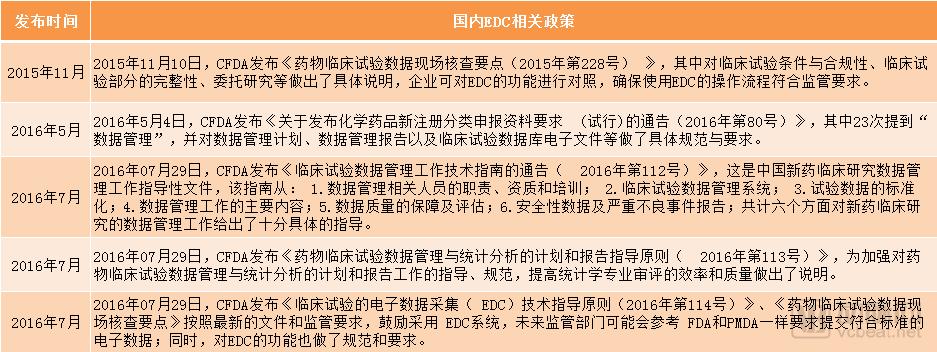
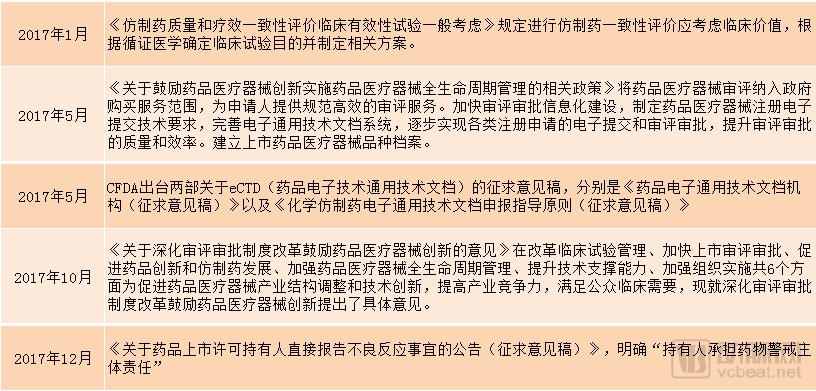
Currently, generic drugs account for approximately 95% of domestically produced pharmaceuticals in China. While there is overcapacity in drug manufacturing, significant innovation remains scarce. First, domestic pharmaceutical companies have relatively weak R&D capabilities, with R&D expenditure accounting for only 3%–5% of their revenue, compared to 15%–20% for foreign innovator drug companies. Second, the domestic drug review process is slow, with serious backlogs in registration applications. To address these issues, the government has introduced a series of policies since 2015 that have effectively driven reforms in drug R&D and approval, including self-inspection of clinical trials, consistency evaluation of generic drugs, and priority review of drug applications.
With changes in China’s policies on innovative drugs, it is projected that more than 15 domestically developed new drugs will receive continuous and intensive approvals between 2018 and 2020, at a rate of over five per year.
Clinical trial applications (INDs) for independently developed innovative drugs have also entered a period of rapid growth. The first wave of IND submissions occurred between 2003 and 2006, followed by the second wave in 2013. Since then, the number of INDs for domestically developed new drugs has increased year by year. In 2017, the National Medical Products Administration (NMPA) accepted a total of 131 INDs (excluding vaccines). It is projected that from 2013 to 2020, more than 500 innovative drugs will be in clinical development, with many entering late-stage clinical trials and filing for market approval after 2020, thereby ensuring a sustained long-term output of innovative therapies.
The rise of the innovative drug industry has brought trend-driven benefits to supporting sectors such as CROs and CMOs. Meanwhile, it has also spurred the development and widespread adoption of EDC systems.
Standards, Processes, and Staffing
From a standards perspective, a competitive EDC product needs to comply with multiple domestic and international standards. Taking Taiyi Medical’s EDC product eCollect®V as an example, it meets the following standards:
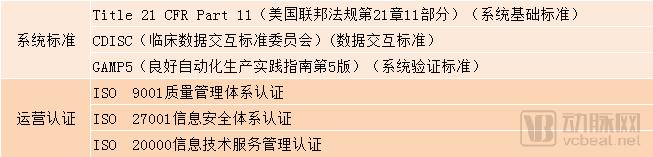
It can be said that compliance with relevant standards is a key factor for pharmaceutical companies when selecting EDC products.
Generally, the workflow of an EDC system includes the following steps:
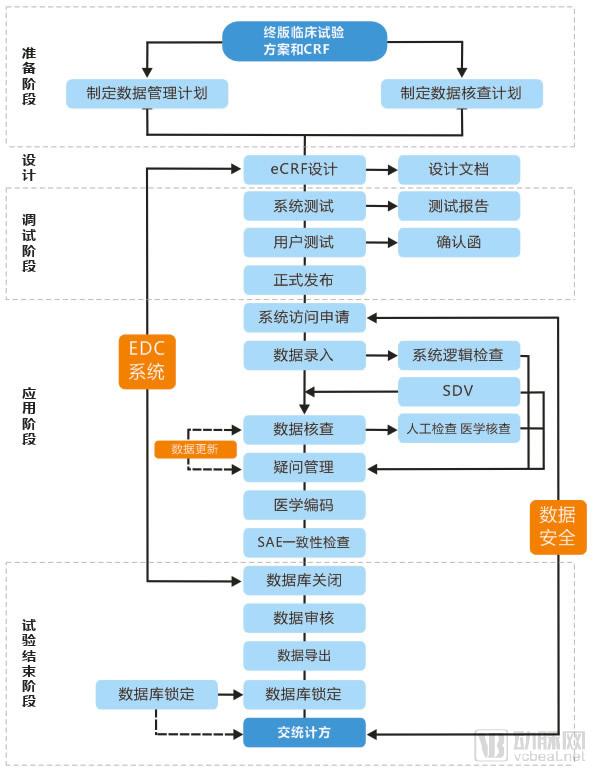
Image source: Pharmasource
In terms of staffing, the operators involved in the EDC system can generally be divided into the following major categories:
1. Data entry personnel, including investigators, physicians, and Clinical Research Coordinators (CRCs). Tasks include assisting with subject screening, enrollment, and follow-up; and assisting with the collection, archiving, and management of study documentation.
2. Regulatory personnel, including Clinical Research Associates (CRAs). Their responsibilities are to safeguard the rights and interests of subjects in clinical trials, ensure the accuracy, completeness, and integrity of data in trial records and reports, and guarantee that the trials are conducted in accordance with the approved protocol and applicable regulations.
3. Data Administrators and Data Cleaning Specialists. Their primary task is to review the data entry standards and logical consistency to ensure compliance with data processing requirements. Data cleaning is an indispensable step in the entire data analysis process, as its quality directly impacts model performance and final conclusions. This task is primarily carried out by data analysts.
4. Medical Personnel. In the event of serious adverse events and protocol deviations, medical personnel must professionally assess from a medical perspective whether the study should continue or require special handling.
5. Auditors. Typically government officials, generally responsible for data review and inspections.
6. Project Management Personnel. Primarily responsible for monitoring data entry, reviewing approval status, and ensuring data quality.
Differences in Needs Among Various Service Recipients
EDC IT service providers typically serve pharmaceutical companies both domestically and internationally. In terms of market volume within China, domestic pharmaceutical firms constitute the majority. However, given the stronger payment capacity of international pharmaceutical companies, the business contributions from domestic and international clients are roughly balanced.
CROs and EDC companies are not, strictly speaking, in a client relationship but rather serve as partners, since the ultimate payer is the study sponsor—namely, pharmaceutical companies. VCBeat has analyzed the differences in client needs across domestic and international markets, company sizes, and various clinical trial phases.
1. Differences in Demand Between Domestic and Foreign Pharmaceutical Companies
The primary difference in demand between domestic and foreign pharmaceutical companies lies in their mindset. Domestic pharmaceutical companies typically follow policy closely, so their demands are often determined by policies, resulting in relatively low initiative. In contrast, foreign pharmaceutical companies tend to proactively leverage information technology to achieve efficiency improvements and quality assurance.
Another point is experimental compliance. In the past, there was a weak awareness of clinical research data management in China. However, abroad, drug clinical trials must undergo rigorous processes such as data cleaning and statistical analysis to ensure the authenticity and accuracy of the experimental results.
At present, China has successively issued guidelines for data management and statistical analysis, leading to an overall improvement in the quality of drug development. Consequently, pharmaceutical companies have developed clear demands for Electronic Data Capture (EDC) systems as they strengthen research during the clinical registration phase. However, many domestic pharmaceutical companies remain relatively conservative when it comes to post-marketing studies.
2. Differences in Needs Between Small/Medium-Sized and Large Sponsors/CROs
Specific clinical trial projects organized by small and medium-sized CROs or sponsors are characterized by tight schedules, stringent requirements, and high efficiency demands, with cost being one of the primary considerations.
Meanwhile, the use of information systems also requires training on system operation. By integrating with the existing Clinical Trial Management System (CTMS), data collection and project management for the entire research process can be accomplished in an informatized manner.
In addition, some companies, such as BAIO Knowledge, also provide auxiliary services for EDC database construction and data management to address the shortage of manpower and experience in these modules among small and medium-sized CROs or sponsors during practical implementation.
For large CROs or sponsors, in addition to requirements for product comprehensiveness and stability, the EDC system must also meet the informatization needs of the entire business chain to facilitate integration across multiple systems.
Typically, EDC companies provide comprehensive solutions and services to such clients, assisting them in establishing a complete information technology infrastructure. These holistic solutions generally encompass clinical study project management, personnel training, pharmacovigilance, project documentation management, drug supply chain management, end-to-end regulatory submission management, as well as the collection, cleaning, and management of data generated during clinical processes.
Taking BioKnow as an example, the company provides consulting services for information platform construction to large CROs or sponsors, designing solutions tailored to each enterprise’s specific circumstances. After system configuration, it offers integrated system validation services along with validation reports. Furthermore, it provides key account support services to address various client inquiries and optimization needs arising during system usage.
3. Differences in Requirements Between Preclinical and Clinical Development Projects
In addition to differences in client scale, CROs or sponsors at the preclinical and clinical stages also have distinct requirements for Electronic Data Capture (EDC) systems, primarily encompassing the following three aspects:
1. Differences in Complexity and Level of Collaboration
Preclinical work is more akin to laboratory-based activities, involving a significantly smaller scope of tasks compared to the clinical phase. Therefore, preclinical research is more laboratory-oriented. EDC products need to design standardized databases tailored for various complex clinical studies.
Due to varying levels of collaboration across different clinical stages, there are significant differences in products. Preclinical work involves greater integration with hardware products and instruments. Consequently, preclinical products are relatively standardized and consist largely of electronic metadata.
In clinical practice, data are more frequently transcribed from electronic medical records; therefore, health IT companies need to establish standardized databases tailored to different trial conditions and scenarios.
2. Given the involvement of manual data entry, the EDC system used in clinical trials must possess robust automated validation capabilities to rapidly identify errors during the entry process, unlike its preclinical counterpart.
3. Global Research. During clinical trials, EDC systems often require cross-time-zone and cross-regional audit capabilities to ensure that data are ultimately standardized into uniform units of measurement and time zones, thereby supporting internationalization.
The Integration of EDC and Artificial Intelligence
With the rise of artificial intelligence and big data, Electronic Data Capture (EDC) systems have ushered in a new round of technological upgrades. In this regard, Taimei Medical Technology serves as an excellent case study.
Taimei Medical focuses on applications in clinical research and pharmacovigilance, and is a leading provider of technology solutions for the life sciences industry in China. In 2018, Taimei Medical secured RMB 300 million in Series D financing.
Taimei Medical’s clients include traditional pharmaceutical companies, innovative pharmaceutical enterprises, contract research organizations (CROs), and research institutions. To date, the company has entered into strategic agreements and conducted in-depth business collaborations with more than 200 leading pharmaceutical companies and CROs both domestically and internationally. These partners include global pharmaceutical giants such as GlaxoSmithKline and AstraZeneca, as well as top-tier Chinese pharmaceutical companies like Hengrui Medicine and Simcere Pharmaceutical.
Taimei Medical’s products have undergone five major version iterations. The first two generations were in a follow-up phase, appearing somewhat immature compared to internationally renowned products. Starting with the third generation, Taimei’s products began to show significant differentiation from other similar offerings.
Taking eCollect as an example, the fifth-generation Tai Mei eCollect® has begun to establish unique advantages when compared with products from international companies. This is primarily attributed to the integration of artificial intelligence technology.
Although previous products already featured some automated logical verification capabilities, many complex checks remained beyond the system’s capacity, necessitating data export for further manual review and verification. In the latest generation of products, by encapsulating more functions and employing more precise methods for data point acquisition, it is now possible to perform more complex cross-data validations across pages and visits.
Meanwhile, Taimei Medical has implemented AI-assisted decision-making to assess the association between concomitant medications and adverse events, thereby supporting data management, reducing manual verification time for data managers, and improving accuracy.
Furthermore, the latest generation of products also embeds a universal medical terminology dictionary. For standard terms, automatic coding can be achieved by comparing against the dictionary and automatically matching the main axis chain, thereby improving coding efficiency.
Payers and Potential Competitors
In addition to competition among peers, EDC companies have also faced competitors from other fields in the past two years, primarily clinical data companies.
From the perspective of enterprise categories: one type takes data as its entry point, such as LinkDoc Technology; another type focuses on underlying technologies, such as Senyi Intelligence; and others prioritize product applications, such as Taimei Medical.
From a business perspective, clinical data companies primarily build their operations around the collection of clinical and follow-up data from hospitals. In contrast, EDC (Electronic Data Capture) vendors focus more on drug development, centering their services on patient enrollment for specific drugs, determining enrollment duration, and collecting system data to complete monitoring and verification tasks.
From a business model perspective, clinical big data companies collect real-world medical data and then mine it to generate value for physicians’ clinical diagnosis, treatment, and scientific research. In contrast, EDC (Electronic Data Capture) providers have served pharmaceutical companies earlier and developed more tightly integrated operations, resulting in a more mature business model. However, currently, mainstream domestic clinical data companies are all expanding their layouts into drug development for pharmaceutical enterprises.
In the short term, the objectives of these three types of companies are largely similar; the first two serve healthcare institutions, while the latter focuses on serving pharmaceutical companies. However, in the long run, there may be a certain degree of competitive relationship among these three types of companies.
Since it is currently difficult for clinical data services to position healthcare institutions as payers, pharmaceutical companies have become the optimal pathway for monetization. Meanwhile, this trend will also lead to the convergence of products and services among these three types of companies. Specifically, companies that initially focus on data or underlying technologies will gradually strengthen their product application capabilities, while those with strong product application capabilities will seek to compensate for their data shortcomings and simultaneously enhance their technological prowess.
Typically, EDC vendors price their services based on the number of enrolled participants and the duration of the drug study. The larger the participant pool and the longer the trial period (for instance, Phase III oncology trials usually last three to five years), the higher the product price. The average market price for an EDC system generally ranges from RMB 100,000 to RMB 150,000. In certain cases, the price of individual products can even reach RMB 500,000 to RMB 600,000.
As the market growth of innovative drugs accelerates, EDC companies are poised to enter a golden age of development in the coming years, driven by clear payers and commercialization pathways. At that time, the market may face genuine red-ocean competition.
References
Probe Capital——The Rise of Informatics in Clinical Research
Zeng Xiantao——Analysis of the Current Status and Future Trends in Global Clinical Research