

Pioneering AI-Driven Solutions in Lung Cancer: Highlights from the 2018 First China Forum on Lung Cancer and Artificial Intelligence
In China, there are 781,500 new cases of lung cancer annually, with 626,400 deaths each year. Lung cancer incidence and mortality in China account for 40% of the global totals. In 2017, the development of artificial intelligence was formally included in the Government Work Report, becoming part of the Healthy China 2030 strategic plan.
The “Healthy China 2030” Planning Outline explicitly states that the overall five-year cancer survival rate should increase by 15% by 2030. Improving early diagnosis and treatment of lung cancer to reduce mortality has become a national priority for scientific research. Key focuses in this effort include promoting low-dose spiral CT screening for lung cancer among high-risk populations, leveraging artificial intelligence and 3D reconstruction technologies for precise diagnosis of small pulmonary nodules detected during screening and health examinations, and avoiding overdiagnosis and overtreatment.
Currently, the development of key technologies and clinical application research of artificial intelligence in the medical field are still in their early stages. There is an urgent need to establish and improve industry access mechanisms and standards, rapidly form expert consensus on interdisciplinary collaboration between medicine and engineering, build high-level AI-driven big data resources, and strengthen communication and collaboration within the industry. Further promoting the integration of medicine with engineering, as well as fostering collaborative alliances among medical institutions, engineering teams, and enterprises, represents the primary challenges facing current research and applications of artificial intelligence in healthcare.
In view of this, the “1st China Lung Cancer and Artificial Intelligence Summit Forum” was jointly initiated and hosted by institutions including the Lung Cancer Diagnosis and Treatment Center of Capital Medical University, the Medical-Engineering Interdisciplinary Innovation Research Institute of Beihang University, the Chinese Thoracic Surgery Lung Cancer Alliance, and the Beijing Frontier International Artificial Intelligence Research Institute, with Xuanwu Hospital of Capital Medical University, Hangzhou Yingku Medical Technology Co., Ltd., Zhenjiankang (Beijing) Medical Technology Co., Ltd., and Gemaidi (Beijing) Medical Technology Co., Ltd. serving as the organizing entities.
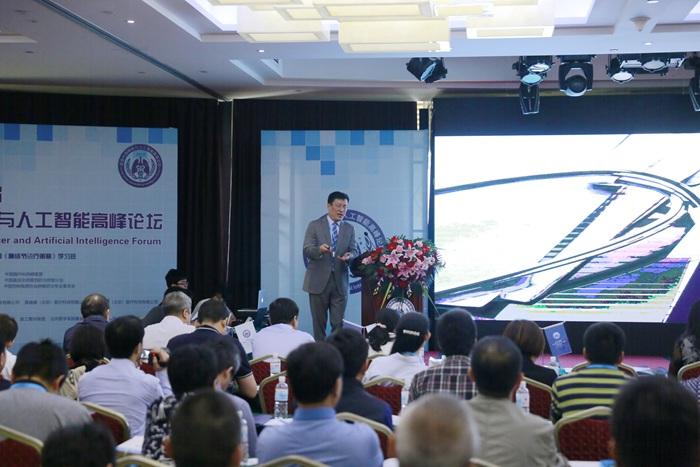
Academician Fang Jiancheng, Vice President of Beihang University; Professor Hu Wenliang, Party Secretary of Capital Medical University; Dr. Wu Yingfeng, Vice President of Xuanwu Hospital of Capital Medical University; and Professor Zhi Xiuyi, Chairman of the Chinese Thoracic Surgery Lung Cancer Alliance, delivered keynote speeches at the forum. The event was attended by over 300 participants, including experts in lung cancer prevention and control and artificial intelligence, as well as young and middle-aged specialists working on the front lines of clinical lung cancer diagnosis and treatment.
In his opening remarks, Professor Zhi Xiuyi stated that the forum aims to build a bridge for exchange and collaboration between medicine and engineering disciplines, thereby promoting and strengthening the research and application of artificial intelligence (AI) in the medical field. The inaugural high-level summit focused on lung cancer—the malignant tumor with the highest incidence and mortality rates in China. By integrating advanced AI technologies, it brought together multidisciplinary experts from various fields to jointly conduct multi-center clinical studies and practices in areas such as lung cancer screening and early diagnosis, precise diagnosis and treatment of small pulmonary nodules, and preoperative surgical navigation and localization. The initiative also seeks to establish a high-quality database on lung cancer and AI with distinct Chinese characteristics.
Professor Zhi Xiuyi pointed out in his report that artificial intelligence technology can rapidly and efficiently perform automated detection and identification of small pulmonary nodules, thereby improving the efficiency and accuracy of early lung cancer diagnosis and significantly reducing physicians’ workload. By assessing the benign or malignant nature of small pulmonary nodules, AI helps identify patients with suspected early-stage lung cancer, aiding in determining follow-up intervals and deciding whether medical intervention is necessary.
Professor Zhang Yongkui presented the research findings and clinical experience in the diagnosis and treatment of small pulmonary nodules accumulated by the Zhoushan Lung Cancer Center over the past decade. He pointed out that artificial intelligence, with its deep learning capabilities, can improve diagnostic accuracy and effectively mitigate the impact of varying expertise levels and fluctuating performance among radiologists on the diagnostic accuracy of pulmonary nodules. Furthermore, leveraging AI technology for early lung cancer screening and diagnosis can achieve comprehensive coverage in remote areas and primary healthcare institutions, thereby homogenizing the standards of lung cancer diagnosis and treatment between these regions and major cities. In this context, 3D reconstruction serves as one of the core "weapons."
At this forum, numerous experts in medical engineering shared their insights on hot topics such as rapid and precise early diagnosis of lung cancer and preoperative localization and navigation. They also discussed, from multiple perspectives, their experiences with 3D reconstruction technology in preoperative planning for pulmonary surgery, surgical scheme design, and surgical simulation, as well as its role in promoting the adoption of precision minimally invasive surgery. The experts unanimously agreed that 3D reconstruction of medical imaging is a crucial aspect of guiding clinical practice. Its greatest advantage lies in enhancing the accuracy and safety of minimally invasive surgeries. Additionally, it effectively helps primary care hospitals and young to middle-aged physicians become familiar with segmental pulmonary anatomy from a three-dimensional perspective, thereby shortening the learning curve for resident physicians. Furthermore, it makes preoperative discussions with patients and their families more intuitive and direct, facilitating greater cooperation from patients and their families. Efforts should be made to further promote and popularize the application of 3D reconstruction in the diagnosis and treatment of small pulmonary nodules, so that this technology can better serve clinical practice and benefit patients.
At this high-level forum, representatives from the China Academy of Information and Communications Technology (CAICT), Tencent, Hangzhou Incool3d Medical Technology Co., Ltd. (Incool3d), SDIC Innovation, Zhenjiankang (Beijing) Medical Technology Co., Ltd., Tigermed Medi (Beijing) Medical Technology Co., Ltd., Taizhihui Industry Accelerator, and Zhongguancun Medical Device Park discussed the current state and development trends of the artificial intelligence (AI) industry. They shared insights on AI applications in lung cancer care and industrial development trends, engaging in vigorous discussions on how to integrate industry, academia, research, and clinical resources across medicine and AI to support interdisciplinary research and clinical practice in early diagnosis and precision treatment of lung cancer.