

Safeguard Genomics Completes Tens of Millions RMB Series A Funding to Expand Market Reach and Accelerate Product Development
Image from the official website of SafeGene
On May 31, 2018, Saifu Gene announced the completion of its Series A financing round, raising tens of millions of RMB. The round was led by China International Capital Corporation (CICC) Venture Capital, with participation from Kaiying Capital and Chuangjian Capital.
Yu Weishi, Founder and CEO of Saifu Gene, told VCBeat that the funds raised in this round will be allocated to two key areas: market expansion and the research, development, and iteration of product lines.
“Our primary focus in the early stages was on product R&D and the development of underlying automation systems, while our sales capabilities were relatively limited,” Yu Weishi told VCBeat. “Additionally, we aim to establish a core database for the Chinese population, and our products require continuous updates.”
It has been more than a year since the last interview. Compared to before, Yu Weishi appears more adept at transitioning between his dual roles as a scientific researcher and an entrepreneur.
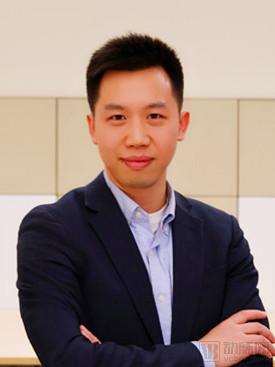
Yu Weishi, Founder and CEO of Saifu Gene
SafeGene was established in October 2015, and it has been two and a half years since then. Compared to the returning startup team that had just entered the Microsoft Accelerator at the beginning, what changes have occurred in this company?
After a year of business exploration, Saifu Gene officially defined its strategic direction in November 2016, expanding from its initial focus on epilepsy testing to offering genetic testing services primarily aimed at assisting the clinical diagnosis of neurological genetic disorders, with an emphasis on epilepsy.
“We initially entered clinical practice with epilepsy as our primary focus, given that there are nearly ten million epilepsy patients in China. The physicians we engage with do not solely study epilepsy; they also manage a wide range of other neurological disorders,” Yu Weishi revealed to VCBeat. “Since these patient populations are also substantial, we are considering whether we can expand from this foundation to address these broader issues.”
After focusing on the field of clinical neurogenetic disorders, Saifu Gene concentrated its efforts on R&D and marketing resources, achieving clinical sales within the first month of product launch. To date, the company has established stable clinical and research collaborations with 32 Grade A tertiary hospitals across 17 provinces and municipalities in China.
“Essentially, pediatricians and neurologists are our potential clients, and we have also received high recognition from diagnostic and treatment experts in the industry,” said Yu Weishi.
Through communication with clinicians, they have gradually identified an increasing number of clinical needs. They have transformed labor-intensive interpretation tasks into fully automated processes. Saifu Gene has developed an automated analysis and interpretation system primarily focused on whole-exome sequencing data, which can increase bioinformatics analysis efficiency by 20–50 times and improve data interpretation efficiency by more than 80%.
“When SafeGene was founded, data analysis in China was still in its infancy. We aimed to develop this capability first, providing the industry with a useful tool,” said Yu Weishi. To ensure the quality of genetic data analysis, interpretation, and reporting, two key factors must be considered: one is having professional interpreters, and the other is sample size and database.”
Through collaboration with physicians, the company has accumulated a substantial data repository, and the database was updated following the overhaul of the entire system’s business operations.
“We previously relied on raw data primarily from European and American populations; now we have also integrated the Chinese data we collected,” he revealed to VCBeat.
The company’s neurogenetic disease database integrates information from all major global genetic disease databases and is continuously incorporating sample data collected through its clinical operations and research collaborations, with the aim of building the most comprehensive database of Chinese individuals in the field of neurogenetic diseases.
For over a year, Saifu Genomics has rarely made public statements, yet its “Saifu Genomics Lecture Hall” has frequently dominated journalists’ WeChat Moments feeds.
This is an online genomics education platform developed by the company. SafeGene invites senior clinical experts and molecular biologists from China, Europe, and the United States to share their insights on applying genomic technologies in clinical practice and scientific research. Meanwhile, the platform serves as a communication bridge between SafeGene and clinicians. Through this platform, clinicians can gain more knowledge about the clinical translation of genomics, while SafeGene can better understand the needs of clinicians in the process.
To date, “SaiFu Gene Lecture Hall” has delivered 24 WeChat-based courses to clinicians in China, accumulating over 10,000 participant views and receiving widespread acclaim within the industry.
Although Saifu Gene’s current product lineup appears somewhat limited compared to that of many large-scale corporations, it is evident that the company has successfully covered its target customer base. After more than two years of market refinement, this group of overseas-educated PhDs, driven by their aspirations, has become increasingly adept and confident in navigating the industry.
Yu Weishi also stated that the most significant change for him and his team, compared to when they first returned to China, is that they have become more mature. “When we first came back, everyone relied largely on sheer enthusiasm. We tended to view many things through an overly idealistic lens, but the market is, in fact, ruthless,” he remarked.
They not only have to withstand scrutiny from clients and investors, but the team members themselves also need time to gel. “Our founding team mostly comes from a scientific research background. People with technical expertise can sometimes become overly fixated, thinking, ‘My product is good; why aren’t others using it?’” Yu Weishi told VCBeat. “In reality, many innovations need to be aligned with market needs, and this process should be guided by clinical demands.”
Data Analysis and Interpretation in Clinical Decision-Making: The Strategist to the Army
“Whole-exome sequencing significantly enhances the efficiency of clinicians’ decision-making,” he revealed to VCBeat. By combining clinical experience with an understanding of genomics, physicians can provide more appropriate clinical guidance when making decisions for patients.
As new technologies enter clinical practice, they inevitably undergo a period of adaptation spanning from top-level regulatory oversight to application-level implementation. For gene technologies entering the clinical arena, in addition to regulatory formulation and market education, the development of the products themselves requires continuous exploration and communication.
“On the one hand, the industry needs a standardized document to regulate the testing process,” Yu Weishi told VCBeat. “On the other hand, product development should align with clinical needs, ensuring that physicians perceive the product as reliable.”
Yu Weishi also told VCBeat that to better leverage genetic technology in supporting clinical decision-making, developers should proactively consider which specific diseases and testing methods offer greater value and benefit to patients during the product development process. “This requires us to deeply explore clinical needs and then consider, from a corporate perspective, how to translate these needs into products.” He believes that “many products seem perfect in concept, but when turning ideas into actual products, technology must be aligned with clinical requirements.”
“This is something we must do,” he emphasized.
For patients, what may matter more is whether they can receive a clear diagnosis and, more importantly, how to proceed with treatment. “What concerns them is also what we need to take into account,” added Yu Weishi. He stated that, in addition to close integration with clinical practice, companies should also collaborate with pharmaceutical manufacturers to explore ways to ensure continuous patient benefit.
“In addition, as we operate in the mid-to-downstream segments of the industry, our next focus will be on how to truly benefit patients—specifically, whether genetic data can guide subsequent treatment plans. This is what we aim to accelerate in this industry in the future,” he stated.
In terms of marketing promotion, Saifu Gene has expanded from hospitals in Beijing and its surrounding areas to a nationwide scale. Moving forward, the company plans to further increase its market coverage through diverse strategies.
“Another critical component remains product R&D. Product iteration is a long-term and continuous process. We need to consider how to make the system more intelligent, faster, and more optimized,” he stated frankly. “This is our primary task moving forward.”
It is reported that the company's next-generation product may be launched in June.