

Yisheng Intelligence Files IPO Prospectus: Pioneering AI-Powered Inpatient Record Quality Control System
Medical records are documentation by healthcare professionals of the evolution of a patient’s condition, the course and outcomes of diagnosis and treatment, and other related medical interventions. They serve as a critical basis for health insurance reimbursement, a key metric in hospital performance evaluations, and compelling evidence in medical disputes. Medical records must be objective, complete, and accurate. They not only reflect the quality of diagnostic and therapeutic services provided by a hospital and its medical staff but also demonstrate their sense of responsibility toward patients.
Evaluating the quality of a medical record requires a dual perspective: formally, it must ensure completeness, timeliness, and standardized formatting; substantively, it demands accurate and detailed content that supports critical analysis and academic discourse.
Thus, it is evident that quality control of medical records is an imperative need; defects in medical records can cause significant losses to a hospital’s economic benefits and reputation, yet the process of generating high-quality medical records remains fraught with challenges.
Ensuring a high rate of excellence in the substantive quality of medical records requires not only that physicians approach documentation with diligence and provide comprehensive descriptions, but also that dedicated personnel assist them in identifying and addressing omissions. Consequently, hospitals must invest significantly in high-caliber talent. Taking Peking Union Medical College Hospital (PUMCH) as an example, the hospital has engaged more than 30 senior clinical experts to form a specialized team for quality control of medical record content. Meanwhile, over 300 department directors, professors, and attending physicians conduct monthly self-inspections of their departments’ medical records. In addition, the hospital regularly organizes activities such as evaluations of exemplary medical records, examinations on medical record documentation, and training sessions. To date, the rate of excellence in the substantive quality of medical records at PUMCH has increased from 66.38% during the initial phase of quality control to 83.60%.
In comparison, the quality control teams at most hospitals average only three to five members, falling far short of the level of investment seen at Peking Union Medical College Hospital. This situation is attributable to a variety of factors.
On the one hand, medical record quality control places exceptionally high demands on the competencies of quality control personnel. Qualified staff are required to have a clinical background; for instance, the job posting for quality control positions at West China Hospital stipulates that applicants must hold “a master’s degree or higher” and possess “a background in clinical medicine or related fields.” Such recruitment criteria are by no means low—in fact, they are significantly more stringent than those for many clinical departments in central urban hospitals. Yet, would clinical graduates who meet these qualifications choose to work in quality control? Against the backdrop of severe shortages in China’s healthcare resources, where outstanding clinical medical students are still insufficient to meet clinical needs, it is difficult for both hospital administration and physicians themselves to accept the notion of leaving clinical practice to engage exclusively in quality control work.
On the other hand, a single medical record can range from dozens to hundreds of pages. Manual quality control is highly time-consuming, and even experienced physicians struggle to identify errors within such voluminous data in a short period. Many discrepancies can only be detected by cross-referencing various sections of the medical record, which places exceptionally high demands on the comprehensive competencies of quality control personnel.
Therefore, it is not that hospitals are unwilling to increase staffing for medical record quality control or improve the quality of medical records; rather, numerous objective constraints hinder the effective implementation of quality control.
Currently, the state has established a set of relatively standardized quality assessment criteria for medical record quality. For tasks that can be standardized, AI can effectively replace manual labor, extending operational capabilities while alleviating market pressure for talent. In light of this, Beijing Yisheng Intelligent Technology Co., Ltd. has launched an AI-powered medical record quality control robot. This system utilizes algorithms to replace manual screening of medical records, identify defects, and enhance hospital medical record quality through the PDCA (Plan-Do-Check-Act) cycle.
Yisheng Intelligent Medical Record Quality Control AI Robot focuses on connotation-based quality control. By leveraging Natural Language Processing (NLP) and a suite of diagnostic and therapeutic algorithms, it thoroughly comprehends the detailed content and logical relationships within medical records. It not only identifies defects such as documentation errors and informational inconsistencies but also evaluates the comprehensiveness and rationality of physicians’ clinical decision-making, providing timely feedback on quality control status to both physicians and quality assurance personnel.
Currently, there are few medical record quality control products on the market. Most of them focus on formal quality control and are mostly launched by medical informatization companies, which are generally integrated with their own electronic medical record systems. Yisheng Intelligence's medical record quality control application fills the gap in domestic medical record connotation quality control.
Zhou Yutong, founder of Yisheng Intelligence, told VCBeat: “Medical record quality control is one of the core components of hospital management. However, the current reality is that the number and competency level of quality control personnel fall short of expectations, and it is difficult to recruit suitable candidates, which is quite frustrating. Deficiencies in medical record quality trigger a series of chain reactions: first, they reflect laxity in the medical care process; second, they pose challenges to hospital accreditation and physicians’ promotion evaluations; and third, they expose hospitals to significant financial losses arising from medical disputes and health insurance reimbursement issues. In fact, defects in medical records are not always due to physicians’ negligence; more often, they stem from technical reasons, with physicians unaware that their documentation contains errors. Therefore, we aim to assist hospitals and physicians in identifying various critical defects in medical records, reminding them to make corrections and improvements, thereby enhancing the quality of future medical record documentation.”
Image provided by Yisheng Intelligence
Yisheng Intelligence’s medical record quality control application is built on two core underlying technologies. The first is natural language processing (NLP), which interprets the semantic content of medical records in accordance with quality control requirements, currently covering the vast majority of clinical departments and disease types. The second is diagnostic and treatment algorithms, used to assess the compliance, rationality, and accuracy of medical decisions, as well as to evaluate disease diagnoses and necessary differential diagnoses. To date, Yisheng Intelligence has launched solutions for dozens of diseases, with retrospective tests showing misdiagnosis and missed diagnosis rates consistently below 10%.
Yisheng Intelligence’s AI-powered medical record quality control application primarily focuses on substantive quality assurance. Calculations show that in a standalone deployment, it takes less than three hours to perform quality checks on 5,000 medical records. For a hospital group comprising three facilities with an average daily discharge volume of approximately 500 patients, the system can complete quality control for all daily medical records within a very short timeframe. This not only saves hospitals substantial human and material resources but also effectively prevents adverse downstream consequences arising from deficiencies in medical record quality.
“This application product will shift its focus from retrospective medical record review to real-time quality control during clinical encounters, enabling true proactive prevention and delivering greater value to hospitals.” Yisheng Intelligence has already completed the deployment and operation of its products in multiple hospitals.
Founder Zhou Yutong graduated from University College London with a major in Artificial Intelligence, possessing a thoroughly formal academic background in AI. His team is composed of professionals with both technical and medical expertise. Unlike other AI companies, Yisheng Intelligence focuses on medical record quality control as its entry point, leveraging AI methods to assist hospital management. By improving the quality of medical records from the perspective of quality control, it ultimately enhances the overall quality of medical services.
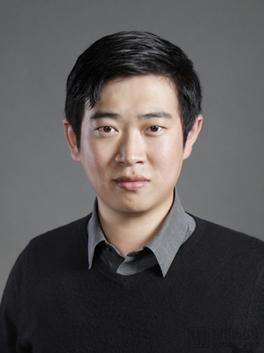
Zhou Yutong, Founder of YiSheng Intelligence
Currently, Yisheng Intelligence has completed an angel round of financing nearing RMB 10 million, marking its first step toward the market.
In terms of operations, Yisheng Intelligence has partnered with multiple Grade A tertiary hospitals to implement its solutions, and plans to extend medical record quality control services to more hospitals, leveraging technology to contribute to the well-being of hospitals, physicians, and patients.