

Elderly Wearables No Longer 'Gimmicky': Functional Protection Combined with Contextual Data Collection Emerges as New Trend
Since the launch of wearable products, the market has been rife with skepticism, and product homogenization has become severe. Among wearable devices targeted at the elderly—a group often perceived as conservative, stubborn, and technologically backward, and thus neglected by tech products—lies a blue ocean for medical and health wearables. Abroad, wearable products for seniors have also embarked on a path of product transformation and upgrading. They are shifting from simple data collection and alerts to integration with artificial intelligence and deep learning, collaborating with medical institutions for early disease diagnosis. Moreover, they are evolving from mere warning functions to tangible protective capabilities, featuring outstanding product performance and lightweight design, thereby delivering a superior user experience for the elderly.
When it comes to wearable products, the top three companies by shipment volume are Xiaomi, Apple, and Fitbit. The products that come to mind are likely fitness trackers and smartwatches. Market research indicates that half of the users of these youth-oriented products consider them to have little practical utility; Xiaomi’s ability to compete with Apple relies primarily on its low-price advantage. In contrast, the elderly population is often viewed as technologically isolated. With core technologies for wearables advancing rapidly, products are increasingly diversifying and targeting niche market segments.
In terms of market size, the elderly population is projected to account for 28% of the global population by 2050. According to United Nations estimates, the population aged 65 and above in developed countries will grow at an annual rate of 2% over the next decade. Similarly, China’s working-age population is expected to shrink by 2%, while its retired population will surge by 50% during the same period.
Contrary to the stereotype that older adults reject technology and dislike new things, data from AARP shows that they are interested in using tech products for health management. Moreover, more than 75% of respondents believe that leveraging tech products to improve health is effective. However, currently 50% of wearable devices are targeted at users aged 18–34. A survey by Accenture indicates that the primary reason most older adults go online is to find health information that meets their needs. They also wish to learn about relevant medical technologies, but fewer than one-third of healthcare providers offer such services.
In the realm of self-managed health care for the elderly, the market is far from saturated. The plethora of data-logging products currently available fails to meet user needs. VCBeat (WeChat: vcbeat) has observed that over the past year, numerous wearable device companies abroad have intensified their efforts, launching multiple products with excellent functionality, robust interactive capabilities, and powerful cloud computing capacities. These innovations have broken through the bottlenecks hindering the development of wearable devices, achieving significant product upgrades.
A survey by Penguin Intelligence reveals that 51.1% of respondents believe smart bands offer little practical utility and have minimal impact on their daily lives. Beyond product homogenization, the limited functionality of wearable devices represents another current bottleneck in their development. Wearable technology has evolved from merely tracking past activities to providing real-time monitoring, and now to genuinely improving users’ health status. The functional value of wearable products is becoming increasingly well-defined. The more prominent and clear the functionalities, the greater the user stickiness; conversely, similar features imply high substitutability. Recently, several wearable devices designed for the elderly have demonstrated noteworthy performance.
Active Protective
Established in: 2006
Corporate Location: Manhattan
Funding Status: $5.6 million in seed funding
Key Features: Smart belt with built-in airbags; deploys protective device upon detecting falls in the elderly
Active Protective is a smart belt equipped with an airbag system designed to mitigate injury from falls in the elderly. The Active Protective product comprises an airbag, a cold-gas inflator, and sensors that detect when the wearer is falling and trigger the system. Upon detecting an imminent fall, Active Protective deploys an airbag at the hip to reduce injury. It can alert caregivers and family members via Wi-Fi when a fall occurs, enabling timely intervention. The smart belt has been proven to reduce impact force by 90%, providing unprecedented protection for the hips.
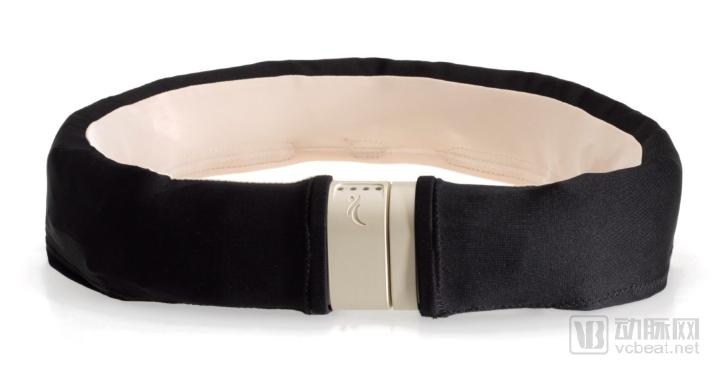
Active Protective’s strength lies in developing practical, real-world functionalities; rather than recording vast amounts of superficial and useless data, it truly endows wearable devices with value.
The smart belt is also equipped with a disambiguation mechanism. Utilizing 3D sensing technology, it can identify hip movements within the normal range of motion. It allows for a certain degree of deviation while providing protective intervention when the probability of a fall exceeds 15%. According to the official website, this product will also be applied in high-risk sectors such as the military, extreme sports, and professional athletics.
Falls are often fatal for the elderly. According to a report from the World Health Organization, more than 300,000 people worldwide die from falls each year, with individuals aged 60 and above accounting for over half of these deaths.
It was direct exposure to this alarming reality that prompted Robert F. Buckman, founder of Active Protective, to develop this smart belt product. As a professor of trauma at Temple University and the director of Pennsylvania’s busiest trauma center, Dr. Buckman recognized shifting age demographics and persistent injury patterns among his patients during his tenure at Saint Mary Medical Center in Langhorne. From this observation, he identified a significant yet solvable healthcare crisis facing emergency centers worldwide: frail, independent older adults falling and suffering hip fractures, from which most never fully recover.
Steadiwear
Establishment Date: August 2015
Corporate Location: Toronto, Canada
Funding Status: $5.6 Million in Seed Funding
Main Function: Anti-tremor gloves allow the wearer to stop hand tremors.
Steadiwear Anti-Tremor Gloves. This product is based on a combination of nanotechnology and engineering, akin to seismic damping technology used in buildings. It features a battery-free design for tremor suppression. Currently, it demonstrates significant efficacy: artists with the condition can draw straight lines, and users can lift beverages steadily. Founder Mark Elias was motivated by witnessing his grandmother’s inability to control her hand tremors. As an engineer, he recognized that previous treatments for essential tremor involved either botulinum toxin injections with side effects or invasive surgeries. Consequently, he developed the Steadiwear anti-tremor gloves. Being battery-free, the gloves can be worn continuously.
Seismic
Established: April 2016
Company Location: California
Financing: $10.02 million in Series A funding
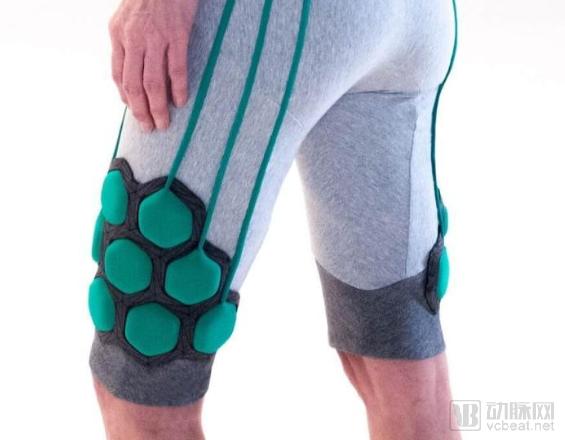
Main Function: A bodysuit that provides power support for walking muscles
Seismic is a line of compression garments designed to help older adults exercise for longer durations. Embedded with tiny motors within an exoskeleton framework, the garments provide powered support to muscles during movement. The first version was released in the fall of 2017, and the company secured $1.02 million in its initial round of financing. SuffFLeX has recruited experts from the fields of textiles, industrial design, robotics, biomechanics, and data science to develop next-generation powered clothing. Its mission is to enable individuals with physical disabilities—whether seniors or athletes—to leverage powered garments to assist their muscles and joints, thereby maximizing their physical potential. Originally, this technology was part of a military project funded by SRI International (formerly Stanford Research Institute) aimed at reducing soldier injuries and enhancing endurance. Recognizing its broader implications beyond military applications, SuffFLeX spun off from SRI to explore commercialization. The company initially targeted the aging population, citing the market’s substantial size and strong demand.
Spring Loaded Technology
Date of Establishment: September 2012
Corporate Location: New Zealand
Funding Status: Two Rounds of Financing Totaling $2.5 Million
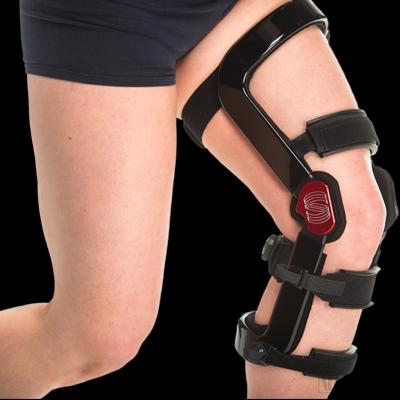
Key Features: Bionic Knee Brace, Alleviates Knee Joint Pain
Spring Loaded Technology’s brace, which provides support beneath the leg, is the world’s first bionic knee brace. It stores energy when you bend your leg and assists with extension as you straighten it, thereby enhancing the wearer’s mobility. Its carbon-fiber leg supports can lift up to 40 pounds and are designed to help individuals with sports injuries and age-related joint degeneration. Independent studies have shown that its suspended three-chamber unloading system reduces knee joint load by 64%. The device can be concealed under clothing, reducing psychological burden for users. The company raised $2.4 million to launch this product. Unlike other products on the market, its bionic hinge provides shock absorption during knee flexion and muscular assistance, increasing strength and reducing joint compression.
A key reason these products, which focus on specific body parts, can break through the bottlenecks facing wearable devices lies in the practical application and commercialization of scientific research. The founder of the airbag technology is a professor at Temple University from a trauma center. Similarly, the founder of the anti-tremor glove has joined the renowned Impact Centre at the University of Toronto. Cutting-edge technologies from the frontline, such as bionics and biology, enhance the core value of these products and propel wearables into a new phase of practical utility.
Of course, there is still significant room for improvement in traditional monitoring products. A major challenge facing wearable devices in conventional monitoring is data inaccuracy, which compromises the effectiveness of monitoring and early warning systems. As a result, such data cannot be used for medical purposes. Measurement precision varies considerably across different products. Some companies have pushed the boundaries of traditional wearable monitoring to the extreme, breaking free from the limitations of wearable devices and returning to the essence of information collection. Meanwhile, as lightweight wearable products, monitoring devices can also serve as an entry point to health management platforms.
A major pain point of wearable devices is the validity and reliability of the collected data, which needs to be integrated with in-hospital data. In the past, the massive amounts of sleep and activity data generated by wearable devices were difficult for physicians to utilize in clinical diagnosis and treatment, and much of it was ultimately useless. First, the reliability of such data is low, preventing it from being considered genuine medical data. Second, these data are often fragmented or one-sided, making them unsuitable for supporting clinical decision-making.
At last year’s Connected Health Conference, Richard Milani, Chief Clinical Transformation Officer at Ochsner Health System, stated, “For wearable device solutions to achieve user retention, they must be extremely simple and effortless. The essence of medical assistive devices lies in information, which does not necessarily need to be delivered through wearables.” Kardian ensures timeliness and accuracy in information precision, without being confined to wearable devices, but rather focusing on the essence of information.
Kardian
Established in: 2006
Company Location: Minnesota
Funding Status: $18.9 million raised across three rounds
Key Feature: Detects falls in the elderly using wireless pulse technology.
Kardian resembles a fire alarm, but its wireless system employs pulse radio ultra-wideband (UWB) radar technology, capable of scanning a room one million times per second. The system detects slips and falls, as well as movements such as sitting up, which can alert hospital staff that a patient is about to get out of bed. Developers have equipped the system with an emergency response feature that notifies family members or caregivers in the event of a fall. Currently, the product is available only for use in hospitals and elderly care or rehabilitation facilities; however, developers have indicated plans to introduce it for home use in the future. Kardian claims that its system achieves a 99% accuracy rate in detecting falls.
In addition to detecting falls, the product can also monitor heart rate, respiratory rate, and sleep apnea. Currently, Kardian’s monitoring system is only applicable in hospitals and care facilities, but the company has stated that the system is ultimately intended for home use.
CarePredict’s LifeWell Senior Living System
Establishment Date: May 2013
Corporate Location: Florida
Funding Status: $10.2 million raised across five rounds
Core Function: Collaborate with care facilities to install wearable devices, followed by AI-driven health management.
The LifeWell Senior Living System from CarePredict is a product that integrates wearable devices for the elderly with AI deep learning to deliver substantive functionalities. The LifeWell Senior Living System represents a collaboration between CarePredict and LifeWell Senior Living, a senior care facility, involving the deployment of CarePredict’s latest monitoring system at a newly built care center in New Mexico. This system can track user behaviors and alert caregivers to potential hazards.
Care Predict is a Florida-based company that markets an advanced health monitoring platform comprising networked wearable devices and data-driven pre-diagnostic capabilities. The Life Well Senior Living System is one of the three device deployments under its portfolio designed to monitor users’ vital sign data.
Founder Movva explained that traditional diagnosis requires physicians to observe patients’ symptoms in person. Care Predict’s system integrates monitored behavioral data with an artificial intelligence deep-learning platform to analyze the information. The system’s AI serves as the physician’s eyes, enabling health management and disease prediction. Currently, they are leveraging deep-learning technologies to detect conditions such as depression.
Traditional wearable wristbands, which have long suffered from severe product homogenization and focused merely on basic data presentation and real-time monitoring, are now evolving in new directions. Leveraging artificial intelligence, modern wearable devices can automatically filter data to help physicians identify clinically significant information. By integrating this with in-hospital data, they enable comprehensive health management for patients. This integration of in-hospital and out-of-hospital data creates a closed-loop service model, delivering enhanced care for both patients and providers.
K4Connect
Date of Establishment: October 2013
Corporate Location: North Carolina
Funding Status: $9.9 million raised across two rounds
Key Features: IoT Community for Elderly Health Management
K4Connect has partnered with Garmin to launch a wearable smartwatch designed specifically for the elderly. This device monitors heart rate and tracks sleep patterns. Data from Garmin devices seamlessly integrates with the K4 Community platform, enabling caregivers to access real-time analytical insights and trend data. While traditional wearables could only report past events, this new solution not only provides real-time monitoring but also predicts future health outcomes. Leveraging its IoT-based community, K4Connect consolidates and utilizes fragmented physiological data. Previously, data from a single domain represented merely a small piece of the puzzle for physicians, resulting in limited clinical utility.
K4 is a leading enterprise in the current landscape of gerontechnology products. Based in North Carolina, it provides an IoT platform for the elderly and people with disabilities. The company collaborates with healthcare institutions and also sells its products directly to individual consumers. It has secured $10 million in financing from investors including Intel Capital, Sierra Ventures, Stonehenge Growth Equity, Lowe’s Venture, Traverse Ventures Partners, and RGAx. K4’s founder boasts an impeccable track record; his previous company was acquired by Apple and served as the foundation for Apple’s Touch ID technology.
By examining the product strategies of leading companies in the elderly care market, it is evident that wearable devices are evolving beyond basic counting and monitoring functions toward greater depth. They are now collecting more comprehensive data with higher relevance to health management, such as heart rate and atrial fibrillation.
In data applications, it is no longer about the accumulation of massive datasets, nor are data points independent; rather, they constitute context-aware data within a system.
CarePredict and K4connect both collaborate extensively with hospitals and care facilities. Compared to partnerships with individuals, data monitoring products not only enable resource sharing in data exchange and analysis with medical institutions but also close the service loop, allowing for more efficient and accurate utilization of user data. Fragmented behavioral data from users can be integrated, enabling medical institutions to better evaluate healthcare outcomes.
Wearable devices for the elderly have overcome many limitations in terms of both services and technology. They have improved monitoring accuracy, achieved ecosystem-level contextualized data utilization, and delivered robust functionality by integrating in-hospital and out-of-hospital data. These devices represent the future direction of wearable technology. Nevertheless, elderly wearable data still faces challenges, particularly within payment systems. Although some wearable devices can serve as alternatives to surgery, they are often not covered by patients’ medical insurance, and hospital budgets remain constrained.